Best Books on Japanese Woodblock Prints, in Order
This curriculum moves from the broad cultural world of ukiyo-e through its greatest masters, then into the technical craft of printmaking, and finally into the practical knowledge needed to collect intelligently. Each stage builds the visual literacy and historical context required to get the most from the next, so that by the end the reader can look at any woodblock print with an informed, confident eye.
Foundations: The Floating World
BeginnerUnderstand what ukiyo-e is, where it came from, who made it, and what subjects it celebrated — building the essential vocabulary and cultural context for everything that follows.
▸ Study plan for this stage
Pace: 4–5 weeks, ~20–25 pages/day (approximately 600–700 pages total across both books)
- Ukiyo-e as 'pictures of the floating world': the philosophy, aesthetic, and historical context of this art form that emerged in Edo-period Japan
- The production pipeline: how woodblock prints were created collaboratively by artists, carvers, printers, and publishers, and why this matters for understanding authorship and variation
- Hiroshige's 'One Hundred Famous Views of Edo' as a canonical work: its structure, subjects, and how it documents urban life, landscape, and seasonal change in 19th-century Tokyo
- Subject matter and social function: why ukiyo-e celebrated actors, courtesans, landscapes, birds-and-flowers, and everyday scenes—and what these choices reveal about Edo society
- The role of perspective, color, and composition: how Western influence and technical innovation shaped the visual language of late-period ukiyo-e
- Ukiyo-e as a commercial art form: the economics of print production, distribution networks, and the relationship between artist reputation and market demand
- Historical periodization: the evolution of ukiyo-e from its origins in the 17th century through its peak in the 18th–19th centuries, and the factors that sustained or threatened it
- What does 'ukiyo-e' literally mean, and how does this philosophy shape the subjects and aesthetic choices of the prints?
- How did the collaborative woodblock printing process work, and why is it important to understand the roles of the artist, carver, printer, and publisher?
- What are the major subject categories in ukiyo-e, and what does Hiroshige's 'One Hundred Famous Views of Edo' reveal about urban life and landscape in Edo-period Japan?
- How did Western artistic influence (perspective, color theory) affect the development of ukiyo-e in the 18th and 19th centuries?
- What economic and social factors allowed ukiyo-e to flourish as a commercial art form, and who were its primary audiences?
- How does 'One Hundred Famous Views of Edo' function as both a work of art and a historical document of a specific place and time?
- Create a visual timeline: map out the major periods of ukiyo-e development (17th–19th centuries) using Kobayashi's historical framework, noting key artists, innovations, and subject shifts at each stage
- Analyze a single print from 'One Hundred Famous Views of Edo': identify the composition, perspective technique, seasonal markers, and human activity; then write a one-page description of what it reveals about Edo society
- Sketch or photograph a familiar urban or natural scene from your own environment, then compare it to a Hiroshige landscape print—note how his framing, perspective, and color choices differ from your own observation
- Create a 'production diagram': illustrate the collaborative workflow of woodblock printing (artist design → carver → printer → publisher), and identify how each step could affect the final print's appearance
- Categorize 10–15 prints from 'One Hundred Famous Views of Edo' by subject (landscape, urban scene, seasonal marker, human activity, etc.), and write brief notes on what each category tells you about Edo culture
- Research and write a short biography (2–3 pages) of Hiroshige using Kobayashi's text as a starting point, focusing on how his career, reputation, and artistic choices reflected the economics of the ukiyo-e market
Next up: This stage establishes the foundational vocabulary, historical timeline, and cultural logic of ukiyo-e—enabling the next stage to zoom in on specific artists, technical innovations, or thematic traditions with confidence that you understand the broader ecosystem in which they operated.
A richly illustrated, accessible introduction to the most beloved ukiyo-e series ever made; starting here gives the beginner an immediate, visceral feel for the art form before any heavy theory.
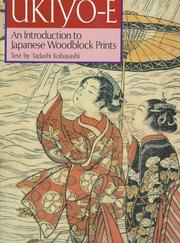
A compact, authoritative survey of the entire ukiyo-e tradition from its origins to its decline, giving a clear chronological spine on which to hang all subsequent reading.
The Great Masters: Hokusai & Hiroshige
BeginnerDevelop a deep familiarity with the two towering figures of the tradition — their careers, their landmark series, and what makes their work visually and conceptually distinctive.
▸ Study plan for this stage
Pace: 6–7 weeks, ~25–30 pages/day (approximately 3 weeks per book, with overlap for reflection and exercises)
- Hokusai's evolution from commercial artist to master printmaker: his early training, mid-career reinvention, and late-life artistic breakthroughs (especially after age 60)
- The Thirty-Six Views of Mount Fuji as a paradigm shift: how Hokusai used landscape as a vehicle for compositional innovation and tonal experimentation
- Hiroshige's distinctive approach to landscape: his emphasis on atmospheric effects, seasonal variation, and intimate perspective compared to Hokusai's monumental vision
- The Tokaido Road series as Hiroshige's masterwork: its narrative structure, travel narrative, and role in establishing the landscape print as a major genre
- Technical mastery in both artists: understanding woodblock production, color registration, perspective techniques, and the evolution of printing methods
- The relationship between commercial demand and artistic ambition: how both artists navigated the ukiyo-e market while pursuing personal artistic vision
- Hokusai and Hiroshige's influence on each other and their contemporaries: artistic dialogue, competition, and the broader ecosystem of Edo and early Meiji printmaking
- How did Hokusai's career trajectory differ from that of typical ukiyo-e artists of his era, and what catalyzed his major artistic breakthroughs?
- What makes the Thirty-Six Views of Mount Fuji compositionally and conceptually revolutionary, and how does Hokusai use Mount Fuji as a unifying element across diverse scenes?
- How does Hiroshige's approach to landscape—particularly in the Tokaido Road series—differ from Hokusai's, and what does this reveal about their respective artistic philosophies?
- What technical innovations in woodblock printing and color application do Hokusai and Hiroshige employ, and how do these innovations shape the visual impact of their work?
- How did the commercial ukiyo-e market influence the subject matter, scale, and distribution of prints by both artists, and how did they balance commercial success with artistic integrity?
- What is the historical significance of Hiroshige's work in the context of Japanese art's transition from the Edo to the Meiji period?
- Create a visual timeline of Hokusai's career phases (early training, mid-career, late-life mastery) using images from the Calza book; annotate each phase with 2–3 key stylistic or thematic shifts
- Select 6–8 prints from the Thirty-Six Views of Mount Fuji and analyze how Hokusai uses compositional framing, color, and perspective to create visual variety while maintaining thematic unity
- Compare a Hokusai landscape with a Hiroshige landscape side-by-side; write a 300-word analysis of their differing approaches to perspective, atmosphere, and human presence
- Trace the Tokaido Road series geographically using a map of Japan; select 4–5 stations and explain how Hiroshige's prints capture the character and mood of each location
- Research and sketch the woodblock printing process (carving, color separation, registration); then examine a multi-color print by each artist and identify how many blocks would have been needed
- Write a short biographical narrative (500 words) comparing Hokusai's and Hiroshige's lives, focusing on how their personal circumstances shaped their artistic choices and legacy
Next up: Mastery of these two foundational figures provides the visual vocabulary and historical context needed to understand how their successors adapted, challenged, and transformed the landscape print tradition in the late Edo and Meiji periods.
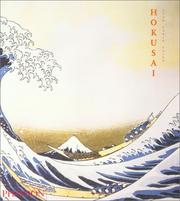
The most comprehensive single-volume monograph on Hokusai in English, covering his full career from early prints to the Manga; reading it first establishes Hokusai as the benchmark against which Hiroshige can be compared.
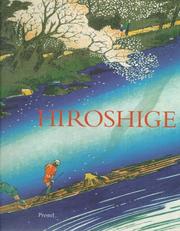
A scholarly yet accessible catalogue of Hiroshige's major series with superb reproductions; coming after the Hokusai volume, the reader can immediately appreciate the lyrical, atmospheric contrast between the two masters.
Collecting: Connoisseurship & the Market
ExpertAcquire the practical knowledge to evaluate, date, and collect ukiyo-e prints — distinguishing early impressions from later reprints, assessing condition, and navigating the market responsibly.
▸ Study plan for this stage
Pace: 4–5 weeks, ~40–50 pages/day, with 2–3 days per week dedicated to museum visits or print examination
- The distinction between early impressions (aizuri-e, nishiki-e) and later reprints, including technical markers like registration shifts and pigment degradation
- The role of publisher seals, carver signatures, and printer marks in dating and authenticating ukiyo-e prints
- Condition assessment criteria: paper quality, color fading, foxing, trimming, and mounting damage as indicators of age and value
- The economics of the ukiyo-e market: how rarity, subject matter, artist reputation, and provenance affect pricing and collectibility
- The production process (design, carving, printing) and how understanding it enables detection of printing errors and quality variations
- Meech-Pekarik's framework for evaluating aesthetic merit and historical significance alongside market value
- The ethical dimensions of collecting: responsible acquisition, avoiding fakes and stolen works, and supporting conservation
- What technical and visual markers distinguish a first-edition impression from a later reprint of the same ukiyo-e design?
- How do publisher seals, carver signatures, and printer marks function as authentication tools, and what do they reveal about a print's date and origin?
- What are the primary condition issues that affect ukiyo-e prints, and how do you assess their impact on both aesthetic and monetary value?
- How does understanding the woodblock carving and printing process help you identify printing errors, quality variations, and signs of block wear?
- What factors drive market value in ukiyo-e collecting, and how do rarity, provenance, and historical context interact with aesthetic quality?
- What are the ethical responsibilities of a collector, and how do you verify authenticity and legitimate provenance before purchasing?
- Examine 5–8 prints by the same artist in museum collections or online databases (e.g., Metropolitan Museum, British Museum) and document differences in color, registration, and paper condition to practice identifying impressions and reprints
- Create a detailed condition report for 3 prints using a standardized template (paper quality, color saturation, foxing, tears, trimming, mounting), then compare your assessments with published conservation notes
- Research the publisher seals and carver signatures in 4–6 prints from 'Designed for Pleasure' and cross-reference them with dated examples to practice authentication and dating
- Attend a museum exhibition or print viewing session (in person or virtually) and take notes on how curators and conservators discuss condition, rarity, and market context
- Compile a price-tracking spreadsheet for 10 prints by a single artist across 3–5 auction or dealer listings, analyzing how condition, edition size, and provenance correlate with asking prices
- Write a 500–750 word connoisseur's assessment of one print, addressing its design merit, condition, historical significance, and estimated market value with justification
Next up: This stage equips you with the technical and market literacy to make informed collecting decisions; the next stage will likely deepen your understanding of specific artists, schools, or periods, allowing you to build a focused collection with both scholarly depth and investment acumen.

Bridges connoisseurship and cultural history by showing how to look closely at condition, impression quality, and publisher seals — essential groundwork before tackling a dedicated collector's guide.
Discussion
Keep reading
Paths that share books, cover the same subject, or open a related topic.