Anime History and Culture: The Best Books to Read, in Order
Most books shelved under "anime" are art books — production sketches, exhibition catalogues, studio tie-ins — and they will not tell you anything about how the medium came to exist. The books that will are film scholarship and industry history, and there are perhaps fifteen of them worth reading. This path runs through them in the order that makes each next one legible: a critical survey and a reference work first, then the manga and television roots the survey assumes, then the industrial history of how the thing was actually financed and exported, and finally the theory.
The Two Books to Start With
BeginnerGet a critical vocabulary for talking about anime as a body of work, plus a reference you can check every unfamiliar title against.
▸ Study plan for this stage
Pace: Three to four weeks for Napier's Anime from Akira to Howl's Moving Castle (400 pages), read a chapter at a time with the films to hand — it is academic film criticism written accessibly, and it works far better if you watch what she is reading. Clements and McCarthy's Anime Encyclopedia (867 pages)
- Napier's three modes — apocalyptic, elegiac, and the festival or carnivalesque — as an organising scheme that cuts across studio and decade
- Why a mode-based taxonomy is a deliberate alternative to auteur criticism, and what it makes visible
- Anime as a medium with genres rather than as a genre in itself, which is the first correction most readers need
- The shojo and mecha traditions as distinct lineages with their own conventions
- Encyclopedia entries as production facts — studio, director, episode count, source manga — against Napier's readings as interpretation
- That Clements and McCarthy are unusually opinionated for a reference work, so their evaluative judgements are arguments, not data
- What do Napier's three modes each pick out, and which films sit awkwardly across two of them?
- What is Napier's argument about the body and transformation in the apocalyptic films, and which titles does she build it on?
- How does the Anime Encyclopedia's entry on a film differ in what it tells you from Napier's chapter on the same film?
- What does Napier claim is distinctive about anime's treatment of the female protagonist, and what evidence does she use?
- Where does Clements and McCarthy's evaluative language conflict with Napier's readings of the same works?
- Take three films Napier discusses under one mode, look each up in the Anime Encyclopedia, and note every production fact — studio, director, source, budget context — that complicates her reading. Doing this once teaches the division of labour between the two books.
- Watch one film Napier analyses at length, read her chapter, and write a paragraph on the reading you would defend against hers. Her method is arguable by design.
- Pick a title from the Encyclopedia that Napier never mentions and decide which of her three modes it belongs to, writing out the reasoning. The failures are more informative than the fits.
- Trace one director through the Encyclopedia's cross-references — every title, in order — and note which of them Napier discusses. That gap is the map of what her book is not about.
Next up: Napier reads the films as texts and largely takes the medium's existence for granted; the next stage supplies the manga industry and the one television contract that determined what the medium physically looks like.
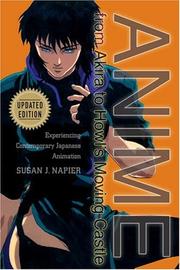
The standard critical introduction: Napier reads major films as texts, organising them by mode — apocalyptic, elegiac, festival — rather than by studio or decade. Note that her earlier Anime from Akira to Princess Mononoke is the first edition of the same project; this is the expanded version, so read only one.

Clements and Helen McCarthy's reference work, thousands of entries deep and unusually opinionated for an encyclopedia. Keep it beside you for the rest of the path — it is the fastest way to place any title the other books mention in passing.
The Manga and Tezuka Roots
BeginnerUnderstand where the visual language and the production economics came from, and why one man's television deal shaped fifty years of limited animation.
▸ Study plan for this stage
Pace: Four to five weeks, about 835 pages. Schodt's Manga! Manga! (260 pages) first — it is from 1983 and introduced Japanese comics to English readers, so read it as a period document as well as a survey; its account of magazines, serialisation and editorial structure remains the clearest available, but
- The magazine-serialisation model — weekly and monthly anthologies, editorial control, reader surveys, tankobon collection — and how it drives what gets adapted
- Tezuka's cinematic panel grammar and its inheritance by animation
- Limited animation: reduced frame counts, held cels, stock sequences and pans, adopted as an economic response to a cheap television budget
- That the Japanese house style is an economic constraint that later criticism reads as an aesthetic — the point of The Astro Boy Essays for this path
- The manga-to-anime adaptation pipeline as the medium's default production route
- Demographic categories — shonen, shojo, seinen, josei — as marketing designations attached to magazines rather than genres
- Schodt's position as a translator and participant in the industry he documents, not a detached observer
- How does the anthology magazine system determine which stories get made and how long they run?
- What was the Astro Boy television contract, and what did its budget force Tezuka's studio to do?
- Which visual habits of anime are direct consequences of limited animation, and which are choices made independently of cost?
- What does Schodt's 1983 account of the industry get right that a present-day account might miss, and where has it dated?
- How much of what Dreamland Japan describes as the manga scene of the 1990s is recognisable in the anime Napier writes about?
- Read The Astro Boy Essays' account of the production budget, then rewatch a sequence of early Astro Boy and count what is actually moving. Naming the specific economies — held cels, three-frame cycles, pans across stills — turns a general claim into an observation.
- Take the magazine-and-editor structure from Manga! Manga! and trace one series through it: serialisation, reader ranking, collection, adaptation. Use the Anime Encyclopedia to fill in the adaptation end.
- List the artists Dreamland Japan treats as central in the mid-1990s and check each against the Encyclopedia for whether their work was adapted. The hit rate says something about which manga becomes anime.
- Write half a page on one visual convention — the speed-line background, the held reaction shot — arguing first that it is an economy and then that it is a style. Schodt gives you the material for both.
Next up: Schodt explains the aesthetic and the manga economy; the next stage is the money — who commissioned, who financed, who exported, and what was cut on the way.
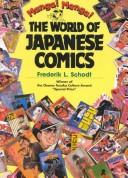
The 1983 book that introduced Japanese comics to English-language readers, and still the clearest account of the industry structure — magazines, serialisation, editors — that anime adapts from. Read it before anything about the animation itself.
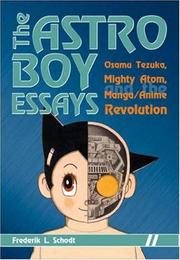
Tezuka, Astro Boy, and the fateful cheap television contract that entrenched limited animation as the Japanese house style. Read it second: it explains an economic constraint that every later book treats as an aesthetic.
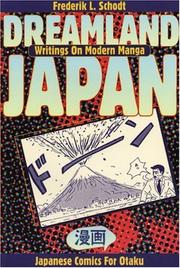
Schodt's follow-up survey of the manga world of the 1990s, artist by artist and magazine by magazine. It is the contemporary snapshot that fills the gap between Tezuka and the era Napier writes about.
The Industry and How It Travelled
IntermediateTrace anime as a business — production committees, the OVA boom, the studios, and the specific route by which it reached the West.
▸ Study plan for this stage
Pace: Five to six weeks, about 1,030 pages, and the four books are of very different kinds. Clements's Anime (356 pages) is serious industrial history built from Japanese-language trade sources and production records; it is the only scholarly account of the business here and it goes first. Ladd's Astro Bo
- The production committee as a financing structure, and how spreading risk across publishers, broadcasters and toy companies shapes what gets greenlit
- Merchandising and sponsor influence on content, which Clements documents from the trade record
- The OVA boom of the 1980s: direct-to-video economics, a smaller and older audience, and the creative latitude that followed
- Localisation as rewriting — cuts, rescoring, renaming, episode reordering — with Ladd as the primary document for how and why
- Gainax as a case of fans becoming a studio, and Evangelion as a production as well as a text
- The American reception boom of the 1990s and 2000s, its distribution channels, and the two-way traffic it created
- The difference between an industrial history from records, a participant memoir, and reportage — and why all three are needed here
- What is a production committee, and how does its structure affect the finished programme?
- What did Ladd actually change in adapting Astro Boy, and what reasons does he give?
- What made the OVA market possible, and what happened to it?
- How does Takeda's account of Gainax's finances and working conditions complicate the standard critical account of Evangelion?
- Where does Clements's documentary evidence contradict the received story that Kelts repeats?
- Take one series and build its full financing and distribution chain from Clements: who commissioned it, who sat on the committee, who broadcast it, who sold what. Most critical writing about anime never mentions any of this, and assembling it once changes how you read the rest.
- Compare a Japanese episode of Astro Boy with Ladd's account of what he did to it, listing every category of change he names. Then look for any of those changes acknowledged in the Anime Encyclopedia's entry.
- Read The Notenki Memoirs against the Encyclopedia's Gainax entries and mark every place where the participant account and the reference work disagree about dates, credits or sequence. Takeda is a source, not an authority, and this is how to use him.
- Take one claim Kelts makes about anime's American reception and try to source it from Clements. Where you cannot, note what kind of claim it is — journalism does work here that the trade record does not, and vice versa.
Next up: With the economics on record, the last stage turns to formal analysis — which argues about the meaning of exactly these production constraints — and then to the one director whose career resists every generalisation the path has made.

The serious industrial history, built from Japanese-language trade sources and production records rather than from the films. Read it after the Schodt books: it is the only volume here that explains who paid for what, and it is catalogued simply as Anime.

A memoir by the man who adapted Astro Boy and Gigantor for American television, including exactly what was cut and why. The primary source behind everything later written about localisation.

An insider account of Gainax from fan club to Evangelion, written by a founder. Read it here for the view from inside a studio rather than from the trade press — it is gossipy, partial, and irreplaceable.

Reportage on the American reception boom of the 2000s and the two-way traffic it created. The weakest scholarship on this list but the best account of the export moment, so read it as journalism.
The Theory, and the One Director Who Gets a Shelf
BeginnerMove from history to formal analysis, and finish with Miyazaki, who is the exception to almost every generalisation the earlier books make.
▸ Study plan for this stage
Pace: Six to eight weeks, and the difficulty is uneven. LaMarre's The Anime Machine is the most demanding book on the path: it is film theory drawing on Deleuze and on media-materialist argument, and it needs to be read slowly and after Clements, because much of it argues against the purely economic accou
- LaMarre's animetic interval: the gap between layers of the multiplanar setup, treated as the medium's basic formal unit
- Cinematism versus animetism — movement into depth against movement across a plane — and what LaMarre claims follows from the difference
- The compositing machine as an argument that limited animation produced its own way of organising space rather than merely saving money
- Denison's genre framework as a corrective to auteur-and-masterpiece criticism, and what a genre approach captures that Napier's modes do not
- Miyazaki's own stated positions on animation labour, war, environmentalism and his contempt for parts of the industry — as primary statements, not settled fact about his films
- Ghibli as an institution: its production model, its distribution deals and its succession problem
- That Miyazakiworld is Napier applying twenty years later to one career the apparatus she built for a whole medium
- What is the animetic interval, and how does LaMarre argue from a mechanical property of the animation stand to a claim about form?
- Where exactly does LaMarre's account conflict with Clements's economic explanation of limited animation, and can both be right?
- What does Denison's genre framework do with a film that Napier reads as a singular work?
- Which of Miyazaki's stated intentions in Starting Point are visible in the films, and which are not?
- What does Miyazakiworld's biographical method allow Napier to argue that Anime from Akira to Howl's Moving Castle could not?
- Take one sequence LaMarre analyses and watch it frame by frame, identifying the layers and their relative motion. His argument is about something physically visible, and confirming it on screen is the only way to judge it.
- Write out LaMarre's argument and Clements's argument about limited animation as two numbered chains, and mark the point at which they diverge. They are answering different questions, and locating the fork is the exercise.
- Take one film covered by Napier, Denison and Miyazakiworld and write a page on what each of the three approaches — mode criticism, genre criticism, biographical criticism — makes central and what each discards.
- Find a passage in Starting Point where Miyazaki describes his intention for a specific film, then read Napier's account of that film in Miyazakiworld and note where she takes him at his word and where she does not.
- Return to the Anime Encyclopedia entries for the Ghibli films and check the production facts against Miyazaki's own recollections. A primary source and a reference work disagreeing about dates is normal and worth seeing.
Next up: This closes the path: a critical vocabulary and a reference, the manga and economic roots beneath it, the industrial history of how it travelled, and the theory and the single career that test all of it.
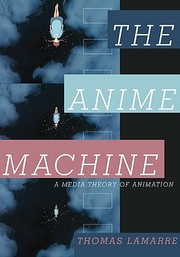
The most demanding book here: Lamarre analyses the multiplanar camera and the moving image itself to argue that limited animation produced a distinct way of organising space. Read it only after Clements has given you the economic history it is arguing against.

A genre-by-genre film-studies treatment, and the best correction to Napier's auteur-and-masterpiece framing. Catalogued as Anime, and not to be confused with Clements's history of the same short name.
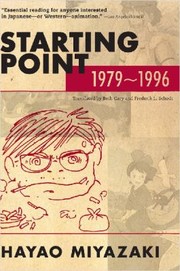
Miyazaki's own essays, interviews and memos from 1979 to 1996, including the ones where he is rude about the industry he defined. A primary source, and the point where the path stops being about other people's readings.

Napier's film-by-film study of Miyazaki, written twenty years after her survey and much more biographical. The right closing book: it uses everything the path has established and applies it to a single career.
Discussion
Keep reading
Paths that share books, cover the same subject, or open a related topic.