Best Books on the French New Wave, in Order
This curriculum takes an intermediate cinephile from a solid grounding in French New Wave history and key figures, through the theoretical frameworks that powered the movement, into deep auteur-level studies of Godard and Truffaut, and finally to critical reassessments of the movement's legacy and collapse. Each stage builds the vocabulary and context needed to fully absorb the next, moving from narrative history → theory → auteur deep-dives → critical synthesis.
The Movement in Full: History and Context
IntermediateGain a comprehensive, chronological understanding of the French New Wave — its origins, key players, landmark films, and the cultural moment that produced it — before diving into theory or individual directors.
▸ Study plan for this stage
Pace: 6–7 weeks, ~25–30 pages/day, with 2–3 days per week reserved for review and exercises
- The historical and cultural conditions of 1950s France that enabled the New Wave (economic recovery, generational shift, intellectual ferment)
- The role of Cahiers du cinéma critics (Godard, Truffaut, Rivette, Rohmer, Chabrol) in theorizing auteurism and challenging classical cinema
- Key production innovations: low budgets, location shooting, lightweight equipment, non-professional actors, and improvisation as defining aesthetic choices
- Landmark films and their directors (Truffaut's *400 Blows*, Godard's *Breathless*, Chabrol's *Le Beau Serge*, Rivette's *Paris Belongs to Us*) as case studies in the movement's diversity
- The New Wave's relationship to classical French cinema and American cinema (both homage and rupture)
- The role of producers, cinematographers, and technical innovation in enabling the movement's visual and narrative experimentation
- The movement's chronology: origins in criticism (1950–1959), explosion (1959–1962), consolidation and diversification (1962–1968)
- Gender, class, and generational themes that recur across New Wave films as reflections of post-war French society
- What were the main historical, economic, and cultural factors in 1950s France that made the French New Wave possible?
- How did the Cahiers du cinéma critics' theory of auteurism challenge the dominant film criticism and production practices of the time?
- What were the key technical and budgetary innovations that defined New Wave filmmaking, and how did they shape the movement's aesthetic?
- How do the landmark films discussed in these books (e.g., *400 Blows*, *Breathless*, *Le Beau Serge*) exemplify different approaches within the New Wave?
- What was the New Wave's relationship to both classical French cinema and American cinema—where did it draw from, and where did it break away?
- How did the New Wave evolve chronologically from the late 1950s through the 1960s, and what factors contributed to its diversification?
- Create a detailed timeline of the French New Wave (1950–1968) marking key critical writings, directorial debuts, landmark films, and cultural events; cross-reference between Greene and Vincendeau to note where they emphasize different milestones
- Compile a comparative chart of 4–5 landmark New Wave films (title, director, year, budget, key technical choices, plot summary, and critical reception) using evidence from both books
- Write a 2–3 page synthesis essay on how the Cahiers du cinéma critics' ideas about auteurism and mise-en-scène translated into actual filmmaking practice, citing specific examples from the books
- Select one film discussed in depth in both books (e.g., *Breathless* or *400 Blows*) and write a detailed analysis of how its production constraints (budget, equipment, locations) shaped its narrative and visual style
- Create an annotated map or diagram showing the relationships between key figures (directors, producers, cinematographers, critics) and their collaborations, based on the books' accounts
- Watch one landmark film from the reading (e.g., *Breathless*, *400 Blows*, or *Le Beau Serge*) and write a 1–2 page reflection connecting what you see on screen to the historical and technical context described in Greene and Vincendeau
Next up: This stage provides the historical scaffolding and movement-wide overview needed to deeply examine individual directors' philosophies, recurring themes, and theoretical contributions in the next stage, where you'll study auteurs and theory with the confidence of understanding the broader context.

A clear, well-organized overview of the movement's history, aesthetics, and social context. Starting here gives the intermediate reader a reliable map of the terrain before tackling more specialized texts.

An anthology of primary documents and critical essays from the period itself, including writings by the filmmakers. Reading this second grounds the history in the actual voices and debates of the movement.
The Theory Engine: Cahiers du Cinéma and Auteur Theory
IntermediateUnderstand the critical and theoretical foundations of the New Wave — especially the politique des auteurs developed at Cahiers du Cinéma — and see how criticism directly shaped filmmaking practice.
▸ Study plan for this stage
Pace: 6–7 weeks, ~25–30 pages/day. Week 1–2: Hillier's Cahiers anthology (selections); Week 3: Bazin's essays (concentrated reading); Week 4–5: Perkins' Film as Film; Week 6–7: Review, synthesis, and comparative analysis.
- Politique des auteurs: the concept that a director's personal vision and style constitute the primary meaning of a film, even within commercial studio systems
- Bazin's realism and mise-en-scène: the idea that cinema's essence lies in its ability to capture reality through long takes, depth of field, and spatial composition rather than montage
- Auteur as artist: how Cahiers critics elevated directors (Hitchcock, Hawks, Welles) to the status of artists comparable to novelists or painters
- The relationship between criticism and practice: how Cahiers writers (Godard, Truffaut, Rivette) became filmmakers who embodied their own critical theories
- Formal analysis and visual language: Perkins' systematic approach to analyzing how cinematic technique (framing, editing, movement) creates meaning independent of narrative
- The rejection of 'quality cinema' and literary adaptation: Cahiers' polemical stance against the French tradition of prestige literary adaptations in favor of American genre cinema
- Depth of field and the long take as moral/aesthetic choices: how technical decisions reflect a director's worldview and relationship to reality
- Mise-en-scène as the director's signature: the visual and spatial orchestration of a scene as the true locus of authorial intent
- What is the politique des auteurs, and how did Cahiers du Cinéma critics use it to challenge the critical establishment of 1950s France?
- How does Bazin's theory of realism and his emphasis on mise-en-scène and depth of field differ from earlier film criticism that privileged montage?
- Why did Cahiers critics champion American genre directors like Hitchcock and Hawks, and what did they see in these films that French critics had overlooked?
- How did the critical theories developed at Cahiers du Cinéma directly influence the filmmaking practice of critics-turned-directors like Godard and Truffaut?
- According to Perkins, how do formal cinematic techniques (framing, editing, camera movement) create meaning, and why is this analysis essential to understanding authorship?
- What is the relationship between a director's use of mise-en-scène and their 'personal vision' or authorial signature?
- Read and annotate 3–4 key Cahiers reviews from Hillier's anthology (e.g., reviews of Hitchcock or Hawks films). Identify how the critic applies politique des auteurs logic and what directorial qualities they isolate.
- Select one Bazin essay from 'What is Cinema?' and write a 500-word analysis of his argument about realism, mise-en-scène, or the long take. Use a specific film example to test his claims.
- Watch a film discussed in Bazin's essays (e.g., a Welles or Bresson film) and analyze one scene using Bazin's vocabulary: depth of field, spatial composition, the relationship between camera position and meaning.
- Using Perkins' framework from 'Film as Film,' analyze the formal techniques (framing, editing, movement, composition) in a 3–5 minute scene from a New Wave or contemporary film. Write a 400-word explanation of how these choices create meaning independent of dialogue or plot.
- Create a comparative chart: list 3 films discussed across all three books (e.g., a Hitchcock or Hawks film in Cahiers, a Welles film in Bazin, a Godard film in Perkins). For each, note the critical argument made about the director's authorship and the formal techniques cited as evidence.
- Write a 1000-word essay: 'How does Cahiers criticism become New Wave filmmaking?' Use specific examples from Hillier (the critical argument), Bazin (the theoretical foundation), and Perkins (the formal analysis of the resulting films) to show the chain of influence.
Next up: This stage establishes the theoretical and critical scaffolding—the *why* and *how* of New Wave cinema—preparing you to examine the actual films and filmmakers of the movement with both critical vocabulary and historical context.
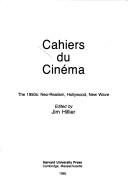
The essential anthology of Cahiers criticism from the decade when auteur theory was forged. Reading the actual Bazin, Truffaut, and Godard essays here makes the theory concrete and historically situated.
Bazin is the intellectual godfather of the New Wave; his essays on realism, the long take, and cinematic ontology are the theoretical bedrock every New Wave director absorbed. This belongs immediately after the Cahiers anthology.

Perkins systematizes auteurist close reading into a rigorous critical method. Placed here, it gives the reader the analytical tools needed to apply auteur theory to individual films in the next stage.
The Two Pillars: Truffaut and Godard
IntermediateDevelop a deep, film-by-film understanding of the two defining auteurs of the movement, their methods, obsessions, and diverging trajectories.
▸ Study plan for this stage
Pace: 8–10 weeks, ~40–50 pages/day (with film viewing integrated). Allocate roughly 3 weeks to Petrie's monograph, 2 weeks to Truffaut's Hitchcock book, and 3–4 weeks to Godard's collected writings, allowing time for rewatching key films between reading sessions.
- Truffaut's auteur theory in practice: how personal obsession (childhood trauma, romantic idealism, mortality) becomes cinematic language through mise-en-scène, editing, and narrative structure
- The director-as-critic: how Truffaut's Cahiers du cinéma essays on Hitchcock shaped his own directorial philosophy and technique
- Godard's radical break from classical narrative: deconstruction of cinema's formal conventions (continuity editing, dialogue, plot) as political and philosophical act
- The Truffaut-Godard divergence: contrasting approaches to humanism (Truffaut's emotional realism vs. Godard's materialist critique), and how their personal and professional split reflected broader ideological rifts
- Hitchcock as Truffaut's artistic father: the influence of suspense mechanics, camera placement, and psychological depth on Truffaut's own filmmaking
- Godard's cinema as essay: the use of film as a medium for philosophical inquiry, intertextuality, and self-reflexivity rather than narrative entertainment
- The politics of form: how both directors weaponized cinematic technique—Truffaut through humanistic storytelling, Godard through formal disruption—to challenge postwar French cinema
- How does Petrie argue that Truffaut's biographical experiences (particularly his relationship with his mother and his time in the military) manifest in the thematic and stylistic choices of his films?
- What specific Hitchcock techniques does Truffaut identify and praise in his monograph, and how did Truffaut adapt or transform these techniques in his own directorial work?
- What is Godard's critique of classical narrative cinema, and how does he use formal disruption (breaking the fourth wall, discontinuous editing, non-diegetic sound) to enact this critique?
- How and why did Truffaut and Godard's artistic and personal relationship deteriorate, and what do their diverging filmographies reveal about fundamentally different conceptions of cinema's purpose?
- According to Godard's own writings, what role does cinema play in his broader project of political and philosophical critique, and how does this differ from Truffaut's humanistic project?
- How does Truffaut's analysis of Hitchcock's use of the camera and point-of-view inform your understanding of Truffaut's own visual style in films like *The 400 Blows* or *Jules and Jim*?
- Comparative shot analysis: Watch a Hitchcock sequence (e.g., the shower scene in *Psycho*) alongside a corresponding Truffaut scene (e.g., the staircase murder in *Shoot the Piano Player*). Document how Truffaut borrows, adapts, or subverts Hitchcock's camera placement and editing rhythm.
- Truffaut auteur study: Select three Truffaut films from different periods (e.g., *The 400 Blows*, *Jules and Jim*, *The Last Metro*). Track recurring visual motifs, narrative preoccupations, and emotional registers across the films while reading Petrie's analysis.
- Godard deconstruction exercise: Choose one Godard film mentioned in *Godard on Godard* (e.g., *Breathless*, *Contempt*, *Weekend*). Identify and document five instances of formal rule-breaking (narrative discontinuity, direct address, sound-image disjuncture). Write a one-page analysis of how each disruption serves Godard's philosophical or political argument.
- Hitchcock close reading: Select one chapter from Truffaut's *Hitchcock* monograph. Rewatch the corresponding Hitchcock film sequence, then write a 500-word response comparing Truffaut's written analysis to your own viewing experience. Note where you agree, disagree, or see additional layers.
- Ideological mapping: Create a two-column chart comparing Truffaut and Godard across five dimensions: narrative structure, camera movement, use of dialogue, relationship to genre, and political intent. Use specific film examples and textual evidence from all three books.
- Godard's essay-film: Reread a dense passage from *Godard on Godard* (e.g., his reflections on *Contempt* or *Two or Three Things I Know About Her*). Watch the corresponding film sequence. Write a 300-word reflection on how Godard's theoretical language translates into cinematic form.
Next up: By mastering the formal and ideological foundations laid by Truffaut and Godard—the two poles of the New Wave—you are now equipped to understand how their successors (Rivette, Rohmer, Chabrol) both inherited and challenged these paradigms, and how the movement evolved beyond its founding figures.

A thorough auteur study of Truffaut's entire body of work, covering style, themes, and biography. Reading Truffaut first establishes the more accessible pole of the movement before tackling Godard's radical experiments.
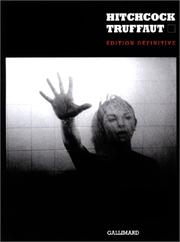
Truffaut's landmark interview-book with Hitchcock is itself a masterclass in auteurist criticism and reveals exactly how Truffaut thought about cinema. It also illuminates the Hollywood influences the New Wave was processing.
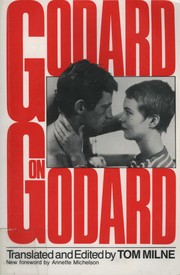
Godard's own collected writings and interviews from the Cahiers years through his early films. Reading Godard in his own words, after the theoretical groundwork is laid, makes his radical positions fully legible.
Legacy, Collapse, and Critical Reassessment
ExpertUnderstand why and how the French New Wave ended, assess its global influence, and engage with revisionist and feminist critiques that complicate the movement's canonical narrative.
▸ Study plan for this stage
Pace: 4–5 weeks, ~40–50 pages/day (approximately 280–350 pages total for Neupert's comprehensive history)
- The economic and industrial factors that led to the French New Wave's decline in the late 1960s and early 1970s
- How Neupert periodizes the movement's phases and identifies the turning points where stylistic and thematic shifts occurred
- The distinction between the New Wave's initial revolutionary impact and its later institutionalization within French cinema
- Global influence and adaptation: how New Wave techniques and philosophy spread to and were transformed by filmmakers in other national contexts
- Feminist and revisionist critiques of the New Wave's gender politics, particularly regarding female directors and representation
- The role of criticism and film journals (especially Cahiers du cinéma) in constructing and later deconstructing the New Wave canon
- How technological, cultural, and political shifts of the 1970s made the New Wave's aesthetic and ideological project obsolete or transformed it
- According to Neupert, what were the primary economic and industrial reasons for the decline of the French New Wave as a coherent movement?
- How does Neupert's periodization of the New Wave differ from earlier critical accounts, and what does this reveal about the movement's actual lifespan?
- What evidence does Neupert provide for the New Wave's global influence, and how did different national cinemas adapt or resist New Wave aesthetics?
- What feminist and revisionist critiques does Neupert engage with regarding the New Wave's treatment of female directors and gender representation?
- How did the relationship between New Wave filmmakers and critical institutions (like Cahiers du cinéma) change over time, and what impact did this have on the movement's legacy?
- What does Neupert argue about the relationship between the New Wave's artistic innovations and its eventual absorption into mainstream or institutional cinema?
- Create a detailed timeline of the French New Wave's phases using Neupert's framework, marking key films, directorial debuts, and critical turning points; annotate each phase with the economic or cultural conditions Neupert identifies
- Select three New Wave films discussed by Neupert and write comparative analyses examining how their formal techniques influenced filmmakers from at least two different national contexts (e.g., Latin American, Asian, or Eastern European cinema)
- Research and write a 2–3 page essay on one female director mentioned or discussed by Neupert (or notably absent from his account), using Neupert's text as a starting point to interrogate gender dynamics in New Wave historiography
- Create a visual map or chart showing Neupert's argument about the New Wave's decline: plot the movement's stylistic evolution against the industrial, economic, and cultural factors he identifies as causative
- Conduct a close reading of Neupert's discussion of how Cahiers du cinéma critics shaped the New Wave canon, then identify one filmmaker or film that Neupert argues has been undervalued or misread due to critical bias
- Write a reflective essay comparing Neupert's reassessment of the New Wave with the movement's self-perception during its height—what does his historical distance reveal about the movement's actual achievements versus its mythologized legacy?
Next up: This stage equips you with a comprehensive, historically grounded understanding of the New Wave's trajectory from innovation to institutionalization, preparing you to engage with subsequent stages that might explore specific national cinema responses, auteur studies, or deeper theoretical frameworks for understanding cinema history and criticism.

The most scholarly and comprehensive single-volume history of the movement, covering its rise, internal contradictions, and dissolution. Saved for last, it synthesizes everything the reader has learned and provides the definitive account of the movement's collapse.
Discussion
Keep reading
Paths that share books, cover the same subject, or open a related topic.