Learn Japanese: a realistic roadmap
This four-stage curriculum takes a complete beginner from zero knowledge of Japanese all the way to self-sustaining immersion learning, without burnout. Each stage builds directly on the last: you first master the writing systems and survival grammar, then develop solid intermediate grammar and vocabulary habits, then learn to acquire the language naturally through immersion, and finally adopt the mindset and long-term strategies needed to reach fluency over years — not months.
Foundations: Kana, Kanji & Survival Grammar
BeginnerRead hiragana and katakana fluently, understand how kanji learning works, and grasp the basic logic of Japanese sentence structure so nothing feels alien.
▸ Study plan for this stage
Pace: 10–12 weeks total. Weeks 1–6: Work through "Remembering the Kanji I" at ~30–35 kanji/day (targeting all 2,200 characters), using spaced-repetition review daily alongside new entries. Weeks 7–12: Read "Japanese From Zero! 1" at roughly 1 lesson every 2–3 days (~15–20 pages/session), revisiting RTK fl
- Hiragana and katakana as complete phonetic syllabaries — every sound in Japanese can be written with kana, and fluent recognition is non-negotiable before moving forward
- The Heisig RTK method: learning kanji through imaginative memory stories (primitives → keyword → story) rather than rote stroke repetition, separating meaning from reading at this stage
- Kanji primitives as building blocks — RTK I shows that complex characters are composed of recurring visual sub-units, making the writing system learnable and systematic
- The subject-object-verb (SOV) sentence order that underlies all Japanese grammar, introduced practically in Japanese From Zero! 1
- Particles as the grammatical glue of Japanese sentences (は, を, に, で, etc.) — JFZ!1 introduces these as slot-markers that tell you the role of each word, replacing English word-order logic
- Hiragana writing system internalized through JFZ!1's progressive kana introduction, moving from recognition to production (reading and writing each character from memory)
- Katakana as the syllabary for foreign loanwords and emphasis — JFZ!1 introduces it alongside real vocabulary so the purpose feels concrete, not abstract
- Basic verb conjugation logic: the concept of verb groups (う-verbs, る-verbs) and the polite present/negative forms (〜ます / 〜ません) introduced in JFZ!1
- Can you write all 46 base hiragana and 46 base katakana characters from memory, including the dakuten (voiced) and combination forms introduced in JFZ!1?
- How does Heisig's RTK I method work, and why does it deliberately delay teaching kanji readings (on'yomi/kun'yomi) until a later stage?
- What is a 'primitive' in RTK I, and how do you construct a memory story to permanently link a kanji's shape to its English keyword?
- What is the basic word-order rule for a Japanese sentence, and how does it differ from English? Give an example using vocabulary from JFZ!1.
- What is the function of the topic particle は (wa) versus the subject particle が (ga) as introduced in JFZ!1, and how do particles replace the need for strict word order?
- How do you conjugate a polite present-tense verb and its negative form using the 〜ます pattern from JFZ!1?
- RTK I Daily Flashcard Drill: After each study session in Remembering the Kanji I, add that day's kanji to an Anki deck (or physical cards) using the exact keyword and your own personal story. Review all previous cards before adding new ones — never skip the review queue.
- Kana Writing Grids: Using the kana charts introduced in Japanese From Zero! 1, hand-write each hiragana row (a-i-u-e-o, ka-ki-ku-ke-ko, etc.) from memory every morning for the first four weeks. Time yourself — target under 3 minutes for all 46 base characters.
- RTK Story Journal: For every 50 kanji completed in RTK I, write out 10 of your most creative or difficult stories in a dedicated notebook. Revisit and refine weak stories; if a kanji keeps failing in review, rewrite its story from scratch.
- JFZ!1 Sentence Construction Drills: After each JFZ!1 lesson, write 5 original sentences using that lesson's vocabulary and grammar patterns, then swap the particles deliberately (e.g., replace を with に) and explain in writing why the meaning breaks or changes.
- Katakana Real-World Hunt: Once katakana is introduced in JFZ!1, spend 10 minutes per day reading katakana in the wild — food packaging, app menus, YouTube thumbnails in Japanese. Write down 5 new loanwords you decoded and their English origin.
- End-of-Stage Self-Test: Before moving to Stage 2, take a blank sheet of paper and (1) write all kana from memory, (2) draw and keyword 20 randomly chosen RTK kanji from your deck, and (3) write a 5-sentence Japanese paragraph about your daily routine using only JFZ!1 grammar. Grade yourself honestly.
Next up: Completing this stage gives you a fully decoded writing system (kana fluency + kanji keyword framework) and a mental model of Japanese sentence logic, which means the next stage can immediately focus on expanding vocabulary, kanji readings, and intermediate grammar without the cognitive overload of an unfamiliar script or alien sentence structure.
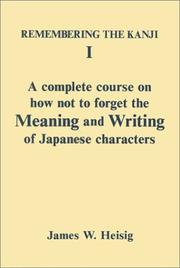
Introduces a story-based mnemonic system for learning the meaning and writing of 2,200 kanji. Starting this early builds a kanji framework that makes every future resource far more accessible.
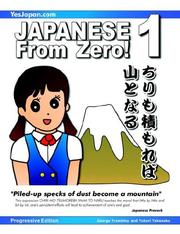
A beginner-friendly grammar primer with a gradual, encouraging pace — ideal for building first grammar intuition right after kana, without overwhelming a new learner.
Core Grammar: Making Sense of the Language
BeginnerInternalize the core grammar patterns of Japanese — particles, verb conjugations, and sentence logic — well enough to read and construct real sentences independently.
▸ Study plan for this stage
Pace: 16–20 weeks total. Weeks 1–8: Genki I (~2 lessons/week, including textbook readings, grammar notes, and workbook exercises). Weeks 9–16: Genki II (~2 lessons/week, same cadence). Weeks 17–20: A Dictionary of Basic Japanese Grammar used throughout as a reference, but read systematically cover-to-cove
- Japanese sentence-final structure (SOV word order) and how it differs fundamentally from English SVO order
- The particle system: understanding は (topic), が (subject), を (object), に (direction/time/target), で (location/means), と (and/with), も (also), and の (possession/nominalization) as the glue of Japanese sentences
- Verb groups and conjugation: distinguishing る-verbs (Group II) from う-verbs (Group I) and irregular verbs (する, くる), and producing て-form, た-form, ない-form, and dictionary form confidently
- Predicate types: noun predicates (〜です), い-adjective predicates, な-adjective predicates, and verb predicates — and how negation and past tense work across all four
- Expressing existence and location with います vs. あります, and using に and で correctly with each
- Expressing ability, desire, experience, and obligation through auxiliary constructions: 〜たい, 〜ことができる, 〜たことがある, 〜なければならない, 〜てもいい
- Connecting clauses: て-form chaining, から/ので (reason), が/けど (contrast), and とき (when) to build multi-clause sentences
- Using A Dictionary of Basic Japanese Grammar as a precision tool: reading its metalanguage (e.g., 'Vmasu', 'Adj(i)', formation rules, exception notes) to deepen and self-correct grammar intuitions built through Genki
- Can you explain why Japanese places the verb at the end of the sentence, and construct three original SOV sentences using different particle combinations from Genki I?
- What is the difference between は and が as demonstrated in Genki I and II, and in what contexts does the Dictionary of Basic Japanese Grammar say each is preferred?
- How do you conjugate a Group I (う-verb) versus a Group II (る-verb) into the て-form, negative form, and past form — and how does Genki I's verb chart help you identify which group a verb belongs to?
- Using patterns from Genki II, how would you express 'I have never eaten sushi' and 'I want to go to Japan someday' in Japanese?
- How does A Dictionary of Basic Japanese Grammar's entry on から differ from ので, and which Genki lesson first introduces each connector?
- What are the four predicate types in Japanese, and how do negation and past tense endings differ between い-adjectives and な-adjectives as taught in Genki I?
- Genki Workbook Drills (active): Complete every workbook exercise for Genki I and II in writing — do not skip the listening sections; replay each audio track until you can transcribe the dialogue from memory.
- Sentence Mining with Particles: After each Genki lesson, write 10 original sentences using the new particle or grammar point in a dedicated notebook. Swap は for が or で for に deliberately to feel the meaning shift.
- Dictionary Deep-Dives: For every major grammar point in Genki (e.g., て-form, たい, ことができる), find the corresponding entry in A Dictionary of Basic Japanese Grammar, read the full entry including examples and notes, then copy 3 example sentences and write 3 of your own in the same pattern.
- Conjugation Flashcard Sprint: Build a flashcard deck (Anki or paper) of 50 verbs — 20 う-verbs, 20 る-verbs, 10 irregulars — and drill all six forms (dictionary, ます, て, た, ない, potential) daily for the first 8 weeks until production is automatic.
- Dialogue Reconstruction: After finishing each Genki lesson's main dialogue, close the book and rewrite the dialogue from memory in Japanese, then compare it word-for-word with the original, noting every particle or conjugation you got wrong.
- Error Journal: Keep a running log of every grammar mistake you make in exercises or self-tests. For each error, write the incorrect form, the correct form, and the rule from either Genki or A Dictionary of Basic Japanese Grammar that explains why — review this log weekly.
Next up: Mastering the core grammar patterns, particle logic, and conjugation system in this stage gives you the structural foundation to begin tackling authentic or near-authentic Japanese texts, where vocabulary breadth and reading stamina — rather than grammar confusion — become the primary challenges.
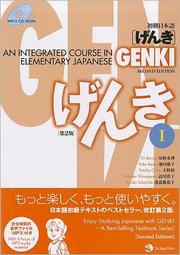
The most widely used university-level beginner textbook; its structured lessons, dialogues, and exercises solidify grammar and vocabulary in a logical, cumulative order.
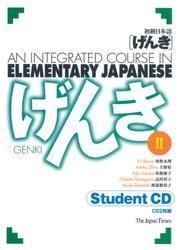
Continues directly from Genki I into intermediate grammar territory, completing the foundational grammar map a learner needs before moving to authentic materials.
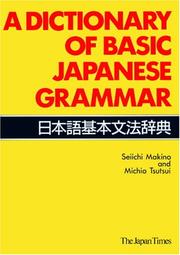
Not read cover-to-cover but used as a reference alongside Genki — its clear explanations of grammar points build deeper understanding and answer the 'but why?' questions textbooks skip.
Immersion Methods: Acquiring Japanese Naturally
IntermediateUnderstand how to move beyond textbooks and acquire Japanese through real input — anime, manga, novels, and conversation — using proven immersion and SRS strategies.
▸ Study plan for this stage
Pace: 6–8 weeks total: Weeks 1–3 cover "Fluent Forever" (~25–30 pages/day, reading actively with notes on SRS and pronunciation techniques); Weeks 4–8 cover "Read Real Japanese Fiction" (~10–15 pages/day including the Japanese stories and their annotations, re-reading each story at least twice before movi
- The Pronunciation First principle from Fluent Forever — mastering Japanese sounds (including pitch accent awareness) before drilling vocabulary, to build accurate mental models from the start
- Spaced Repetition Systems (SRS) as the engine of vocabulary acquisition — understanding the forgetting curve and how Anki-style flashcard design (images, personal associations, no translations) encodes words into long-term memory
- Minimal pairs and the importance of training your ear to distinguish similar Japanese sounds (e.g., long vs. short vowels, voiced vs. unvoiced consonants) as a foundation for listening immersion
- The 'no English' flashcard philosophy from Fluent Forever — creating target-language-only cards that force the brain to think in Japanese rather than translate
- Comprehensible input as the mechanism of natural acquisition — engaging with real Japanese fiction (as modeled in Read Real Japanese Fiction) at a level just above your current ability (i+1)
- Annotation literacy — using the vocabulary lists, grammar notes, and cultural footnotes in Read Real Japanese Fiction to decode authentic literary prose without losing immersion momentum
- Reading strategies for native-level text: tolerating ambiguity, inferring meaning from context, and using re-reading passes (first for gist, second for detail) as demonstrated by the layered apparatus in Read Real Japanese Fiction
- Bridging SRS and immersion — mining unknown words and grammar patterns encountered in the Read Real Japanese Fiction stories directly into your Anki deck to create a personal, input-driven vocabulary corpus
- According to Fluent Forever, why should pronunciation training come before vocabulary study, and how does this principle apply specifically to Japanese phonology (mora timing, vowel length, pitch)?
- What makes an SRS flashcard 'stick' according to Wyner's method — what elements should a well-designed Japanese vocabulary card include, and what should it deliberately avoid?
- How does the annotation system in Read Real Japanese Fiction support comprehensible input without becoming a crutch that prevents real acquisition?
- After working through at least two stories in Read Real Japanese Fiction, what patterns do you notice in literary Japanese grammar (e.g., sentence-final forms, classical verb endings, ellipsis) that differ from textbook Japanese?
- How would you design a personal immersion pipeline that connects the SRS principles from Fluent Forever with the authentic reading practice modeled in Read Real Japanese Fiction?
- What is the role of re-reading in the immersion approach — how does returning to the same story in Read Real Japanese Fiction a second or third time deepen acquisition differently than moving to new material?
- Build a 'Pronunciation Foundation' Anki deck: Using the minimal-pairs framework from Fluent Forever, create 30–50 cards targeting Japanese sounds you personally confuse (e.g., ざ/じゃ, long/short vowels). Use audio from Forvo or NHK Web Easy — no romaji, no English.
- Story Mining Sprint: After finishing each story in Read Real Japanese Fiction, highlight every word or grammar pattern you couldn't guess from context. Add the 10 most frequent or most interesting items to your Anki deck as image/sentence cards following Wyner's no-translation card design.
- Two-Pass Reading Log: For each story in Read Real Japanese Fiction, write a short log entry after Pass 1 (gist only, no looking anything up) and a second entry after Pass 2 (using the annotations). Compare what you understood vs. what you missed — track your comprehension growth across stories.
- Shadow a Story Passage: Choose one paragraph from any Read Real Japanese Fiction story, listen to or record yourself reading it aloud, then shadow it repeatedly until your rhythm matches natural literary Japanese pacing. Focus on mora timing as trained in Fluent Forever.
- Build Your Personal Immersion Schedule: Using the habit-stacking advice in Fluent Forever, design a written weekly immersion plan that allocates specific daily time blocks to SRS review, Read Real Japanese Fiction reading, and one additional input source (anime, podcast, or manga) — then follow it for two full weeks and journal what worked.
- Translation Comparison Exercise: Translate one short passage from a Read Real Japanese Fiction story yourself (without looking at any provided translation), then compare your version to the published English translation if available. Identify where your interpretation diverged and why — this surfaces hidden grammar assumptions.
Next up: By internalizing SRS-driven vocabulary acquisition from Fluent Forever and building real reading stamina through authentic literary texts in Read Real Japanese Fiction, the reader is now equipped to engage independently with unassisted native Japanese media — setting the foundation for the next stage, which pushes further into self-directed immersion with more complex and varied native content.

Explains the science of spaced repetition and how to build a personal SRS (Anki) system for vocabulary and kanji — a critical skill for sustaining progress through immersion.
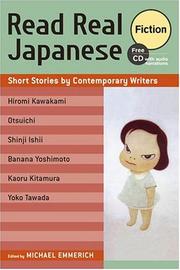
Provides short authentic literary texts with full grammar notes and vocabulary, acting as a bridge from textbook Japanese to real native reading material.
Long-Term Fluency: Mindset, Roadmap & Advanced Mastery
ExpertAdopt a sustainable, years-long learning philosophy; refine grammar to a near-native level; and understand how to keep growing independently without a teacher or curriculum.
▸ Study plan for this stage
Pace: 16–20 weeks total. Week 1–8: Work through "A Dictionary of Intermediate Japanese Grammar" systematically (~8–10 grammar entries/day, revisiting with active writing). Week 9–14: Study "Remembering the Kanji 2" in parallel with grammar review (~20–25 kanji/day using Heisig's story/keyword method). Wee
- Intermediate-to-advanced grammar mastery: Using 'A Dictionary of Intermediate Japanese Grammar' as a living reference, not a linear textbook — learning to diagnose your own grammar gaps and self-correct
- Nuance and register: Understanding the subtle differences between near-synonymous grammar patterns (e.g., のに vs. が, ために vs. ように) and when native speakers choose one over another
- Kanji as a system of meaning, not memorization: Heisig's RTK2 method of using primitive elements and imaginative memory stories to permanently encode readings of kanji already learned by shape
- On'yomi and kun'yomi in context: RTK2's focus on kanji readings bridges the gap between recognizing kanji and actually reading native Japanese texts fluently
- The 10,000-hour framework from 'Outliers': Gladwell's argument that world-class mastery requires ~10,000 hours of deliberate, structured practice — applied directly to your Japanese study log
- The role of environment and opportunity ('Outliers'): Recognizing that fluency is shaped not just by talent but by consistent access to the language, community, and meaningful practice opportunities you deliberately create
- Autonomous learning philosophy: Synthesizing all three books into a personal, teacher-free roadmap — knowing how to identify weaknesses, source materials, and set multi-year milestones
- Sustainable motivation and identity: Shifting from 'student following a curriculum' to 'Japanese speaker who keeps refining' — a mindset shift that makes decades of growth feel natural
- After studying a grammar point in 'A Dictionary of Intermediate Japanese Grammar,' can you explain not just what it means but when a native speaker would choose it over a structurally similar alternative?
- How does Heisig's approach in 'Remembering the Kanji 2' differ from rote memorization of readings, and why does that difference matter for long-term retention?
- According to Gladwell's 'Outliers,' what distinguishes high achievers from the merely talented, and how does that argument reframe the role of deliberate practice in your own Japanese study?
- Can you identify three specific grammar patterns from 'A Dictionary of Intermediate Japanese Grammar' that you consistently misuse, and do you have a concrete plan to correct them?
- How would you design a self-directed 12-month Japanese study plan — without a teacher or structured curriculum — using the principles drawn from all three books in this stage?
- What environmental and community factors (inspired by 'Outliers') can you actively engineer into your life to accelerate your path to near-native Japanese fluency?
- Grammar Diagnosis Journal: Each week, pick 10 grammar entries from 'A Dictionary of Intermediate Japanese Grammar,' write 3 original sentences per entry, then find a native-speaker source (drama, novel, news) where that pattern appears naturally — compare your usage to theirs and note the gap.
- RTK2 Kanji Story Workshop: For every 50 kanji completed in 'Remembering the Kanji 2,' write out your personal memory story for the 5 you found hardest, then test yourself one week later with no hints — track your retention rate over the full study period.
- Deliberate Practice Time Audit: Inspired by Gladwell's 10,000-hour thesis in 'Outliers,' calculate how many hours of Japanese study you have logged to date, project how many hours remain to your fluency goal, and build a weekly schedule that makes that timeline concrete and realistic.
- Grammar Synonym Showdown: Choose 5 pairs of similar grammar patterns from 'A Dictionary of Intermediate Japanese Grammar' (e.g., ばかり vs. だけ, わけだ vs. ということだ) and write a short paragraph in Japanese that uses BOTH correctly in context, then explain in English why each choice was made.
- Outliers Reflection Essay: After finishing 'Outliers,' write a 500-word essay (in English or Japanese) titled 'My 10,000 Hours' — mapping Gladwell's framework onto your own Japanese learning history, identifying your 'Matthew Effect' advantages and gaps, and committing to three specific habit changes.
- Independent Roadmap Document: Synthesize all three books into a personal 3-year Japanese mastery roadmap — include monthly kanji targets (using RTK2 as a benchmark), a grammar review schedule (using the Dictionary as a reference), and the environmental/community conditions you will build (inspired by Outliers) to sustain growth without a teacher.
Next up: By internalizing near-native grammar precision from the Dictionary, locking in advanced kanji readings through RTK2, and adopting Gladwell's deliberate-practice philosophy from Outliers, the reader is now equipped to engage authentically with unstructured, native-level Japanese content — setting the foundation for any subsequent stage focused on full immersion, professional-level reading, or domai

The natural next step after the Basic volume, this reference unlocks the nuanced grammar patterns found in native media and literature that no textbook fully covers.
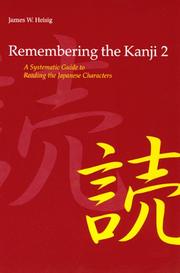
Completes the kanji journey by adding readings (on'yomi and kun'yomi) to the meanings already learned in volume 1, enabling full kanji literacy in authentic texts.
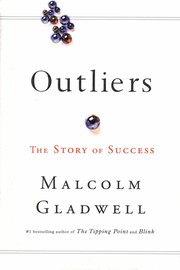
Not a language book, but its research on deliberate practice and the 10,000-hour principle reframes the long Japanese learning journey as a realistic, structured process — essential for avoiding burnout at the advanced stage.
Discussion
Keep reading
Paths that share books, cover the same subject, or open a related topic.