The French New Wave is unusual among film movements in that its directors published first. Godard, Truffaut, Rohmer, Chabrol and Rivette were all writing for Cahiers du Cinéma years before they shot anything, and the arguments they made in print — about authorship, about American genre films, about the "tradition of quality" they despised in French cinema — are directly legible in what they went on to make.
That is why the reading order should not start with the films' style. Start with a survey that establishes who did what and when, read the criticism that formed them, and only then read the directors on each other. Jump straight to Godard's collected writings without the context and it reads as posturing; read it in sequence and it reads as a manifesto being worked out in public.
Two surveys, deliberately
The French New Wave by Naomi Greene places the movement in postwar French culture — the Algerian War, consumer modernity, the generational break — and is strong on why these films felt urgent in 1959 rather than merely novel. The French New Wave edited by Ginette Vincendeau, with Peter Graham, gathers the key critical documents alongside commentary, including the polemics that defined the movement's self-image.
Two books with the same title on one path is awkward, so be clear about the split: Greene for cultural context and interpretation, the Vincendeau collection for primary documents. If you want only one, take Greene first.
For the fullest scholarly account, A history of the French new wave cinema by Richard Neupert is the standard English-language history, tracing the movement from its precursors through the individual careers with real attention to production circumstances — budgets, crews, and the state subsidy rules that made cheap first features possible.
The criticism that created it
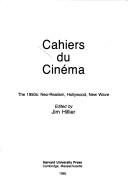
Cahiers du Cinéma; The 1950s, edited by Jim Hillier, is the essential collection: the actual pieces in which the politique des auteurs was formulated, along with the fights about neorealism, Hollywood, and mise en scène. This is the movement's intellectual raw material.
Behind it stands What is cinema?, André Bazin's essays on realism, deep focus, and the photographic image's relationship to reality. Bazin co-founded Cahiers and mentored the group; his preference for long takes and spatial continuity is the theory the young critics both absorbed and rebelled against. Read at least the essays on the ontology of the image and on montage.
Film as Film by V.F. Perkins is the useful third voice — a British critic writing in the Cahiers tradition who works out, more systematically than the French did, what it means to judge a film by its own internal coherence. It sharpens the vocabulary the earlier books use loosely.
The filmmakers on each other
Hitchcock is the famous week-long interview in which Truffaut takes Hitchcock film by film, and it is simultaneously the best case for auteur criticism and the book that made Hitchcock's reputation as an artist rather than an entertainer. Godard on Godard collects Godard's own criticism and interviews, showing the ideas that produced Breathless and after. Then The cinema of François Truffaut by Graham Petrie gives you the outside reading of a director you have just heard talk at length.
Follow the full path in order and the movement resolves into an argument rather than an aesthetic. If national cinemas are your interest, Japanese cinema offers a striking parallel case.
Follow the full ordered path here: Best Books on the French New Wave, in Reading Order.