Studio Ghibli and Hayao Miyazaki: The Best Books to Read, in Order
The Ghibli literature comes in four kinds that get shelved together and should not be read together: film-by-film guides, Miyazaki's own essays and interviews, academic criticism, and art books that are mostly reproductions with very little text. This path separates them and takes them in a useful order — the films first, then Miyazaki in his own words, then the critical biography, then the studio seen from inside and the source manga, and finally Ghibli's place in anime as a whole. One honest limit: almost all of this was written before The Boy and the Heron, so the last film and the studio's succession problem are covered by journalism rather than by any book here.
The films, one at a time
BeginnerWatch the Ghibli features in a considered order and be able to say what distinguishes Miyazaki's films from Takahata's, and where each sits in the studio's history from Nausicaä to The Wind Rises
▸ Study plan for this stage
Pace: Three to four weeks, paced by the films rather than by the pages. Ghibliotheque (192 pages) and Colin Odell's Studio Ghibli (175 pages) are both organised film-by-film, so read only the chapter for the film you watched that evening; two features a week gets you through the Miyazaki and Takahata run
- The difference between a Miyazaki film and a Takahata film — flight and motion against observation and restraint — and why Odell is the book that insists on it
- The studio's own chronology from Nausicaä through The Wind Rises, and which films are Miyazaki's, which are Takahata's, and which are neither
- Hand-drawn animation as a production decision with costs attached, not a style choice
- The pre-Ghibli career — television series and Lupin III — as the place Miyazaki's method was actually formed
- Recurring material: flight, machinery, working girls, pollution, the refusal of a clean villain
- Where each of these three books is willing to say a Ghibli film does not work, and where each protects the studio
- Which films in the Ghibli run are Takahata's, and what does Odell say they do that Miyazaki's do not?
- What does McCarthy cover about the pre-Ghibli television work that Ghibliotheque leaves out entirely?
- Where do Ghibliotheque and Odell disagree in their judgement of the same film, and which reading holds up against the film itself?
- What changed in the studio's production between Nausicaä and Princess Mononoke, on the account these books give?
- Which of these three books is doing criticism and which is doing a viewing guide, and how can you tell from the prose?
- Watch Grave of the Fireflies and Only Yesterday, then read both Ghibliotheque and Odell on each; write down the two places the books disagree and decide which one the film supports.
- Build your own viewing order from Ghibliotheque's film-by-film chapters, then check it against Odell's chronology and note which films you were about to skip.
- Read McCarthy on Future Boy Conan and Lupin III, then rewatch Castle in the Sky looking specifically for what she says was carried over from the television work.
- Keep a one-line note per film — what moves, who works, what is being destroyed — and after ten films see whether a pattern has emerged before any critic hands you one.
Next up: With the films in your head and three outside accounts of them, you are ready to hear Miyazaki argue about the same films himself — which is the point of the next stage, and it only works this way round.

The best entry point in print: Leader and Cunningham take every Ghibli film in turn, with production background, what to look for, and honest judgement including on the weaker ones. Start here and watch alongside it — nothing else in the path works as well without the films in your head.

Published as Studio Ghibli: The Films of Hayao Miyazaki and Isao Takahata. A compact critical guide that is much better than Ghibliotheque on Takahata, who is the studio's other major director and routinely gets flattened into a footnote. Read it second for that reason alone.
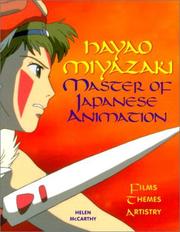
The first serious English-language study, from 1999, covering the films through Princess Mononoke and the pre-Ghibli work — Future Boy Conan, Lupin III, Sherlock Hound — that later books skip. Dated by design and useful precisely for the early career.
Miyazaki and Suzuki in their own words
BeginnerRead Miyazaki's own account of his method — hand-drawn animation, storyboarding without a finished script, his politics and his contempt for parts of his own industry — and see how the studio was actually run
▸ Study plan for this stage
Pace: Four to five weeks. These are essay and interview collections, so read them in sittings of two or three pieces rather than in long stretches — the material repeats deliberately and the repetitions are where his positions harden. Open Library holds no page count for Starting Point 1979–1996, so treat
- Storyboarding without a finished script, and what that method costs everyone downstream of the director
- Miyazaki's argument with his own industry — what he says animation had become and why he refused it
- His politics: the wartime childhood, the union work, the environmentalism, and how directly each shows up in the essays
- The producer's job as Suzuki describes it — how a Ghibli film was financed, greenlit and sold
- How his position darkens between the first collection and the second, particularly on retirement and on younger animators
- The difference between what a director says about a film and what the film does
- What does Miyazaki actually claim is wrong with the animation industry he works in, and does he offer an alternative or only a refusal?
- How does storyboarding without a script change what the producer's job has to be, on Suzuki's account?
- Which of Miyazaki's stated positions changes between Starting Point and Turning Point, and what happened in between that he points to?
- Where does Suzuki's account of a decision differ from Miyazaki's account of the same decision?
- What does Miyazaki say about children as an audience, and does his own work observe it?
- Pick one film covered in both collections and read every piece about it in publication sequence; write the one sentence in which he changes his mind about it.
- Take a production memo from Starting Point and set it against the finished film — mark what survived the process and what did not.
- Read Suzuki on how a specific film got greenlit, then read Miyazaki on making the same film, and list the facts only one of them mentions.
- Collect every place Miyazaki talks about drawing itself — hand, line, movement — and write a paragraph stating his method in your own words, with no adjectives.
Next up: You now have Miyazaki's own account on the record, which is exactly what the critical biography in the next stage is interpreting — and occasionally correcting.
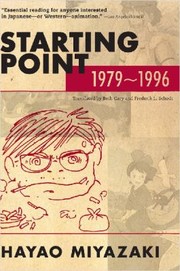
Published as Starting Point: 1979-1996, though the catalogue mangles the dates into the display title. Essays, interviews, memos and production notes covering Nausicaä through Mononoke, and the single most important book here — this is Miyazaki arguing about animation, war, children and drawing, not being written about.
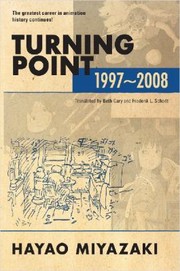
Published as Turning Point: 1997-2008; catalogued with the dates run together in the same way. The sequel volume, covering Spirited Away, Howl's Moving Castle and Ponyo, and noticeably darker on the state of animation and on his own retirement. Read it straight after the first.
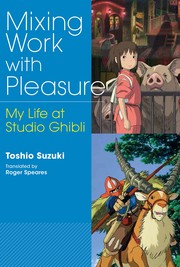
Ghibli's producer on how the studio was actually financed, marketed and held together, including how films were greenlit and how Miyazaki and Takahata were managed. The business half of a story the other books tell only as art.
The critical account
IntermediateSet Miyazaki's recurring preoccupations — flight, pollution, war, working girls, animism, the refusal of clean villains — against his biography and his politics, and judge the academic readings against the primary material you have just read
▸ Study plan for this stage
Pace: Five to six weeks; 740 pages across the three, and they are not read at the same rate. Susan Napier's Miyazakiworld (344 pages) is written for a general reader and can go at 30 to 40 pages a sitting — take it first and take it fast. Raz Greenberg's Hayao Miyazaki (192 pages) is short but academic an
- The biographical reading: wartime childhood, a mother's long illness, union activism, and what Napier claims each explains in the films
- Recurring visual motifs treated as a system rather than as coincidence, which is Cavallaro's contribution
- The European sources — literature, illustration, landscape — that Greenberg traces into the work
- The gap between what Miyazaki says about a film in his essays and what the critics read out of it
- Where biographical criticism becomes circular, and how to spot it in a specific claim
- The difference between a critical biography, a monograph on sources, and a film-by-film reference
- Which of Napier's biographical readings is best supported by the essays you read in the previous stage, and which is the weakest?
- What does Greenberg identify as European in Miyazaki's work that Napier treats as Japanese?
- Which motifs does Cavallaro show recurring across films, and which of them are common to animation generally rather than specific to Miyazaki?
- Where does Napier interpret against Miyazaki's own stated intention, and is she right to?
- What would count as evidence that a biographical reading of a film is wrong?
- Take one Napier claim about Miyazaki's mother and the mothers in the films, find the passage in Starting Point or Turning Point she is drawing on, and judge whether the essay supports the reading.
- Use Cavallaro's chapter on Princess Mononoke as a checklist while rewatching it, and mark each motif she names as present, absent or forced.
- Read Greenberg on one European source, then find that source and read fifty pages of it; write what Miyazaki took and what he left.
- Write two paragraphs on the same film, one in Napier's mode and one in Cavallaro's, and decide which you can defend.
Next up: Criticism read from outside the studio now needs the view from inside it — how the films were physically made, sold abroad, and argued with in Miyazaki's own manga.

The critical biography, and the best book on this list for a general reader: Napier reads the films through Miyazaki's childhood in wartime Japan, his mother's long illness, his union activism and his environmentalism. Read it after his own essays so you can see what she is interpreting.

Catalogued simply as Hayao Miyazaki, which is also the display title of the Academy Museum's 2021 exhibition catalogue edited by Jessica Niebel — check the author before ordering. Greenberg's subject is the television and pre-Ghibli work and the European sources Miyazaki drew on.
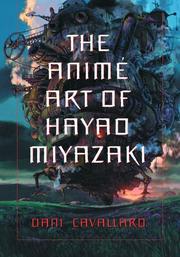
Catalogued as The animé art of Hayao Miyazaki. A film-by-film academic study, drier than Napier and more systematic about visual motifs and their recurrence. The right third book: it is the closest thing to a reference work on the imagery.
Inside the studio, and the source
IntermediateUnderstand how a Ghibli film was physically made and sold abroad, and read the manga that Miyazaki spent twelve years on and that most of his later films argue with
▸ Study plan for this stage
Pace: Three to four weeks, and it splits three ways because the books do. Steve Alpert's Sharing a House with the Never-Ending Man (296 pages) is a memoir and reads like one — a week, easily. Nausicaä of the Valley of the Wind, Vol. 1 (136 pages) is comics: read it slowly, twice, because the panel density
- How a Ghibli film moved from image board to background art to finished cel, as the Mononoke art book documents it
- The manga Nausicaä as a separate and more pessimistic work than the film, and the primary text for Miyazaki's later positions on war and ecology
- What a foreign executive inside the studio could see about Miyazaki's temperament and Suzuki's dealmaking that no critic could
- The Disney negotiation and what international distribution demanded of a studio that had never done it
- Why an art book is worth owning for the production process rather than for its writing
- The difference between the studio's account of itself and an employee's account of the studio
- Where does the Nausicaä manga go that the film does not, and which later Miyazaki film argues with it?
- What does the Mononoke art book show about the order in which a film's imagery was settled?
- What does Alpert say about how decisions were actually made at Ghibli, and does it match Suzuki's version from the previous stage?
- Which of Miyazaki's stated principles survived contact with an American distributor, on Alpert's evidence?
- What is volume one of the manga setting up that a reader who stops here will misread?
- Read the manga's first volume, then rewatch the film and list every plot element it compresses or removes.
- Work through thirty pages of the Mononoke art book with the film paused at the matching scene, and note where the finished frame departs from the image board.
- Pull every anecdote in Alpert about a specific film's production and slot it into the chronology you built in stage one.
- Write a short account of one production decision using Alpert, Suzuki and Miyazaki's own essays, and mark which of the three you trusted where they conflicted.
Next up: One studio is now visible in detail; the last stage puts it back into the industry it came from and mostly refused to behave like.

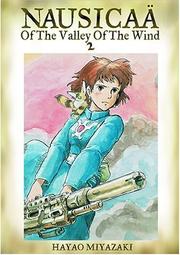
The manga is much longer, stranger and more politically pessimistic than the 1984 film, and it is the primary text for everything Miyazaki does with war and ecology afterwards. Volume one starts a seven-volume work; a two-volume boxed edition also exists if you want it in one purchase.

Catalogued as The art of the Princess Mononoke. Be clear about what the Art of series is: mostly reproductions — image boards, backgrounds, character sheets — with limited commentary, and worth owning for the production process rather than the writing. The companion volumes for Spirited Away and Howl's Moving Castle are the same in kind.

Alpert was the only foreign executive at Ghibli, and this is the funniest and most specific account anywhere of the studio from inside — Miyazaki's temperament, Suzuki's dealmaking, the Disney negotiation, the Berlin premiere. The best last book of this stage.
Ghibli inside anime
IntermediatePlace the studio in the industry it came from and largely refused to behave like, and be able to say what is specific to Ghibli rather than typical of Japanese animation
▸ Study plan for this stage
Pace: Four weeks for 756 pages, and the two books do different jobs. Susan Napier's Anime from Akira to Howl's moving castle (400 pages) is academic film criticism and reads at maybe 25 pages a sitting — take four weeks over it if you are new to the wider medium, and read the Miyazaki chapters last so you
- Anime as an industry built on television economics and outsourced labour, which is Clements's subject and nobody else's here
- What is genuinely specific to Ghibli — director-led, hand-drawn, feature-length — against what is simply normal for Japanese animation
- Napier's critical categories for the medium, and how Miyazaki sits inside or outside each
- What Ghibli's method actually cost, and why almost no other studio could sustain it
- The films — Akira, Evangelion — that define the medium's reputation abroad and that Ghibli is constantly compared against
- How a national industry's history gets written differently by a critic and by a historian
- On Clements's evidence, what in Ghibli's working method was economically abnormal, and how was it paid for?
- Which of Napier's claims about anime as a medium do not hold for Ghibli, and does she say so?
- What does the television production system explain about the look of anime that no aesthetic argument does?
- If you had to name three things that make a Ghibli film identifiable, which of them survive contact with Clements's industrial history?
- Where do Napier's readings of Miyazaki here differ from her readings in Miyazakiworld?
- Read Clements on the economics of television animation, then rewatch twenty minutes of a non-Ghibli series and count the techniques used to save frames.
- Set Napier's chapter on Spirited Away beside her treatment of the same film in Miyazakiworld and write down what the different frame changes.
- Watch Akira and one Evangelion arc, then argue in a page whether Ghibli is the exception to Napier's account of the medium or an instance of it.
- Return to the film list from stage one and mark, using Clements, which production decisions were Ghibli's choice and which were industry standard.
Next up: The path ends here by design: the studio's succession problem and The Boy and the Heron postdate every book on this list, so from this point the reporting is where the story continues.
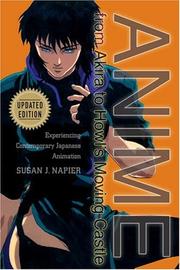
Napier's academic survey of anime as a medium, with substantial Miyazaki chapters set beside Akira, Evangelion and others. This is the expanded edition of her earlier Anime from Akira to Princess Mononoke — the two are separate catalogue records, so buy only one.

Catalogued simply as Anime. The serious industrial history of the medium — studios, labour, television economics, technology. The right last book in the path: it explains what Ghibli's hand-drawn, director-led method actually cost, and why almost nobody else worked that way.
Discussion
Keep reading
Paths that share books, cover the same subject, or open a related topic.