Financial modeling: the best books to build models that actually work
This curriculum builds financial modeling competency in four progressive stages, starting from spreadsheet discipline and accounting fundamentals, moving through integrated three-statement modeling and DCF valuation, and culminating in advanced forecasting and real-world investment decision-making. Because the learner starts at an intermediate level, early-stage books sharpen foundational rigor rather than teach from scratch, allowing faster progression into practitioner-grade techniques.
Spreadsheet Discipline & Accounting Foundations
IntermediateBuild airtight spreadsheet habits and refresh the accounting mechanics (income statement, balance sheet, cash flow statement) that every financial model depends on.
▸ Study plan for this stage
Pace: 4–5 weeks, ~40–50 pages/day. Start with Benninga's chapters on spreadsheet mechanics and best practices (weeks 1–2), then transition to Ittelson's systematic walkthrough of the three financial statements (weeks 3–5). Allocate 2–3 days per week for hands-on modeling practice alongside reading.
- Spreadsheet architecture: cell referencing, formula discipline, and avoiding hard-coded values to ensure auditability and scalability
- The income statement: revenue recognition, cost structure, and operating leverage as the foundation for profitability analysis
- The balance sheet: assets, liabilities, and equity as a snapshot of financial position and the basis for solvency assessment
- The cash flow statement: operating, investing, and financing activities as the true measure of cash generation versus accrual earnings
- Interconnections between the three statements: how changes in one statement cascade through the others in a coherent model
- Accounting mechanics: accruals, depreciation, working capital, and how they differ from cash movements
- Spreadsheet hygiene: documentation, color-coding, separation of inputs from calculations, and version control for professional modeling
- What are the key spreadsheet best practices Benninga emphasizes, and why is avoiding hard-coded values critical for model integrity?
- How do revenue, cost of goods sold, operating expenses, and taxes flow through the income statement to arrive at net income?
- What is the fundamental accounting equation (Assets = Liabilities + Equity), and how does it constrain the balance sheet?
- Why does net income differ from operating cash flow, and what role do working capital changes and capital expenditures play in the cash flow statement?
- How do the three financial statements articulate: which line items link the income statement to the balance sheet and cash flow statement?
- What is the difference between accrual accounting and cash accounting, and why does it matter for financial modeling?
- Build a simple 3-statement model (income statement, balance sheet, cash flow) for a fictional company over 5 years, ensuring all formulas are cell-referenced and no values are hard-coded
- Reconstruct the three financial statements from a real public company's 10-K filing; verify that net income flows to retained earnings and that the balance sheet balances
- Create a working capital schedule showing accounts receivable, inventory, and accounts payable; link it to the income statement and cash flow statement to show the impact on cash
- Build an income statement model where you separate fixed costs, variable costs, and semi-variable costs; test sensitivity to revenue changes to understand operating leverage
- Develop a depreciation and amortization schedule for a company with multiple asset classes; link it to the balance sheet (PP&E) and income statement (depreciation expense)
- Audit a poorly constructed spreadsheet model (provided or self-created with intentional errors) and rewrite it following Benninga's best practices: clear inputs section, logical formula flow, and color-coded cells
Next up: Mastering spreadsheet discipline and the mechanical flow of the three statements equips you to move into valuation techniques and scenario analysis, where the integrity of your model's architecture directly determines the reliability of your outputs.
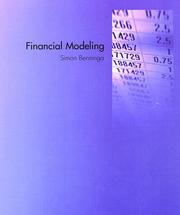
The canonical academic-practitioner bridge for financial modeling; establishes Excel best practices, model architecture, and core finance applications in one rigorous volume — the right starting anchor for an intermediate learner.
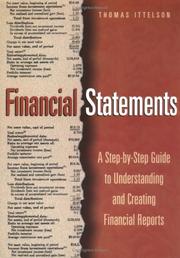
A clear, visual walkthrough of how the three statements interconnect; reading this immediately after Benninga ensures the accounting logic behind every model line item is fully internalized before building anything complex.
Three-Statement Modeling & Valuation Core
IntermediateConstruct a fully integrated three-statement operating model from scratch and understand how it feeds directly into a DCF valuation.
▸ Study plan for this stage
Pace: 6–8 weeks, ~40–50 pages/day, focusing on Chapters 4–7 (Financial Statements & Valuation sections)
- The three-statement model architecture: how P&L, Balance Sheet, and Cash Flow Statement interconnect through working capital, capex, and financing
- Income statement mechanics: revenue drivers, operating margins, tax rates, and how they cascade into EBIT and net income
- Balance sheet dynamics: asset/liability relationships, working capital calculation (AR, AP, inventory), and how changes feed into cash flow
- Cash flow statement construction: operating cash flow (indirect method), investing cash flow, financing cash flow, and free cash flow calculation
- Integration logic: how net income links to operating cash flow, how capex and working capital changes impact cash, and how financing balances the model
- DCF valuation framework: terminal value assumptions, discount rate (WACC) fundamentals, and how the three-statement model outputs feed into enterprise value
- Sensitivity analysis and scenario modeling: testing assumptions and understanding key value drivers
- Model auditing and circularity: ensuring the model balances and identifying circular references
- How do changes in accounts receivable and accounts payable flow through the three-statement model, and why does this matter for cash flow?
- Walk through the complete path from revenue growth to free cash flow: what are all the intermediate steps and adjustments?
- What is the relationship between net income and operating cash flow, and why are they different?
- How does capex and depreciation interact in the three-statement model, and what is their impact on both cash flow and valuation?
- Explain how you would construct a terminal value in a DCF using outputs from your three-statement model, and what assumptions drive it
- If you increase revenue growth assumptions in your model, trace through all the line items that change across all three statements
- Build a three-statement model for a real or fictional company using 5 years of historical financials and 5 years of projections; ensure the balance sheet balances and cash flow ties out
- Create a detailed working capital schedule (AR, AP, inventory) and manually trace how changes flow into the cash flow statement
- Construct a free cash flow waterfall from net income, showing every adjustment (D&A, capex, working capital, taxes) step-by-step
- Build a simple DCF valuation model using your three-statement projections; calculate WACC, terminal value, and enterprise value
- Run sensitivity analysis on 3–4 key assumptions (revenue growth, EBIT margin, capex as % of revenue, terminal growth rate) and create a sensitivity table
- Audit your model for circularity: identify any circular references and resolve them using iteration or restructuring
Next up: This stage equips you with the foundational integrated model and valuation mechanics needed to move into advanced topics like LBO modeling, M&A analysis, and scenario-based valuation where the three-statement model becomes the engine for more complex financial structures.
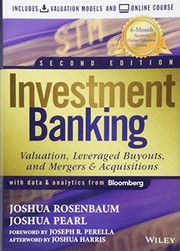
The definitive Wall Street practitioner manual for building three-statement models, DCF, and comparable company analyses; its step-by-step case studies make it the single most important book in this curriculum.
Provides the conceptual and empirical depth behind DCF — WACC, ROIC, growth drivers — that transforms a mechanical model into a genuine valuation judgment; read after Rosenbaum to understand the 'why' behind every assumption.
Forecasting & Assumptions
IntermediateDevelop rigorous, evidence-based forecasting skills — revenue drivers, scenario analysis, and sensitivity tables — so model assumptions reflect real business and economic dynamics.
▸ Study plan for this stage
Pace: 4–5 weeks, ~40–50 pages/day, focusing on chapters covering financial statement analysis, forecasting frameworks, and assumption-building methodologies
- Revenue driver decomposition: breaking down top-line growth into unit volume, pricing, and mix effects to build granular, defensible forecasts
- Historical financial statement analysis as a foundation for assumptions: using past performance, margins, and capital efficiency to inform forward projections
- Scenario and sensitivity analysis: constructing base, bull, and bear cases to stress-test assumptions and quantify downside/upside risk
- Working capital and capital expenditure forecasting: modeling cash conversion cycles, inventory turns, receivables, and capex as a percentage of revenue
- Linking business strategy to financial assumptions: ensuring forecasts reflect competitive positioning, market dynamics, and management guidance rather than arbitrary extrapolation
- Assumption documentation and auditability: maintaining clear, traceable links between business logic and numerical inputs so forecasts can be challenged and refined
- How do you decompose a company's revenue forecast into its core drivers (volume, price, mix), and why is this more robust than simple trend extrapolation?
- What role does historical financial statement analysis play in setting realistic assumptions for future periods, and what red flags suggest an assumption is unsustainable?
- How do you construct a three-scenario model (base, bull, bear), and what key assumptions typically vary most across scenarios?
- How should you forecast working capital items (receivables, inventory, payables) and capital expenditures, and what metrics help validate these assumptions?
- How do you ensure your forecasting assumptions are grounded in business fundamentals and competitive dynamics rather than mechanical extrapolation?
- What is the relationship between assumption sensitivity and model risk, and how do you use sensitivity tables to identify which assumptions matter most?
- Conduct a 5–10 year historical financial statement analysis of a real company: calculate key margins (gross, operating, net), asset turnover, and cash conversion metrics to establish baseline patterns and identify structural breaks
- Decompose a company's historical revenue into volume, price, and mix components; project each driver separately for 3–5 years based on industry trends, competitive positioning, and management guidance
- Build a three-scenario revenue and EBIT forecast (base, bull, bear) for a company, explicitly documenting the key assumption differences across scenarios (e.g., market share, pricing power, cost inflation)
- Model working capital as a percentage of revenue and capex as a percentage of revenue for a real company; validate these assumptions against industry peers and historical norms
- Create a sensitivity table showing how EBIT or free cash flow changes with ±10–20% swings in your three most critical assumptions (e.g., revenue growth, operating margin, capex intensity)
- Write a one-page assumption summary for a financial model: document the logic, data sources, and peer/historical benchmarks for your top 5–6 forecast assumptions; identify which are most uncertain
Next up: This stage equips you with disciplined, evidence-based forecasting and assumption-building skills that form the foundation for the next stage—valuation and DCF modeling—where these projections are discounted to present value and sensitivity analysis directly informs enterprise value ranges.

Teaches a structured framework for analyzing strategy, accounting quality, and competitive position before touching a spreadsheet — essential for making defensible forecast assumptions.
A research-grounded compendium of forecasting methods (judgmental, statistical, scenario-based) that directly improves the quality of the revenue and cost projections inside any financial model.
Advanced Valuation & Real Investment Decisions
ExpertApply financial models to real investment and capital-allocation decisions, including LBO analysis, relative valuation, and the behavioral pitfalls that distort model outputs.
▸ Study plan for this stage
Pace: 8–10 weeks, ~40–50 pages/day, with 2–3 days per week dedicated to case studies and modeling exercises
- Behavioral biases in valuation: anchoring, overconfidence, herding, and how they distort DCF and relative valuation models
- The dark side of valuation: how managers and analysts manipulate assumptions to justify predetermined conclusions
- LBO (Leveraged Buyout) mechanics: debt structures, return calculations, and sensitivity to leverage and exit multiples
- Relative valuation frameworks: multiples-based approaches (EV/EBITDA, P/E, EV/Sales) and their limitations versus intrinsic valuation
- Intrinsic valuation fundamentals: DCF, terminal value estimation, and the critical role of growth and discount rate assumptions
- Valuation across different company types: mature firms, high-growth companies, cyclical businesses, and distressed situations
- Real-world constraints on valuation: market sentiment, liquidity, regulatory environment, and macroeconomic cycles
- Bridging models to decisions: how to use valuation outputs responsibly in M&A, capital allocation, and investment decisions
- What are the primary behavioral biases that distort valuation models, and how do they manifest in analyst reports and management guidance?
- How do managers use accounting choices, assumption manipulation, and selective disclosure to justify overvalued acquisitions or investments?
- Walk through an LBO analysis: how do you calculate equity returns, and what are the key drivers (leverage, growth, exit multiple)?
- When is relative valuation appropriate versus intrinsic valuation, and what are the pitfalls of relying solely on multiples?
- How do you estimate a defensible terminal value in a DCF, and why is this the most critical and fragile assumption?
- What valuation adjustments are necessary for cyclical, distressed, or high-growth companies, and how do you avoid overpaying or underselling?
- How should you adjust your valuation model for real-world constraints like illiquidity, regulatory risk, and market sentiment?
- Read 'The Dark Side of Valuation' and annotate 5–10 case studies where valuation went wrong; for each, identify the behavioral bias or assumption error that drove the mistake
- Build a 3-statement LBO model (income statement, balance sheet, cash flow) for a real acquisition target; calculate IRR and MOIC under base, bull, and bear cases
- Conduct a relative valuation analysis on 3–5 comparable companies in the same industry; calculate key multiples and identify outliers; then cross-check against intrinsic DCF value
- Estimate a DCF for a mature company and a high-growth company; vary terminal growth rate and discount rate by ±1–2% and document sensitivity; discuss which assumptions are most fragile
- Critique a real analyst report or management presentation on a major M&A deal; identify hidden assumptions, aggressive accounting choices, and behavioral red flags
- Model a cyclical business (e.g., steel, automotive) across a full business cycle; adjust WACC and growth assumptions for different phases; discuss valuation timing
- Perform a post-mortem on a failed acquisition or overvalued IPO from the past decade; reconstruct the original valuation model and identify where it broke down
Next up: This stage equips you with both the technical rigor and the skepticism needed to apply financial models to real capital-allocation decisions; the next stage will likely deepen your ability to synthesize valuation with corporate strategy, portfolio management, or specialized contexts (e.g., startups, private equity, emerging markets) where standard models must be adapted.
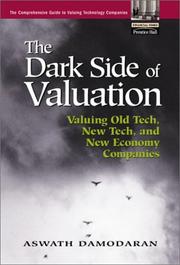
Damodaran tackles the hardest valuation cases — high-growth, distressed, and intangible-heavy companies — pushing the learner to stress-test and adapt standard DCF models to messy real-world situations.
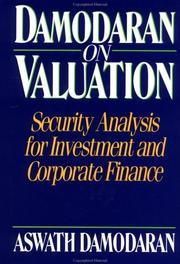
A practitioner-focused synthesis of all valuation approaches (DCF, multiples, real options) with worked examples; reading it last consolidates everything into a coherent, decision-ready framework.
Discussion
Keep reading
Paths that share books, cover the same subject, or open a related topic.