Auditing and Assurance: The Best Books, In Order
This curriculum builds a rigorous, professional-grade understanding of auditing and assurance, starting from the conceptual and regulatory foundations and advancing through internal controls, risk assessment, evidence, and the modern audit environment. Because the learner begins at an intermediate level, early stages consolidate core frameworks before moving into specialist depth on sampling, fraud, and technology-driven auditing.
Foundations & Frameworks
IntermediateEstablish a solid command of auditing standards, the audit process lifecycle, and the conceptual role of assurance — creating the shared vocabulary needed for every subsequent stage.
▸ Study plan for this stage
Pace: 4–5 weeks, ~40–50 pages/day (approximately 280–350 pages total across both texts)
- Auditing standards (GAAS, PCAOB, IAASB) and their hierarchical structure
- The audit process lifecycle: planning, fieldwork, and reporting phases
- Risk assessment and materiality as foundational audit concepts
- The auditor's responsibility for detecting fraud and illegal acts
- Assurance engagement types and the spectrum from audit to review to compilation
- Internal controls and their role in the audit strategy
- Audit evidence: types, quality, and sufficiency standards
- Professional skepticism and ethical responsibilities of auditors
- What are the key differences between GAAS, PCAOB standards, and IAASB standards, and when does each apply?
- Walk through the major phases of an audit engagement from acceptance through reporting—what happens in each phase and why?
- How do auditors determine materiality, and how does it influence the scope and nature of audit procedures?
- What is the auditor's responsibility for detecting fraud and illegal acts, and what are the limits of that responsibility?
- Explain the relationship between risk assessment, internal controls, and the design of audit procedures.
- What types of assurance services exist beyond a full financial statement audit, and how do they differ?
- What constitutes sufficient and appropriate audit evidence, and how do auditors evaluate it?
- How does professional skepticism shape the auditor's approach to planning and executing an audit?
- Create a side-by-side comparison matrix of GAAS, PCAOB, and IAASB standards, noting which apply to different entity types (public companies, non-profits, small businesses).
- Map out the complete audit process lifecycle using a flowchart or timeline, identifying decision points and deliverables at each stage.
- Work through a case study: given a client scenario (industry, size, complexity), determine materiality levels for different account categories and explain your reasoning.
- Develop a fraud risk assessment for a hypothetical company—identify high-risk areas, design procedures to address them, and document your professional skepticism.
- Analyze a sample audit engagement letter and internal control questionnaire; identify the key terms, responsibilities, and scope limitations.
- Compare three different assurance engagement types (audit, review, compilation) by creating a table showing standards, procedures, evidence requirements, and reporting differences.
- Review a real or hypothetical audit report and trace back to the evidence and procedures that would support each assertion in the auditor's opinion.
- Conduct a mock materiality discussion: given financial statements with various account balances and qualitative factors, justify your materiality threshold and performance materiality.
Next up: This stage equips you with the conceptual vocabulary, standards framework, and process discipline needed to dive into specialized audit areas—such as specific account cycles, industry-specific audits, or advanced risk assessment techniques—where you'll apply these foundations to real-world complexity.
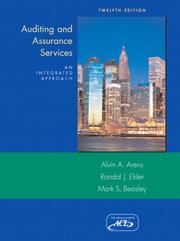
The canonical university-level text that maps the entire audit process — from engagement acceptance to report issuance — using a risk-based framework. Reading it first ensures every later topic has a proper conceptual home.

Complements Arens by emphasizing professional standards (PCAOB, AICPA, IAASB) and ethical obligations; reading it second reinforces the regulatory scaffolding before diving into specialist areas.
Internal Controls & Risk Assessment
IntermediateDeeply understand how internal control systems are designed, evaluated, and tested, and how auditors translate control weaknesses into calibrated risk assessments.
The authoritative source on the five components of internal control; every auditor must read the primary COSO document before studying how others interpret it.
Extends internal control thinking to entity-wide risk management; reading it after the IC Framework shows how risk appetite and strategy feed directly into audit scope decisions.
Audit Evidence & Sampling
IntermediateMaster the theory and practice of gathering sufficient appropriate evidence, including the statistical and non-statistical sampling methods auditors use to draw defensible conclusions.
▸ Study plan for this stage
Pace: 4–5 weeks, ~25–30 pages/day (approximately 150–180 pages total)
- Audit sampling fundamentals: definition, objectives, and when to use sampling versus 100% examination
- Statistical sampling methods: stratification, sample size determination, and projection of results to the population
- Non-statistical (judgmental) sampling: design, execution, and evaluation without formal statistical inference
- Sampling risk: detection risk, sampling risk, and non-sampling risk, and how they relate to audit risk
- Attribute sampling: testing controls, calculating sample sizes, and evaluating control effectiveness
- Variables sampling: estimating account balances, mean-per-unit, ratio estimation, and difference estimation methods
- Sample selection techniques: random selection, systematic selection, and haphazard selection in practice
- Evaluation of sample results: projecting errors, determining tolerable and expected misstatement, and drawing audit conclusions
- What are the key differences between statistical and non-statistical sampling, and when should an auditor use each approach?
- How do auditors determine appropriate sample size for attribute sampling, and what factors influence this decision?
- Explain the relationship between sampling risk, detection risk, and overall audit risk in the audit risk model.
- How should an auditor evaluate and project sample results to reach a conclusion about the population?
- What are the main variables sampling methods (mean-per-unit, ratio estimation, difference estimation), and how do they differ in application?
- How do auditors select samples in practice, and what are the strengths and weaknesses of different selection methods?
- Work through a complete attribute sampling case: design a sample to test a control, calculate required sample size using Guy's tables or formulas, execute the sample, and evaluate results to determine if the control is operating effectively.
- Perform a variables sampling exercise using mean-per-unit method: select a sample from a population of transactions, calculate the sample mean and standard deviation, project to the population, and construct a confidence interval around the estimate.
- Design a stratified sampling plan for an account balance: identify strata, determine allocation method, calculate sample sizes per stratum, and explain why stratification improves precision.
- Analyze a real or realistic audit scenario: identify the audit objective, determine whether statistical or non-statistical sampling is appropriate, specify the sampling method, and document the sampling plan.
- Calculate sampling risk and non-sampling risk for a given audit: determine acceptable risk levels, relate them to sample size, and explain trade-offs between cost and precision.
- Compare ratio estimation versus difference estimation on a sample dataset: calculate both estimates, compare confidence intervals, and explain when each method is most appropriate.
Next up: This stage equips you with the technical foundation to design and execute defensible sampling plans, preparing you to move into the next stage where you'll apply these sampling methods within the broader context of specific audit procedures (such as testing receivables, inventory, or payroll) and integrating evidence into overall audit conclusions.
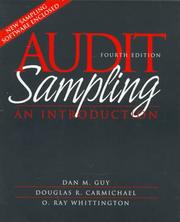
The AICPA's definitive guide to both attribute and variables sampling; it should be read before any advanced evidence text because it grounds the reader in how sample size, risk of incorrect acceptance, and tolerable misstatement interact.
Fraud, Skepticism & Judgment
ExpertDevelop the professional skepticism and fraud-detection mindset that separates competent auditors from excellent ones, understanding how cognitive biases and incentive structures affect audit quality.
▸ Study plan for this stage
Pace: 8–10 weeks, ~40–50 pages/day. Start with "Fraud Examination" (4–5 weeks, ~400 pages), then move to "Financial Shenanigans" (3–4 weeks, ~300 pages). Allocate 1 week for integration and case review.
- The fraud triangle (pressure, opportunity, rationalization) and how to recognize each element in audit contexts
- Red flags and warning signs specific to different fraud schemes (asset misappropriation, financial statement fraud, corruption)
- Cognitive biases that impair auditor judgment (confirmation bias, anchoring, overconfidence) and techniques to mitigate them
- The distinction between aggressive accounting and outright fraud, and how Schilit's shenanigans framework helps identify the gray zone
- Common financial statement manipulation techniques (revenue recognition tricks, expense capitalization, related-party transactions)
- The role of professional skepticism as an active, questioning mindset rather than passive compliance
- How incentive structures (management pressure, auditor fee pressure, career concerns) create blind spots in fraud detection
- Practical fraud detection procedures: analytical procedures, substantive testing, and inquiry techniques that go beyond standard audit steps
- What are the three elements of the fraud triangle, and how would you assess each during an audit of a high-risk client?
- Describe five red flags from Albrecht's framework that would prompt you to escalate fraud risk in an audit, and explain why each matters.
- How do cognitive biases like confirmation bias and anchoring affect audit quality, and what specific procedures would you implement to counteract them?
- Using Schilit's 'Financial Shenanigans' framework, identify and classify three common manipulation techniques (e.g., revenue inflation, expense deferral) and explain how an auditor would detect each.
- What is the difference between aggressive accounting and fraud, and why is this distinction critical for auditor judgment?
- How do management incentives and auditor fee pressure create conditions for fraud, and what safeguards would you recommend?
- Fraud Triangle Case Study: Take a real or hypothetical fraud case from Albrecht's examples and map it to the fraud triangle. Identify the pressure, opportunity, and rationalization elements, then propose how an auditor could have detected it earlier.
- Red Flag Checklist Development: Create a detailed red flag checklist for a specific industry (e.g., retail, manufacturing, SaaS) by synthesizing Albrecht's fraud schemes with Schilit's shenanigans. Test it against a provided financial statement.
- Bias Mitigation Procedure Design: Design an audit program for a revenue recognition audit that explicitly counters confirmation bias and anchoring. Include specific analytical procedures, sample sizes, and inquiry scripts.
- Financial Shenanigans Analysis: Obtain a real company's 10-K or annual report (or use a case study provided in Schilit's book). Classify any suspicious accounting practices using Schilit's framework and propose substantive procedures to test them.
- Skepticism Role-Play: Conduct a mock management inquiry session where you practice asking probing questions about high-risk areas (e.g., related-party transactions, unusual journal entries). Record yourself and self-assess for tone, follow-up depth, and resistance to management explanations.
- Incentive Structure Analysis: Map the incentive structures (compensation, fee pressure, promotion criteria) affecting auditors and management in a case scenario. Identify conflict points and propose governance or procedural controls to reduce fraud risk.
Next up: This stage equips you with the mindset and toolkit to detect fraud and aggressive accounting; the next stage will focus on translating this skepticism into specific audit methodologies and evidence-gathering techniques that operationalize fraud detection within formal audit frameworks.

The leading text on fraud schemes, red flags, and investigative techniques; placed here so the learner can map fraud risks onto the control and evidence frameworks already mastered.
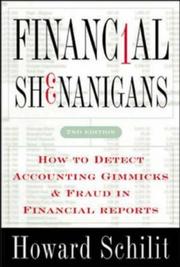
Provides real-world case studies of earnings manipulation and disclosure tricks, sharpening the skeptical mindset through vivid examples that pure standards-based texts cannot offer.
The Modern Audit: Technology, Data & the Future
ExpertUnderstand how data analytics, IT controls, continuous auditing, and emerging technologies are reshaping audit methodology and the auditor's professional role.
▸ Study plan for this stage
Pace: 4–5 weeks, ~40–50 pages/day. Week 1: Weiss chapters 1–4 (IT governance & compliance frameworks). Week 2: Weiss chapters 5–8 (infrastructure controls & risk assessment). Week 3: Cascarino chapters 1–4 (analytics fundamentals & data preparation). Week 4: Cascarino chapters 5–8 (analytical procedures &
- IT control frameworks (COBIT, ISO 27001) and their role in audit planning and evidence gathering
- Compliance auditing in IT infrastructure: network security, access controls, change management, and segregation of duties
- Data analytics methodology: data sourcing, cleaning, validation, and preparing audit datasets for testing
- Continuous auditing and monitoring techniques: automated controls, real-time testing, and exception reporting
- Analytical procedures: benching, trend analysis, ratio analysis, and anomaly detection to identify audit risks
- The auditor's evolving role: from manual sampling to population-wide testing and data-driven risk stratification
- Emerging technologies in audit: AI, machine learning, and blockchain implications for audit evidence and methodology
- Integrating IT controls and data analytics into a cohesive audit strategy for complex, technology-dependent organizations
- What are the primary IT control frameworks (COBIT, ISO 27001) and how do they inform an auditor's compliance audit plan?
- How do IT infrastructure controls—such as access controls, change management, and segregation of duties—reduce audit risk and what evidence should an auditor gather to test them?
- What are the key steps in preparing and validating audit data, and why is data quality critical to the reliability of analytical procedures?
- How do continuous auditing and automated monitoring techniques differ from traditional periodic audits, and what are their advantages and limitations?
- What analytical procedures (benching, trend analysis, ratio analysis, anomaly detection) are most effective for identifying high-risk transactions or unusual patterns?
- How is the auditor's role changing due to data analytics and technology, and what new skills and competencies are required?
- Map a sample organization's IT infrastructure to COBIT or ISO 27001 domains; identify control gaps and draft audit procedures to test key controls.
- Download a real or synthetic dataset (e.g., transaction log, user access records); perform data cleaning, validation, and profiling using Excel or Python to prepare it for audit testing.
- Conduct a benching analysis on a provided financial or operational dataset: calculate expected values, identify outliers, and document your findings and audit conclusions.
- Design a continuous auditing dashboard or monitoring rule set for a specific IT control (e.g., user access, change logs); define thresholds, alerts, and remediation workflows.
- Perform a trend and ratio analysis on 3–5 years of sample data; identify anomalies, investigate root causes, and propose audit procedures to address high-risk areas.
- Write a brief audit program that integrates IT controls testing (from Weiss) with data analytics procedures (from Cascarino) for a realistic scenario (e.g., revenue cycle, payroll, inventory).
Next up: This stage equips auditors with the technical foundation and analytical toolkit to audit modern, data-intensive organizations; the next stage will likely deepen specialization in specific audit domains (e.g., financial statement audits, operational audits, fraud detection) or explore advanced topics such as audit quality, professional judgment under uncertainty, and emerging regulatory frameworks.

Grounds the learner in IT general controls, application controls, and compliance auditing in technology environments — essential before tackling data-driven audit approaches.

Closes the curriculum by showing how analytics tools transform risk assessment, sampling, and evidence gathering in practice, connecting every prior stage to the contemporary audit environment.
Discussion
Keep reading
Paths that share books, cover the same subject, or open a related topic.