Best Books to Launch a Financial Analyst Career (in Order)
This curriculum builds a financial analyst from the ground up across four tightly sequenced stages: first establishing the accounting language that underpins all analysis, then mastering valuation theory, then translating that theory into the Excel-based financial models employers actually build, and finally sharpening the interview and technical skills tested in the hiring process. Each stage assumes the prior one is complete, so concepts compound rather than repeat.
Accounting Foundations
IntermediateRead and interpret all three financial statements with confidence, understand how they interlink, and spot the accounting choices that affect analysis — the non-negotiable language of every analyst role.
▸ Study plan for this stage
Pace: 8–10 weeks, ~40–50 pages/day (mix of reading and active note-taking). Week 1–3: Ittelson's "Financial Statements" (foundational mechanics); Week 4–6: Fridson's "Financial Statement Analysis" (analytical depth); Week 7–8: Cross-book integration and case studies; Week 9–10: Review and capstone analysi
- The three financial statements (income statement, balance sheet, cash flow statement) as an integrated system: how transactions flow through each and how they articulate together
- Double-entry bookkeeping and the accounting equation (Assets = Liabilities + Equity) as the foundation for all financial reporting
- Revenue recognition, expense matching, and accrual accounting versus cash accounting—the choices analysts must scrutinize
- Working capital management: how current assets, current liabilities, and operating cycles affect liquidity and solvency analysis
- Earnings quality and cash flow quality: distinguishing sustainable earnings from accounting manipulations and one-time items
- Key accounting policies and estimates (depreciation methods, inventory valuation, allowances) that materially impact reported numbers
- Financial statement interconnections: how net income flows to retained earnings, how operating cash flow reconciles to net income, how financing activities affect the balance sheet
- Red flags in financial statements: unusual accruals, aggressive revenue recognition, off-balance-sheet financing, and other analyst warning signs
- Explain how a single business transaction (e.g., a sale on credit or a debt issuance) flows through all three financial statements and why they must remain in balance
- What is the difference between accrual-based net income and operating cash flow, and why would an analyst be concerned if the two diverge significantly?
- Identify and explain three accounting choices (e.g., depreciation method, revenue recognition policy, inventory valuation) that could materially affect reported earnings and how you would adjust for them in analysis
- Walk through the articulation of the balance sheet and income statement: how does net income from the P&L connect to retained earnings on the balance sheet?
- What are common red flags in financial statements that suggest earnings quality issues or potential accounting manipulation, and how would you investigate them?
- Compare the cash flow statement's three sections (operating, investing, financing) and explain what each reveals about a company's financial health and capital allocation strategy
- Using a real company's annual report (10-K), manually trace a major transaction (e.g., a capital expenditure or debt issuance) through all three financial statements to verify articulation
- Reconstruct a simplified income statement and balance sheet from a series of journal entries; verify that the accounting equation holds and that net income flows to retained earnings
- Analyze a company's revenue recognition policy (from MD&A or notes) and identify potential red flags; estimate the impact on earnings quality if the policy were more or less aggressive
- Calculate working capital, current ratio, and cash conversion cycle for a company; explain how changes in these metrics signal operational or financial stress
- Compare operating cash flow to net income for a company over 3–5 years; identify periods of divergence and investigate the causes (accruals, one-time items, changes in working capital)
- Select two companies in the same industry with different depreciation methods or inventory valuation approaches; adjust their reported earnings to a common basis and compare profitability
Next up: This stage equips you with the language and mechanics of financial reporting so that in the next stage you can move beyond reading statements to analyzing them—applying valuation models, assessing competitive positioning, and making investment decisions grounded in a deep understanding of what the numbers actually mean.
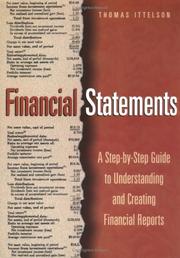
A visual, plain-English walkthrough of how the income statement, balance sheet, and cash flow statement connect. Start here to build intuitive fluency before tackling technical depth.
Moves beyond reading statements to critically analyzing them — quality of earnings, red flags, and ratio interpretation. Bridges accounting literacy to the analytical mindset employers expect.
Valuation Theory
IntermediateUnderstand the core frameworks — DCF, comparable companies, precedent transactions — and develop the economic intuition for why businesses are worth what they are worth.
▸ Study plan for this stage
Pace: 8–10 weeks, ~40–50 pages/day. Start with "The Little Book of Valuation" (2–3 weeks), move to "Investment Valuation" (4–5 weeks), finish with "The Intelligent Investor" (2–3 weeks).
- Discounted Cash Flow (DCF) mechanics: projecting free cash flows, estimating terminal value, and discounting at appropriate WACC
- Relative valuation using multiples: EV/EBITDA, P/E, Price-to-Book, and when each multiple is most reliable
- Precedent transaction analysis: extracting valuation benchmarks from historical M&A deals and understanding deal premiums
- Terminal value estimation: perpetuity growth method vs. exit multiple method and sensitivity to long-term assumptions
- Weighted Average Cost of Capital (WACC): calculating cost of equity, cost of debt, and blending them appropriately
- Margin of safety and intrinsic value: Graham's philosophy that price ≠ value and the importance of a valuation cushion
- Economic moats and competitive advantages: how sustainable competitive positioning drives long-term cash flow generation
- Valuation in different contexts: mature stable companies vs. high-growth firms vs. distressed situations
- Walk through a complete DCF valuation: how would you project 5-year free cash flows, estimate terminal value, and calculate enterprise value for a mature industrial company?
- When would you use EV/EBITDA vs. P/E vs. Price-to-Book multiples, and what are the key limitations of each approach?
- How do you calculate WACC, and why does the cost of equity differ from the cost of debt? What happens to valuation if WACC increases by 1%?
- Explain the difference between intrinsic value and market price. Why does Graham emphasize a margin of safety, and how would you quantify it?
- You're analyzing two companies in the same industry with identical P/E ratios. Why might one be a better investment than the other based on valuation theory?
- What is a terminal value, why is it often 60–80% of enterprise value in a DCF, and how sensitive is your valuation to terminal growth rate assumptions?
- Build a 3-statement DCF model (income statement, balance sheet, cash flow statement projections) for a real public company using 5-year historical financials; calculate WACC from scratch using current market data
- Run a sensitivity analysis on your DCF: create a two-way table showing how enterprise value changes with ±1% changes in WACC and terminal growth rate
- Gather 3–5 recent comparable company transactions in an industry of your choice; calculate implied EV/EBITDA, EV/Revenue, and P/E multiples; compare to current market multiples
- Analyze a precedent transaction (M&A deal) from the past 2 years: extract the purchase price, calculate the deal premium, and reverse-engineer the buyer's implied valuation assumptions
- Value the same company using three methods (DCF, comparable companies, precedent transactions) and reconcile the range of values; write a one-page summary of which method you trust most and why
- Read Graham's analysis of a specific company in 'The Intelligent Investor' (e.g., a case study in the chapters); replicate his margin of safety calculation and critique his assumptions by today's standards
Next up: This stage equips you with the theoretical and practical foundations to value any business; the next stage will apply these frameworks to real-world scenarios—sector-specific valuation, dealing with uncertainty, and building conviction in your investment thesis.

Damodaran is the definitive authority on valuation; this concise book delivers the full conceptual framework — intrinsic vs. relative value, WACC, growth — without overwhelming detail. Read it first to build the mental model.

The comprehensive reference that expands every concept from the Little Book. After the primer, this is where you go deep on DCF mechanics, multiples, and sector-specific approaches used by real analysts.
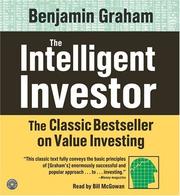
Instills the margin-of-safety mindset and value discipline that separates rigorous analysts from mechanical model-runners — essential context for why valuation judgment matters.
Financial Modeling
IntermediateBuild integrated three-statement models, LBO models, and DCF models in Excel to the standard expected in investment banking, equity research, and corporate finance roles.
▸ Study plan for this stage
Pace: 8–10 weeks, ~40–50 pages/day (Benninga), then 3–4 weeks on Rosenbaum's modeling chapters at ~30 pages/day
- Three-statement model architecture: linking income statement, balance sheet, and cash flow statement with circular references and debt schedules
- Sensitivity analysis and scenario modeling to stress-test assumptions and understand model drivers
- Discounted cash flow (DCF) valuation: building explicit and terminal value periods, calculating WACC, and interpreting intrinsic value
- Leveraged buyout (LBO) model mechanics: sources and uses, debt paydown schedules, equity returns (IRR and MOIC), and exit scenarios
- Excel best practices for financial models: formula auditing, dynamic inputs, named ranges, and avoiding circular errors
- Comparable company analysis and precedent transaction analysis as inputs to valuation models
- Working capital, capex, and depreciation modeling as drivers of free cash flow
- Terminal value calculations and sensitivity to perpetual growth assumptions
- How do you structure a three-statement model so that the balance sheet balances and cash flow ties to net income, and what are common pitfalls in circular references?
- Walk through the steps to build a DCF model: how do you forecast revenues and EBIT, calculate unlevered free cash flow, determine WACC, and calculate enterprise value?
- What is an LBO model, and how do you calculate equity returns (IRR and MOIC) given a purchase price, debt structure, and exit assumptions?
- How do you build a sensitivity table in Excel, and what are the key value drivers you should test in a financial model?
- What is the difference between comparable company analysis and precedent transactions, and how do their outputs feed into valuation?
- How do working capital changes, capex, and depreciation affect free cash flow, and how do you model these items dynamically?
- Build a complete three-statement model for a real public company (e.g., from SEC filings) with 5 years of historical data and 5 years of projections; ensure the balance sheet balances and cash flow reconciles
- Create a DCF valuation model for the same company, calculating WACC from scratch (cost of equity via CAPM, cost of debt from filings), forecasting unlevered FCF, and deriving enterprise and equity value
- Build a sensitivity table showing how DCF enterprise value changes across a 2×2 matrix of WACC and terminal growth rate assumptions
- Model a leveraged buyout scenario: assume a private equity firm acquires your chosen company at a 20–30% premium; structure debt (senior/subordinated), model 5-year operations, and calculate IRR and MOIC at exit
- Reconstruct a real M&A transaction from an investment banking case study or precedent transaction database; build the sources and uses, debt schedule, and pro forma financials
- Practice building a comparable company analysis: pull financial metrics (EV/EBITDA, P/E, EV/Sales) for 5–8 peers, calculate median multiples, and apply them to your model company to triangulate valuation
Next up: Mastery of integrated financial models and valuation techniques positions you to tackle advanced topics such as merger models, equity research reports, and real-world deal analysis where these frameworks are applied to complex multi-year transactions and investment decisions.

The canonical academic-to-practitioner bridge for Excel-based modeling. Covers three-statement models, option pricing, and portfolio models with hands-on spreadsheet examples — read this first to learn model architecture.
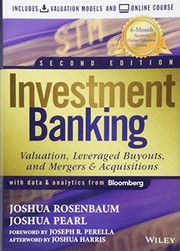
The industry-standard guide to comparable company analysis, precedent transactions, DCF, and LBO modeling as practiced on Wall Street. Its step-by-step templates mirror exactly what analysts build on the job.
Interview Mastery & Employer-Tested Skills
ExpertAce technical and behavioral interviews by knowing exactly what questions are asked, how to walk through a model or valuation live, and how to present analysis the way senior professionals expect.
▸ Study plan for this stage
Pace: 8–10 weeks, ~40–50 pages/day, with 2–3 days per week dedicated to live modeling practice and mock interviews
- Technical interview frameworks: how to approach valuation, M&A, LBO, and accretion/dilution questions systematically
- Mental math and quick calculation shortcuts for financial metrics (multiples, returns, growth rates) under time pressure
- Building and walking through a 3-statement model and DCF valuation live in front of an interviewer
- Behavioral interview storytelling: structuring STAR responses that demonstrate analytical rigor and client/team impact
- Investment banking deal mechanics: understanding how banks structure, pitch, and advise on real transactions
- Presenting analysis with confidence: translating complex models into clear, executive-level narratives
- Common pitfalls and red flags: what interviewers listen for and how to avoid sounding unprepared or overconfident
- Handling curveballs: recovering gracefully when you don't know an answer and pivoting to demonstrate problem-solving logic
- Walk me through a DCF valuation from scratch: how would you set up assumptions, build the model, and explain the output to a senior banker?
- What is accretion/dilution in an M&A deal, and how do you calculate it quickly? Give a concrete example.
- Describe a time you analyzed a complex business problem. How did you structure your thinking, and what was the outcome?
- If a company has $100M in revenue growing 15% annually with a 20% EBITDA margin, and you're valuing it at 8x EBITDA, what's the enterprise value? Walk me through your logic.
- What are the key drivers of an LBO return, and how would you explain them to a client in a pitch meeting?
- Tell me about a deal you've studied or a company you've analyzed. Why did it matter, and what did you learn about how banks think about value?
- Complete 15–20 technical problems from 'Heard on the Street' without a calculator, focusing on mental math speed and accuracy; time yourself and aim to halve your initial time by week 4
- Build a full 3-statement model (P&L, balance sheet, cash flow) for a real public company using 10-K data, then create a DCF with 5-year projections and terminal value—present it aloud as if to an interviewer
- Model a mock M&A scenario: assume Company A is acquiring Company B; calculate purchase price, pro forma financials, accretion/dilution, and IRR; present findings in a 5-minute pitch
- Conduct 4–6 mock interviews (with a peer, mentor, or recorded self-interview) using actual technical and behavioral questions; record yourself and critique your clarity, pacing, and confidence
- Study 3–5 real investment banking pitch books or case studies (available via public filings or case libraries); annotate the valuation methodologies and deal rationale to understand how professionals present
- Create a personal 'cheat sheet' of 20–30 key formulas, shortcuts, and talking points; review it daily and practice reciting them under time pressure
- Perform a live 15-minute modeling exercise: take a new company, build a quick model, and explain your assumptions and output without stopping—repeat weekly to build fluency
Next up: Mastering these technical and behavioral frameworks positions you to confidently navigate real-world deal analysis, client interactions, and the first 90 days on the job—the next stage will deepen your ability to execute independently on live transactions and build a professional network that sustains your career.

The definitive collection of quantitative and finance interview questions used by banks and asset managers. Work through it after building your modeling base so you can answer with real depth, not memorized scripts.

Written by a former banker turned career coach, this book demystifies the analyst role end-to-end — deal process, day-to-day work, and interview strategy — giving you the insider context to stand out in any finance interview.
Discussion
Keep reading
Paths that share books, cover the same subject, or open a related topic.