Business valuation: the best books to read in order
This curriculum builds rigorous business valuation expertise across four progressive stages, starting from core financial frameworks and advancing through DCF modeling, multiples-based valuation, and professional-grade analysis. Because the learner starts at the intermediate level, early books sharpen foundational intuition quickly before diving into the technical and modeling depth that separates practitioners from students.
Foundations & Mental Models
IntermediateEstablish a clear conceptual framework for how businesses create value, how financial statements connect to intrinsic worth, and why valuation is both art and science.
▸ Study plan for this stage
Pace: 6–7 weeks, ~25–30 pages/day. Start with "The Little Book of Valuation" (weeks 1–4, ~200 pages), then transition to "Financial Statements" (weeks 5–7, ~150 pages). Allocate 1–2 days per book for review and integration.
- Intrinsic value vs. market price: understanding why valuation is an estimate of what a business is worth, not a prediction of stock price
- The three valuation approaches: discounted cash flow (DCF), relative/comparable valuation, and asset-based valuation, and when each applies
- Cash flow as the foundation: why free cash flow, not earnings, is what matters to investors and how to think about it conceptually
- The role of financial statements in valuation: how the income statement, balance sheet, and cash flow statement reveal a company's economic reality
- Risk and discount rates: how uncertainty and the cost of capital shape what future cash flows are worth today
- Growth, profitability, and reinvestment: the relationship between how much a company grows, how much profit it generates, and how much it must reinvest
- Valuation as both art and science: recognizing that inputs are estimates, assumptions matter, and sensitivity analysis is essential
- What is the difference between intrinsic value and market price, and why does this distinction matter for investors?
- Explain the three main valuation approaches (DCF, relative, asset-based) and describe a realistic scenario where you would use each one.
- Why is free cash flow more relevant to valuation than accounting earnings, and how do you conceptually move from net income to free cash flow?
- How do the income statement, balance sheet, and cash flow statement each contribute to understanding a company's ability to generate value?
- What is a discount rate, why does it matter in DCF valuation, and how would you estimate the cost of capital for a business?
- Describe the relationship between a company's growth rate, profitability (return on invested capital), and the amount of capital it must reinvest—and why this matters for valuation.
- Read 'The Little Book of Valuation' chapters 1–3 and write a one-page summary of why valuation is both art and science, using Damodaran's examples.
- Choose a real company and sketch out the three valuation approaches (DCF framework, comparable multiples, asset value) without detailed calculations—focus on which approach seems most appropriate and why.
- Using a company's financial statements (from SEC filings or financial websites), trace the path from net income to free cash flow, documenting each adjustment and explaining why it matters.
- Build a simple DCF model for a business using 'The Little Book of Valuation' as your guide: project 5 years of free cash flow, estimate a terminal value, and discount back at a reasonable cost of capital. Document your assumptions.
- Read 'Financial Statements' chapters 1–4 and create a visual map showing how the three financial statements interconnect (e.g., how net income flows to retained earnings, how cash flow reconciles changes in the balance sheet).
- Conduct a sensitivity analysis on your DCF model: vary the discount rate and terminal growth rate by ±1–2% and observe how intrinsic value changes. Write a brief reflection on what this teaches you about valuation uncertainty.
Next up: This stage equips you with the mental models and financial literacy needed to move into deeper valuation techniques—whether that's mastering DCF modeling, learning to analyze specific industries, or developing a personal investment philosophy grounded in fundamental value.

A concise, accessible entry point from the world's foremost valuation authority — it frames the core logic of DCF, multiples, and risk without overwhelming detail, giving the learner a mental map for everything that follows.
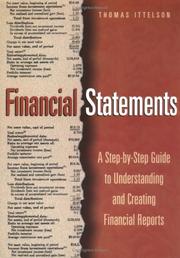
Ensures fluency in reading income statements, balance sheets, and cash flow statements as an integrated system — a prerequisite for building any credible valuation model.
DCF & Cost of Capital
IntermediateMaster discounted cash flow analysis end-to-end: projecting free cash flows, estimating WACC, calculating terminal value, and understanding the assumptions that drive intrinsic value.
▸ Study plan for this stage
Pace: 6–8 weeks, ~40–50 pages/day (focus on Chapters 9–13 covering DCF framework, cash flow projections, WACC, and terminal value)
- Free Cash Flow to Firm (FCFF) vs. Free Cash Flow to Equity (FCFE): definition, calculation, and when to use each
- Weighted Average Cost of Capital (WACC): component costs (cost of equity via CAPM, cost of debt), weights, and sensitivity to assumptions
- Terminal Value calculation: perpetuity growth method vs. exit multiple approach, and its dominance in total DCF value
- Explicit forecast period: typical 5–10 year horizon, revenue growth drivers, and margin assumptions
- Discount rate mechanics: risk-free rate, equity risk premium, beta estimation, and how changes cascade through valuation
- Sensitivity analysis: identifying which assumptions (growth, WACC, margins) move valuation most
- From DCF output to intrinsic value: interpreting the range of outcomes and comparing to market price
- How do you calculate Free Cash Flow to Firm (FCFF) from operating income, and why is it preferable to net income for valuation?
- What are the components of WACC, how do you estimate each, and why does the cost of equity typically exceed the cost of debt?
- Explain the two main approaches to terminal value (perpetuity growth vs. exit multiple) and why terminal value often represents 60–80% of total DCF value.
- What is the difference between Free Cash Flow to Firm (FCFF) and Free Cash Flow to Equity (FCFE), and when would you use each in a DCF model?
- How do you build a realistic explicit forecast period (5–10 years), and what assumptions drive revenue growth and operating margins?
- How does a 1% change in WACC or terminal growth rate affect your final valuation, and why is sensitivity analysis critical?
- Build a 5-year FCFF projection for a real company (e.g., Apple, Microsoft): start with historical revenue/EBIT, apply conservative growth and margin assumptions, and calculate unlevered free cash flows.
- Estimate WACC for the same company: gather risk-free rate, equity risk premium, estimate beta from historical returns, find cost of debt from credit ratings, and calculate the weighted average.
- Calculate terminal value using both perpetuity growth (2–3% long-term growth) and exit multiple (8–12x EBITDA) methods; compare the two and discuss which is more defensible.
- Create a sensitivity table showing how intrinsic value changes across a range of WACC (±1%) and terminal growth rate (±0.5%) assumptions.
- Discount your projected FCFF and terminal value back to present value using your WACC; sum to get enterprise value, subtract net debt, and calculate per-share intrinsic value.
- Compare your DCF intrinsic value to the company's current market price; write a one-page memo explaining whether the stock is undervalued, overvalued, or fairly valued based on your assumptions.
Next up: This stage equips you with the mechanics and discipline of DCF valuation; the next stage will teach you how to stress-test these assumptions, handle multi-scenario analysis, and adapt DCF frameworks to different business models and industries.

The definitive, comprehensive textbook on valuation — covers DCF, cost of equity and debt, WACC, terminal value, and every major asset class; this is the core technical reference for the entire curriculum.
The McKinsey standard for corporate valuation bridges theory and practice, with deep treatment of ROIC, economic profit, and how operating decisions translate into value — essential for modeling real companies.
Multiples, Comparables & Relative Valuation
IntermediateDevelop mastery of market-based valuation methods — EV/EBITDA, P/E, EV/Sales, precedent transactions — and learn when and how to apply them alongside DCF.
▸ Study plan for this stage
Pace: 8–10 weeks, ~40–50 pages/day (mix of dense theory and worked examples)
- Relative valuation fundamentals: how multiples work as shortcuts to DCF and when they break down
- EV/EBITDA, P/E, EV/Sales, and Price-to-Book multiples: calculation, interpretation, and pitfalls
- Comparable company analysis (trading multiples): selecting peers, adjusting for differences, and building valuation ranges
- Precedent transaction analysis: using M&A deal multiples to triangulate value and understand market sentiment
- The dark side of multiples: how accounting choices, growth assumptions, and market cycles distort comparables
- Blending multiples with DCF: when to use each method, how to reconcile divergent outputs, and building conviction
- Sector and cyclical adjustments: normalizing earnings, handling outliers, and applying context-specific multiples
- Why is EV/EBITDA considered more reliable than P/E for comparing companies with different capital structures, and what are its blind spots?
- Walk through the process of building a comparable company analysis: how do you select peers, calculate multiples, and identify outliers?
- What are the key differences between trading multiples and precedent transaction multiples, and why might they diverge?
- How do accounting choices (depreciation methods, revenue recognition, stock-based compensation) distort multiples, and how would you adjust for them?
- When would you rely on multiples over DCF, and when would you use multiples as a sanity check rather than a primary valuation method?
- How do you normalize earnings for a cyclical business when building a comparable company analysis?
- Build a 5–7 company comparable analysis for a real or fictional company: gather trading multiples (EV/EBITDA, P/E, EV/Sales), identify outliers, calculate a median multiple, and apply it to derive a valuation range
- Analyze a real M&A deal (e.g., from SEC filings or case studies): extract the implied transaction multiple, compare it to trading multiples at the time, and explain the premium or discount
- Create a sensitivity table showing how a company's valuation changes across a range of EV/EBITDA multiples (e.g., 8x–14x) and different EBITDA scenarios; present findings as a valuation bridge
- Identify three accounting distortions in a company's financials (e.g., aggressive revenue recognition, high stock-based comp, unusual depreciation) and adjust the P/E or EV/EBITDA multiples accordingly
- Compare a DCF valuation you've built with a multiples-based valuation for the same company; explain where they diverge and which you trust more, and why
- Analyze a sector-specific multiple (e.g., EV/Sales for SaaS, EV/Subscribers for telecom) and explain why it's more appropriate than a generic EV/EBITDA for that industry
Next up: This stage equips you with market-tested, practical valuation tools that complement DCF and ground valuations in real transaction data; the next stage will likely deepen your ability to synthesize multiple methods, handle edge cases (distressed companies, startups, cyclicals), and build conviction in your final valuation judgment.
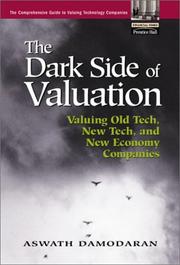
Tackles the hardest valuation cases — high-growth, distressed, and intangible-heavy companies — forcing the learner to stress-test multiples and DCF assumptions in non-standard situations.
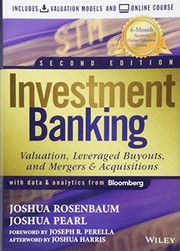
The Wall Street practitioner's handbook for comparable company analysis, precedent transactions, and LBO modeling; provides step-by-step methodology used by professionals to build and sanity-check valuations.
Advanced Modeling & Professional Mastery
ExpertBuild institutional-quality financial models, stress-test valuations with scenario and sensitivity analysis, and develop the judgment to communicate and defend a valuation with confidence.
▸ Study plan for this stage
Pace: 12–14 weeks, ~40–50 pages/day, with 2–3 days per week dedicated to hands-on modeling and case study work
- Building institutional-quality DCF, LBO, and M&A models with proper architecture, error-checking, and auditability (Benninga)
- Scenario and sensitivity analysis frameworks to stress-test valuations under different market conditions and assumptions (Benninga)
- The acquirer's multiple framework: using EV/EBITDA and similar multiples as a disciplined alternative to DCF, and understanding when each method is most reliable (Carlisle)
- Identifying and exploiting valuation gaps and market inefficiencies through rigorous comparative analysis (Carlisle)
- Integrating narrative (qualitative story) with quantitative numbers to create defensible, persuasive valuations (Damodaran)
- Communicating assumptions transparently and building credibility through honest uncertainty quantification (Damodaran)
- Judgment development: knowing the limitations of models, when to trust or distrust outputs, and how to adapt methodology to context (all three)
- How do you structure a financial model to ensure it is auditable, error-resistant, and suitable for institutional use? What are the key design principles Benninga emphasizes?
- Walk through a complete sensitivity and scenario analysis on a DCF or LBO model: what assumptions drive value most, and how do you present these findings to a skeptical audience?
- Explain the acquirer's multiple framework: when is it preferable to DCF, and how does Carlisle use it to identify mispriced assets?
- How do you reconcile a narrative story (competitive advantage, management quality, market growth) with quantitative valuation outputs? When do they conflict, and how do you resolve it?
- You are valuing a company with high uncertainty in terminal growth rate. How would you use scenario analysis, sensitivity tables, and narrative framing to communicate this risk to an investor or board?
- What are the most common modeling errors and judgment traps in valuation, and how do you guard against them?
- Build a complete 3-statement DCF model (income statement, balance sheet, cash flow) from scratch using a real public company; include detailed assumptions, sensitivity tables, and scenario tabs (base, bull, bear). Audit for circular references and formula errors.
- Construct an LBO model for a mid-market acquisition target: project debt paydown, calculate IRR and MOIC under different exit scenarios, and stress-test against rising interest rates and lower EBITDA growth.
- Perform a comparable company analysis using EV/EBITDA, EV/Revenue, and P/E multiples; then apply the acquirer's multiple framework to identify which companies are trading at a discount and why.
- Take a company you've modeled and write a 2–3 page investment memo that weaves together the quantitative output (DCF, multiples, scenarios) with a clear narrative about the business, competitive position, and key risks. Practice defending it against pushback.
- Conduct a sensitivity analysis on a valuation model, then create a one-page visual summary (tornado chart, heat map, or scenario table) suitable for presenting to a non-technical stakeholder.
- Reverse-engineer a company's current stock price: what growth rate, margin, or terminal multiple is the market implicitly assuming? Is it reasonable?
Next up: This stage equips you with the technical rigor, analytical frameworks, and communication skills to value companies like a professional investor or banker; the next stage will likely focus on specialized applications (real estate, infrastructure, distressed assets) or deepening judgment through live deal experience and case study dissection.

The canonical academic-practitioner bridge for building rigorous Excel-based financial models from scratch — covers integrated three-statement models, DCF, and scenario analysis with real data.

Sharpens valuation judgment by examining how deep-value investors use operating earnings multiples to find undervalued companies, adding a critical investor's perspective to complement the modeler's toolkit.

The capstone read — teaches how to connect a qualitative business story to quantitative valuation inputs, the skill that separates truly confident analysts from those who can only run spreadsheets.
Discussion
Keep reading
Paths that share books, cover the same subject, or open a related topic.