Best books on indigo dyeing and shibori
This curriculum begins at an intermediate level, assuming some textile or dyeing familiarity, and builds from a solid grounding in indigo's history and chemistry through hands-on vat and resist technique mastery, then into the refined artistry of shibori patterning and contemporary creative practice. Each stage deepens both technical precision and artistic vision, so that by the end the learner can confidently design, set up, and execute complex indigo and shibori work.
Indigo Foundations & Vat Mastery
IntermediateUnderstand indigo's chemistry, history, and the core mechanics of building and maintaining healthy vats — the non-negotiable foundation for everything that follows.
▸ Study plan for this stage
Pace: 4–5 weeks, ~25–30 pages/day. Allocate roughly 2.5 weeks to Balfour-Paul's "Indigo" (comprehensive history and chemistry foundation), then 2–2.5 weeks to Boutrup's "The Art and Science of Natural Dyes" (practical vat mechanics and maintenance protocols).
- Indigo's chemical structure (indigotin) and why it requires reduction to become soluble and dyeable onto fiber
- Historical and cultural significance of indigo across civilizations, and how traditional knowledge informs modern practice
- The chemistry of vat reduction: pH, reducing agents (sodium hydrosulfite, thiourea dioxide), and oxidation cycles
- Vat health indicators: color, smell, viscosity, and how to diagnose and correct common problems (overoxidation, contamination, exhaustion)
- Fiber preparation, mordanting, and pre-treatment protocols specific to indigo's requirements
- The relationship between vat temperature, dye uptake, and fiber type (protein vs. cellulose)
- Sustainable and historical alternatives to synthetic reducing agents, and their trade-offs
- Explain why indigo must be reduced to dye fiber, and describe the chemical state of indigo in a healthy, reduced vat.
- What are the primary visual and olfactory signs of a well-maintained indigo vat, and what do they indicate about pH and reduction?
- How do you diagnose and correct an over-oxidized or exhausted vat using the methods described in Boutrup?
- Trace indigo's historical journey through at least three major civilizations or regions, and explain how traditional dyeing practices differ from modern vat chemistry.
- What is the role of fiber preparation and pH in achieving even, deep indigo color, and why does this differ between protein and cellulose fibers?
- Compare at least two reducing agents (synthetic and/or natural) discussed in the texts: their chemistry, safety, environmental impact, and practical outcomes.
- Build a detailed timeline of indigo's cultural and trade history using Balfour-Paul; annotate it with the chemical innovations (synthetic indigo, modern reducing agents) that changed production.
- Create a vat health diagnostic chart: list visual indicators, smell profiles, pH ranges, and corrective actions for common problems (overoxidation, contamination, weak dye uptake) based on Boutrup's protocols.
- Prepare three fiber samples (cotton, wool, silk) and document their pre-treatment and mordanting steps; dye them in a test indigo vat and record color depth, evenness, and fastness after 2–3 weeks.
- Write a detailed lab report on one reducing agent (sodium hydrosulfite or thiourea dioxide): its chemistry, safety considerations, environmental footprint, and how Boutrup recommends using it.
- Conduct a pH and reduction test on an indigo vat using simple indicators (pH paper, visual color change); correlate your findings to vat health and predict dye performance.
- Interview or research a traditional indigo dyer (via text, video, or published account); compare their vat maintenance practices to Boutrup's modern protocols and identify which traditional methods align with current chemistry.
Next up: Mastery of vat chemistry and maintenance equips you to move into the next stage—advanced techniques like shibori resist patterns, color layering, and troubleshooting edge cases—because a stable, predictable vat is the non-negotiable platform for all creative and technical experimentation.

A richly researched cultural and historical survey of indigo worldwide; reading this first gives the learner essential context — where the dye comes from, how it has been used across cultures — before diving into technique.

Provides the scientific underpinning — pH, reduction chemistry, mordanting — that demystifies why vats succeed or fail; reading it here locks in the 'why' behind every practical step.
Shibori: Resist Techniques & Core Vocabulary
IntermediateMaster the six classical shibori categories — itajime, arashi, ne-maki, kumo, miura, and ori-nui — and understand how cloth manipulation controls pattern before dye ever touches fabric.
▸ Study plan for this stage
Pace: 4–5 weeks, ~25–30 pages/day, with 2–3 days per week dedicated to hands-on practice and pattern documentation
- The six classical shibori categories as distinct systems of cloth manipulation: itajime (board-resist), arashi (pole-wrapping), ne-maki (core-wrapping), kumo (spider/gathering), miura (folding), and ori-nui (stitch-resist)
- How resist placement and cloth folding geometry determine final pattern before dyeing—the principle that pattern design happens through physical manipulation, not pigment application
- The relationship between tension, binding pressure, and dye penetration in creating sharp versus soft pattern edges
- Shibori as a language of cultural memory and personal narrative embedded in cloth, connecting technique to meaning-making
- The role of indigo as the traditional dye partner for shibori and how its properties (oxidation, layering, depth) interact with resist structures
- Practical material knowledge: appropriate fabrics, binding materials, tools, and how each resist technique requires specific preparation and handling
- What are the six classical shibori categories, and what is the primary method of cloth manipulation that defines each one?
- How does the geometry of cloth folding or binding in itajime differ from that in arashi, and what visual patterns result from these differences?
- Explain how tension and pressure during binding affect the sharpness or softness of pattern edges in shibori resist dyeing.
- What does Wada mean by shibori as 'memory on cloth,' and how do personal or cultural narratives become embedded in the choice and execution of resist techniques?
- How do the oxidation and layering properties of indigo interact with shibori resist structures to create depth and complexity in the final cloth?
- What practical preparation and material choices are essential for successfully executing each of the six shibori techniques, and why does technique-specific knowledge matter?
- Master one shibori technique per week: execute itajime, arashi, ne-maki, kumo, miura, and ori-nui on small cotton or linen samples (6–12 inches), documenting binding pressure, folding angles, and dye results in a photo journal
- Create a 'resist vocabulary' reference sheet for each technique, sketching the folding/binding method, noting the tools required, and recording the resulting pattern characteristics from your samples
- Dye a series of samples using the same technique but varying one parameter (e.g., binding tightness, folding angle, or indigo bath time) to observe how manipulation geometry directly controls pattern
- Document the 'memory' in one finished piece: choose a shibori technique and write a brief narrative (100–150 words) about what personal or cultural meaning you embed in that cloth through your choice of pattern
- Analyze 3–5 photographs or examples from Wada's books, identifying which of the six techniques was used, explaining the cloth manipulation logic, and describing how the resulting pattern could carry cultural or personal significance
- Create a comparative chart mapping each shibori technique to its ideal fabric weight, binding material, dye bath temperature, and timing—grounding Wada's descriptions in actionable material specifications
Next up: This stage equips you with mastery of the six foundational shibori resist systems and the vocabulary to read cloth as a record of intentional manipulation, preparing you to explore advanced refinements, contemporary artistic applications, and the deeper cultural and historical contexts of indigo and shibori in subsequent stages.

The definitive English-language reference on shibori; it establishes precise terminology, historical lineage, and systematic technique descriptions that every subsequent book in this curriculum assumes you know.

A follow-up survey showing how contemporary artists worldwide have extended classical shibori; reading it immediately after the foundational text reveals the full creative range of the techniques just learned.
Folding, Clamping & Patterned Cloth
IntermediateDevelop fluency in itajime (fold-and-clamp) and other geometric resist methods, learning to predict and design repeating patterns in blue cloth with precision.
▸ Study plan for this stage
Pace: 4–5 weeks, ~25–30 pages/day, with 2–3 dedicated practice days per week for hands-on folding and clamping experiments
- Itajime (fold-and-clamp) technique: how wooden blocks and precise folding create geometric resist patterns in indigo
- Geometric pattern prediction: understanding how fold lines, clamp placement, and cloth dimensions translate to symmetrical designs on dyed cloth
- Repeat pattern systems: creating modular, scalable designs through consistent folding and clamping methods
- Precision in cloth preparation: measuring, marking, and folding cloth accurately to achieve intended geometric results
- Hand-sewing as pattern foundation: how stitching lines can act as resist boundaries and inform fold-and-clamp design
- Material properties and dye penetration: understanding how different cloth weights and fold tightness affect indigo absorption and pattern clarity
- Symmetry and tessellation principles: applying mathematical concepts to predict and design repeating patterns in textiles
- How does the itajime technique work, and what role do wooden blocks and precise folding play in creating geometric patterns?
- Given a specific fold configuration and clamp placement, can you predict the resulting pattern on cloth after indigo dyeing?
- What is the relationship between cloth dimensions, fold intervals, and the size and spacing of repeating geometric motifs?
- How do hand-stitching techniques from Chanin's work function as resist methods, and how can you integrate them with itajime clamping?
- What adjustments in fold tightness, clamp pressure, or cloth weight would you make to achieve sharper or softer pattern edges?
- How can you design a scalable repeat pattern system that produces consistent geometric results across multiple pieces of cloth?
- Practice basic itajime folds (accordion, triangular, rectangular) on scrap indigo-dyed cloth or white cloth, then dye to observe pattern outcomes
- Create a fold-and-clamp pattern prediction sketch: draw your intended fold lines and clamp positions, dye the cloth, and compare results to your prediction
- Measure and mark cloth precisely for a multi-step repeat pattern; execute the fold, clamp, and dye cycle, documenting measurements and results
- Combine hand-stitching (from Chanin's techniques) with itajime clamping on a single piece: use stitched lines as secondary resist boundaries
- Experiment with three different cloth weights (lightweight cotton, medium linen, heavyweight canvas) using identical fold-and-clamp patterns; analyze how material affects pattern clarity
- Design and execute a tessellating geometric pattern system: create a modular fold template, use it to produce multiple cloth pieces, and arrange them to demonstrate the repeating pattern
Next up: Mastery of predictable geometric resist methods through folding and clamping establishes the technical foundation needed to move toward more complex, layered resist techniques and color-layering strategies in subsequent stages.
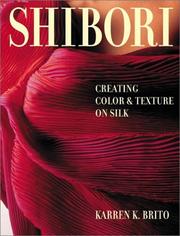
Focuses specifically on folding and clamping methods with detailed pattern diagrams; its project-based structure lets the learner immediately translate geometric folding logic into finished cloth.

While broader in scope, its rigorous treatment of stitch geometry and cloth manipulation deepens understanding of stitched-resist (ne-maki/ori-nui) patterning and how line and fold interact on fabric.
Advanced Vat Chemistry & Natural Indigo Practice
ExpertConfidently manage fermentation vats, iron vats, and fructose-lime vats; troubleshoot problems; and work with plant-extracted indigo for the deepest, most archival blues.
▸ Study plan for this stage
Pace: 4–5 weeks, ~25–30 pages/day, with 2–3 dedicated vat-building and troubleshooting sessions per week
- Fermentation vat chemistry: pH, reducing agents, oxidation states, and how to maintain anaerobic conditions for indigo solubility
- Iron vat (shibori vat) construction and management: iron sulfate ratios, alkali balance, and achieving the characteristic greenish-gold liquor
- Fructose-lime vat as a modern alternative: preparation, stability, and advantages over traditional methods
- Plant-extracted indigo: sourcing, processing, and quality assessment compared to synthetic indigo
- Troubleshooting vat problems: yellowing, grittiness, weak uptake, and recovery techniques from Buchanan's practical guidance
- Archival and lightfastness principles: how vat chemistry directly affects dye permanence and color depth
- Garden cultivation of indigo-bearing plants: timing, harvest, and extraction workflows for small-scale production
- Seasonal and environmental factors: temperature, humidity, and storage practices that preserve vat integrity over months
- What is the relationship between pH, reducing agents, and indigo solubility in a fermentation vat, and how do you diagnose when one of these factors is out of balance?
- How does an iron vat differ chemically from a fermentation vat, and what specific problems arise from incorrect iron sulfate ratios?
- When would you choose a fructose-lime vat over a fermentation vat, and what are the trade-offs in terms of maintenance and color characteristics?
- How do you extract indigo from plant material (as described in Buchanan), and what quality indicators tell you whether your extraction is successful?
- What are the most common vat failures Buchanan describes, and what corrective steps can restore a compromised vat?
- Why does vat chemistry directly affect the archival quality and lightfastness of indigo-dyed textiles, and how does this influence your choice of vat type for a specific project?
- Build and maintain a fermentation vat over 3–4 weeks, recording daily pH, temperature, and visual indicators; document any adjustments needed and their effects
- Construct an iron vat following Buchanan's proportions; test it with sample yarns and compare the resulting color and handling to a fermentation vat
- Prepare a fructose-lime vat and run side-by-side dyeing tests against your fermentation and iron vats; evaluate ease of use, color depth, and vat longevity
- If possible, grow or source indigo-bearing plants; extract indigo using Buchanan's methods and compare the resulting dye liquor to commercial indigo in a test vat
- Deliberately create a vat problem (e.g., allow oxidation, add incorrect pH water, or overheat) and practice troubleshooting using Buchanan's diagnostic framework
- Dye a series of samples from the same yarn lot using your three vats at different stages of maturity; evaluate and document color depth, consistency, and lightfastness predictions
Next up: This stage equips you with the chemistry and hands-on mastery to manage indigo vats at a professional level, setting the foundation for the next stage, which will likely focus on advanced resist techniques, color layering, and scaling production while maintaining archival standards.
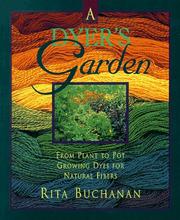
Covers growing and processing dye plants including indigo from seed to vat; at this stage the learner is ready to close the loop from raw plant to finished dye bath.
Discussion
Keep reading
Paths that share books, cover the same subject, or open a related topic.