Best books to learn Tunisian crochet
This curriculum takes a complete beginner from their very first Tunisian crochet hook all the way through advanced colorwork and construction of blankets and garments. Each stage builds directly on the last — mastering the foundational entrelac stitch and hook mechanics before layering in texture, color, and finally full project design. Expect roughly 8 focused books that form a tight, progressive path rather than a scattered survey.
Foundations: Hook, Yarn & the Basic Stitch
BeginnerUnderstand what makes Tunisian crochet unique, hold the hook correctly, work the forward and return passes, and complete the essential simple stitch (TSS) and full stitch (TFS) with even tension.
▸ Study plan for this stage
Pace: 2–3 weeks, ~15–20 pages/day with frequent practice breaks
- Tunisian crochet as a hybrid between crochet and knitting, with its own distinct techniques and fabric characteristics
- Proper hook grip and hand positioning for Tunisian crochet (pencil or knife grip, yarn tension management)
- The forward pass: inserting the hook, picking up loops, and maintaining an active loop on the hook
- The return pass: working off loops in sequence to complete rows and establish the foundation for the next forward pass
- Tunisian Simple Stitch (TSS): the foundational stitch combining forward and return passes with consistent tension
- Tunisian Full Stitch (TFS): building on TSS with deeper insertions to create denser fabric
- Even tension as the cornerstone of readable, professional-looking Tunisian crochet fabric
- How forward and return passes work together as a unified row unit, unlike traditional crochet
- What are the key differences between Tunisian crochet and traditional crochet, and why does it resemble knitting?
- Describe the correct hand position and hook grip for Tunisian crochet, and explain why tension control is critical during both passes.
- Walk through the forward pass step-by-step: what happens to your loops, where does the hook go, and what determines when the pass ends?
- Explain the return pass and how it differs from the forward pass. Why must you work loops off in a specific sequence?
- What is the Tunisian Simple Stitch (TSS), and how do the forward and return passes combine to create one complete row of TSS?
- Compare Tunisian Simple Stitch and Tunisian Full Stitch: where does the hook insert in each, and how does this affect the resulting fabric?
- How do you maintain even tension throughout both the forward and return passes, and why does uneven tension disrupt the fabric?
- Practice the pencil and knife grip on your hook without yarn; switch between grips 10 times to build muscle memory and find which feels most natural.
- Work 5 practice chains (8–10 stitches each) focusing solely on consistent tension and smooth yarn flow; do not move forward until chains look uniform.
- Complete 3 full rows of Tunisian Simple Stitch (TSS) on a practice swatch, counting loops aloud during the forward pass to ensure you pick up one loop per stitch.
- Work 2 rows of Tunisian Full Stitch (TFS) immediately after TSS rows on the same swatch; compare the fabric density and texture side-by-side.
- Create a tension sampler: work 4 small swatches (one TSS, one TFS, one TSS, one TFS) deliberately varying your tension (loose, medium, tight, medium) to see how tension affects appearance and identify your natural tension range.
- Photograph or sketch your practice swatches and label the forward pass, return pass, and active loop on each row; annotate where tension issues appear and what caused them.
Next up: Mastering the forward and return passes and achieving consistent tension in TSS and TFS gives you the mechanical foundation to explore the wider range of Tunisian stitches and stitch variations that build on these core techniques.
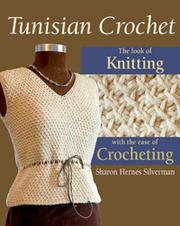
The single best entry-level reference for Tunisian crochet: it explains the hook, yarn selection, the forward/return pass rhythm, and the core stitches with clear step-by-step photos — exactly the vocabulary a beginner needs first.
Building a Stitch Library: Texture & Pattern
BeginnerExpand beyond the basic stitches into smocked, twisted, bobble, and lace variations, and learn to read Tunisian stitch diagrams and charts.
▸ Study plan for this stage
Pace: 4–5 weeks, ~20–25 pages/day, with 2–3 days per week dedicated to hands-on practice
- Reading and interpreting Tunisian crochet stitch diagrams and symbol charts specific to motif construction
- Mastering smocked and twisted stitch variations as foundational texture-building techniques
- Understanding bobble and popcorn stitches to create dimensional, sculptural effects in Tunisian work
- Constructing lace variations and openwork patterns while maintaining fabric integrity
- Adapting motif patterns to create cohesive multi-piece projects (blankets, garments, accessories)
- Recognizing how stitch choice affects drape, elasticity, and visual impact in finished pieces
- How do you read a Tunisian crochet stitch diagram, and what do the different symbols represent in Eckman's notation system?
- What is the difference between a smocked stitch and a twisted stitch, and when would you use each in a Tunisian project?
- How do bobble and popcorn stitches create texture, and what tension adjustments are needed to keep them from distorting the overall fabric?
- How do you work lace variations in Tunisian crochet without losing structural stability, and what role do yarn-overs and decreases play?
- How can you modify or scale a motif pattern from the book to fit a different project size or shape?
- What visual and tactile qualities should you expect from each stitch variation, and how do these inform your choice of yarn and project type?
- Work through 3–4 different motif patterns from 'Beyond-the-Square Crochet Motifs,' focusing on one stitch variation per motif (smocked, twisted, bobble, lace)
- Create a personal stitch swatch library: crochet a 6×6 inch swatch of each major stitch variation, label it with the stitch name and chart reference from the book, and note yarn weight and hook size used
- Practice reading and transcribing one Tunisian stitch diagram from the book into written instructions, then crochet it to verify accuracy
- Combine 2–3 completed motifs into a small project (coaster set, dishcloth, or small blanket) to practice joining techniques and color coordination
- Experiment with yarn weight variations: work the same motif pattern in 2–3 different yarn weights and compare how stitch definition, drape, and finished size change
- Design a simple motif variation by modifying one stitch sequence from a book pattern (e.g., substituting a lace section for a solid section) and document the changes with sketches or notes
Next up: Mastering these textured and patterned stitches, combined with the ability to read and adapt Tunisian charts, prepares you to tackle larger, more complex garment construction and color-work projects that layer multiple stitch techniques into cohesive designs.
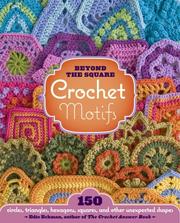
While not Tunisian-exclusive, Eckman's thorough treatment of motif construction and joining methods is the standard reference for understanding how individual fabric units connect — essential before tackling blanket construction.
Blankets: Construction & Finishing
IntermediatePlan, size, and execute full Tunisian blanket projects using modular, entrelac, and large-panel construction methods, with professional finishing and seaming.
▸ Study plan for this stage
Pace: 4–5 weeks, ~20–25 pages/day with pattern practice interspersed
- Modular construction techniques for Tunisian crochet blankets and how to plan projects using repeating units
- Entrelac construction methods to create interlocking panels with visual depth and structural integrity
- Sizing and scaling Tunisian blanket projects based on yarn weight, stitch gauge, and finished dimensions
- Seaming and joining techniques specific to Tunisian crochet edges (Tunisian simple stitch edges, selvage handling)
- Professional finishing methods including blocking, edge treatments, and binding off for blankets
- Pattern reading and adaptation for baby afghans as a foundation for larger blanket projects
- Yarn selection and yardage calculations for multi-panel and modular Tunisian projects
- How do you plan a modular Tunisian blanket project, and what are the advantages of breaking a large blanket into repeating units?
- What is entrelac construction in Tunisian crochet, and how does it differ from traditional modular assembly?
- How do you calculate yardage and determine finished dimensions for a Tunisian blanket project before you begin?
- What seaming and joining techniques are most effective for connecting Tunisian crochet panels, and how do you maintain tension and alignment?
- How do you block and finish a Tunisian crochet blanket to achieve professional results, and what edge treatments work best?
- What modifications would you make to a baby afghan pattern to scale it up to a full-size blanket?
- Work through at least two complete baby afghan patterns from the book, paying attention to construction method (modular, entrelac, or panel-based) and noting how each approach affects the final product
- Create a gauge swatch in your chosen yarn and stitch, then calculate yardage and dimensions for a full-size blanket adaptation of one of the book's patterns
- Practice seaming two Tunisian crochet panels using the recommended technique, experimenting with different selvage treatments to find your preferred method
- Block one completed baby afghan following the book's finishing instructions, documenting the process and results
- Design a modular Tunisian blanket project on paper: sketch the layout, calculate total yardage, and write out a construction sequence before crocheting
- Execute at least one full blanket project (baby or larger) using either modular or entrelac construction, completing all seaming and finishing steps
Next up: This stage equips you with the technical skills and planning frameworks to tackle advanced Tunisian projects—setting the foundation for exploring specialty stitches, color work, and complex pattern integration in larger-scale pieces.

Kim Guzman is a prolific and widely respected Tunisian designer; this collection focuses specifically on afghans and teaches the construction decisions — panel width, joining, borders — that make large-scale Tunisian projects successful.
Discussion
Keep reading
Paths that share books, cover the same subject, or open a related topic.