Tatting looks impossibly intricate, yet it is built almost entirely from one element: the double stitch, plus small loops called picots. The hard part is not complexity but the counterintuitive "flip" that transfers the knot to the core thread. Once that clicks, everything else is repetition and pattern-reading. That is why a good beginner book, worked through patiently, is worth more than any shortcut.
The path moves from that first crucial technique to reading patterns fluently, then into advanced forms and design.
Learn the fundamental knot
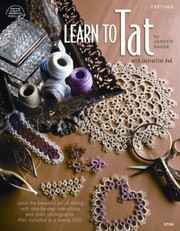
Start with the clearest teachers. Learn To Tat, Janette Baker's beginner classic, is famous for finally making the flip make sense. The Complete Book of Tatting, Rebecca Jones's thorough guide, backs it up with both shuttle and needle methods and a solid grounding in the basics. If needle tatting appeals, Needle Tatting with Style teaches that variant directly.
Read patterns and build rings and chains
With the double stitch mastered, learn to read tatting's shorthand and combine rings and chains. Tatting by Elgiva Nicholls and A Pattern book of tatting, Mary Konior's well-loved collection, give you graded patterns that build fluency stitch by stitch.
Reach advanced and decorative work
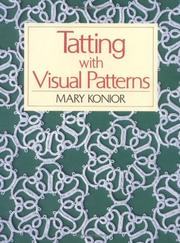
Now explore the art's full range. Tatting with Visual Patterns, another Mary Konior classic prized for its clear diagrams, and Inventive Tatting push you toward more complex motifs and original design. Celtic Tatting Knots and Patterns adds the interlaced Celtic style, and Tatting with Anne Orr reaches back to a historic master's designs, connecting your work to the craft's heritage.
Worked in order, you go from a single stubborn knot to lace of real delicacy and beauty. Follow the full path for the stage-by-stage reading plan.
Follow the full reading path →
Ready to learn something deeply?
Build a reading path — free