Tunisian crochet — sometimes called afghan crochet — uses a long hook to keep all the loops on the needle at once, producing a dense, woven-looking fabric that sits somewhere between knitting and standard crochet. The technique is distinct enough that jumping into an advanced pattern without the fundamentals leads to frustration and curling edges.
The path builds cleanly: master the handful of core stitches, then expand into motifs and colorwork, then apply it all to real garments.
Master the fundamentals
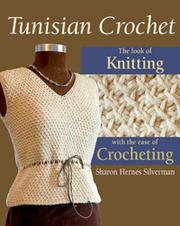
Start with two clear teaching books. Tunisian crochet, Sharon Hernes Silverman's approachable introduction, and The Complete Book of Tunisian Crochet, Dora Ohrenstein's thorough survey, walk you through the forward and return passes, the simple stitch, the knit stitch, and how to keep tension even. Add Tunisian Crochet Workshop, Toni Lipsey's modern, well-photographed guide, and you have a rock-solid foundation.
Build a stitch and color vocabulary
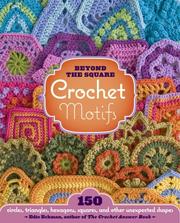
Once the basics feel natural, expand your range. Beyond-the-square crochet motifs opens up shaped pieces, while Colorwork Crochet and Tapestry Crochet and More — Carol Ventura's specialty — teach you to carry and switch colors cleanly, unlocking patterned fabric. Tunisian Crochet Stitch Dictionary, Ashley Lillis's reference, becomes the book you keep beside you for texture ideas.
Make finished projects
Now put the skills to work. Tunisian Baby Afghans to Crochet offers approachable, satisfying first projects, and Crochet Garments, Kristin Omdahl's guide, teaches the shaping and finishing that turn stitches into wearable pieces. These close the path by proving your technique on real, giftable work.
Read in order, you go from tangled first rows to confident, colorful garments. Follow the full path for the stage-by-stage plan.
Follow the full reading path →
Ready to learn something deeply?
Build a reading path — free