The Best Indian Literature to Read
This curriculum moves from the ancient mythological and epic foundations of Indian literature through the colonial and independence-era classics, and finally into the rich landscape of contemporary Indian fiction across languages and regions. Because the learner starts at an intermediate level, we skip introductory surveys and dive straight into primary texts, building cultural and narrative fluency before tackling more structurally complex or regionally specific modern works.
The Epic Foundations
IntermediateGrasp the mythological, philosophical, and narrative bedrock that underlies virtually all Indian literature — the stories, archetypes, and moral frameworks that every later writer references or subverts.
▸ Study plan for this stage
Pace: 8–10 weeks, ~40–50 pages/day. The Mahabharata (Narayan's condensed version) takes 4–5 weeks; The Ramayana takes 3–4 weeks. This allows time for reflection and note-taking on parallel themes.
- Dharma (duty/righteousness) as the central moral framework: how characters navigate conflicting duties and the consequences of dharmic choices in both epics
- The Bhagavad Gita's philosophy of action and detachment: Krishna's teachings to Arjuna on karma, duty, and the nature of the self as embedded in the Mahabharata
- Archetypal characters and their symbolic functions: heroes (Rama, Arjuna), villains (Ravana, Duryodhana), mentors (Vishvamitra, Drona), and how these recur in later Indian literature
- Narrative structure and layering: how both epics use nested stories, digressions, and multiple perspectives to explore themes from different angles
- The tension between fate and free will: how characters' agency interacts with prophecy and cosmic order (rita) in shaping events
- Gender and power dynamics: the roles of women (Sita, Draupadi, Kunti) as agents, victims, and moral anchors within patriarchal structures
- Cosmological and philosophical worldview: the Hindu understanding of time (yugas), divine incarnation (avatara), and the relationship between human and divine realms
- What is dharma, and how do the central conflicts in both the Mahabharata and Ramayana arise from competing interpretations of dharmic duty?
- Explain Krishna's core teaching in the Bhagavad Gita: how does the concept of nishkama karma (action without attachment to results) resolve Arjuna's moral dilemma?
- Compare the characterization of Rama and Arjuna: how do their responses to duty, exile, and moral ambiguity differ, and what does each reveal about the epic's worldview?
- How do the female characters (Sita, Draupadi, Kunti) function as moral and emotional centers in their respective epics, and what constraints do they face?
- Identify three archetypal character types from these epics and explain how they establish patterns that later Indian writers either follow or subvert.
- What role does the nested narrative structure play in the Mahabharata? How do stories within stories deepen the exploration of dharma?
- Create a dharma chart: for three major characters (e.g., Arjuna, Rama, Draupadi), list their conflicting duties and trace how each resolves (or fails to resolve) the conflict. Note which choices align with the epic's moral framework.
- Annotate the Bhagavad Gita passages: mark key verses on karma, duty, and detachment, then write a one-page synthesis of Krishna's philosophy in your own words and its relevance to Arjuna's crisis.
- Map archetypal characters: create a table with columns for Character, Epic, Role (hero/mentor/antagonist), Key Traits, and Later Echoes. Fill it with 8–10 characters from both epics; this becomes a reference for later stages.
- Comparative character study: write a 2–3 page essay comparing Rama's exile and Arjuna's crisis on the battlefield—how does each epic frame suffering, duty, and acceptance differently?
- Trace a theme across both epics: choose one theme (e.g., loyalty, sacrifice, justice) and find 4–5 scenes from each epic that illustrate it. Write brief notes on how the theme evolves or repeats.
- Rewrite a key scene from a female character's perspective: take a pivotal moment involving Sita or Draupadi and rewrite it from her internal viewpoint, exploring her agency and constraints.
Next up: By internalizing the archetypal characters, moral frameworks, and narrative techniques of these foundational epics, you'll recognize how every subsequent Indian writer—from classical poets to modern novelists—either echoes, reinterprets, or deliberately subverts these mythological patterns, making the epics an essential reference point for understanding literary innovation in the tradition.
Narayan's retelling is the ideal entry point: compact, lucid, and faithful to the spirit of Vyasa's epic without the overwhelming scale of a full translation. Reading it first gives you the mythological grammar every subsequent Indian author assumes you know.
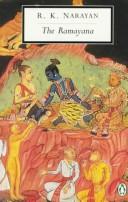
Narayan's Ramayana pairs naturally with his Mahabharata, completing the two pillars of Indian epic tradition. Together they establish the moral and emotional vocabulary — dharma, exile, devotion, duty — that echoes across centuries of Indian writing.
The Classical & Pre-Modern Voice
IntermediateExperience the lyrical, devotional, and philosophical strands of classical Indian literature, understanding how poetry and drama shaped the literary imagination long before the novel arrived.
▸ Study plan for this stage
Pace: 4–5 weeks, ~25–30 pages/day. Week 1: Abhijnansakuntalam (Acts I–III); Week 2: Abhijnansakuntalam (Acts IV–VII); Week 3: Songs of Kabir (selections, ~100 pages); Week 4–5: Review, reflection essays, and comparative analysis.
- Classical Sanskrit drama as a sophisticated literary form: structure, aesthetics (rasa theory), and the role of poetry within dramatic action in Abhijnansakuntalam
- The lyrical and devotional voice: how Kabir's vernacular poetry expresses direct spiritual experience and challenges institutional religion
- Separation, recognition, and reunion as narrative and philosophical themes in both texts—exploring desire, memory, and the nature of identity
- The use of nature imagery and metaphor as vehicles for emotional and spiritual truth across both classical and devotional registers
- Pre-modern Indian literary imagination: how poetry and drama functioned as primary modes of philosophical inquiry before the novel's emergence
- Vernacular versus Sanskrit traditions: understanding how Kabir's folk-rooted voice differs from and dialogues with classical literary conventions
- The reader's emotional engagement (rasa) as central to meaning-making in classical Indian literature
- How does Abhijjansakuntalam use dramatic structure and poetic language to explore the theme of separation and recognition? What role does memory play?
- What is the concept of rasa in classical Sanskrit drama, and how does Thakur's Improvised Edition help you experience the emotional resonance of the play?
- How does Kabir's devotional poetry differ in tone, language, and spiritual approach from the courtly, philosophical world of Abhijnansakuntalam?
- What are the key metaphors and images Kabir uses to express his spiritual vision, and how do they reflect his critique of religious orthodoxy?
- How do both texts use nature, love, and longing as pathways to deeper philosophical or spiritual truth?
- What does it mean to read these texts as 'pre-novel' literature, and how do their narrative and lyrical strategies differ from modern prose fiction?
- Close-read 2–3 key scenes from Abhijnansakuntalam (e.g., the first meeting of Dushyanta and Sakuntala, the curse, the recognition scene) and annotate the poetic language, stage directions, and emotional shifts; note how the text guides your emotional response.
- Create a visual or written character map for Abhijnansakuntalam tracking Sakuntala, Dushyanta, and secondary characters; note how each character's perspective on separation and reunion differs.
- Select 5–6 poems from Songs of Kabir and analyze the recurring metaphors (e.g., the river, the bird, the beloved, the mirror); write a short essay on how these images function spiritually and philosophically.
- Write a comparative scene: imagine a conversation between Kabir and a character from Abhijnansakuntalam (e.g., Sakuntala or Dushyanta) about love, duty, and spiritual truth. What would each say?
- Perform or record a dramatic reading of one scene from Abhijnansakuntalam and one Kabir poem; reflect on how hearing the language aloud changes your understanding of rhythm, emotion, and meaning.
- Create a timeline or visual diagram showing the emotional arc of Abhijnansakuntalam (anticipation, union, separation, despair, recognition, reunion); then overlay Kabir's emotional/spiritual journey as expressed across his poems.
Next up: This stage establishes the lyrical, devotional, and philosophical foundations of Indian literary tradition, preparing you to understand how the novel—when it emerges in the 19th century—both inherits and transforms these pre-modern modes of storytelling, character, and spiritual inquiry.

Kalidasa's 4th-century Sanskrit masterpiece is the pinnacle of classical Indian drama — its themes of love, memory, and loss resonate across all later Indian literature. Reading it after the epics shows how classical authors transformed mythological material into intimate human drama.

Kabir's 15th-century devotional poetry bridges Hindu and Sufi traditions and represents the vast bhakti movement that democratized Indian literary expression. His plain-spoken, paradox-filled verses introduce the oral and vernacular tradition that runs parallel to Sanskrit classicism.
The Modern Novel Arrives
IntermediateUnderstand how Indian writers absorbed the Western novel form and bent it to Indian realities — caste, colonialism, language, and identity — producing a distinctly Indian modernism.
▸ Study plan for this stage
Pace: 8–10 weeks, ~40–50 pages/day. Read Godan (4–5 weeks), Untouchable (2–3 weeks), The Guide (2–3 weeks), with 1 week for synthesis and comparative analysis.
- The Western novel form as a colonial import: how Indian writers adopted the realist novel structure while rejecting its European assumptions
- Caste as a narrative problem: how Premchand's Hori and Anand's Bakha expose caste hierarchies through intimate character study rather than social treatise
- Language and translation: the tension between writing in English, Hindi, and regional languages, and how each choice shapes what stories can be told
- Colonialism and economic dispossession: how Godan's agrarian crisis and The Guide's spiritual tourism reveal India's material conditions under and after colonial rule
- Individual consciousness vs. social structure: the modernist focus on interiority (Bakha's shame, Raju's self-deception) as a way to critique rigid social systems
- The Indian city and village as modernist settings: how these spaces become sites of moral and spiritual crisis rather than mere backdrops
- Irony and ambiguity as Indian modernist tools: how these novels refuse neat resolutions, leaving readers to grapple with contradictions
- How does Premchand use Hori's relationship to land and debt in Godan to critique both feudalism and capitalist exploitation? What does the novel suggest about the peasant's agency?
- In Untouchable, how does Anand use a single day in Bakha's life to expose the violence of caste? What is the significance of Bakha's final conversion moment—is it hopeful or ironic?
- Compare how Premchand (Godan) and Anand (Untouchable) use the realist novel form to address social injustice. What does each author gain or lose by choosing realism?
- In The Guide, how does Narayan use Raju's spiritual transformation to comment on authenticity, tourism, and Indian identity in the post-colonial period?
- What role does language play in each novel? How might these stories have been different if written in English vs. Hindi/Tamil, and what does this tell us about Indian modernism?
- How do these three novels collectively challenge or redefine what the 'novel' is as a form? What is distinctly Indian about their modernism?
- Close-read a key scene from each novel (e.g., Hori's final illness in Godan, Bakha's encounter with the sweeper in Untouchable, Raju's first meeting with Rosie in The Guide) and analyze how the author uses interior monologue, dialogue, and description to reveal character and social critique simultaneously.
- Create a comparative timeline: map the historical contexts (pre-independence India for Godan and Untouchable; post-independence for The Guide) and trace how each novel's setting reflects its political moment.
- Write a short essay (1,500–2,000 words) arguing which novel most successfully 'bends' the Western realist form to Indian realities, using specific textual evidence.
- Trace the theme of shame or moral ambiguity across all three novels. How does each author use these emotions to critique social structures rather than individual failings?
- If possible, read excerpts in translation and in original language (Hindi for Premchand, if accessible; Tamil for Narayan). Reflect on what is gained or lost in translation—how does this illuminate the language question in Indian modernism?
- Create character maps for Hori, Bakha, and Raju, noting their relationships to caste, class, colonialism, and spirituality. What patterns emerge across the three protagonists?
Next up: By mastering how these three foundational modernist novels adapted the Western form to Indian social realities, you are now equipped to trace how later Indian writers (from the 1960s onward) would further experiment with form—fragmenting narrative, mixing languages, and interrogating the very concept of the 'Indian novel'—in response to independence, partition, and globalization.
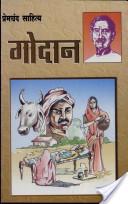
Premchand's 1936 Hindi masterpiece about a peasant farmer's struggle is the founding text of the modern Indian novel in a vernacular language. Reading it first in this stage grounds you in the social-realist tradition before moving to English-language Indian fiction.
![Untouchable [by] Mulk Raj Anand](https://covers.openlibrary.org/b/id/97377-M.jpg)
Anand's searing 1935 novel follows a single day in the life of a sweeper, confronting caste with unflinching directness. It pairs with Godan to show how Indian modernism tackled social injustice from both Hindi and English literary angles.
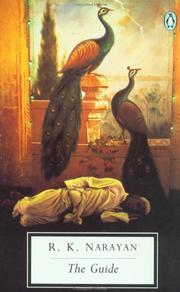
Narayan's Sahitya Akademi Award-winning novel is the masterwork of his Malgudi world — comic, ironic, and quietly profound. It demonstrates how a distinctly Indian sensibility could be rendered in English without losing its cultural soul.
Partition, Independence & the Postcolonial Novel
ExpertEngage with the trauma of Partition, the contradictions of independence, and the emergence of a confident, complex postcolonial Indian literary voice in multiple languages.
▸ Study plan for this stage
Pace: 8–10 weeks, ~40–50 pages/day. Week 1–2: Train to Pakistan (320 pp); Week 3–4: Midnight's Children (645 pp); Week 5–6: The God of Small Things (340 pp); Week 7–8: Re-read key passages and thematic synthesis; Week 9–10: Comparative analysis and reflection.
- Partition as collective trauma: how Singh uses the Sikh-Muslim love story and communal violence to explore the human cost of political division
- Magical realism and narrative unreliability in Rushdie's portrayal of independence as a contested, contradictory moment shaped by individual perspective and national mythology
- Postcolonial linguistic hybridity: how Roy's Malayalam-inflected English and non-linear narrative challenge colonial literary conventions
- The relationship between personal/family history and national history: how each novel uses domestic spaces and genealogy to interrogate grand historical narratives
- Caste, class, and gender as persistent structures of power that complicate the promise of independence in all three texts
- The role of the narrator/storyteller: how Singh's omniscient voice, Rushdie's unreliable first-person, and Roy's fragmented perspective shape our understanding of Partition and its aftermath
- Nostalgia, loss, and ambivalence toward the past: how these novels resist simple celebration of independence or condemnation of colonialism
- How does Khushwant Singh use the relationship between Nooran and Iqbal in Train to Pakistan to explore the tragedy of Partition? What does their fate suggest about the possibility of Hindu-Muslim coexistence?
- What is the significance of Saleem's midnight birth in Midnight's Children, and how does Rushdie use magical realism to blur the line between individual destiny and national history?
- How does Arundhati Roy's use of Malayalam words, non-linear chronology, and the 'Love Laws' in The God of Small Things challenge conventional postcolonial narrative forms?
- Compare how the three novels represent the relationship between personal trauma and historical trauma. Which approach most effectively conveys the human impact of Partition and independence?
- What role do caste, class, and gender play in each novel, and how do these social hierarchies persist or shift in the postcolonial moment?
- How does each narrator's perspective (Singh's omniscience, Rushdie's unreliability, Roy's fragmentation) shape the reader's understanding of independence as a historical event?
- Close-read the opening pages of each novel (Singh's train massacre, Rushdie's midnight scene, Roy's prologue) and annotate how each author establishes the relationship between individual lives and historical rupture.
- Create a timeline mapping Partition and independence across the three novels—note which events each text foregrounds or omits, and discuss what these choices reveal about authorial perspective.
- Write a comparative character study of a protagonist from each novel (Iqbal/Nooran, Saleem, Rahel/Estha), analyzing how their personal journeys embody postcolonial contradictions.
- Identify 5–7 instances of magical realism in Midnight's Children and 5–7 instances of linguistic hybridity in The God of Small Things; discuss how these techniques function as postcolonial literary strategies.
- Conduct a close reading of a scene depicting communal violence or social hierarchy in each novel; analyze how the author's narrative technique shapes moral judgment and emotional response.
- Write a reflective essay: 'Which novel most honestly reckons with the failures of independence?' Support your argument with textual evidence from all three books.
Next up: This stage establishes how postcolonial Indian literature uses formal innovation and linguistic plurality to interrogate national narratives; the next stage will likely deepen engagement with regional literatures, contemporary Indian writing, or the global circulation of postcolonial texts.
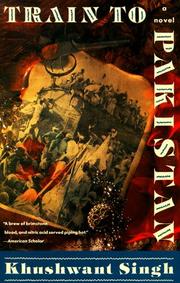
Singh's 1956 novel is the most direct and visceral literary reckoning with the violence of Partition. Reading it here, after the social-realist stage, places that violence in its full historical and human context.
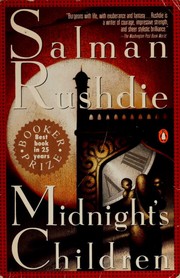
Rushdie's Booker Prize-winning epic is the defining postcolonial Indian novel — its magical-realist style, polyphonic voice, and allegorical sweep demand the cultural fluency built in all previous stages. It reprocesses everything from the epics to Partition into a single dazzling narrative.
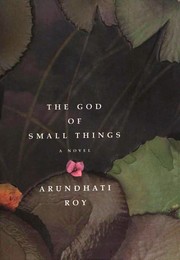
Roy's Booker-winning debut brings the postcolonial novel into the intimate register of family, caste, and forbidden love in Kerala. Its non-linear structure and lyrical prose represent the full maturity of Indian English fiction and reward the reader who has traveled the whole curriculum.
Contemporary Voices Across Languages & Regions
ExpertDiscover the breadth of 21st-century Indian literature beyond the English-language mainstream — regional, Dalit, feminist, and diasporic voices that together map modern India's full literary landscape.
▸ Study plan for this stage
Pace: 8–10 weeks, ~40–50 pages/day (Ponniyin Selvan: 5–6 weeks; The White Tiger: 2–3 weeks)
- Regional literary traditions and their independence from English-language publishing: how Tamil literature (Ponniyin Selvan) operates within its own aesthetic and historical frameworks
- Historical fiction as a vehicle for exploring national identity and cultural memory: Kalki's construction of Chola history and its relevance to modern India
- The picaresque and unreliable narration in contemporary Indian fiction: Balram's voice in The White Tiger as a counter-narrative to sanitized India
- Capitalism, corruption, and moral ambiguity in post-liberalization India: how Adiga depicts the informal economy and survival ethics
- Linguistic and cultural specificity: reading across languages (Tamil literary conventions vs. English-language Indian fiction) and what is gained or lost in translation
- Dalit and lower-caste perspectives in Indian literature: Balram's caste identity as central to understanding his rebellion and reinvention
- The relationship between individual agency and systemic constraint: protagonists navigating rigid social structures in different historical and contemporary contexts
- How does Kalki use the historical setting of the Chola empire in Ponniyin Selvan to comment on or reflect concerns relevant to modern India, and what does this reveal about the function of historical fiction in Indian literature?
- Compare the narrative strategies of Ponniyin Selvan and The White Tiger: how do their different narrative structures (epic/historical vs. first-person confessional) shape the reader's relationship to the protagonist and the world they inhabit?
- What role does caste play in each novel, and how do the authors use caste identity to explore questions of social mobility, morality, and belonging?
- How does The White Tiger's portrayal of corruption and informal capitalism challenge or complicate stereotypes about 'developing' India, and what is Adiga's moral stance toward Balram's choices?
- What linguistic and cultural assumptions are embedded in English-language Indian fiction (The White Tiger) versus regional-language literature (Ponniyin Selvan), and how might these shape what stories get told and how?
- How do both novels engage with the concept of individual transformation or reinvention, and what do their different outcomes suggest about the possibilities and limits of personal agency in India?
- Create a comparative timeline: map key historical events in Ponniyin Selvan's Chola setting alongside major moments in The White Tiger's contemporary India. What patterns of power, ambition, and social hierarchy emerge across these different periods?
- Write a character study of Balram (The White Tiger) from the perspective of a Chola-era character from Ponniyin Selvan. How might they judge or understand his choices? What does this reveal about changing moral frameworks across time?
- Analyze a 10-page passage from each novel focusing on narrative voice: annotate how the author reveals character, establishes tone, and positions the reader. What does each author's stylistic choice tell you about their vision of India?
- Research the Tamil literary tradition and Kalki Krishnamurthy's place within it (using scholarly sources or critical essays). Write a 2-page reflection on how Ponniyin Selvan might be read differently by Tamil readers versus English-language readers unfamiliar with this tradition.
- Create a 'corruption map' of The White Tiger: identify every instance of bribery, exploitation, or moral compromise. What pattern emerges? How does Adiga position the reader toward these acts—as inevitable, condemnable, or something more complex?
- Conduct a close reading of caste markers in both novels (names, occupations, social interactions, self-descriptions). Write an essay exploring how caste operates as a visible or invisible force in each text, and what each author suggests about its persistence or transformation.
Next up: This stage establishes the critical skill of reading Indian literature on its own terms—across languages, genres, and ideological positions—preparing you to engage with even more marginalized and experimental voices (Dalit autobiography, feminist poetry, diasporic hybrid forms) in the next stage.

This monumental Tamil historical novel about the Chola empire is one of the most beloved works in any Indian language. Reading it here reveals how rich and self-sufficient the regional literary traditions are, entirely outside the English or Hindi mainstream.
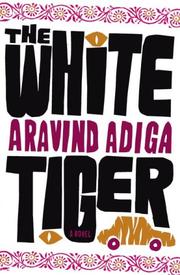
Adiga's Booker-winning novel gives a darkly comic, class-conscious portrait of contemporary India through the voice of a murderous entrepreneur. It brings the curriculum into the 21st century and into conversation with everything learned about caste and social mobility.
Discussion
Keep reading
Paths that share books, cover the same subject, or open a related topic.