Sufism: The Best Books to Understand Islamic Mysticism, in Order
This curriculum guides an intermediate learner from a solid grounding in Sufi history and doctrine, through the poetry and teachings of its greatest masters, and finally into the deeper philosophical and experiential dimensions of Islamic mysticism. Each stage builds the conceptual and spiritual vocabulary needed to fully appreciate the next, moving from scholarly overview to living transmission.
Foundations of Islamic Mysticism
IntermediateUnderstand what Sufism is, where it came from, and how it developed — its history, core concepts (fana, baqa, dhikr, the stations and states), and its place within Islam.
▸ Study plan for this stage
Pace: 4–5 weeks, ~25–30 pages/day, with 2–3 reflection days per week
- Sufism as the inner, esoteric dimension of Islam distinct from exoteric law and theology
- The historical development of Sufism from early Islamic asceticism through organized orders (tariqas) and their practices
- Fana (annihilation of the self) and baqa (subsistence in God) as central mystical experiences and goals
- Dhikr (remembrance of God) as a foundational spiritual practice and its role in Sufi methodology
- The stations (maqamat) and states (ahwal) as progressive stages of the spiritual path and their characteristics
- The role of the Sufi master (shaykh) and the disciple relationship in transmission of knowledge and spiritual transformation
- Sufi poetry, metaphor, and paradox as vehicles for conveying truths beyond rational discourse
- The integration of Sufism within Islamic orthodoxy and its relationship to Sharia
- What is Sufism and how does it relate to the broader Islamic tradition? How does Shah present its origins and early development?
- Explain the concepts of fana and baqa. What do these terms mean, and why are they central to Sufi spiritual experience according to Shah?
- What is dhikr, and how does it function as a Sufi practice? What role does it play in the spiritual path?
- Describe the distinction between maqamat (stations) and ahwal (states). Can you identify examples of each from Shah's text?
- What is the significance of the shaykh-murid (master-disciple) relationship in Sufism? How does Shah illustrate this dynamic?
- How does Shah use stories, anecdotes, and paradoxical language to convey Sufi teachings? What is the purpose of this approach?
- Create a timeline of Sufism's historical development from the early Islamic period through the major orders, using Shah's account as your source. Note key figures, movements, and turning points.
- Write a glossary of 15–20 key Sufi terms from the book (fana, baqa, dhikr, tawhid, muraqaba, etc.), defining each in your own words with a brief example or context from Shah's text.
- Select 3–5 Sufi stories or anecdotes from Shah's book and analyze what spiritual principle or teaching each one illustrates. Explain how the narrative form conveys meaning that direct explanation might not.
- Map out the stations and states as Shah describes them, creating a visual diagram or written outline showing their sequence, characteristics, and relationship to one another.
- Practice a simple form of dhikr (e.g., repetition of 'La ilaha illallah' or another invocation) for 10–15 minutes daily for one week, then journal about the experience: What did you notice? How might this practice relate to Shah's descriptions?
- Write a reflective essay (500–750 words) on how Sufism, as presented by Shah, represents an integration of mysticism within Islamic orthodoxy rather than a departure from it.
Next up: This stage establishes the foundational vocabulary, historical context, and core spiritual concepts of Sufism, preparing you to engage with more specialized texts on specific orders, advanced practices, or deeper philosophical and theological dimensions in subsequent stages.
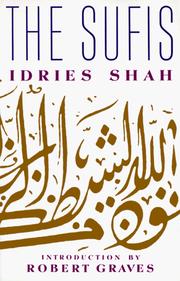
A classic, wide-ranging introduction that maps the Sufi world — its orders, symbols, and key figures — giving the learner a rich panoramic view before diving into primary sources.
The Path of the Heart — Core Sufi Teachings
IntermediateEngage directly with the inner path (tariqa) — the stations of the soul, the practice of love, and the ethics of the Sufi way — through foundational classical and modern texts.
▸ Study plan for this stage
Pace: 8–10 weeks, ~25–30 pages/day (alternating between texts; ~3–4 weeks per book with overlap for synthesis)
- The seven valleys (or stations) of the soul's journey toward union with the Divine, and the progressive annihilation of ego (fanā) at each stage
- The role of love (mahabbah) as the driving force and ultimate goal of the Sufi path, transcending rational knowledge
- The spiritual guide (shaykh/murshid) as essential intermediary and mirror for the disciple's transformation
- The ethical refinement of character (akhlāq) and the purification of intention (niyyah) as prerequisites for inner states
- The use of parable, allegory, and narrative as vehicles for transmitting experiential truth beyond literal meaning
- The paradox of the path: simultaneous effort and surrender, striving and trust in Divine grace (tawakkul)
- The distinction between knowledge of the Divine (ma'rifah) gained through direct experience versus intellectual learning ('ilm)
- The role of spiritual states (ahwāl) and stations (maqāmāt) as markers of progress, and the danger of attachment to them
- What are the seven valleys in Aṭṭār's Conference of the Birds, and what spiritual transformation occurs at each stage?
- How does Rumi use narrative and metaphor in Book One of the Masnavi to teach about the soul's separation from and longing for the Divine?
- What is the relationship between love (mahabbah) and knowledge (ma'rifah) in these texts, and why is love considered superior or more essential?
- What role does the spiritual master (shaykh) play in guiding the disciple, and what does this reveal about the nature of the Sufi path?
- How do Aṭṭār and Rumi address the paradox of human effort versus Divine grace, and what does this teach about the ethics of the Sufi way?
- What is the significance of ego-annihilation (fanā) in both texts, and how is it portrayed as both a death and a liberation?
- Trace the journey of the birds through each valley in Conference of the Birds, mapping the spiritual state, the trial, and the transformation at each stage; then reflect on which valley resonates most with your current spiritual condition
- Select three parables or stories from the Masnavi (Book One) and rewrite each in your own words, then identify the hidden teaching beneath the literal narrative
- Practice lectio divina (or a Sufi equivalent: slow, meditative reading) on a single passage from either text for 20 minutes; record what surfaces emotionally and spiritually, not intellectually
- Write a dialogue between yourself and a spiritual guide (real or imagined) in which you ask three genuine questions about your own inner obstacles, and respond as the guide might—drawing on wisdom from both texts
- Create a visual map or diagram of the stations of the soul (maqāmāt) as presented in both texts, noting overlaps, differences, and the qualities required to pass through each
- Identify one character or bird from the texts who embodies a spiritual state you struggle with; write a letter to them asking what they have learned, and respond in their voice
Next up: This stage establishes the inner landscape of the Sufi path and the transformative power of love and surrender; the next stage will deepen practice by exploring the formal structures of the orders (tariqas), the role of ritual and remembrance (dhikr), and how these teachings are lived communally and institutionally.

Attar's 12th-century masterpiece is the supreme allegorical map of the soul's journey to God through seven valleys; reading it here gives the learner the symbolic language that Rumi and later teachers inherited and transformed.
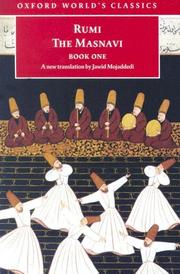
Rumi's magnum opus — read in a good translation such as Jawid Mojaddedi's — is the ocean of Sufi teaching in verse; placed after Attar, the learner can now hear its depths and recognize its allusions.
Rumi and the Great Sufi Poets
IntermediateExperience the full range of Sufi lyric poetry — from Rumi's ecstatic odes to Hafiz's wine-mysticism and Kabir's vernacular devotion — and understand how poetry functions as a vehicle of transmission.
▸ Study plan for this stage
Pace: 4–5 weeks, ~25–30 pages/day, with 2–3 days per week dedicated to close reading and reflection of individual poems
- Ecstatic union (fana) as the ultimate goal of Sufi practice, expressed through Rumi's intoxicated, boundary-dissolving language
- The beloved as a mirror for divine presence: how Rumi uses erotic and romantic imagery to describe the soul's relationship with God
- Poetry as direct transmission of mystical experience rather than intellectual instruction—the poem as a vehicle for spiritual states
- Vernacular devotion and accessibility: Kabir's rejection of Sanskrit, Persian, and formal religious authority in favor of everyday Hindi speech
- The paradox of expression: how both poets use contradiction, negation, and impossibility to point toward what cannot be said
- Spiritual intoxication and sobriety as complementary states in Sufi practice, particularly in Rumi's whirling dervish tradition
- The guru-disciple relationship and oral transmission: how Kabir's songs preserve the living voice of a teacher outside institutional religion
- How does Rumi use the image of the beloved to describe the soul's longing for union with the divine, and what does 'fana' (annihilation of self) mean in his poetry?
- Compare Rumi's use of formal Persian poetic structures (ghazals, odes) with Kabir's use of vernacular Hindi couplets—how does form reflect each poet's spiritual message?
- What role does intoxication (both literal and metaphorical) play in Rumi's mystical vision, and how does it differ from conventional religious sobriety?
- How does Kabir's rejection of both Hindu and Muslim institutional authority shape the content and tone of his devotional songs?
- In what ways do both poets use paradox, contradiction, and impossibility as spiritual teaching tools rather than logical arguments?
- How does the oral, performative nature of these poems (Rumi's connection to the whirling dervishes, Kabir's role as a traveling singer) affect how we should read and experience them?
- Select 3–4 of Rumi's most ecstatic odes from The Essential Rumi and read them aloud multiple times, noting how the rhythm and sound carry meaning beyond the literal words. Reflect on how the body responds to the language.
- Create a visual map or collage representing Rumi's recurring images (fire, wine, the beloved, the mirror, the dance) and trace how they interconnect across different poems to express the same mystical experience.
- Memorize one complete Rumi ghazal and one Kabir couplet. Recite them daily for one week, observing how repetition and embodied knowledge differ from analytical reading.
- Write your own 3–5 couplets in the style of Kabir using everyday language and vernacular speech (in English or your native language) on a spiritual or devotional theme, imitating his directness and rejection of formal religious language.
- Compare a single Rumi poem with a single Kabir song side-by-side: annotate the differences in imagery, tone, audience, and spiritual goal. Write a 1–2 page analysis of how their different contexts (Persian court mysticism vs. North Indian vernacular devotion) shape their approaches.
- Listen to or watch recordings of Rumi's poetry being performed (if available) and/or recordings of Kabir's songs in their original contexts. Reflect on how performance and music transform the experience of reading the text on the page.
Next up: This stage grounds you in the lived, embodied experience of Sufi poetry as a transmission vehicle, preparing you to explore how later Sufi movements institutionalized, systematized, and sometimes rigidified these ecstatic insights into formal orders and doctrinal frameworks.

Coleman Barks's celebrated translations of the Divan-e Shams make Rumi's lyric voice immediately accessible; reading this after the Masnavi reveals the more intimate, ecstatic register of his genius.

Kabir's Hindi devotional poetry, translated by Rabindranath Tagore, extends the curriculum beyond Persian Sufism into the broader world of Islamic mysticism's encounter with South Asian spirituality.
Advanced Sufi Philosophy & Living Masters
ExpertPenetrate the metaphysical heights of Sufi thought — especially the doctrine of the Unity of Being (wahdat al-wujud) — and encounter the teachings of great modern Sufi guides.
▸ Study plan for this stage
Pace: 8–10 weeks, ~25–30 pages/day, with 2–3 days per week dedicated to deep reflection and note-taking on dense metaphysical passages
- Wahdat al-wujud (Unity of Being): the doctrine that only God's existence is truly real, and all other existence is manifestation or shadow of the Divine
- The Bezels (Fuṣūṣ) as divine wisdom imprinted in the hearts of the prophets, each representing a unique facet of God's self-knowledge
- The relationship between the Absolute (al-Haqq) and the relative (al-khalq), and how creation participates in Divine Being without being identical to it
- Imagination (khayāl) as the intermediary faculty between the sensible and intelligible worlds, central to mystical perception
- The prophetic archetypes: how each prophet embodies a specific divine attribute and serves as a mirror for understanding God's nature
- The role of the Perfect Human (al-insān al-kāmil) as the microcosm containing all divine names and attributes
- Ontological hierarchy: the levels of existence from pure non-being through manifestation to the Divine Essence
- Mystical hermeneutics: reading scripture and creation as signs (āyāt) that reveal hidden divine meanings
- What does Ibn al-Arabi mean by wahdat al-wujud, and how does he distinguish it from pantheism or the claim that creation is identical to God?
- How does Ibn al-Arabi use the prophetic narratives in the Qur'an to illustrate metaphysical principles, and what is the significance of each bezel?
- What is the function of imagination (khayāl) in Sufi epistemology according to Ibn al-Arabi, and how does it enable mystical knowledge?
- Explain the concept of the Perfect Human (al-insān al-kāmil) and its relationship to both God and creation in Ibn al-Arabi's metaphysics.
- How does Ibn al-Arabi's doctrine of the Unity of Being transform the believer's understanding of prayer, ethics, and relationship with God?
- What are the ontological levels or stations of existence in Ibn al-Arabi's system, and how do they relate to the journey of the soul?
- Close-read one bezel (e.g., Adam, Moses, or Jesus) in detail, mapping out the metaphysical principles Ibn al-Arabi extracts from the prophetic narrative and how they illustrate aspects of wahdat al-wujud
- Create a visual diagram or concept map showing the ontological hierarchy from pure non-being through the divine names and attributes to creation, labeling each level with relevant Qur'anic or Prophetic references from the text
- Write a 2–3 page meditation on a single divine name or attribute (e.g., 'The Merciful,' 'The Just,' 'The Wise') as Ibn al-Arabi presents it, exploring how that attribute manifests in creation and in your own spiritual experience
- Analyze a passage where Ibn al-Arabi discusses imagination (khayāl) and write a reflection on how this faculty operates in your own mystical or contemplative practice, with concrete examples
- Comparative study: select one bezel and compare Ibn al-Arabi's interpretation with a classical Islamic exegesis (tafsīr) of the same prophetic narrative, noting how his metaphysical lens transforms the reading
- Journaling exercise: after reading 2–3 bezels, write a personal response exploring how the doctrine of Unity of Being challenges or deepens your own understanding of monotheism and divine transcendence
Next up: Mastery of Ibn al-Arabi's metaphysical system and his method of reading prophetic archetypes as mirrors of divine truth prepares you to encounter living Sufi masters who stand in his intellectual and spiritual lineage, applying these principles to contemporary spiritual guidance and transformation.
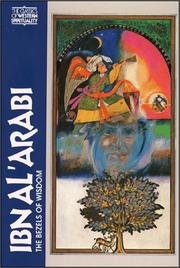
Ibn Arabi's Fusus al-Hikam is the summit of Sufi metaphysics; placed last among the classical texts, the learner now has the poetic and doctrinal preparation to engage its demanding but transformative ideas.
Discussion
Keep reading
Paths that share books, cover the same subject, or open a related topic.