Magical Realism: The Best Novels to Read, in Order
This curriculum guides an intermediate reader through the heart of magical realism — from its most accessible and beloved classics, through its foundational Latin American masters, and into the modern global writers who have carried the tradition forward. Each stage builds narrative and thematic fluency, so that by the end the reader can recognize, appreciate, and analyze the genre's deepest techniques and ideas.
The Gateway Classics
IntermediateExperience magical realism at its most immersive and emotionally immediate, building intuition for how the impossible is treated as ordinary and how myth saturates everyday life.
▸ Study plan for this stage
Pace: 8–10 weeks, ~40–50 pages/day. Start with "Like Water for Chocolate" (245 pages, 2–3 weeks), then move to "One Hundred Years of Solitude" (417 pages, 5–7 weeks). Allow 1 week between books for reflection and integration.
- The normalization of the magical: how impossible events (Tita's supernatural influence through food, the Buendía family's cyclical time) are presented without explanation or apology as part of ordinary life
- Emotional and sensory immersion as the gateway to belief: how Esquivel's focus on taste, smell, and bodily sensation makes magical events feel inevitable, and how García Márquez's matter-of-fact narration achieves the same effect
- Myth and cyclical time: recognizing how both novels embed mythic patterns (repetition of names, fates, and conflicts across generations) into their narrative structure
- The blurred boundary between the personal and the cosmic: how intimate domestic spaces and individual desires become entangled with larger historical, magical, or metaphysical forces
- Magical realism as a mode of resistance: understanding how the impossible can express what realism alone cannot—trauma, longing, cultural memory, and the weight of history
- Narrative voice and tone: how the author's calm, accepting perspective toward magical events shapes the reader's willingness to accept them as real
- How does Esquivel use sensory detail (taste, smell, texture) to make Tita's magical influence through food feel emotionally true rather than fantastical? Provide specific examples.
- In 'One Hundred Years of Solitude,' how does the repetition of names and character arcs across generations create a sense of cyclical time, and what does this suggest about fate and free will in the novel?
- What is the relationship between Tita's emotional state and her supernatural abilities in 'Like Water for Chocolate'? How does this differ from how magic functions in 'One Hundred Years of Solitude'?
- How do both novels use magical elements to express historical trauma or cultural memory that realistic narrative alone might not capture?
- Describe the tone and narrative perspective in each novel. How does the narrator's attitude toward magical events influence your acceptance of them as a reader?
- What role does the family (the De la Garza household, the Buendía lineage) play in anchoring magical events to the everyday world in each novel?
- Sensory mapping: Choose three scenes from 'Like Water for Chocolate' where Tita's emotions affect others through food. Map the sensory details (taste, smell, texture, color) and note how they create emotional truth. Write a paragraph explaining how sensation makes the magical believable.
- Character genealogy: Create a visual family tree of the Buendías across all seven generations, tracking the repetition of names, professions, and fates. Annotate with page numbers and note patterns. Write a reflection on what the cyclical naming suggests about the novel's view of time and destiny.
- Magical realism journal: As you read each novel, keep a running list of magical events. For each, note: (1) how it's introduced, (2) the emotional or historical context, (3) how other characters react, (4) what it reveals about the character or world. Review your list at the end to identify patterns.
- Comparative scene analysis: Select one emotionally charged scene from 'Like Water for Chocolate' (e.g., Tita's wedding night) and one from 'One Hundred Years of Solitude' (e.g., Remedios the Beauty's ascension). Write a 2–3 page analysis comparing how each author uses magical elements to express what realistic description could not.
- Tone and voice study: Read aloud a passage from each novel where something impossible occurs. Record yourself, then listen back. Write notes on the narrator's tone—is it matter-of-fact? Lyrical? Detached? How does this tone shape your emotional response?
- Myth and metaphor exploration: Research one mythic or folkloric element in each novel (e.g., the magical kitchen in 'Like Water for Chocolate,' the plague of insomnia in 'One Hundred Years of Solitude'). Write a 1–2 page essay on how the novel transforms myth into lived experience.
Next up: This stage establishes intuition for the emotional logic of magical realism—how the impossible becomes inevitable through sensory immersion, cyclical time, and narrative acceptance—preparing you to recognize and analyze these techniques in more experimental or fragmented works that push the boundaries of the form.

A warm, accessible entry point where magic flows naturally through food and emotion — perfect for calibrating the genre's central contract: the supernatural accepted without question.

The genre's defining masterpiece. Read here, after Esquivel has primed the reader's instincts, so its epic scope and cascading miracles feel wondrous rather than overwhelming.
The Labyrinthine Mind — Borges and the Philosophical Core
IntermediateUnderstand the intellectual and structural DNA of magical realism: infinite libraries, mirrors, labyrinths, and the idea that fiction itself is a kind of magic.
▸ Study plan for this stage
Pace: 4–5 weeks, ~25–30 pages/day. Start with "Ficciones" (2 weeks), then move to "Labyrinths" (2–3 weeks). Allow overlap for re-reading key stories and reflection.
- The Library as infinite metaphor: how Borges uses 'The Library of Babel' to explore the limits of knowledge, meaning, and human understanding
- Labyrinths and recursive structures: how stories fold back on themselves, creating loops where endings circle back to beginnings (e.g., 'The Garden of Forking Paths')
- Mirrors and doubling: the idea that fiction reflects reality and reality reflects fiction, collapsing the boundary between them
- Authorship and textual authority: how Borges questions who wrote what and whether the author controls meaning (e.g., 'Pierre Menard, Author of the Quixote')
- Time as non-linear and cyclical: rejecting chronological progression in favor of eternal recurrence and branching possibilities
- Metafiction as magic: the notion that stories about stories, and fiction about fiction, reveal something true about how meaning is constructed
- The infinite within the finite: how Borges packs cosmic scope into tiny, dense stories
- What does 'The Library of Babel' suggest about the relationship between language, order, and chaos? How does this story embody magical realism?
- In 'The Garden of Forking Paths,' how does the labyrinthine structure of the story mirror its plot? What does this tell us about time and choice?
- How does 'Pierre Menard, Author of the Quixote' challenge the idea of authorship and originality? Why is this a form of magic?
- What role do mirrors and doubling play in Borges' work? Find at least two examples and explain how they blur fiction and reality.
- How does Borges use brevity and density to suggest infinity? What is the relationship between form and content in his stories?
- What is the connection between labyrinths, libraries, and mirrors in Borges' work? How do these three symbols work together?
- Map the structure of 'The Garden of Forking Paths': draw or diagram how the story branches, loops, and folds back on itself. Annotate where time splits and how the labyrinth functions as both plot and theme.
- Write a one-page response: If you were a librarian in 'The Library of Babel,' what would you search for and why? How would you cope with infinite possibility?
- Create a Borgesian index or catalog: invent 5–7 fictional books that might exist in the Library of Babel. Write 2–3 sentence descriptions for each, mimicking Borges' style of blending the absurd with the scholarly.
- Rewrite a scene from one of Borges' stories from a different character's perspective (e.g., the spy's handler in 'The Garden of Forking Paths'). How does shifting perspective change the labyrinth?
- Close-read 'Pierre Menard, Author of the Quixote': underline every instance where Borges questions authorship, originality, or meaning. Write a paragraph explaining how this story is itself a kind of literary magic trick.
- Identify and trace one recurring symbol (mirror, library, labyrinth, or infinity) across at least three stories in the two books. Create a visual or written analysis showing how Borges develops and transforms this symbol.
Next up: This stage establishes the philosophical and structural foundations of magical realism—the idea that fiction is a labyrinth of meaning, authorship is unstable, and infinity can be contained in a story—preparing you to see how later magical realist writers (García Márquez, Allende, Rushdie) build on Borges' innovations to create worlds where the impossible becomes mundane and the everyday becomes w
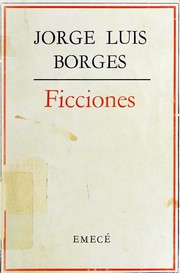
Borges is the genre's great architect of ideas. These stories introduce the philosophical puzzles — infinite regress, parallel worlds, invented encyclopedias — that underpin all serious magical realism.

A complementary collection that deepens Borges's key themes; reading it after Ficciones reveals his full range and cements the reader's grasp of metafiction as magic.
The Latin American Canon
IntermediateEncounter the other towering voices of the Latin American Boom who shaped magical realism alongside García Márquez, each with a distinct national mythology and style.
▸ Study plan for this stage
Pace: 6–7 weeks, ~40–50 pages/day. *Pedro Páramo* (130 pages) in weeks 1–2; *Love in the Time of Cholera* (368 pages) in weeks 3–7, with overlap for reflection and comparative work.
- The ghost-town as narrative form: how Rulfo uses spatial disorientation and the dead as narrators to collapse past and present in *Pedro Páramo*
- National mythology and regional voice: Rulfo's Mexican landscape versus García Márquez's Caribbean sensibility, and how each author grounds magical realism in local history and geography
- Time as a non-linear, cyclical force: the rejection of chronological progression in favor of recursive, layered temporality in both novels
- Love as a destructive and redemptive force across generations: how both authors use romantic obsession to explore mortality, memory, and the human condition
- The magical realist technique of matter-of-fact narration: how extraordinary events (the dead speaking, a woman ascending to heaven, eternal love) are presented without explanation or apology
- Solitude and isolation as existential conditions: the ways characters are trapped by circumstance, desire, or their own nature, and how this reflects broader Latin American social realities
- Narrative fragmentation and reader disorientation: how both novels resist linear comprehension and demand active reconstruction of meaning
- How does Rulfo use the voices of the dead in *Pedro Páramo* to tell the story, and what effect does this narrative strategy have on your understanding of time and causality?
- Compare the role of love in *Pedro Páramo* (Susana San Juan and Pedro Páramo) and *Love in the Time of Cholera* (Florentino and Fermina). How does each author use romantic obsession to explore larger themes about human nature and mortality?
- What is the significance of place in each novel? How do the Mexican village of Comala and the Caribbean port city in *Love in the Time of Cholera* function as more than mere settings—as characters or forces in their own right?
- How do Rulfo and García Márquez differ in their use of magical realism? What distinct national or regional mythologies does each author draw upon, and how does this shape their narrative style?
- Explain the concept of solitude in both novels. How are the main characters isolated, and what does this isolation reveal about the human condition as each author sees it?
- How does the non-linear, fragmented structure of *Pedro Páramo* compare to the more chronological (though still complex) structure of *Love in the Time of Cholera*? What are the advantages and challenges of each approach?
- Create a timeline or map of *Pedro Páramo*: identify the major events and characters, then attempt to arrange them chronologically. Reflect on what is lost and gained by imposing linear order on Rulfo's deliberately disorienting narrative.
- Write a comparative character study of Susana San Juan (from *Pedro Páramo*) and Fermina Daza (from *Love in the Time of Cholera*). How do these women embody different responses to love, desire, and social constraint?
- Identify 5–7 instances of magical realism in each novel (e.g., Remedios the Beauty ascending to heaven in *Love in the Time of Cholera*, or the dead speaking in *Pedro Páramo*). For each, write a sentence explaining why the author presents it without explanation and what emotional or thematic effect this creates.
- Sketch or describe the geography of Comala (*Pedro Páramo*) and the unnamed Caribbean city (*Love in the Time of Cholera*) based on textual clues. How does each setting reflect the novel's themes? What role does landscape play in shaping character and plot?
- Rewrite a key scene from *Pedro Páramo* (e.g., an encounter between Pedro and Susana) in chronological, realistic prose. Then compare your version to Rulfo's original. What does the magical realist fragmentation achieve that realism cannot?
- Track the motif of solitude through both novels. Create a chart noting moments when characters are isolated, what causes their isolation, and how they respond. What patterns emerge across the two works?
Next up: This stage establishes the stylistic and thematic foundations of the Latin American Boom—fragmented time, regional mythology, and the use of love and solitude as windows into existential truth—preparing you to engage with other major voices (such as Vargas Llosa or Cortázar) who extend and complicate these innovations in their own ways.
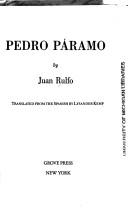
García Márquez called this the book that taught him how to write; its dead narrators and ghostly Mexican village are the direct ancestor of Macondo — essential context read here.
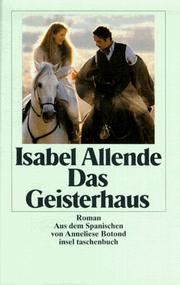
Allende's multigenerational Chilean saga applies the Macondo blueprint to political history, showing how magical realism can carry the weight of real-world trauma and feminist perspective.
A return to García Márquez at a more mature reading level; this novel shows his quieter, more intimate magic and rounds out the reader's understanding of his full range.
Global Voices — The Genre Travels
ExpertSee how magical realism migrated beyond Latin America into European, African, and South Asian fiction, absorbing new mythologies and political contexts.
▸ Study plan for this stage
Pace: 8–10 weeks, ~40–50 pages/day (accounting for dense prose and re-reading of key passages). Allocate roughly 3 weeks per novel to allow for deep engagement with each text's historical and cultural contexts.
- Magical realism as a vehicle for postcolonial narratives: how Rushdie uses the fantastical to process Partition and Indian independence in Midnight's Children
- Trauma, memory, and the supernatural: how Morrison weaponizes magical elements in Beloved to represent the unspeakable horrors of slavery and the persistence of the past
- Magical realism in non-Latin American contexts: recognizing how each author adapts the genre to their own cultural mythology and political moment rather than simply importing a Latin American formula
- The role of unreliable narration and metafiction: how Rushdie's Saleem and Bulgakov's narrator destabilize historical 'truth' through magical distortion
- Political allegory through the magical: decoding how each novel uses supernatural elements to critique authoritarianism, colonialism, and systemic oppression
- Mythological syncretism: how Midnight's Children draws on Hindu/Islamic traditions, Beloved invokes African diasporic spirituality, and The Master and Margarita resurrects Russian folklore and Menippean satire
- The ghost as historical witness: understanding how spectral presences (Beloved's ghost, the Devil's retinue in Bulgakov) embody historical forces that refuse to be forgotten or erased
- How does Rushdie use Saleem's magical abilities (his telepathic powers, his literally dripping nose) to represent India's relationship to its own independence and fragmentation? What does the magical enable that realistic narration could not?
- In Beloved, how does Morrison's treatment of Beloved as a ghost differ from traditional ghost stories, and what does this difference reveal about how she conceptualizes slavery's ongoing trauma?
- Compare the narrative unreliability in Midnight's Children and The Master and Margarita: how do both Rushdie and Bulgakov use magical distortion to question the possibility of historical truth?
- What role do pre-colonial and pre-Soviet mythologies play in grounding magical realism in Midnight's Children and The Master and Margarita respectively? How do these mythologies resist Western rationalism?
- How does each novel use magical realism to critique political systems (Partition and Indian nationalism in Rushdie; slavery and American racism in Morrison; Stalinism in Bulgakov)? What can the magical express about these systems that realism cannot?
- Trace the figure of the supernatural witness across all three novels: what do Saleem's memories, Beloved's presence, and the Devil's interventions have in common as historical forces?
- Create a timeline of Midnight's Children that separates 'historical events' from 'magical events,' then write a 2–3 page reflection on how the magical events distort or reframe the historical ones. What does this distortion accomplish politically?
- Write an alternative scene from Beloved from the perspective of Beloved herself, using only the magical/supernatural details Morrison provides. How does inhabiting the ghost's voice change your understanding of her agency?
- Map the political allegories in The Master and Margarita: identify 3–4 scenes where Bulgakov uses the supernatural (the Devil's visit, Woland's interventions) to critique Stalinist society. Write a 1-page analysis of how realism would fail to convey what the magical achieves.
- Comparative close reading: select one passage from each novel where magical realism is most densely deployed (e.g., Saleem's telepathic awakening, Beloved's arrival, Woland's first appearance). Annotate each for tone, narrative perspective, and political subtext.
- Research and write: investigate the historical context each novel engages with (Indian Partition, American slavery, Stalinist USSR). Then write a 2–3 page essay on why magical realism was the necessary formal choice for representing each crisis.
- Create a 'magical realism across cultures' chart comparing how each author deploys the supernatural: What mythological traditions does each draw on? What political work does the magical perform? How does this differ from Latin American magical realism?
Next up: Having traced magical realism's global migration and its capacity to articulate postcolonial, diasporic, and authoritarian traumas, you are now prepared to examine how contemporary and 21st-century authors have further hybridized and fragmented the genre in response to digital culture, climate crisis, and transnational identity.
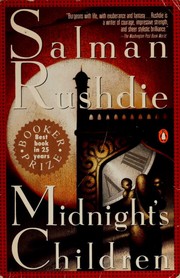
The landmark novel that transplanted magical realism into postcolonial India; its narrator's telepathic powers tied to the birth of a nation show the genre's political power at full stretch.

Morrison's haunted masterpiece brings magical realism to the American experience of slavery, proving the mode is not ornamental but the only adequate language for certain historical horrors.
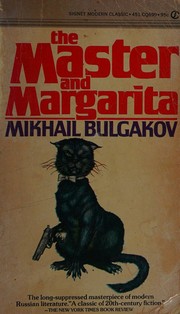
Written in Soviet Russia, this novel's devil-in-Moscow premise shows a parallel European tradition of the fantastic-as-satire, broadening the reader's genre map before the final stage.
Contemporary Masters — The Living Tradition
ExpertEngage with 21st-century writers who have reinvented magical realism for new cultural contexts and concerns, confirming the genre's ongoing vitality.
▸ Study plan for this stage
Pace: 4–5 weeks, ~40–50 pages/day (Strecher's critical study: 2 weeks; Homegoing: 2–3 weeks, with overlap for synthesis)
- Murakami's reinvention of magical realism through Japanese metaphysics and urban alienation—how The Wind-up Bird Chronicle uses surreal domesticity and parallel worlds to explore consciousness and trauma
- Temporal multiplicity and nested narratives as a magical realist technique—how Strecher's analysis reveals Murakami's use of time-slips and dream logic to collapse past and present
- Magical realism as a vehicle for postcolonial and diasporic memory—how Gyasi's Homegoing uses ancestral spirits, cyclical time, and magical elements to trace the long shadow of the slave trade across generations and continents
- Genre adaptation across cultural contexts—how Murakami (Japanese) and Gyasi (Ghanaian-American) reshape magical realism away from its Latin American origins to address distinct historical traumas and epistemologies
- The domestic and intimate as sites of the magical—how both texts locate the extraordinary within everyday spaces (Murakami's house, Gyasi's family homes) rather than in exotic landscapes
- Fragmentation and reader agency—how both texts demand active interpretation, leaving gaps and ambiguities that reflect characters' fractured identities and the reader's role in constructing meaning
- How does Strecher argue that Murakami's use of magical realism differs from the Latin American tradition, and what does this reveal about the genre's adaptability?
- What role do parallel worlds, dream sequences, and temporal distortions play in The Wind-up Bird Chronicle, and how do they function as expressions of psychological or historical trauma?
- How does Homegoing use magical realist elements (ancestral presence, cyclical time, symbolic objects) to represent the intergenerational impact of slavery and colonialism?
- Compare the function of the domestic space in The Wind-up Bird Chronicle and Homegoing—how does each text make the home a site where the magical and historical converge?
- What does the coexistence of magical realism in both a Japanese and a Ghanaian-American text suggest about the genre's relationship to non-Western epistemologies and modes of storytelling?
- How do both texts use fragmentation and ambiguity as formal strategies, and what effect does this have on the reader's experience of meaning-making?
- Create a timeline of The Wind-up Bird Chronicle that maps the multiple temporal layers (present, past, dream, parallel world)—annotate which events are 'real' vs. magical, and note where Strecher's analysis clarifies these boundaries
- Write a comparative character map for Homegoing tracing one family line across generations—mark where magical or ancestral elements appear and analyze how they carry historical memory forward
- Analyze a single scene from The Wind-up Bird Chronicle (e.g., the well, the cat, the Lieutenant's story) using Strecher's critical framework—identify how surrealism functions as a vehicle for exploring consciousness or trauma
- Create a visual or written genealogy of magical realism across the three contexts: Latin American origins, Murakami's Japanese adaptation, and Gyasi's diasporic African-American reinvention—note what shifts and what persists
- Write a close-reading essay (1,500–2,000 words) comparing how The Wind-up Bird Chronicle and Homegoing each use magical elements to represent historical or psychological rupture—use specific textual evidence from both
- Conduct a 'form and function' analysis: select 3–4 magical realist moments from each text and explain how the magical element serves the thematic or narrative purpose (trauma, memory, identity, resistance)
Next up: This stage establishes how contemporary writers across diverse cultural contexts have claimed and transformed magical realism as a vehicle for exploring trauma, memory, and non-Western epistemologies—preparing you to examine how the genre continues to evolve in response to urgent 21st-century concerns (climate, technology, migration, identity politics) in the final stage.
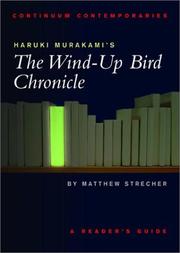
Murakami's Japanese magical realism — dreamlike, suburban, psychologically deep — shows how the genre mutates when filtered through an entirely different cultural unconscious.
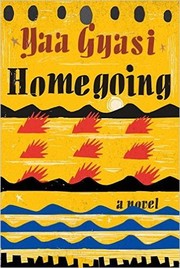
A modern multigenerational epic rooted in Ghanaian history that uses magical and mythic elements with restraint and power, representing the genre's freshest and most urgent contemporary form.
Discussion
Keep reading
Paths that share books, cover the same subject, or open a related topic.