The Best Books on the Beat Generation
The Beat Generation is best understood by reading the core texts in the order they exploded into the world — starting with the novels and poems that defined the movement, then expanding outward to its key voices, and finally deepening with critical and contextual works that reveal what the Beats were really rebelling against and building toward. Because the learner starts at an intermediate level, we skip introductory surveys and dive straight into the primary texts, building from the most accessible to the most experimental.
The Holy Trinity: Core Texts
IntermediateExperience the three defining masterworks of the Beat Generation firsthand — the road novel, the long poem, and the cut-up novel — and understand what made them revolutionary.
▸ Study plan for this stage
Pace: 8–10 weeks, ~40–50 pages/day (accounting for poetry re-reading and dense passages in Burroughs)
- Spontaneous prose and the rejection of formal literary structure as a philosophical stance in Kerouac's On the Road
- The relationship between form and content: how each text's experimental style embodies Beat Generation values of freedom and authenticity
- Howl as prophetic social critique—the cataloging of a generation's alienation and the sacred in the profane
- Narrative fragmentation and non-linearity in Naked Lunch as a reflection of consciousness, addiction, and the breakdown of conventional meaning
- The Beat obsession with transcendence, spirituality, and ecstatic experience across all three texts
- How these three texts collectively challenged 1950s American conformity, censorship, and literary convention
- The role of the outsider/rebel protagonist in each work and what their journeys reveal about American identity
- What does Kerouac mean by 'spontaneous prose' and how does this technique shape the reader's experience of On the Road?
- How does Ginsberg use cataloging and repetition in Howl to convey both despair and celebration?
- What is the relationship between Sal Paradise's travels and his spiritual or existential search in On the Road?
- How does Burroughs' cut-up method in Naked Lunch challenge conventional narrative and what effect does this have on meaning-making?
- What role does drug use and altered consciousness play as both subject matter and formal technique across all three texts?
- How do these three texts collectively represent a rejection of 1950s American values, and what alternatives do they propose?
- Write 3–5 pages of 'spontaneous prose' in Kerouac's style—unedited, stream-of-consciousness narrative without concern for grammar or structure—then reflect on how this differs from your normal writing
- Annotate a section of Howl (Part I, lines 1–50) marking Ginsberg's use of anaphora, cataloging, and shifts in tone; then write a short analysis of how these techniques build emotional intensity
- Create a visual map or collage representing the non-linear, fragmented structure of Naked Lunch—showing how scenes connect thematically rather than chronologically
- Compare a passage from On the Road with one from Naked Lunch, analyzing how each author's formal choices reflect their different visions of freedom and consciousness
- Write a 2–3 page personal essay responding to one of Ginsberg's central questions in Howl: What does it mean to be 'the best minds of my generation'?
- Perform or record a dramatic reading of a section from Howl (at least 20 lines), paying attention to breath, rhythm, and oral delivery as essential to the poem's meaning
Next up: This stage establishes the formal and thematic foundations of Beat literature, preparing you to explore how these revolutionary techniques and ideas influenced subsequent countercultural movements, literary schools, and individual Beat authors' later works.

The most accessible and iconic Beat text, it establishes the movement's central themes: freedom, jazz rhythm, cross-country wandering, and rejection of postwar conformity. Read it first to anchor everything that follows.

Ginsberg's incantatory long poem is the Beat manifesto in verse form. Reading it after Kerouac lets you feel how the same restless energy translates from prose into raw, biblical poetry.

The most radical and difficult of the three, Burroughs' hallucinatory cut-up novel pushes Beat experimentation to its limit. Placing it third means you arrive with enough context to appreciate its deliberate chaos.
Kerouac's Full Vision
IntermediateGo deeper into Kerouac's 'Legend of Duluoz' and his poetic theory to understand that On the Road was just one facet of a vast, autobiographical literary project.
▸ Study plan for this stage
Pace: 4–5 weeks, ~40–50 pages/day (accounting for poetry re-reading and reflection)
- The Legend of Duluoz as an interconnected autobiographical cycle: how The Dharma Bums and Mexico City Blues extend and deepen the narrative begun in On the Road
- Buddhist philosophy and Zen practice as central to Kerouac's spiritual quest, not merely a backdrop—the shift from restless wandering to contemplative seeking
- Japhy Ryder and the mountain climbing/wilderness experience as an alternative to urban Beat culture and a path toward enlightenment
- Spontaneous prose and spontaneous poetry as literary techniques: how Kerouac's poetic form in Mexico City Blues mirrors his narrative philosophy
- The relationship between Buddhism, nature, and artistic creation in Kerouac's work—how spiritual practice informs literary practice
- Mexico City Blues as a fragmented, jazz-like poetic sequence: understanding breath, rhythm, and the 'chorus' as structural and thematic elements
- Kerouac's critique of materialism and conformity through the lens of Buddhist renunciation and the search for authentic experience
- The role of friendship, mentorship, and community (Japhy, Alvah, other characters) in the spiritual journey across both texts
- How does The Dharma Bums expand or complicate the vision of freedom presented in On the Road? What is different about Kerouac's quest in this novel?
- Explain the significance of Japhy Ryder's character and his influence on the protagonist's spiritual path. How does he represent an alternative to the Beat lifestyle?
- What role does Buddhism and Zen practice play in The Dharma Bums, and how does it shape the narrative's central conflicts and resolutions?
- How does Kerouac use nature and mountain climbing as metaphors for spiritual practice and enlightenment in The Dharma Bums?
- Analyze the structure and style of Mexico City Blues: how do the 'choruses' and fragmented form reflect Kerouac's theories of spontaneous composition?
- What is the relationship between the personal, autobiographical content of Mexico City Blues and its experimental poetic form? Why does Kerouac choose poetry over prose here?
- How do The Dharma Bums and Mexico City Blues together demonstrate that On the Road was only one chapter in a larger, unified literary project (the Legend of Duluoz)?
- Create a character map showing how Japhy Ryder, Alvah Goldbook, and other figures in The Dharma Bums connect to or differ from characters in On the Road; annotate with their spiritual roles and influence on the protagonist
- Write a 2–3 page comparative analysis: identify three key scenes from The Dharma Bums that mirror or invert scenes from On the Road, explaining what the differences reveal about Kerouac's evolving vision
- Select 5–6 choruses from Mexico City Blues and annotate them for: (a) breath/line breaks, (b) autobiographical references, (c) Buddhist imagery, (d) jazz-like rhythms. Write a short reflection on how form and content interact
- Compose your own spontaneous poem (3–5 pages) using Kerouac's method: write without revision, following breath and association, on a personal spiritual or existential question. Then analyze how your process mirrors or differs from his technique
- Create a timeline or visual diagram mapping the Legend of Duluoz across On the Road, The Dharma Bums, and Mexico City Blues, showing how the protagonist's spiritual and geographical journey evolves across all three texts
- Write a close reading essay (4–5 pages) on one major theme (e.g., renunciation, friendship, enlightenment) as it appears in both The Dharma Bums and Mexico City Blues, using specific textual evidence from both works
Next up: This stage establishes Kerouac's spiritual and literary ambitions beyond On the Road, preparing you to explore how other works in the Legend of Duluoz (such as Big Sur or Desolation Angels) continue, challenge, or complicate the Buddhist and autobiographical vision you've now internalized.

Written immediately after On the Road, this novel shifts the Beat quest from jazz and highways to Zen Buddhism and mountain climbing — essential for understanding the movement's spiritual dimension.
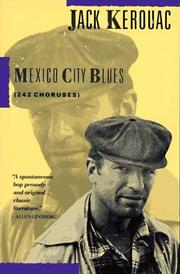
Kerouac's 242-chorus jazz-poetry sequence reveals the musical and Buddhist underpinnings of his prose style, bridging his fiction and his poetic theory of 'spontaneous prose.'
The Other Voices: Ginsberg, Corso & Cassady
IntermediateEncounter the other major Beat writers and the real-life figures behind the fiction, rounding out the movement beyond its three most famous names.
▸ Study plan for this stage
Pace: 4–5 weeks, ~25–30 pages/day (with poetry read more slowly for comprehension)
- Ginsberg's confessional mode and the role of personal/family trauma in Beat poetry—how 'Kaddish' transforms grief into spiritual inquiry
- Corso's anarchic, playful approach to language and form as a counterpoint to Ginsberg's intensity—the range of Beat poetic voices
- Cassady's prose style as the bridge between autobiography and myth-making—how lived experience becomes literary legend
- The Beat obsession with authenticity and spontaneity across different genres (long-form poetry, short lyric, memoir)
- How these three writers embody different relationships to spirituality, mortality, and the search for meaning
- The role of marginality and outsider status in shaping Beat aesthetics and subject matter
- Intertextuality within the Beat circle—how these works reference, echo, and respond to each other
- How does Ginsberg use the Jewish prayer form (Kaddish) to process his mother's death and mental illness, and what does this reveal about Beat spirituality?
- What is distinctive about Corso's poetic voice and technique in 'Gasoline'—how does it differ from Ginsberg's approach, and what does this suggest about Beat diversity?
- How does Cassady's narrative voice in 'The First Third' construct his own legend, and what is the relationship between his lived experience and his mythic status in Beat literature?
- What role does spontaneity and 'first thought, best thought' play across these three works, and how is it realized differently in poetry versus prose?
- How do these three writers engage with themes of family, identity, and belonging—what do their different treatments reveal about Beat concerns?
- What connections exist between the three works in terms of imagery, preoccupations, and literary technique?
- Read 'Kaddish' aloud in sections, noting how Ginsberg's long lines and breath-based rhythm create emotional intensity; record yourself and listen back to identify where the poem's emotional peaks occur
- Create a visual map of 'Kaddish' tracking the poem's movement between Ginsberg's present moment, memories of his mother Naomi, and spiritual/mystical passages—annotate where the tone shifts
- Compare 3–4 poems from 'Gasoline' with passages from 'Kaddish' in a side-by-side analysis: what are the differences in line length, diction, humor, and subject matter?
- Write a 2–3 page imitation of Corso's style (playful, anarchic, image-driven) on a contemporary subject, then reflect on what this exercise reveals about his technique
- Trace Cassady's self-presentation in 'The First Third'—identify moments where he seems to be constructing or mythologizing himself, and moments where raw vulnerability breaks through
- Create a timeline of Cassady's life as presented in 'The First Third' and cross-reference it with biographical facts (research online); note where the memoir emphasizes, omits, or reimagines events
- Write a comparative essay (4–5 pages) on how Ginsberg, Corso, and Cassady each approach the theme of freedom—what does freedom mean to each writer, and how is it expressed formally?
Next up: This stage establishes the stylistic and thematic range within the Beat movement itself, preparing you to understand how Beat aesthetics influenced and were adopted by subsequent literary movements, and how the Beats' emphasis on authenticity and spontaneity shaped postwar American literature more broadly.
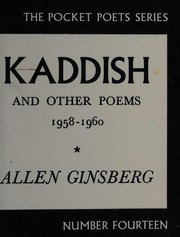
Ginsberg's elegy for his mother is widely considered his greatest work — more personal and emotionally devastating than Howl, it shows the full range of his genius.
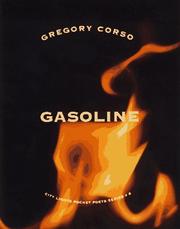
Corso was the youngest and most playfully surreal of the core Beats; this debut collection introduces a vital third poetic voice and shows the movement's range beyond Ginsberg's prophetic mode.
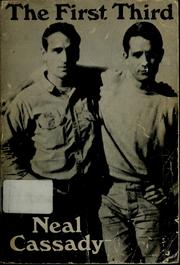
Cassady was the living inspiration for Dean Moriarty in On the Road; his own raw, unpolished autobiography reveals the real man behind the myth and illuminates Kerouac's source material directly.
Context, Criticism & the Wider Circle
ExpertUnderstand the Beat Generation historically, critically, and in relation to its San Francisco Renaissance and Black Mountain contemporaries — moving from reading the Beats to truly knowing them.
▸ Study plan for this stage
Pace: 8–10 weeks, ~40–50 pages/day (mix of primary texts and biography)
- The Beat Generation as a historical movement rooted in post-WWII American anxiety, existentialism, and rejection of conformity
- The role of San Francisco as a geographic and cultural epicenter—City Lights Bookstore, the Six Gallery reading, and the West Coast literary scene
- Jack Kerouac's biographical arc and artistic evolution from *The Town and the City* through *On the Road* and beyond, as documented in McNally's biography
- The interconnections between the Beats and their contemporaries: the San Francisco Renaissance poets (Ferlinghetti, Snyder, Whalen) and Black Mountain College figures (Olson, Creeley, Duncan)
- Beat aesthetics: spontaneous prose/composition, jazz-influenced rhythm, Buddhist and Eastern philosophy, and the search for authenticity
- The role of drugs, sexuality, and transgression as both lived experience and literary subject matter in Beat writing
- How the Beats were received, criticized, and commodified—the gap between their intentions and their public image
- The Portable Beat Reader as a curated archive: what Charters includes/excludes and how editorial choices shape our understanding of the movement
- What historical and cultural conditions gave rise to the Beat Generation, and how does McNally's biography of Kerouac illustrate these forces?
- How did San Francisco function as more than just a location for the Beats—what made it essential to their literary and social project?
- What are the key differences between Beat aesthetics and the literary establishment they rejected? Use specific texts from *The Portable Beat Reader* to illustrate.
- How did the Beats engage with Eastern philosophy, and what role did this play in their critique of American materialism and conformity?
- Who were the Beats' contemporaries in the San Francisco Renaissance and at Black Mountain College, and how did cross-pollination between these groups shape postwar American literature?
- How did the public reception and commercialization of the Beats diverge from their actual literary and philosophical intentions?
- Create a detailed timeline of Kerouac's life (1922–1969) using McNally's *Desolate Angel*, marking key literary works, geographic moves, and personal crises alongside major historical events (WWII, Korean War, the rise of television, etc.). Annotate how each influenced his writing.
- Read the Six Gallery reading account in *The Portable Beat Reader* and McNally's coverage of it in *Desolate Angel*, then write a 2–3 page analysis of why this single event became mythologized as the birth of the Beat Generation.
- Select three poems or prose excerpts from *The Portable Beat Reader* (by different authors—e.g., Ginsberg, Ferlinghetti, Snyder) and analyze how each reflects Beat aesthetics. Compare their approaches to spontaneity, form, and subject matter.
- Research one Black Mountain College figure (Olson, Creeley, or Duncan) using *The Portable Beat Reader* and external sources, then write a comparative essay on how their work intersects with or diverges from Beat poetics.
- Construct a 'genealogy map' showing how Kerouac influenced (or was influenced by) other Beats and San Francisco Renaissance figures. Use both books to trace these relationships and mark points of collaboration, tension, or mutual inspiration.
- Write a critical response to a contemporary review of a Beat work (find one from the 1950s–60s in your library's archives or online), then contrast it with how *Desolate Angel* contextualizes the same work. What did critics miss or misunderstand?
Next up: This stage equips you with the historical depth, critical vocabulary, and contextual awareness needed to engage with advanced literary analysis—setting up the next stage to examine Beat influence on later movements, their legacy in contemporary literature, and their contested cultural memory.
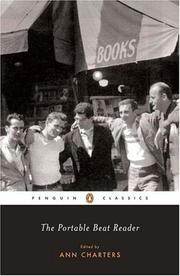
Edited by the foremost Beat scholar, this anthology gathers essential texts from every major and minor Beat figure — it functions as a map of the entire movement and fills in all the gaps left by the primary texts.

The most rigorously researched biography of Kerouac doubles as a cultural history of the entire Beat movement, placing every book you've read into its full biographical and historical context.
Discussion
Keep reading
Paths that share books, cover the same subject, or open a related topic.