The Best British Literature to Read
This curriculum traces British literature from its medieval roots to the modern era, moving through poetry, drama, and fiction in roughly chronological order so each stage builds the historical and stylistic context needed for the next. Beginning with accessible prose retellings and landmark novels, the path gradually introduces verse drama, Romantic poetry, Victorian fiction, and finally the experimental and postcolonial voices of the 20th and 21st centuries.
Foundations: The Story Begins
BeginnerGain a feel for the sweep of British literary history, from medieval storytelling to the first great English novels, building reading confidence and historical context.
▸ Study plan for this stage
Pace: 8–10 weeks, ~25–30 pages/day (with flexibility for poetry in Canterbury Tales)
- Medieval narrative structure and the frame-tale device in The Canterbury Tales as a precursor to the novel
- The emergence of the individual protagonist and psychological realism in Robinson Crusoe as a proto-novel
- The development of social satire and irony as tools for examining class, marriage, and morality in Pride and Prejudice
- How narrative voice and perspective evolve across these three works—from multiple voices to first-person introspection to omniscient irony
- The role of setting and historical context in shaping character and plot across medieval, early modern, and Regency England
- The shift from oral/performative storytelling (Canterbury Tales) to written, introspective fiction (Robinson Crusoe and Pride and Prejudice)
- How does Chaucer's frame-tale structure in The Canterbury Tales allow him to present multiple perspectives and social classes, and how does this anticipate the novel form?
- What makes Robinson Crusoe a 'proto-novel' rather than a traditional adventure tale, and how does Defoe's use of first-person narration create psychological depth?
- How does Jane Austen use irony and free indirect discourse in Pride and Prejudice to critique social conventions around marriage and women's agency?
- What are the key differences in how these three works portray the individual—as a storyteller, a survivor, and a social being navigating courtship?
- How does the concept of 'realism' change across these three texts, from Chaucer's estates satire to Defoe's circumstantial detail to Austen's domestic observation?
- What historical and literary conditions made the transition from The Canterbury Tales to Pride and Prejudice possible?
- Read one tale from The Canterbury Tales (e.g., 'The Knight's Tale' or 'The Miller's Tale') in full and write a 1-page analysis of how Chaucer uses the pilgrim's social status to shape their narrative voice and values.
- Create a comparative character sketch: choose one character from each book (e.g., the Wife of Bath, Robinson Crusoe, Elizabeth Bennet) and analyze how each author develops interiority and motivation.
- Write a short scene (300–500 words) in the voice of a Pride and Prejudice character reflecting on an event from Robinson Crusoe—this forces you to inhabit different narrative styles and time periods.
- Track the role of solitude and isolation across the three texts: How does Chaucer's tavern setting contrast with Crusoe's island, and how does Austen use social gatherings to explore isolation within community?
- Annotate a passage from each book that exemplifies its narrative technique (e.g., Chaucer's dialogue, Defoe's introspection, Austen's irony) and write a brief explanation of how it advances character or theme.
- Create a timeline or visual map showing how attitudes toward marriage, social class, and individual agency shift from The Canterbury Tales through Pride and Prejudice, using specific textual examples.
Next up: This stage establishes the foundational techniques and concerns of British literature—narrative structure, character psychology, and social observation—that will deepen and complicate in the next stage, where you'll encounter Romantic intensity, Victorian complexity, and modernist experimentation.
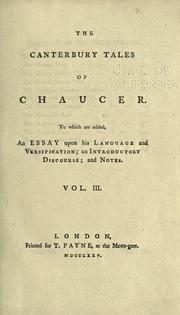
The cornerstone of the English literary tradition; reading a modern prose translation first makes Chaucer's wit, variety of voice, and social satire immediately accessible without the barrier of Middle English.
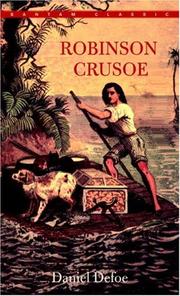
Often called the first English novel, it introduces the plain, direct prose style of early British fiction and themes of individualism and empire that echo throughout the tradition.
Austen's most beloved novel offers sparkling irony and social observation in highly readable prose — a perfect bridge between early fiction and the richer complexity of Victorian literature ahead.
The Poetic Tradition: From Renaissance to Romantics
BeginnerDevelop an ear for English verse and understand how British poetry evolved from Renaissance drama through the Romantic revolution in feeling and imagination.
▸ Study plan for this stage
Pace: 8–10 weeks, ~40–50 pages/day (mix of drama text and poetry; allow extra time for re-reading and annotation)
- Iambic pentameter and blank verse as the foundation of English dramatic and poetic language
- The soliloquy as a window into interiority and psychological complexity in Renaissance drama
- Metaphor, imagery, and sensory language as tools for evoking emotion and imagination
- The Romantic privileging of feeling, nature, and the individual imagination over reason and convention
- How poetic form (rhyme scheme, stanza structure, line length) shapes meaning and emotional impact
- The tension between innocence and experience as a lens for understanding human development and social critique
- Intertextuality: how later poets (Keats, Blake) respond to and transform the dramatic tradition of Shakespeare
- How does Shakespeare use iambic pentameter and soliloquy in Hamlet to reveal Hamlet's internal conflict and hesitation?
- What role does imagery of disease, decay, and corruption play in Hamlet's language, and what does it suggest about the state of Denmark?
- How do Keats's letters reveal his poetic philosophy, particularly his ideas about negative capability and the poet's role?
- Compare the treatment of love and desire in Keats's poems (e.g., 'La Belle Dame sans Merci,' 'The Eve of St. Agnes') with the emotional intensity of Hamlet's feelings for Ophelia.
- What is Blake's argument in Songs of Innocence and of Experience about the nature of childhood, morality, and social institutions?
- How do Blake's use of rhyme, repetition, and symbolism (e.g., the Tyger, the Lamb) differ from Shakespeare's dramatic verse and Keats's lyric intensity, and what does each style achieve?
- Read Hamlet aloud (or listen to a recording) and mark every soliloquy; annotate the iambic pentameter in 2–3 key speeches (e.g., 'To be or not to be,' the ghost scene) to feel the rhythm in your ear.
- Write a short scene (200–300 words) in blank verse responding to a moment in Hamlet—e.g., Ophelia's perspective on the nunnery scene, or Gertrude's thoughts after the play-within-a-play.
- Select one Keats poem and one Shakespeare passage with similar themes (e.g., both dealing with mortality, beauty, or desire); write a comparative analysis (500 words) of how form and language differ between them.
- Create a visual or written 'map' of imagery in Hamlet (disease, poison, ears, eyes) and trace how these images cluster around Hamlet's psychological state; then do the same for one Keats poem.
- Memorize and recite 10–15 lines from Hamlet, 8–10 lines from a Keats poem, and 8–10 lines from Blake; record yourself and listen for how rhythm and sound affect meaning.
- Write your own short poem (20–30 lines) in rhyming couplets or quatrains inspired by a Blake poem from Songs of Innocence or Experience; experiment with how form constrains or liberates your expression of an idea.
Next up: This stage trains your ear to recognize and appreciate the formal and emotional architecture of English verse, establishing the rhythmic and imaginative foundations you'll need to engage with later Victorian, Modernist, and contemporary poetry that builds on, challenges, or abandons these traditions.
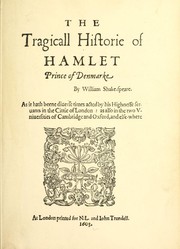
Shakespeare's greatest tragedy introduces the power of English blank verse and dramatic language; reading it after Chaucer shows how the language transformed over two centuries.
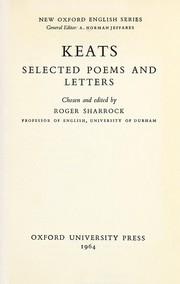
Keats's odes are the most sensuous and approachable entry point into Romantic poetry, building the vocabulary of imagery and feeling needed to appreciate later, denser verse.
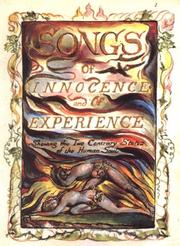
Blake's paired short lyrics are deceptively simple yet profound, introducing the Romantic critique of industrialism and innocence lost — essential context for Victorian literature.
The Victorian Peak
IntermediateEngage with the novel at its richest and most ambitious, understanding how Victorian writers used long fiction to explore class, morality, psychology, and social reform.
▸ Study plan for this stage
Pace: 10–12 weeks, ~40–50 pages/day (accounting for re-reading passages and note-taking). Suggested pacing: Jane Eyre (3 weeks), Great Expectations (3.5 weeks), Middlemarch (4–5 weeks due to length and complexity).
- The bildungsroman as a vehicle for moral and social critique: how Brontë, Dickens, and Eliot use coming-of-age narratives to interrogate class mobility, education, and self-determination
- Narrative voice and unreliable narration: the difference between Jane's first-person retrospection, Pip's self-deluding retrospection, and Eliot's omniscient narrator with psychological depth
- The Victorian heroine and hero: how Jane Eyre, Pip, and Dorothea challenge or conform to gender and social expectations of their time
- Psychological realism: the shift from external plot to internal consciousness, especially Eliot's exploration of character motivation and moral ambiguity in Middlemarch
- Class, inheritance, and social reform: how each novel uses plot mechanics (orphanhood, expectations, marriage) to expose class rigidity and advocate for social change
- Morality and conscience: the role of guilt, redemption, and ethical choice in shaping character arcs across all three novels
- Symbolism and Gothic elements: how Brontë's use of fire, madness, and the supernatural contrasts with Dickens's social realism and Eliot's naturalism
- Marriage and female agency: the different outcomes and meanings of marriage in Jane Eyre, Great Expectations, and Middlemarch as a measure of women's autonomy
- How does Jane Eyre's first-person narration shape your understanding of her reliability as a narrator, and how does her retrospective voice differ from Pip's in Great Expectations?
- What role does social class play in the romantic and moral conflicts of each novel? How do Brontë, Dickens, and Eliot use inheritance and expectation to critique Victorian society?
- Compare the psychological development of Pip and Dorothea: how do their illusions about themselves and others drive the plot, and what does each author suggest about self-knowledge?
- How do the three novels treat the question of female agency and choice, particularly through marriage? What different conclusions do they reach about women's autonomy?
- What is the function of secondary characters (Bertha Mason, Estella, Casaubon) in each novel, and what do they reveal about the limitations or possibilities of the protagonists?
- How does each author use narrative technique (first-person, third-person omniscient, free indirect discourse) to create moral complexity and invite reader judgment?
- Create a comparative character map tracking Pip, Jane, and Dorothea's illusions, awakenings, and moral choices at three key points in each narrative; annotate how each author signals the character's self-deception
- Write a 500-word essay comparing how Brontë and Dickens use orphanhood and social exclusion to motivate their protagonists' desire for belonging and respectability
- Perform a close reading of 2–3 key passages (one from each novel) focusing on narrative voice: identify the author's use of irony, free indirect discourse, or direct commentary to guide your judgment
- Create a visual timeline or chart showing how class barriers are erected, reinforced, and challenged in each novel; note which characters cross class lines and at what cost
- Write an imagined dialogue between Jane Eyre and Dorothea Brooke discussing marriage, duty, and self-sacrifice; use direct quotes from both novels to ground their positions
- Analyze the role of a secondary character (Bertha Mason, Estella, or Casaubon) in a 400-word response: what does this character's fate reveal about the novel's moral vision?
Next up: This stage establishes the Victorian novel's capacity for psychological depth, social critique, and formal innovation—skills and themes you'll see refined, challenged, and reimagined in later periods as modernist and contemporary writers inherit, parody, and deconstruct the Victorian literary legacy.
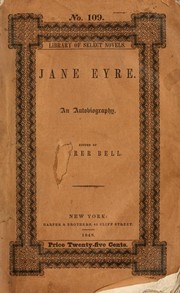
A gripping first-person narrative that combines Gothic atmosphere with a fierce moral and feminist voice — the ideal opening to Victorian fiction for its readability and passion.
Dickens's most perfectly structured novel, it deepens the reader's grasp of Victorian class anxiety and social criticism while showcasing his mastery of character and plot.
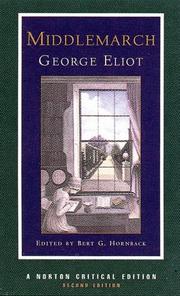
Widely regarded as the greatest English novel, it rewards the reading stamina built in earlier stages with unmatched psychological depth, moral seriousness, and narrative breadth.
Modernism and Its Discontents
IntermediateUnderstand how 20th-century British writers broke with Victorian conventions, experimenting with stream of consciousness, fragmented form, and a darker post-war vision of the world.
▸ Study plan for this stage
Pace: 6–7 weeks, ~40–50 pages/day (accounting for poetry analysis and re-reading dense passages)
- Stream of consciousness as a narrative technique: how Woolf uses interior monologue to collapse time and reveal psychological depth in Mrs. Dalloway
- Fragmentation and collage in modernist form: how Eliot's The Waste Land uses broken syntax, multiple voices, and cultural allusions to mirror post-war disintegration
- The rejection of linear plot and Victorian realism: how both Eliot and Woolf abandon straightforward storytelling for experimental structures
- Post-war disillusionment and spiritual emptiness: the pervasive sense of cultural collapse, meaninglessness, and psychological trauma in The Waste Land and the surveillance state's dehumanization in 1984
- Interior consciousness vs. external control: contrasting Woolf's exploration of individual thought with Dean's adaptation of Orwell's vision of totalitarian suppression of inner life
- Intertextuality and allusion as meaning-making: how modernist texts layer literary, mythological, and historical references to construct meaning in fragmented worlds
- The modernist response to industrialization and mass society: alienation, isolation, and the search for authentic experience amid mechanization
- How does Virginia Woolf use stream of consciousness in Mrs. Dalloway to represent a single day's experience, and what does this technique reveal about the nature of time and identity?
- What role do fragmentation, multiple voices, and cultural allusions play in The Waste Land, and how do they reflect the poem's themes of post-war spiritual crisis?
- How do The Waste Land and Mrs. Dalloway both reject Victorian narrative conventions, and what do their experimental forms suggest about modernist attitudes toward representation?
- In what ways does the surveillance state in 1984 (adaptation) represent a totalitarian response to the modernist crisis of meaning, and how does it contrast with Woolf's celebration of interior consciousness?
- What connections exist between the spiritual emptiness depicted in The Waste Land and the psychological alienation experienced by characters in Mrs. Dalloway?
- How do these three works collectively illustrate the modernist break from 19th-century literary traditions, and what do they suggest about the relationship between form and historical crisis?
- Annotate a passage from Mrs. Dalloway (e.g., Clarissa's morning walk or her party scene) and map how Woolf shifts between external action and interior thought; identify the triggers for these shifts
- Create a visual diagram or timeline of The Waste Land's five sections, marking where voices change, where allusions appear, and where fragmentation is most extreme; write brief notes on what each disruption suggests thematically
- Write a 500-word stream-of-consciousness passage in Woolf's style, following a character through a single hour; focus on sensory details, memory intrusions, and the fluidity of thought
- Compare a scene from Mrs. Dalloway with a passage from 1984 (adaptation) that deals with isolation or surveillance; analyze how each work uses different formal techniques to represent the individual's relationship to society
- Trace one major allusion or mythological reference through The Waste Land (e.g., the Fisher King, Tiresias, or the Grail myth); write a short essay on how this reference accumulates meaning across the poem's sections
- Conduct a close reading of a key moment in each text (e.g., Prufrock's indecision in The Waste Land, Clarissa's moment of transcendence in Mrs. Dalloway, and a scene of thought-control in 1984 adaptation) and compare how each represents the modernist crisis of agency and authenticity
Next up: This stage establishes how modernist writers responded to historical crisis through formal experimentation and psychological depth; the next stage will likely explore how subsequent writers either refined these techniques or reacted against them, building on the foundation of fragmentation, interior consciousness, and the tension between individual experience and external forces.
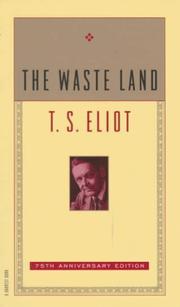
The defining poem of literary Modernism; its fragmented, allusive style is best approached after a solid grounding in the earlier tradition it is consciously reacting against.
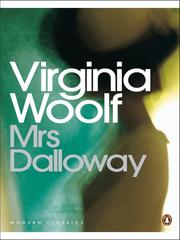
Woolf's stream-of-consciousness masterpiece is the most accessible entry into Modernist fiction, showing how inner life and time can be reimagined on the page.
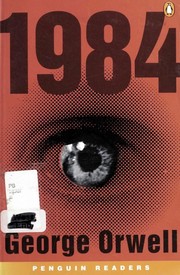
A powerful counterpoint to Woolf's interiority, Orwell's dystopian novel uses plain, urgent prose to address totalitarianism and language — among the most influential British books of the century.
Contemporary Voices: Postwar to Present
ExpertEncounter the pluralism of late 20th- and 21st-century British literature, including postcolonial perspectives, postmodern experimentation, and the ongoing reinvention of the novel.

Larkin is the essential postwar British poet — sardonic, precise, and deeply English — and reading him shows how the lyric tradition survived and mutated after Modernism.
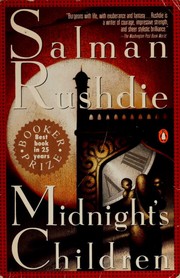
Rushdie's Booker Prize-winning novel expands the definition of British literature to include the postcolonial world, blending myth, history, and exuberant prose in a way that challenges and rewards advanced readers.
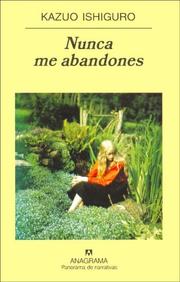
A quiet, devastating novel that uses a dystopian premise to explore memory, mortality, and what it means to be human — a fitting culmination that looks back at the whole tradition with fresh eyes.
Discussion
Keep reading
Paths that share books, cover the same subject, or open a related topic.