The Partition of India: The Best Books to Read, in Order
This curriculum moves from vivid narrative history to rigorous political analysis to intimate human testimony, building a layered understanding of Partition. Starting at the intermediate level, each stage deepens the reader's grasp — first establishing the colonial endgame and its key actors, then examining the violence and its causes at a structural level, and finally confronting the human cost through memoir, fiction, and subaltern voices.
The Colonial Endgame & Independence
IntermediateUnderstand the final decades of the British Raj, the key personalities (Mountbatten, Nehru, Jinnah, Gandhi), and the political decisions that led to the creation of India and Pakistan in August 1947.
▸ Study plan for this stage
Pace: 8–10 weeks, ~40–50 pages/day. "Freedom at Midnight" (approximately 500 pages) over 5–6 weeks, then "The Last Mughal" (approximately 450 pages) over 3–4 weeks, with 1–2 weeks for review and synthesis.
- The accelerating collapse of British authority in India from 1945–1947, driven by the Indian independence movement, WWII aftermath, and economic exhaustion of Britain
- The role of key personalities—Mountbatten's aggressive timeline, Nehru's vision for a secular unified India, Jinnah's demand for Pakistan, and Gandhi's moral authority and assassination
- The communal tensions and religious divide between Hindu, Muslim, and Sikh communities that made partition inevitable and violent
- The mechanics of partition: the Cabinet Mission Plan, the Mountbatten Plan, and the August 15–17, 1947 independence and partition dates
- The human cost of partition: mass migration, communal riots, and the displacement of millions across newly drawn borders
- The historical irony of the Mughal legacy: how the last Mughal Empire's decline set conditions for modern India-Pakistan, and how 1857 foreshadowed 1947
- The role of British decision-making, strategic interests, and the haste of decolonization in shaping the subcontinent's future
- The competing visions of post-independence governance: secular nationalism (Nehru), religious nationalism (Jinnah), and Gandhian non-violence
- What were the main reasons Britain decided to accelerate independence in 1947, and how did Mountbatten's appointment change the timeline?
- How did the personalities and ideologies of Nehru, Jinnah, and Gandhi shape the partition outcome, and why did Gandhi's influence ultimately fail to prevent it?
- What was the Mountbatten Plan, and why did it lead to partition rather than a unified independent India?
- How did communal violence and religious tensions between Hindus, Muslims, and Sikhs make partition seem inevitable to British and Indian leaders?
- What were the immediate human consequences of partition—in terms of migration, violence, and displacement—as documented in 'Freedom at Midnight'?
- How does 'The Last Mughal' connect the fall of the Mughal Empire in 1857 to the partition of India in 1947, and what parallels exist between these two ruptures?
- Create a detailed timeline of key events from 1945–1947 (Cabinet Mission Plan, Cripps Mission, Mountbatten's arrival, partition announcement) with annotations on how each shifted the independence process.
- Write character sketches of Mountbatten, Nehru, Jinnah, and Gandhi based on 'Freedom at Midnight', noting their conflicting visions and how each tried to shape the outcome.
- Map the partition boundaries using historical maps and data from the books; annotate regions of major communal violence and migration patterns to visualize the human displacement.
- Analyze 3–4 key decision points in 'Freedom at Midnight' (e.g., Mountbatten's acceleration of the timeline, the rejection of a united India) and write a 500-word essay on how a different choice might have altered outcomes.
- Compare the portrayal of the Mughal decline in 'The Last Mughal' (1857) with the partition crisis (1947); create a Venn diagram showing structural parallels (communal division, imperial withdrawal, violence, legacy).
- Conduct a close reading of one pivotal scene from each book (e.g., a negotiation in 'Freedom at Midnight' and a moment of violence or loss in 'The Last Mughal') and analyze how the authors use narrative to convey the stakes of partition.
Next up: This stage establishes the political and human drama of independence and partition; the next stage will likely examine the aftermath—the consolidation of the Indian nation-state, the early India-Pakistan conflicts, and the long-term consequences of partition for both countries and the region.
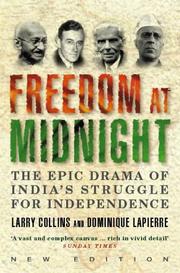
A gripping, narrative-driven account of the last year of British India — the ideal entry point for intermediate readers. It introduces all the central figures and the drama of the transfer of power in vivid, accessible prose.
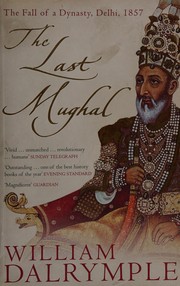
Read second to gain essential historical depth on how British colonial rule unravelled Indian society over a century, setting the long-run context for why Partition became imaginable at all.
Political History & the Making of Two Nations
IntermediateGrasp the political, religious, and ideological forces — the Congress, the Muslim League, the two-nation theory — that made a unified independent India impossible and Partition the chosen solution.
▸ Study plan for this stage
Pace: 8–10 weeks, ~40–50 pages/day (3–4 hours of focused reading). Hasan (weeks 1–3), Khan (weeks 4–6), Singh (weeks 7–10).
- The two-nation theory: the ideological foundation that Muslims and Hindus were separate nations requiring separate homelands, and how this theory evolved from 19th-century political thought into a mobilizing force by the 1940s
- The Congress Party's vision of a unified, secular, multi-religious independent India versus the Muslim League's demand for Pakistan as a homeland for Muslims
- The role of communal mobilization and identity politics: how religious identity was weaponized by political elites to build mass movements and consolidate support
- Jinnah's political strategy and evolution: from a secular nationalist to the architect of Pakistan, and the tensions between his stated vision and the communal forces he unleashed
- The British role in Partition: how colonial administrative structures, the Cabinet Mission Plan, and the decision to withdraw created the conditions for Partition rather than preventing it
- The process of Partition as a political choice, not an inevitable outcome: the contingencies, negotiations, and alternative possibilities that existed before 1947
- The social and economic dimensions of political division: how Partition was not merely an elite political event but involved mass mobilization, communal violence, and displacement of populations
- The ideological and institutional legacies of Partition: how the two-nation theory shaped the post-1947 nation-states and their relationship to religious minorities
- What is the two-nation theory, and how did it develop from 19th-century political thought into the ideological justification for Partition by the 1940s?
- How did the Congress Party and the Muslim League differ in their visions for independent India, and what made compromise between them increasingly difficult?
- What role did communal mobilization and identity politics play in making Partition a political reality? Provide specific examples from the reading.
- Trace Jinnah's political evolution: how and why did his position on a unified India shift toward advocacy for Pakistan, and what tensions existed in his leadership?
- How did British colonial policy, the Cabinet Mission Plan, and the decision to withdraw contribute to Partition as a political outcome?
- Was Partition inevitable, or were there viable alternative paths to independence? What contingencies or decisions might have led to different outcomes?
- Create a timeline (1885–1947) mapping key moments in the development of the two-nation theory, Congress–League relations, and British policy decisions. Annotate with turning points where Partition became more likely.
- Write a comparative policy brief (2–3 pages) contrasting the Congress vision of independent India with the Muslim League's vision. Use direct quotes from Hasan and Khan to ground your analysis.
- Analyze Jinnah's speeches or statements from three different periods (e.g., 1920s, 1930s, 1940s) to trace his ideological and strategic shifts. What changed, and why?
- Map the communal mobilization process: identify specific campaigns, slogans, or events that the authors describe as pivotal in turning political divisions into mass movements. Create a visual or written narrative.
- Debate exercise: Prepare arguments for two positions: (1) Partition was inevitable given the two-nation theory and communal polarization, and (2) Partition was a contingent political choice that could have been avoided. Use evidence from all three books.
- Write a critical reflection (2–3 pages) on how Hasan, Khan, and Singh differ in their explanations of Partition. Which author's interpretation do you find most convincing, and why?
Next up: This stage establishes the political and ideological architecture of Partition—the forces that made two nations; the next stage will examine the human and social consequences: displacement, violence, trauma, and the lived experiences of those caught in the rupture.

A scholarly but accessible collection that examines how communal identities were politically mobilized, giving the reader the analytical vocabulary needed for deeper works ahead.
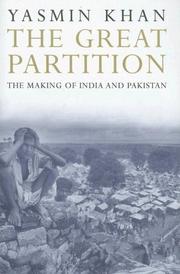
The single best one-volume political and social history of Partition itself. Khan moves from high politics down to the ground level, bridging the gap between elite decision-making and mass experience.
Read last in this stage to get a serious, revisionist account of Jinnah's role — essential for understanding the Pakistani perspective and the contested blame for Partition.
The Violence — What Actually Happened
ExpertConfront the scale, mechanics, and geography of the mass violence — the killings, forced migrations, abductions, and refugee crises — that accompanied Partition on the ground in Punjab and Bengal.
▸ Study plan for this stage
Pace: 8–10 weeks, ~40–50 pages/day. Allocate 4–5 weeks to *Midnight's Furies* (approx. 400 pages), then 4–5 weeks to *The Other Side of Silence* (approx. 350 pages). Read in focused blocks to absorb difficult material; plan breaks after major sections to process emotional and historical weight.
- The scale and speed of violence: how communal riots escalated from localized incidents to mass killings across Punjab and Bengal within weeks, with death tolls reaching 200,000–2 million depending on estimates
- The mechanics of violence: how organized communal militias, police complicity, and state breakdown enabled systematic killings, forced conversions, and abductions of women
- Geography of partition: how the violence was not uniform—Punjab saw rapid, intense massacres while Bengal experienced prolonged communal tension; understanding regional variations in perpetrators and victims
- Forced migration and refugee crises: the movement of 10–20 million people, the camps, disease, starvation, and the collapse of infrastructure that killed as many as the direct violence
- Testimony and silence: how survivors' oral histories reveal experiences erased from official narratives—particularly the abduction and trafficking of women, and the psychological trauma of displacement
- Complicity and agency: examining the roles of local leaders, police, military, and ordinary citizens in enabling or resisting violence, rather than treating Partition as inevitable
- The partition of families and communities: how violence fractured kinship networks, religious communities, and social bonds that had coexisted for centuries
- Documentation gaps: recognizing what we do and do not know about Partition violence due to incomplete records, political sensitivities, and the voices of the dead
- What were the major phases of violence during Partition in Punjab and Bengal, and how did their timing, scale, and character differ between the two regions?
- How did state institutions (police, military, administration) contribute to, enable, or fail to prevent communal violence during Partition?
- What happened to women during Partition—both those abducted and those who survived—and why does Butalia argue that their stories have been silenced in official histories?
- Describe the mechanics of forced migration: what were the conditions in refugee camps, what diseases and shortages killed people, and how did displacement itself become a form of violence?
- How do Hajari and Butalia differ in their approach to explaining Partition violence—what does Hajari emphasize that Butalia complicates or challenges?
- What role did ordinary citizens, local leaders, and community figures play in perpetrating or resisting violence? Provide specific examples from both books.
- Create a detailed timeline of major violent incidents in Punjab and Bengal from March 1946 to December 1947, noting location, estimated death toll, and triggering events. Cross-reference Hajari's narrative account with Butalia's oral histories to identify gaps and corroborations.
- Map the geography of violence: using Hajari's accounts, plot major massacre sites, communal flashpoints, and refugee routes on a map of Punjab and Bengal. Annotate with Butalia's testimonies from specific locations to see how local experiences varied.
- Conduct a close reading of 2–3 testimonies from *The Other Side of Silence* (e.g., accounts of abducted women, displaced families, or survivors of massacres). Write a 500-word analysis of what these oral histories reveal that Hajari's narrative-driven account does not.
- Compile a list of state actors (police, military, administrators) mentioned in both books. For each, note their documented actions during Partition—did they prevent violence, enable it, or remain passive? What does this suggest about institutional responsibility?
- Write a comparative essay (800–1000 words) on how Hajari and Butalia each explain the causes of Partition violence. Does Hajari emphasize political leadership failures? Does Butalia emphasize communal anxiety or structural factors? Where do they agree or diverge?
- Create a fact sheet on the refugee crisis: numbers displaced, mortality rates in camps, diseases, food shortages, and the role of international organizations. Use both books to assess whether violence or displacement killed more people, and what this reveals about how we count Partition deaths.
Next up: By confronting the granular reality of Partition violence—its scale, perpetrators, victims, and the silences around it—you are now equipped to examine how independent India and Pakistan attempted to narrate, memorialize, and move past this trauma, setting up the next stage's focus on political memory and nation-building.
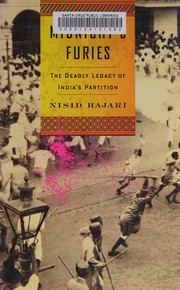
A propulsive, deeply researched narrative of the violence of 1947 — the best modern account of how the killings unfolded. Read it first in this stage to establish the factual baseline of the catastrophe.
A landmark work of oral history that recovers the voices of survivors — especially women — whose experiences were erased from official histories. It fundamentally reframes Partition as a human and gendered tragedy.
Literature & Memory — The Human Soul of Partition
ExpertInternalize the emotional and psychological truth of Partition through canonical fiction and memoir, understanding how writers processed trauma that history alone cannot fully capture.
▸ Study plan for this stage
Pace: 6–7 weeks, ~40–50 pages/day, with 2–3 days between books for reflection and note-taking
- Partition as intimate tragedy: how individual lives, relationships, and communities fracture alongside national borders
- The unreliability of violence: how Singh, Sahni, and Manto depict brutality as senseless, contagious, and psychologically corrosive rather than ideologically justified
- Religious identity as constructed and fluid: how characters' sense of self destabilizes when communal boundaries harden into killing lines
- Narrative fragmentation as form: how these writers use non-linear storytelling, multiple perspectives, and interrupted narratives to mirror psychological trauma
- Silence and the unspeakable: what these texts leave unsaid about grief, guilt, and complicity—and why silence itself becomes a character
- Witness and testimony: the role of the narrator/writer as someone who must document atrocity while grappling with their own implication or helplessness
- The body as historical text: how physical violence, displacement, and bodily violation become the primary language through which Partition is experienced
- How does Khushwant Singh use the love story between Nooran and Iqbal in *Train to Pakistan* to expose the contradiction between personal desire and communal violence? What does their relationship reveal about the impossibility of remaining neutral during Partition?
- In *Tamas*, Bhisham Sahni employs multiple narrative threads and perspectives. How does this fragmented structure mirror the psychological and social fragmentation of Partition itself? What does the reader gain from seeing the same events through different eyes?
- Compare how Singh and Sahni depict the role of religious leaders and political figures in inciting violence. What do these portrayals suggest about the relationship between ideology and individual moral choice?
- Saadat Hasan Manto's stories are often brutally compressed and end abruptly. How does his minimalist style and refusal of narrative closure differ from Singh and Sahni's approaches, and what emotional or philosophical effect does this create?
- Across all three works, identify moments where characters witness violence they cannot stop or fully comprehend. What does the act of witnessing—and the failure to act—reveal about the human experience of historical trauma?
- How do these three writers represent the experience of displacement and homelessness? What is lost when people are forced to leave their homes, and how do the texts suggest this loss cannot be fully recovered?
- Close-read a pivotal violent scene from each book (e.g., the train massacre in *Train to Pakistan*, the communal riots in *Tamas*, a specific story from Manto). Annotate how the writer's language, pacing, and perspective choices shape your emotional response. What is withheld? What is shown in graphic detail?
- Create a character map for *Tamas* tracking how each character's moral position shifts as violence escalates. Note moments of complicity, resistance, and paralysis. What patterns emerge?
- Write a 2–3 page comparative analysis: How does Khushwant Singh's narrative voice (omniscient, somewhat detached) differ from Manto's (fragmented, intimate, often darkly ironic)? What does each voice allow the writer to say about Partition that the other cannot?
- Select one Manto story and one scene from Singh or Sahni that deal with similar themes (e.g., communal betrayal, bodily violation, displacement). Write a dialogue between the two texts: What does Manto's compressed style reveal that the longer narrative obscures, and vice versa?
- Keep a 'silence journal' while reading: Note moments where the text deliberately withholds information, where characters cannot speak, or where the narrator breaks off. What is the cumulative effect of these silences? What do they suggest about trauma that cannot be articulated?
- Interview or write a fictional monologue from the perspective of a minor character in one of the three works—someone on the margins of the main narrative. What would they say about Partition if given voice? How does this exercise reveal what the original text leaves out?
Next up: This stage has trained you to read Partition through the lens of psychological and emotional truth; the next stage will likely contextualize these literary insights within historical scholarship, political analysis, and comparative frameworks, moving from *how* writers experienced Partition to *why* it happened and what its legacies mean for understanding modern South Asia.
The most celebrated novel of Partition, set in a single Punjab border village. Read first in this stage — its intimate scale makes the abstract violence viscerally real and human.
A harrowing, morally complex novel depicting the days immediately before the riots erupt in a Punjab town. It deepens the literary picture by showing how ordinary people become perpetrators and victims.

Manto's short stories — savage, darkly comic, and unflinching — are the definitive literary reckoning with Partition's madness. Save him for last: his nihilistic clarity is best appreciated after the full historical and human context is in place.
Discussion
Keep reading
Paths that share books, cover the same subject, or open a related topic.