The Best Books of the Harlem Renaissance
This curriculum immerses the reader in the Harlem Renaissance from the inside out — beginning with the foundational ideas and voices that ignited the movement, moving through its landmark fiction and poetry, and finally arriving at the critical and scholarly works that reveal its full historical and cultural depth. Because the learner starts at an intermediate level, the path skips basic surveys and opens directly with the movement's own manifesto, letting the primary texts speak first before layering on analysis.
The Manifesto & The Vision
IntermediateUnderstand the intellectual and political framework that made the Harlem Renaissance possible, and absorb the era's defining self-image through its own words.
▸ Study plan for this stage
Pace: 4–5 weeks, ~20–25 pages/day. Start with Locke's "The New Negro" (2–3 weeks), then move to Du Bois's "The Souls of Black Folk" (2–3 weeks). Allow 2–3 days between books for reflection and note synthesis.
- The 'New Negro' concept: Locke's vision of African American self-determination, cultural pride, and intellectual leadership as a break from old stereotypes and accommodationist politics
- The veil and double consciousness: Du Bois's framework for understanding how Black Americans navigate a society that sees them through a distorting lens, always aware of being seen as 'other'
- Cultural nationalism and the arts: How both Locke and Du Bois position literature, music, and visual art as tools for racial uplift and authentic self-representation
- The talented tenth: Du Bois's argument that educated Black leaders have a responsibility to advance the race, and Locke's expansion of this to include artists and intellectuals
- Spiritual and philosophical inheritance: Du Bois's concept of the African American spiritual legacy (the sorrow songs) as a source of strength and cultural continuity
- Racial consciousness as political awakening: How both authors frame Black self-awareness and pride not as vanity but as necessary resistance to systemic dehumanization
- The relationship between individual identity and collective destiny: How personal intellectual/artistic development serves the broader liberation of the race
- What does Locke mean by the 'New Negro,' and how does he argue this represents a fundamental shift in Black American self-perception and social possibility?
- Explain Du Bois's concept of 'double consciousness.' How does this framework help explain the psychological and social experience he describes for Black Americans?
- How do both Locke and Du Bois position the arts and intellectual work as central to racial progress? What is the relationship between cultural expression and political liberation in their thinking?
- What is Du Bois's 'talented tenth,' and how does Locke build on, modify, or challenge this idea in his vision of the Harlem Renaissance?
- What role do Du Bois's 'sorrow songs' play in his argument about African American spiritual and cultural identity? Why does he emphasize this legacy?
- How do Locke and Du Bois each address the question of how Black Americans should relate to white American society—accommodation, separation, or something else?
- Create a two-column comparison chart: 'Old Negro' vs. 'New Negro' (Locke). Use specific quotes from Locke to populate each column, then write a paragraph explaining how this distinction functions as a call to action.
- Map Du Bois's concept of double consciousness onto a specific historical or contemporary scenario. Write 1–2 pages showing how the 'veil' operates in that context and what psychological/social effects it produces.
- Select one essay or section from each book that deals with art, music, or literature. Annotate both texts side-by-side, identifying where Locke and Du Bois agree or diverge on the political purpose of cultural work.
- Write a 500-word manifesto in the voice of either Locke or Du Bois, addressing a specific audience (e.g., young Black artists, white philanthropists, the Black church). Use the rhetorical strategies and arguments from the assigned texts.
- Create a visual timeline or concept map showing how Du Bois's ideas (especially from 'The Souls of Black Folk') directly inform or anticipate Locke's vision in 'The New Negro.' Include at least 5 conceptual connections with supporting quotes.
- Conduct a close reading exercise: select one challenging passage from each book (e.g., Du Bois on the sorrow songs, Locke on racial contributions to American culture). Write out the passage, then paraphrase it in modern language, then explain its significance to the author's overall argument.
Next up: This stage establishes the intellectual and ideological foundation of the Harlem Renaissance—the *why* and *how* of the movement—preparing you to encounter the actual literary, artistic, and cultural works that embodied these ideas in practice.
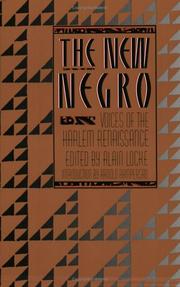
The 1925 anthology that named and launched the movement; reading it first gives you the movement's own mission statement, its key figures, and the aesthetic ideals every subsequent work responds to.
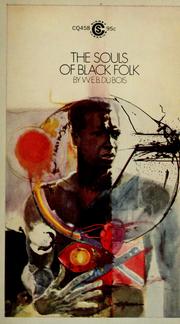
Du Bois's concept of 'double-consciousness' is the philosophical bedrock of the Renaissance; reading it second grounds you in the intellectual tension — between assimilation and self-determination — that animates every novel and poem that follows.
The Poetry
IntermediateExperience the Renaissance's lyric voice in its full range — from formal sonnets of protest to jazz-inflected free verse — and understand how poets used form itself as a political act.
▸ Study plan for this stage
Pace: 6–7 weeks, ~25–30 pages/day (with 2–3 days per week for close reading and reflection)
- Form as resistance: How sonnets, ballads, and traditional meters became tools for protest and dignity in Cullen, McKay, and Hughes
- The jazz aesthetic: How Hughes incorporated syncopation, blues rhythms, and vernacular speech into lyric poetry, breaking from formal conventions
- The lyric 'I' and identity: How each poet constructs a speaker that negotiates race, desire, spirituality, and belonging
- Tone and irony: How understatement, double meaning, and controlled emotion convey rage and critique without explicit declaration
- The body in verse: How these poets represent Black bodies—desire, labor, pain, dignity—through imagery and form
- Dialect and diction: The deliberate choice to use standard English, vernacular, or hybrid speech as a political and aesthetic statement
- Musicality and performance: How these poems were meant to be heard aloud and how sound patterns reinforce meaning
- Grief and resilience: How elegy, lament, and defiance coexist in poems about loss, injustice, and survival
- How does Countee Cullen use the sonnet form in 'Color' to address racial injustice, and what does his adherence to traditional form suggest about his artistic philosophy?
- Compare the formal strategies of Cullen and McKay: where do they align in their use of traditional meters, and where do they diverge?
- How does Langston Hughes's use of jazz rhythms and blues forms in 'The Weary Blues' differ from the approach taken by Cullen and McKay, and what does this difference reveal about competing visions within the Renaissance?
- Identify three specific poems across the three collections where form itself becomes an act of resistance or assertion. What is each poem resisting or asserting?
- How do these poets use tone—irony, understatement, anger, tenderness—to convey their critique of racism and their vision of Black identity?
- What role does the body (desire, labor, pain, beauty) play in these collections, and how does poetic form shape the representation of the body?
- Read aloud: Select 5–6 poems (2 from each collection) and read them aloud multiple times. Note where the rhythm surprises you, where it feels natural, and how sound reinforces or complicates meaning. Record yourself and listen back.
- Formal analysis chart: Create a table comparing 10 poems across the three collections by form (sonnet, free verse, ballad, etc.), rhyme scheme, meter, and tone. What patterns emerge? Which poets favor which forms?
- Rewrite exercise: Take one poem from Cullen and rewrite it in Hughes's jazz-inflected style (or vice versa). What is lost and gained? What does this reveal about each poet's aesthetic choices?
- Close reading: Select one poem from each collection and write a 2–3 page analysis focusing on how form and content interact. How does the poet's choice of line length, stanza shape, or rhyme scheme reinforce the poem's argument or emotion?
- Comparative annotation: Choose a poem from McKay and one from Hughes that address similar themes (e.g., resilience, desire, injustice). Annotate both side-by-side, marking where they use form differently to achieve different effects.
- Performance and interpretation: Choose one poem and prepare two different oral interpretations—one emphasizing its formal structure, one emphasizing its emotional or political content. How do these different readings change the poem's meaning?
Next up: This stage establishes how Harlem Renaissance poets weaponized form and voice to claim artistic and political authority; the next stage will examine how they deployed these techniques across longer works, essays, and collaborative projects to build a movement.

Cullen's debut collection (1925) works in classical European forms while insisting on Black identity; its formal elegance makes it the ideal entry point into Renaissance poetry before encountering more radical departures.
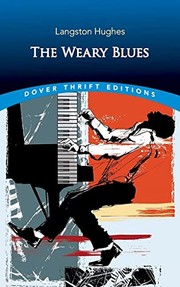
Hughes's first collection fuses blues, jazz, and vernacular speech into a new American poetry; reading it after Cullen makes the contrast — and the argument between them about what Black art should be — vivid and electric.
McKay's 1922 collection, including the defiant sonnet 'If We Must Die,' bridges protest and lyricism; it completes the poetic triangle and shows how the diaspora (McKay was Jamaican-born) shaped the Renaissance's global ambitions.
The Fiction
IntermediateLive inside the Renaissance through its landmark novels, absorbing how writers dramatized race, class, gender, migration, and identity in the streets and parlors of Black America.
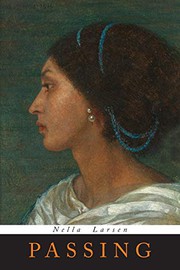
A short, perfectly crafted novel about racial passing and desire; its psychological intensity and compressed form make it an ideal first fiction, and it foregrounds the gender and class dimensions often overlooked in the movement.
The Renaissance's first bestselling novel captures Harlem's nightlife, working-class vitality, and the tension between 'high' and 'low' Black culture — a necessary counterpoint to Larsen's bourgeois world.

Hurston's 1937 masterpiece, written in rich Black Southern vernacular, is the movement's greatest novel; reading it last in this stage lets you fully appreciate how she synthesized folklore, feminism, and lyric prose into something entirely her own.
The Ideas in Conflict
ExpertGrapple with the internal debates of the Renaissance — about art versus propaganda, integration versus nationalism, Africa versus America — through the movement's most provocative essayists.
▸ Study plan for this stage
Pace: 5–6 weeks, ~40–50 pages/day (alternating between both texts to trace parallel arguments)
- Hurston's defense of folk culture and dialect as authentic artistic material versus the assimilationist pressure to 'elevate' Black expression
- Hughes's evolving stance on art as propaganda: his rejection of the 'Talented Tenth' model and embrace of working-class Black life as subject matter
- The tension between African heritage and American identity: Hurston's anthropological reclamation of African diaspora versus Hughes's focus on American racial experience
- Individualism versus collective responsibility: both authors' negotiation of personal artistic freedom within racial uplift ideology
- The role of humor, vernacular, and 'lowbrow' culture as forms of resistance and self-definition in Hurston and Hughes
- Gender and sexuality as contested terrain: Hurston's assertion of female autonomy and Hughes's treatment of desire and masculinity within racialized constraints
- How do Hurston's reflections on her childhood and anthropological training in *Dust Tracks* justify her artistic choice to center Black vernacular and folklore in her work?
- What does Hughes mean when he describes his artistic philosophy in *The Big Sea*, and how does it differ from the expectations of the Black bourgeoisie of his time?
- In what ways do Hurston and Hughes each resist or complicate the idea that Black art should primarily serve the cause of racial uplift?
- How do both authors position themselves in relation to Africa and African identity, and what do their different approaches reveal about competing visions of the Harlem Renaissance?
- What role do class, education, and respectability politics play in shaping the conflicts Hurston and Hughes describe in their respective memoirs?
- How do Hurston and Hughes each use personal narrative to argue for a particular vision of what Black art should be and who it should serve?
- Create a two-column comparison chart tracking Hurston's and Hughes's positions on 5–6 key debates (art vs. propaganda, folk culture vs. 'high' culture, Africa vs. America, individualism vs. collective duty). Cite specific passages from both texts.
- Write a 500-word analytical response: 'Which author's vision of the Harlem Renaissance do you find more compelling, and why?' Ground your argument in concrete examples from *Dust Tracks* and *The Big Sea*.
- Select one passage from each book where the author directly addresses criticism or pressure from their community. Annotate these passages to identify the implicit values being defended and attacked.
- Trace Hughes's evolving relationship with 'art for art's sake' across *The Big Sea*—identify 3–4 moments where his thinking shifts, and explain what experiences prompted each shift.
- Analyze Hurston's discussion of her anthropological work in *Dust Tracks*: How does she defend the study of Black folklore as a legitimate artistic and intellectual pursuit? What does this reveal about her broader aesthetic philosophy?
- Create a dialogue or debate script between Hurston and Hughes on one of the central conflicts (e.g., 'Should Black art serve political purposes?'). Use direct quotes and paraphrases from both texts to represent their actual positions.
Next up: This stage equips you to recognize the ideological fault lines within the Renaissance itself, preparing you to examine how these debates played out in the movement's poetry, fiction, and criticism—and to evaluate which vision ultimately shaped the era's legacy.

Hurston's autobiography reveals the personal and intellectual costs of her refusal to make art serve politics; reading it after her novel shows the woman behind the work and deepens the debate about what Black art owes its community.
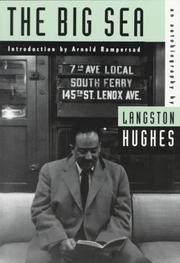
Hughes's memoir of the Renaissance years is both a firsthand chronicle and a wry, critical account of its contradictions — the white patrons, the class tensions, the commercialization — essential for seeing the movement whole.
Critical Depth & Legacy
ExpertStep back with scholarly perspective to understand the Renaissance's historical causes, its internal fault lines, and its long shadow over all subsequent African American literature and culture.
▸ Study plan for this stage
Pace: 6–8 weeks, ~40–50 pages/day with weekly synthesis sessions
- The Great Migration and its role in creating the demographic and cultural conditions for the Harlem Renaissance
- The tension between the 'Talented Tenth' ideology and grassroots African American culture and politics
- White patronage, primitivism, and the commodification of Black culture during the 1920s
- The internal ideological conflicts between assimilationism, cultural nationalism, and radical politics within the Renaissance
- How economic collapse, changing racial politics, and shifting patronage networks led to the Renaissance's decline by the early 1930s
- The distinction between the Harlem Renaissance as a historical phenomenon versus a literary movement, and its actual geographic and demographic scope
- The role of institutions, publications, and gatekeepers (editors, publishers, patrons) in shaping which voices were amplified
- The Renaissance's contested legacy and its influence on subsequent African American intellectual and artistic movements
- What were the specific historical, economic, and demographic factors that made the 1920s Harlem a unique cultural moment, and how did the Great Migration contribute to these conditions?
- How did white patronage and primitivist aesthetics both enable and constrain African American artistic expression during the Renaissance?
- What were the major ideological divisions among Harlem Renaissance figures, and how did debates over assimilation, authenticity, and political engagement shape the movement?
- Why did the Harlem Renaissance decline in the early 1930s, and what role did economic, political, and cultural shifts play in its end?
- How does Lewis challenge or complicate popular understandings of the Harlem Renaissance, and what evidence does he use to support his arguments?
- What is the relationship between the Harlem Renaissance and subsequent African American literary and cultural movements, and how has its legacy been reinterpreted over time?
- Create a detailed timeline of key events, publications, and figures in *When Harlem Was in Vogue*, marking turning points and noting how Lewis explains causation between events
- Construct a 'patronage map' identifying major white patrons mentioned in Lewis's account, their motivations, the artists they supported, and the strings attached to their support
- Write a 2–3 page analytical essay responding to one of Lewis's major arguments about the Renaissance's causes or decline, using specific evidence from the text
- Identify and analyze 3–4 internal ideological conflicts Lewis describes (e.g., between different factions or figures), and explain how these tensions shaped the movement's trajectory
- Compile a annotated list of the key institutions, publications, and gatekeepers Lewis emphasizes, noting their role in determining which voices were heard and which were marginalized
- Compare Lewis's framing of the Renaissance's 'end' with its popular cultural memory—what does he argue was actually happening, and why might the conventional narrative differ?
Next up: This stage equips you with the scholarly, historical framework and critical distance needed to evaluate how the Renaissance's legacy has been constructed, contested, and reinterpreted—preparing you to examine how subsequent African American writers and movements either built upon, rejected, or reimagined the Renaissance's aesthetic and political legacies.
The definitive cultural history of the Renaissance, written by a Pulitzer Prize-winning historian; reading it last transforms everything you've experienced in the primary texts into a fully mapped, critically understood movement.
Discussion
Keep reading
Paths that share books, cover the same subject, or open a related topic.