Hospitality Management: Best Books on Hotel and Guest-Service Operations
This curriculum builds from a solid operational and service foundation up through the financial and strategic layers of hospitality management, finishing with leadership and culture. Because the learner starts at an intermediate level, early stages sharpen core hotel operations and guest-service thinking before advancing into revenue optimization and people leadership — each stage's vocabulary directly unlocking the next.
Hotel Operations & Service Excellence
IntermediateUnderstand how a full-service hotel actually runs — departments, standards, workflows — and internalize what world-class guest service looks like in practice.
▸ Study plan for this stage
Pace: 8–10 weeks, ~25–30 pages/day. Bardi (4 weeks, ~25 pages/day), Michelli (2–3 weeks, ~30 pages/day), Meyer (2–3 weeks, ~25 pages/day). Build in 1 week for review and integration exercises.
- Front office as the operational and guest-facing hub: role of the desk, PMS systems, check-in/check-out workflows, and revenue management fundamentals
- Departmental interdependence: how housekeeping, maintenance, food & beverage, and concierge coordinate to deliver seamless service
- Service recovery and problem-solving: turning guest complaints into loyalty opportunities through empowerment and accountability
- Culture and employee engagement as the foundation of service excellence: hiring, training, and empowering staff to own guest outcomes
- Personalization and emotional connection: moving beyond transactional service to anticipate needs and create memorable experiences
- Standards, systems, and consistency: how documented procedures, metrics, and accountability ensure excellence at scale
- Leadership mindset in hospitality: servant leadership, vulnerability, and setting the tone from the top
- What are the core responsibilities of the front office, and how does the Property Management System (PMS) enable or constrain those functions?
- How do housekeeping, maintenance, and front office workflows intersect, and what happens when communication breaks down between departments?
- Describe a service recovery scenario: what does empowerment look like, and how can a frontline employee turn a failure into a guest loyalty moment?
- What role does employee culture and engagement play in delivering consistent service excellence, and how do you build it?
- How does Danny Meyer's concept of hospitality—creating a feeling of belonging—differ from transactional customer service, and why does it matter for a hotel?
- What metrics and systems should a hotel use to measure and maintain service standards across all departments?
- Map your hotel's (or a hotel you know) departmental workflows: trace a guest journey from reservation through checkout, identifying handoff points and potential friction. Document where communication gaps exist.
- Role-play a service recovery scenario (overbooking, room issue, complaint) using Michelli's framework: identify the failure, the recovery action, and how you'd empower a frontline employee to resolve it without escalation.
- Interview a hotel front desk agent, housekeeping supervisor, or manager about their daily challenges and how they coordinate with other departments. Synthesize findings into a brief case study.
- Design a training module for new front office staff that embeds both operational competency (Bardi's systems) and service mindset (Meyer's hospitality philosophy).
- Audit a hotel's service standards: review their published standards, observe operations for a few hours, and identify gaps between stated and actual practice. Propose three specific improvements.
- Write a personal service philosophy statement for yourself as a hotel leader, drawing on Meyer's principles of belonging and Michelli's service recovery framework. Reflect on how you'd model it daily.
Next up: This stage equips you with the operational and cultural foundations of a functioning hotel; the next stage will likely deepen your ability to optimize these systems—whether through revenue management, guest analytics, technology strategy, or scaling excellence across multi-property portfolios.
The definitive textbook on rooms-division operations; establishes the operational language and departmental logic that every later book assumes you already know.
Decodes the Ritz-Carlton service model with concrete principles, giving you a benchmark for guest-experience design before you study how to price or lead that experience.
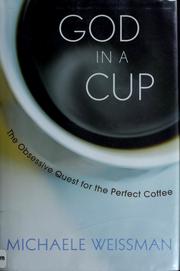
Meyer's concept of 'enlightened hospitality' reframes service as a culture, not a checklist — essential reading before tackling revenue and leadership topics.
Revenue Management & Financial Performance
IntermediateMaster the logic of hotel revenue management — pricing, demand forecasting, distribution channels, and profitability metrics — so you can make data-driven commercial decisions.
▸ Study plan for this stage
Pace: 4–5 weeks, ~25–30 pages/day, with 2–3 days per week dedicated to case analysis and exercises
- Revenue management as a discipline: the core principle of selling the right product to the right customer at the right time for the right price
- Demand forecasting and pattern recognition: using historical data, seasonality, and market signals to predict occupancy and pricing opportunities
- Price elasticity and dynamic pricing: understanding how price changes affect demand and how to optimize rates across different market segments
- Distribution channel strategy: managing inventory across direct, OTA, corporate, and group channels to maximize yield while controlling channel costs
- Overbooking and capacity management: balancing the risk of no-shows and cancellations against the cost of walking guests
- Segmentation and customer value: identifying high-value customers and allocating inventory strategically across segments
- Profitability metrics: RevPAR, ADR, occupancy rate, and how to interpret them to drive commercial decisions
- Competitive positioning and market intelligence: monitoring competitor pricing and adjusting strategy in real time
- What is the fundamental principle of revenue management, and how does it differ from traditional pricing approaches in hospitality?
- How do you forecast demand using historical data and seasonality patterns, and what role does market intelligence play?
- Explain the relationship between price elasticity, demand, and revenue optimization. How would you adjust pricing if demand is highly elastic vs. inelastic?
- What are the trade-offs between maximizing occupancy rate versus maximizing ADR and RevPAR? When should each metric take priority?
- How should a hotel manager distribute inventory across channels (direct, OTA, corporate, group) to optimize yield and minimize channel costs?
- What is overbooking, why do hotels use it, and what are the financial and reputational risks? How do you calculate an optimal overbooking percentage?
- How do you segment customers and allocate inventory strategically? What data would you use to identify your highest-value segments?
- Build a simple demand forecast for a 100-room hotel using 2 years of historical occupancy data; identify seasonal patterns and apply them to next quarter's forecast
- Analyze a competitor's pricing strategy over 4 weeks using publicly available data (OTA sites); document rate changes by day of week, lead time, and season
- Calculate RevPAR, ADR, and occupancy rate for a sample hotel month; then model how a 5%, 10%, and 15% price increase would affect each metric under different demand elasticity scenarios
- Design a distribution strategy for a 150-room hotel: allocate inventory percentages across direct booking, Booking.com, Expedia, corporate contracts, and group sales; justify your allocation based on channel costs and customer value
- Create an overbooking policy: given historical no-show and cancellation rates, calculate the optimal overbooking percentage and model the financial impact of walking 1, 2, and 3 guests
- Segment a hotel's customer base (using provided sample data) by source, length of stay, and booking lead time; recommend inventory allocation and pricing strategy for each segment
Next up: This stage equips you with the analytical and strategic mindset to optimize pricing and inventory in real time; the next stage will deepen your ability to implement these decisions operationally—covering systems, technology, team execution, and how to adapt revenue strategy to different property types and market conditions.

Cross's classic business-side treatment of yield and pricing strategy deepens the commercial intuition needed to apply Kimes's frameworks to real decisions.
Guest Experience Strategy & Brand Thinking
IntermediateMove from executing service to designing and differentiating the entire guest experience as a strategic asset, including loyalty and brand positioning.
▸ Study plan for this stage
Pace: 8–10 weeks, ~25–30 pages/day (alternating between both books; complete "The Experience Economy" first, then "Be Our Guest")
- The shift from commodities to experiences as the primary value driver in hospitality and business strategy
- The four realms of experience: entertainment, education, escapism, and esthetics, and how to layer them into guest interactions
- Theming and immersion as tools to create memorable, differentiated experiences that justify premium pricing
- Disney's service culture framework: how employee empowerment, storytelling, and attention to detail create consistent guest delight
- The guest journey as a designed narrative with distinct touchpoints, moments of truth, and emotional peaks
- Brand positioning through experience design: using sensory, emotional, and functional elements to create lasting competitive advantage
- Loyalty and repeat visitation as outcomes of authentic, emotionally resonant experiences rather than transactional rewards
- What are the four realms of experience according to Pine, and how do they differ from one another? Can you identify examples of each in a hospitality setting?
- How does Pine argue that businesses should transition from selling services to staging experiences, and what does this mean for pricing and customer perception?
- What is theming, and why does Pine consider it essential to creating immersive experiences? What are the risks of poor theming?
- According to the Disney Institute, what is the relationship between employee culture and guest experience? How do cast members contribute to brand storytelling?
- How does Disney's approach to service recovery and attention to detail (e.g., the concept of 'magical moments') differentiate its brand and drive loyalty?
- How would you design a guest experience journey for a specific hospitality property that incorporates multiple realms of experience and clear emotional touchpoints?
- Map the guest journey for a hospitality property you know well (hotel, restaurant, resort), identifying all touchpoints and assessing which realm(s) of experience each one activates. Identify gaps where experiences could be layered.
- Choose a hospitality brand and analyze its theming strategy: What narrative does it tell? How consistent is the theming across physical space, language, staff behavior, and sensory elements? Where does it succeed or fail?
- Conduct a 'moment of truth' audit: Spend time at a hospitality venue and document 5–10 critical interaction points between staff and guests. Assess whether each moment reinforces or undermines the brand promise.
- Design a fictional hospitality experience (e.g., a boutique hotel, restaurant concept, or resort experience) that intentionally layers all four realms of experience. Create a one-page narrative describing the guest journey and how each realm is activated.
- Interview 3–5 hospitality staff members about their understanding of the brand story and their role in delivering it. Analyze whether their understanding aligns with the brand's stated positioning and whether they feel empowered to create 'magical moments.'
- Analyze a loyalty program from a major hospitality brand. Does it reward transactional behavior or emotional engagement? How could it be redesigned to reflect the principles of experience economy and emotional differentiation?
Next up: This stage equips you with the strategic frameworks and emotional design principles needed to move into operational execution—the next stage will focus on translating experience strategy into systems, training, and measurable service standards that ensure consistent delivery at scale.
Pine's landmark framework — goods → services → experiences — gives hospitality managers the strategic vocabulary to design stays that command premium pricing.
Disney's operational playbook for experience design translates directly to hotel and resort contexts, bridging strategy back to day-to-day execution.
Leading a Hospitality Team
ExpertDevelop the leadership mindset and practical tools to build, motivate, and retain high-performing hospitality teams in a high-turnover, 24/7 service environment.
▸ Study plan for this stage
Pace: 8–10 weeks, ~25–30 pages/day with reflection breaks; allocate 4–5 weeks for "Unreasonable Hospitality" (240 pages) and 3–4 weeks for "The Heart of Hospitality" (200 pages), plus 1 week for integration and team application
- Unreasonable Hospitality: The philosophy of exceeding expectations through deliberate, personalized service that creates emotional connections with guests and staff
- Building a culture of ownership: How to empower team members to make autonomous decisions and take pride in their work without constant oversight
- The role of vulnerability and authenticity in leadership: Leading by example, admitting mistakes, and creating psychological safety so teams feel trusted and valued
- Retention through meaning-making: Connecting daily hospitality work to larger purpose and helping staff see their role as essential to guest transformation
- Systems and storytelling: Using operational systems to enable consistency while using narratives to inspire and align team behavior with hospitality values
- Emotional intelligence in high-turnover environments: Recognizing and responding to staff burnout, stress, and motivation shifts in fast-paced 24/7 service settings
- The Heart of Hospitality framework: Integrating guest experience, employee experience, and business outcomes as interdependent pillars of sustainable leadership
- What does 'unreasonable hospitality' mean according to Guidara, and how does it differ from standard customer service? How would you apply this philosophy to your team's daily interactions?
- How does Guidara use storytelling and culture-building to create ownership among his staff? What specific examples does he provide, and how could you adapt his approach to your own team?
- What are the key barriers to employee retention in hospitality, and what does Solomon identify as the root causes? How do guest experience and employee experience interconnect?
- Describe the relationship between vulnerability, trust, and team performance in a high-turnover environment. What leadership behaviors does Guidara model to build psychological safety?
- How do systems and processes enable hospitality teams to deliver consistent, personalized service without requiring heroic individual effort? What role does training play?
- What is the 'heart of hospitality' according to Solomon, and how does it balance profitability with genuine care for guests and employees?
- Read 'Unreasonable Hospitality' and annotate 3–5 moments where Guidara describes a specific leadership decision or team interaction. For each, write a one-paragraph reflection on how that decision shaped culture or outcomes, then identify one parallel situation in your own team and draft how you'd handle it using Guidara's principles.
- Conduct a 'culture audit' of your current team: Interview 3–5 staff members (anonymously if possible) about what makes them feel valued, what frustrates them, and what would make them stay longer. Map their responses against Guidara's and Solomon's frameworks for ownership and meaning-making.
- Design a 'storytelling ritual' for your team: Identify one key hospitality value (e.g., 'anticipation,' 'empathy,' 'ownership') and create a 5-minute team meeting format where staff share a recent guest or colleague interaction that exemplifies that value. Run this for 2 weeks and document how it affects team language and behavior.
- Create a 'decision-making empowerment map': List 10 common service decisions your team currently escalates to you. For each, determine which ones staff could safely own, what training/guardrails they'd need, and draft a one-page guide for each decision. Implement 3 of these over the next month.
- Develop a personal vulnerability practice: Identify one recent mistake or challenge you faced as a leader. Write a 2–3 minute narrative about what happened, what you learned, and how it changed your approach. Share it with your team and observe how it shifts psychological safety and openness.
- Read 'The Heart of Hospitality' and create a 'three-pillar assessment': For your team/property, rate yourself on a 1–10 scale across guest experience, employee experience, and business outcomes. Identify the weakest pillar and design a 90-day improvement plan grounded in Solomon's principles.
Next up: This stage equips you with the mindset and team-building tools to lead with authenticity and empower your staff; the next stage will likely deepen your ability to scale these principles across multiple teams, manage organizational change, and align hospitality leadership with broader business strategy.

Guidara's account of building the world's best restaurant team is the most current and compelling model of hospitality leadership — read after the operational and strategic stages so its lessons land fully.
Solomon interviews top hospitality leaders (Isadore Sharp, Danny Meyer) specifically about hiring, culture, and retention, making it the ideal capstone for the leadership stage.
Discussion
Keep reading
Paths that share books, cover the same subject, or open a related topic.