Event Planning: Best Books to Plan and Run Successful Events
This curriculum takes a beginner from zero event-planning knowledge to confident, professional execution across weddings and corporate events. Each stage builds directly on the last: first you learn the universal language of events (budgets, timelines, logistics), then you master vendor relationships and client management, and finally you specialize in the two most in-demand event types — weddings and corporate — with advanced execution strategies.
Foundations: How Events Work
BeginnerUnderstand the full lifecycle of an event — from concept and budgeting to day-of logistics — and build the core vocabulary every event professional uses.
▸ Study plan for this stage
Pace: 4–5 weeks, ~25–30 pages/day. Week 1–2: "Art of the Event" (foundation and philosophy); Week 2–3: "Event Planning" (practical frameworks); Week 3–5: "The Complete Guide to Successful Event Planning" (comprehensive systems and checklists).
- The event lifecycle: conception, planning, promotion, execution, and post-event evaluation
- Budget fundamentals: revenue models, cost categories, contingency planning, and ROI measurement
- Stakeholder management: identifying and communicating with clients, vendors, sponsors, and attendees
- Logistics and operations: venue selection, timeline creation, risk management, and day-of coordination
- Event design principles: creating memorable experiences aligned with client objectives and audience expectations
- Core event vocabulary and industry terminology used across all planning contexts
- Vendor relationships and negotiation: contracts, timelines, and quality standards
- Post-event analysis: feedback collection, financial reconciliation, and lessons learned documentation
- What are the five major phases of the event lifecycle, and what happens in each?
- How do you build a realistic event budget, and what are the main cost categories?
- What is the difference between event objectives and event design, and how do they inform each other?
- How do you identify, communicate with, and manage expectations across different stakeholder groups?
- What are the critical elements of an event timeline, and why is contingency planning essential?
- How do you evaluate whether an event was successful, and what metrics matter most?
- Create a full event budget (with revenue and expense categories) for a hypothetical 100-person corporate networking event using frameworks from 'Event Planning' and 'The Complete Guide'
- Map out the complete lifecycle for a real or fictional event, identifying key milestones, decision points, and stakeholder touchpoints from conception through post-event
- Draft a vendor communication template and sample contract language based on best practices from Monroe and Kilkenny
- Build a detailed event timeline (Gantt chart or linear) for a 6-month lead-time event, including contingency buffers
- Conduct a mock post-event evaluation: collect feedback, reconcile finances, and document three key lessons learned
- Create a stakeholder matrix identifying all parties involved in a sample event (client, vendors, sponsors, attendees) and outline communication cadence for each
Next up: This stage equips you with the vocabulary, lifecycle understanding, and foundational systems needed to move into specialized event types (corporate, weddings, conferences, etc.), where you'll apply these principles to industry-specific requirements and constraints.

A comprehensive, accessible introduction to professional event planning that covers concept development, budgeting basics, and logistics from the ground up — the perfect starting point for a true beginner.
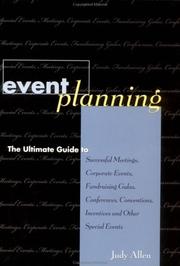
Judy Allen's foundational text is one of the most widely used in the field; it systematically walks through every planning phase — budgets, timelines, venues, and vendor coordination — giving beginners a reliable framework before diving deeper.

Read after Allen to reinforce core concepts with practical checklists and real-world templates; Kilkenny's workbook-style approach helps beginners translate theory into actionable planning documents.
Budgeting, Logistics & Operations
IntermediateMaster the financial and operational engine of events — building airtight budgets, managing cash flow, creating run-of-show documents, and handling risk and contingencies.
▸ Study plan for this stage
Pace: 4–5 weeks, ~25–30 pages/day, with 2–3 days per week dedicated to hands-on exercises and case study work
- Budget creation and cost estimation: identifying all revenue streams and expense categories (venue, catering, staffing, marketing, contingency)
- Cash flow management: timing of payments, invoicing, deposits, and financial controls to prevent overspending
- Run-of-show and timeline documentation: creating detailed minute-by-minute schedules that coordinate all operational elements
- Risk assessment and contingency planning: identifying potential failures and building mitigation strategies with buffer budgets
- Vendor management and contracts: negotiating terms, managing relationships, and protecting the event through clear agreements
- Operational workflows and checklists: designing systems for staffing, logistics coordination, and day-of execution
- Break-even analysis and profitability: understanding how to price tickets/sponsorships and achieve financial targets
- Post-event financial reconciliation: tracking actual spend vs. budget and learning from variances
- How do you build a comprehensive event budget from scratch, and what are the major expense categories you must account for?
- What is the relationship between cash flow timing and event success, and how do you prevent cash shortfalls before the event date?
- What should a run-of-show document contain, and how does it differ from a general timeline or checklist?
- How do you identify risks specific to your event and build contingency plans that actually protect you financially and operationally?
- What are the key elements of an effective vendor contract, and how do you negotiate terms that protect both parties?
- How do you calculate break-even for an event, and what strategies can you use to improve profitability without cutting corners on quality?
- Build a complete budget for a hypothetical 200-person corporate conference, including all major cost categories, contingency allocation, and revenue projections
- Create a 12-month cash flow forecast for a multi-day event, mapping when deposits are due, invoices are paid, and revenue is collected
- Develop a detailed run-of-show document for a 4-hour gala event, broken into 15-minute increments with assigned responsibilities and contingency notes
- Conduct a risk assessment for a specific event type (conference, wedding, festival), identify 8–10 key risks, and design mitigation strategies with cost implications
- Draft a vendor contract template for a catering company, including scope, payment terms, cancellation clauses, and liability provisions
- Perform a break-even analysis for a ticketed event: set pricing, calculate fixed/variable costs, and determine the minimum attendance needed to profit
Next up: This stage equips you with the financial discipline and operational rigor to execute events reliably; the next stage will focus on the human and creative dimensions—managing teams, engaging stakeholders, and delivering memorable experiences that justify the budget you've now mastered.
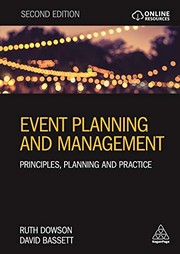
Dowson goes deeper into the operational and financial mechanics of events, including budgeting models, stakeholder management, and risk assessment — essential reading before tackling vendor negotiations.
A highly practical, logistics-focused guide that covers run-of-show planning, health and safety, and on-site management in granular detail; builds the operational confidence needed for real execution.
Vendors, Clients & the Business of Events
IntermediateLearn how to source, negotiate with, and manage vendors; handle client relationships and contracts; and understand how to run event planning as a professional business.
▸ Study plan for this stage
Pace: 4–5 weeks, ~25–30 pages/day (approximately 150–180 pages total across both books)
- Vendor sourcing, vetting, and relationship management strategies for sustainable partnerships
- Negotiation tactics and contract essentials for protecting both vendor and planner interests
- Client intake, communication protocols, and expectation-setting throughout the planning process
- Professional business structure: pricing models, profitability, and financial management for event planning
- Ethical standards and professional etiquette as competitive advantages in the event industry
- Legal and contractual frameworks that minimize liability and disputes
- Building a scalable business system and delegation model for growing an event planning company
- What are the key criteria for evaluating and selecting vendors, and how do you build long-term vendor relationships?
- What essential clauses and protections should be included in vendor and client contracts?
- How do you structure initial client consultations and set clear expectations to prevent scope creep and miscommunication?
- What are the main revenue models for event planning businesses, and how do you calculate pricing and profitability?
- How do ethical practices and professional etiquette differentiate your business and build client trust?
- What are your legal obligations and liability risks as an event planner, and how do contracts mitigate them?
- Create a vendor evaluation rubric with at least 8–10 criteria (cost, reliability, portfolio quality, references, flexibility) and use it to assess 3 real vendors in your local market
- Draft a sample vendor contract and a sample client contract, including key clauses for payment terms, cancellation, liability, and scope of work
- Conduct a mock client intake meeting with a partner; document the client's needs, budget, timeline, and expectations, then write a follow-up confirmation email
- Build a pricing model for a hypothetical event planning business: calculate overhead, hourly rates, markup percentages, and package pricing for 3 different event types
- Write a professional code of conduct for your event planning business, addressing vendor relations, client confidentiality, conflict of interest, and ethical decision-making
- Research and document the business licensing, insurance, and tax requirements for event planners in your state or region
Next up: This stage establishes the professional infrastructure and ethical foundation needed to run a sustainable event planning business; the next stage will likely focus on the creative and logistical execution of events—applying these vendor, client, and business systems to actual event design and on-site management.

Bridges the gap between planning skills and business acumen — covering contracts, vendor agreements, pricing your services, and client communication, which are critical before specializing in weddings or corporate events.

Allen's follow-up focuses on the professional conduct, vendor relationships, and ethical decision-making that separate good planners from great ones; pairs naturally with the business-building stage.
Specialization: Weddings
IntermediateApply all prior knowledge specifically to weddings — understanding the unique emotional dynamics, vendor ecosystem, timelines, and cultural considerations that define this high-stakes event type.
▸ Study plan for this stage
Pace: 4–5 weeks, ~40–50 pages/day, with 2–3 days per week dedicated to case studies and vendor research
- The emotional and relational dynamics unique to wedding planning (client expectations, family involvement, stress management)
- Wedding vendor ecosystem and negotiation strategies (caterers, florists, photographers, venues, coordinators)
- Wedding timeline architecture and critical path management (12-month, 6-month, and final-week milestones)
- Budget allocation and cost control across wedding categories (venue, catering, décor, entertainment, contingency)
- Cultural, religious, and personal customization in wedding design and logistics
- Risk management and contingency planning specific to high-stakes celebrations
- Client communication protocols and expectation-setting throughout the planning process
- How do emotional dynamics and family involvement differ in wedding planning compared to other event types, and how should a planner navigate these?
- What are the key vendor categories in a wedding, and what are the primary negotiation and contract considerations for each?
- What is a realistic wedding planning timeline, and what are the critical decision points and deadlines at each phase?
- How should a wedding budget be allocated across major categories, and what strategies minimize cost overruns?
- How do cultural, religious, or personal preferences shape wedding design and logistics, and how does a planner integrate these sensitively?
- What are the top risks in wedding execution, and what contingency plans should be in place before the event?
- Create a detailed 12-month wedding planning timeline for a hypothetical couple (specify budget, guest count, and venue type), including all vendor deadlines and decision milestones
- Develop a wedding budget breakdown for three different budget tiers (e.g., $15K, $50K, $150K), allocating funds across venue, catering, décor, photography, entertainment, and contingency
- Research and compare 5–6 vendors in at least three categories (e.g., caterers, florists, photographers) in your local market, documenting pricing, packages, contract terms, and negotiation leverage points
- Write a client intake questionnaire and communication plan for a wedding couple, covering expectations, preferences, cultural considerations, family dynamics, and decision-making authority
- Design a contingency plan for a real or hypothetical wedding addressing at least five high-risk scenarios (e.g., vendor cancellation, weather, guest count changes, budget overrun, timeline compression)
- Conduct a post-event debrief template and case study analysis: review a real wedding (from the book, a portfolio, or a documented case) and identify what went well, what challenges arose, and how they were managed
Next up: This stage equips you with specialized knowledge of the wedding market's unique emotional, logistical, and cultural dimensions, preparing you to either deepen expertise in other specialized event types (corporate, nonprofit, destination) or advance to leadership and business management topics in event planning.

An academically grounded yet practical text that covers wedding planning from a business and cultural perspective, including multicultural events and client management; deepens expertise beyond the basics.
Specialization: Corporate Events & Advanced Execution
ExpertPlan and execute complex corporate events — conferences, product launches, galas — from strategic concept through post-event evaluation, with professional-level polish and measurable outcomes.
▸ Study plan for this stage
Pace: 6–8 weeks, ~40–50 pages/day with project work integrated throughout
- Project management frameworks (scope, time, cost, quality, risk, stakeholder management) applied specifically to corporate events
- Strategic planning and concept development for high-stakes corporate events (conferences, product launches, galas)
- Budget development, financial forecasting, and ROI measurement for corporate events
- Vendor management, negotiation, and contract administration at scale
- Risk identification, mitigation strategies, and contingency planning for complex events
- Team structure, delegation, and leadership in event execution environments
- Post-event evaluation, metrics, and continuous improvement processes
- Professional standards, compliance, and stakeholder communication in corporate settings
- How do you apply the five process groups (initiating, planning, executing, monitoring, closing) from project management to a corporate conference or product launch?
- What are the key financial metrics and KPIs you should establish during the planning phase of a corporate event, and how do you measure ROI?
- How do you identify, assess, and mitigate risks specific to large-scale corporate events, and what contingency plans should be in place?
- What is the appropriate vendor selection, negotiation, and contract management process for a multi-million-dollar corporate gala or conference?
- How do you structure a project team for a complex corporate event, and what are the critical delegation and communication protocols?
- What should a comprehensive post-event evaluation include, and how do you use findings to improve future events?
- Develop a full project charter and scope statement for a hypothetical corporate conference (500+ attendees) including objectives, constraints, assumptions, and success criteria
- Create a detailed project schedule (Gantt chart) with critical path analysis for a product launch event, identifying dependencies and resource allocation
- Build a zero-based budget for a corporate gala, including all cost categories, contingency reserves, and a break-even analysis
- Conduct a risk register exercise: identify 15+ risks for a major corporate event, assess probability/impact, and develop mitigation and contingency strategies
- Negotiate and draft a vendor contract (catering, AV, venue) with realistic terms, payment schedules, and performance guarantees
- Design a stakeholder communication plan for a corporate event, including frequency, channels, and escalation protocols for different audience segments
- Perform a mock post-event evaluation: analyze actual event data (attendance, budget variance, feedback scores) and produce a lessons-learned report with recommendations
Next up: This stage equips you with the strategic and operational frameworks to manage corporate events as complex projects; the next stage will likely deepen specialization in either niche event categories (virtual/hybrid events, destination events) or advanced soft skills (crisis management, stakeholder psychology, innovation in event design).
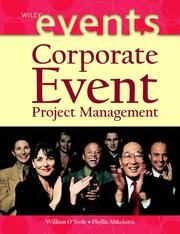
O'Toole applies formal project management methodology to corporate events, covering scope, scheduling, budgeting, and stakeholder reporting — essential for anyone managing large-scale professional events.
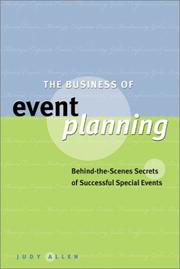
Allen's advanced title focuses on corporate clients, sponsorships, ROI measurement, and strategic event design — the ideal capstone that ties together everything learned across the entire curriculum.
Discussion
Keep reading
Paths that share books, cover the same subject, or open a related topic.