Restaurant Management: Best Books to Run a Profitable Restaurant
This curriculum builds from solid operational and financial foundations up through advanced profitability and leadership strategy, tailored for someone who already has some industry exposure. Each stage sharpens a specific lens — how a restaurant runs, how money flows, how people perform, and finally how it all integrates into a sustainably profitable business.
Operational Foundations
IntermediateUnderstand how a restaurant functions as a system — from daily operations and workflow to the core vocabulary of professional kitchen and floor management.
▸ Study plan for this stage
Pace: 8–10 weeks, ~25–30 pages/day (mix of both books, alternating focus)
- Hospitality as a deliberate philosophy and operational system—how Meyer's 'enlightened hospitality' translates to daily management practices
- The restaurant as an integrated system: front-of-house and back-of-house interdependence, workflow design, and communication protocols
- Core kitchen vocabulary and brigade system: stations, mise en place, communication hierarchy, and professional kitchen standards
- Service standards and guest experience management: consistency, problem-solving, and staff empowerment in real-time operations
- Financial and operational controls: labor scheduling, inventory management, cost control, and profitability metrics
- Staff training, motivation, and accountability systems: hiring, onboarding, performance management, and creating a culture of excellence
- Daily operational procedures: opening/closing checklists, shift management, crisis response, and continuous improvement cycles
- How does Danny Meyer define 'enlightened hospitality' and what are the specific operational practices that bring this philosophy to life in a restaurant?
- What are the key differences between front-of-house and back-of-house operations, and how should these departments communicate and coordinate?
- Describe the classical kitchen brigade system: what are the major stations, and what is the role of each position in maintaining service quality?
- What does 'mise en place' mean, why is it critical to kitchen operations, and how does it relate to service consistency?
- What are the primary financial metrics and controls a restaurant manager must monitor daily, and how do they impact profitability?
- How should a manager handle service failures or guest complaints in a way that aligns with hospitality principles while maintaining operational integrity?
- Map your local restaurant's front-of-house and back-of-house workflow: trace a single order from guest request through delivery, identifying handoff points and communication moments
- Create a mise en place checklist for a specific station (e.g., sauté, pastry, or expo) based on a restaurant you know or can research; identify what prep is needed before service
- Conduct a 'service shadow' at a restaurant: observe for 2–3 hours and document one moment where enlightened hospitality was (or wasn't) demonstrated; analyze what the manager could have done differently
- Design a staff training module for a new server or line cook using principles from both books: include onboarding steps, performance standards, and empowerment guidelines
- Build a simplified P&L (profit and loss) statement for a hypothetical restaurant shift or day, identifying labor costs, food costs, and revenue; calculate margins and identify cost-control levers
- Role-play a service recovery scenario: practice responding to a guest complaint or kitchen crisis using the communication and empowerment strategies outlined in the books
Next up: This stage establishes the operational vocabulary and systems thinking needed to manage a restaurant as an integrated whole; the next stage will likely deepen into specialized domains—such as menu engineering, financial strategy, or marketing—that build on this foundation of how restaurants actually function day-to-day.
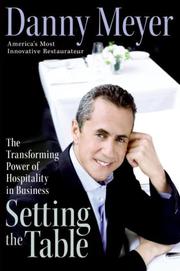
Meyer's philosophy of 'enlightened hospitality' establishes the mindset that underpins every operational decision; reading this first frames why operations and service exist — to create an experience, not just a transaction.
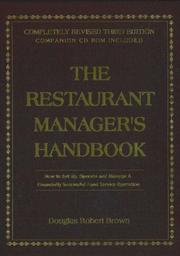
The most comprehensive operational reference in the field, covering purchasing, food safety, layout, staffing, and daily procedures — essential vocabulary and systems for everything that follows.
Menu Costing & Financial Control
IntermediateMaster food and beverage costing, menu engineering, and the financial levers that determine whether a restaurant makes or loses money.
▸ Study plan for this stage
Pace: 8–10 weeks, ~25–30 pages/day. Week 1–5: "Restaurant Financial Basics" (approximately 250–300 pages); Week 6–10: "Menu Engineering" (approximately 150–200 pages). Allocate 2–3 days per week for exercises and case study work.
- Food cost percentage, prime cost, and how to calculate and control them using actual restaurant data
- The Uniform System of Accounts for Restaurants (USAR) and how to structure financial statements for meaningful analysis
- Break-even analysis, contribution margin, and how menu items drive profitability at different price points
- Menu engineering matrix (popularity vs. profitability) and how to classify items as stars, plowhorses, puzzles, and dogs
- Cost allocation methods (direct, indirect, and overhead) and their impact on true menu item profitability
- Beverage costing and control, including pour cost, inventory turnover, and theft prevention
- Pricing strategies based on cost, competition, and perceived value; how to use costing data to set menu prices
- Financial leverage points: labor, waste, portion control, and inventory management as levers to improve margins
- How do you calculate food cost percentage and prime cost, and what do these metrics tell you about restaurant profitability?
- What is the Uniform System of Accounts for Restaurants, and how does it help you identify financial problems in your operation?
- How do you use the menu engineering matrix to identify which menu items are generating profit and which are dragging down margins?
- What is contribution margin, and how does it differ from food cost percentage when evaluating menu item profitability?
- How do you allocate overhead and indirect costs to individual menu items, and why does this matter for pricing decisions?
- What are the key levers for controlling beverage costs, and how do you detect and prevent theft or waste in beverage operations?
- How do you use costing data to set menu prices that balance profitability, competition, and customer value perception?
- Calculate food cost percentage and prime cost for a real or hypothetical restaurant using 2–4 weeks of actual invoices and sales data; identify the top 3 cost drivers.
- Reconstruct a simplified income statement using the Uniform System of Accounts; classify each expense line and calculate key ratios (food cost %, labor %, overhead %).
- Build a menu engineering matrix for a 15–20 item menu: plot each item by popularity (number sold) and profitability (contribution margin); classify items as stars, plowhorses, puzzles, or dogs; recommend price or promotion changes for at least 3 items.
- Conduct a full costing analysis on 5–8 menu items: calculate recipe costs, portion costs, and contribution margin; allocate a share of overhead (rent, utilities, labor) to each item and compare profitability before and after allocation.
- Perform a beverage inventory audit: count bottles, calculate pour cost for 3–5 signature drinks, identify variance between theoretical and actual cost, and propose 2–3 control measures.
- Run a break-even analysis for the restaurant: determine fixed costs, average contribution margin per cover, and the number of covers needed to break even; model the impact of a 5–10% price increase or cost reduction.
- Price a new menu item or repriced existing item using three methods (cost-plus, competition-based, value-based); justify your final price using costing data and market positioning.
Next up: This stage equips you with the financial literacy and analytical tools to diagnose profitability problems and optimize menu performance; the next stage will likely deepen your ability to use these insights to drive operational improvements, manage labor and inventory strategically, or scale the business profitably.

Provides a rigorous but accessible grounding in P&L statements, food cost percentages, prime cost, and break-even analysis — the quantitative core of profitable restaurant management.

The canonical text on classifying menu items by popularity and contribution margin (Stars, Plowhorses, Puzzles, Dogs), giving you a data-driven framework to price and redesign any menu.
Staffing, Culture & Service Excellence
IntermediateBuild and retain high-performing teams, design training systems, and deliver consistent, memorable guest service at scale.
▸ Study plan for this stage
Pace: 4–5 weeks, ~25–30 pages/day (approximately 150–180 pages total)
- Hospitality as a deliberate philosophy: moving beyond transactional service to creating genuine human connection and emotional resonance with guests
- The 'unreasonable' standard: setting expectations that exceed industry norms and building systems to consistently deliver on them
- Empowering staff autonomy: trusting frontline employees to make decisions that prioritize guest delight, even when it breaks protocol
- Intentional culture design: how leadership values and behaviors cascade to shape team dynamics, service quality, and guest experience
- Service recovery and failure: using mistakes as opportunities to deepen guest relationships and demonstrate genuine care
- The business case for hospitality: how exceptional service drives loyalty, word-of-mouth, and sustainable profitability
- Training and systems for consistency: creating repeatable processes and frameworks that enable teams to deliver excellence at scale
- What does Guidara mean by 'unreasonable hospitality,' and how does it differ from standard customer service?
- How should restaurant leaders balance empowering staff autonomy with maintaining operational consistency and profitability?
- What role does genuine human connection play in building guest loyalty, and how can it be cultivated systematically?
- How can service failures and mistakes be reframed as opportunities to strengthen guest relationships?
- What specific leadership behaviors and cultural practices does Guidara identify as essential to building a high-performing hospitality team?
- How does investing in staff development and culture directly impact bottom-line business results in restaurants?
- Audit your current service standards: Document 3–5 key service moments in your restaurant (greeting, ordering, delivery, payment, departure). For each, identify where you could exceed guest expectations in a way that feels authentic to your brand.
- Conduct a staff empowerment inventory: Interview 5–10 frontline staff members about decisions they feel authorized to make. Identify gaps where they're hesitant to act, then draft new guidelines that expand their autonomy within guardrails.
- Design a 'service recovery' playbook: Document 3–4 common service failures (wrong order, long wait, cold food, etc.). For each, write a response that goes beyond fixing the problem—one that creates a memorable recovery moment.
- Map your culture: Create a one-page visual of your restaurant's current culture (values, behaviors, norms). Compare it to the culture you want. Identify 2–3 leadership actions you can take this month to close the gap.
- Host a 'hospitality storytelling session': Gather your team and ask them to share stories of a time they went above and beyond for a guest. Document these stories and use them to reinforce cultural values in team meetings.
- Develop a guest connection training module: Design a 30-minute training session for new hires focused on one specific skill from the book (e.g., active listening, remembering guest preferences, or personalizing recommendations). Pilot it with your team.
Next up: This stage establishes the philosophical and cultural foundation for hospitality excellence; the next stage will likely focus on operational systems, financial management, and scaling these principles across multiple locations or complex service environments.

Guidara's account of running the world's best restaurant operationalizes service culture — read it here to translate the 'why' from Stage 1 into concrete team behaviors and hiring philosophy.
Discussion
Keep reading
Paths that share books, cover the same subject, or open a related topic.