Customer Service: Best Books to Deliver Great Customer Experiences
This curriculum takes you from the human fundamentals of service all the way to building an organization-wide culture of excellence. It begins with communication and empathy — the bedrock skills — then moves through complaint handling and loyalty science, before finishing with the strategic and cultural frameworks that turn great individuals into winning teams and brands.
Foundations: The Human Side of Service
BeginnerUnderstand what exceptional customer service feels like, why empathy and communication are its core, and develop the mindset of a true service professional.
▸ Study plan for this stage
Pace: 4–5 weeks, ~25–30 pages/day. Cockerell (1–2 weeks), Mitchell (1–2 weeks), Carnegie (1–2 weeks), with 3–4 days for review and integration.
- Service mindset: viewing customers as partners, not transactions—the foundation Cockerell establishes for treating people with genuine respect
- Emotional connection through personal touch: Mitchell's principle that remembering names, preferences, and personal details transforms ordinary service into memorable relationships
- Active listening and genuine interest: Carnegie's core insight that people feel valued when truly heard, which builds trust and loyalty faster than any sales pitch
- Empathy as a business strategy: understanding that customer problems are real human problems, requiring emotional intelligence alongside technical competence
- Communication clarity: the ability to explain, apologize, and resolve issues in language that reassures rather than confuses or frustrates
- Consistency and reliability: showing up the same way every time, which Cockerell emphasizes as the bedrock of customer confidence
- Vulnerability and authenticity: admitting mistakes and being human, rather than hiding behind corporate scripts—the path to genuine connection
- Reciprocal respect: the mutual obligation between service provider and customer, where both parties are treated as worthy of dignity
- According to Cockerell, what is the difference between a transactional approach to customer service and a relational one, and why does it matter?
- How does Mitchell's concept of the 'personal touch' create customer loyalty, and what are three specific tactics he recommends for remembering and honoring customer preferences?
- What does Carnegie mean by 'genuine interest in other people,' and how is this different from manipulation or flattery?
- Describe a situation where empathy would change the outcome of a customer service interaction. What would the service professional do differently?
- How do Cockerell, Mitchell, and Carnegie each address the role of listening in customer service? What common thread connects their approaches?
- Why is consistency important in building customer trust, and what happens when a service professional is inconsistent?
- Active listening practice: Have a conversation with a colleague or friend where your only job is to listen and ask clarifying questions—no advice, no interrupting. Afterward, summarize what you heard and ask if you understood correctly. Do this 3 times and notice how people respond.
- Memory building: For one week, write down one personal detail about each customer or colleague you interact with (name, preference, family member, hobby). Review your notes daily and use these details in your next interaction. Track how many people notice and respond positively.
- Empathy mapping: Take 3 real customer complaints or frustrations you've witnessed. For each, write down: What is the customer feeling? What problem are they actually trying to solve? What would a solution look like from their perspective? How would you explain it back to them?
- Personal touch audit: Review your last 10 customer interactions (email, call, in-person). How many were generic/scripted vs. personalized? Rewrite 3 generic responses to include a personal detail or acknowledgment that shows you see the individual.
- Mistake recovery role-play: With a partner, practice apologizing for a service failure using Carnegie's principle of genuine interest. The goal is not to defend yourself but to understand the customer's frustration first. Record yourself and listen for: Did you interrupt? Did you show understanding? Did you ask how to make it right?
- Mindset journal: After reading each book, write a one-page reflection on how your view of customers has shifted. What surprised you? What challenged your old assumptions? What will you do differently this week?
Next up: This stage establishes the emotional and relational foundation—the "why" and "how" of genuine service—preparing you to move into the next stage where you'll learn the systems, skills, and strategies needed to deliver that foundation consistently at scale.

A former Disney executive distills 39 simple, memorable rules for delivering outstanding service. It's the perfect first read — concrete, inspiring, and immediately actionable for any beginner.
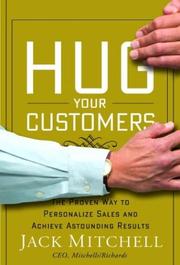
Introduces the philosophy of deeply personal, relationship-first service through real retail stories. It builds the vocabulary of customer intimacy before you tackle more complex communication frameworks.

The timeless foundation of human communication and empathy. Reading this third cements the interpersonal principles — listening, genuine interest, avoiding criticism — that underpin every service interaction.
Communication & Complaint Handling
BeginnerMaster the language of service — how to phrase responses, de-escalate tension, handle difficult customers, and turn complaints into opportunities.
▸ Study plan for this stage
Pace: 8–10 weeks, ~25–30 pages/day (alternating between both books to reinforce complementary techniques)
- The Crucial Conversations framework: how to prepare for high-stakes conversations, establish safety, and share your perspective without triggering defensiveness
- Dialogue skills from Crucial Conversations: listening actively, asking clarifying questions, and creating conditions where others feel heard before responding
- The psychological shift in A Complaint is a Gift: reframing complaints as valuable feedback and relationship-building opportunities rather than attacks
- De-escalation techniques: using empathy, validation, and strategic silence to calm emotional customers and prevent conversations from becoming adversarial
- Turning complaints into loyalty: the specific steps to acknowledge, investigate, resolve, and follow up on complaints in ways that strengthen customer relationships
- Language patterns and phrasing: concrete phrases and sentence structures that convey respect, accountability, and genuine commitment to resolution
- Root cause analysis: moving beyond surface-level complaints to understand underlying customer needs and systemic issues
- Recovery and service recovery: how to rebuild trust after a service failure and exceed expectations in the resolution process
- What are the five components of a Crucial Conversation, and how do you establish psychological safety before addressing a complaint?
- How does the mindset shift from 'a complaint is a problem' to 'a complaint is a gift' change the way you respond to difficult customers?
- What specific listening and clarification techniques from Crucial Conversations help prevent misunderstandings and de-escalate tension?
- Walk through the complete complaint-handling process outlined in A Complaint is a Gift: what are the key steps from initial contact to follow-up?
- How do you identify and address the root cause of a complaint rather than just treating the symptom?
- What language choices and phrases help you convey empathy and accountability without admitting fault prematurely or sounding defensive?
- Role-play a high-stakes complaint scenario (e.g., a customer threatening to leave): use the Crucial Conversations framework to establish safety, listen actively, and share your perspective without triggering defensiveness
- Record yourself handling a simulated complaint call or email; listen back and identify moments where you could have used better de-escalation language or asked clarifying questions
- Write out 10–15 go-to phrases for common complaint situations (delays, quality issues, billing errors) that balance empathy with professionalism
- Analyze a real complaint you've received (or a fictional one): map it to the root cause analysis process from A Complaint is a Gift and design a recovery plan
- Practice the 'pause and listen' technique: in a role-play, deliberately use strategic silence and open-ended questions to let the customer fully express their frustration before responding
- Create a complaint-to-loyalty case study: document a complaint scenario from start to finish, showing how you'd transform it into a relationship-strengthening opportunity
Next up: This stage equips you with the conversational tools and mindset to handle complaints with skill and empathy; the next stage will build on this foundation by teaching you how to systematize and scale these practices across teams and organizations.
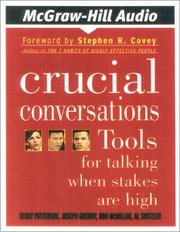
Teaches a proven framework for high-stakes dialogue when emotions run hot — essential for complaint situations. It gives you the specific language tools to stay calm and constructive under pressure.

Reframes complaints as the most valuable feedback a business can receive and provides a step-by-step method for responding. Reading it after Crucial Conversations means you already have the communication skills to execute its strategies.
Loyalty & the Customer Experience
IntermediateUnderstand the science and strategy behind customer loyalty, the Net Promoter System, and how to design experiences that keep customers coming back.
▸ Study plan for this stage
Pace: 4–5 weeks, ~40 pages/day (approximately 280 pages total)
- The Effort Metric: How customer effort (not just satisfaction) is the primary driver of loyalty and retention
- The Effortless Experience Framework: The three pillars of reducing friction—people, processes, and technology
- The Net Promoter System: Using NPS as a diagnostic tool to identify effort points and measure loyalty
- Emotional vs. Rational Loyalty: Understanding that reducing effort creates rational loyalty, which is more durable than satisfaction alone
- Service Recovery Paradox: How handling problems effortlessly can create stronger loyalty than never having problems
- The Cost of Effort: Why high-effort interactions drive customers away and increase churn, even when satisfaction scores are high
- Designing Frictionless Processes: Mapping customer journeys to identify and eliminate unnecessary steps and handoffs
- Empowering Front-Line Employees: How giving staff autonomy and tools reduces effort for both customers and employees
- Why is reducing customer effort more effective at building loyalty than increasing satisfaction or delight?
- What are the three pillars of the Effortless Experience Framework, and how do they work together to reduce friction?
- How can you use Net Promoter System data to identify where customers experience the most effort in their journey?
- What is the difference between emotional loyalty and rational loyalty, and why does rational loyalty matter for retention?
- Describe the service recovery paradox: how can handling a problem effortlessly actually increase loyalty?
- What are the key barriers to implementing an effortless experience, and how can organizations overcome them?
- Map your own customer journey (or a specific customer segment) and identify at least 5 high-effort touchpoints; document why each requires effort and brainstorm one low-effort alternative for each
- Conduct a follow-up interview with 3–5 customers who recently had a service interaction; ask them to rate the effort required and identify what made it easy or hard
- Analyze your organization's (or a case study company's) NPS data by effort level; segment Promoters, Passives, and Detractors by the effort they reported in their last interaction
- Design a process improvement proposal for one high-effort interaction: map the current state, identify unnecessary steps, and propose a streamlined version with clear metrics for success
- Role-play a service recovery scenario with a colleague; practice handling a customer problem with minimal effort (e.g., single point of contact, quick resolution, no transfers)
- Audit your organization's (or a competitor's) technology and tools; identify 2–3 systems that create friction for customers or employees and propose integration or simplification solutions
Next up: This stage establishes the foundational principle that loyalty is built through effortless experiences and measured through effort metrics, preparing you to explore deeper strategies for designing loyalty programs, personalization, and emotional engagement in the next stage.
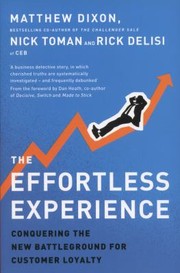
Challenges the 'delight at all costs' myth with data, showing that reducing customer effort is the most powerful driver of loyalty. This evidence-based perspective is a crucial pivot from intuition to strategy.
Introduces the Net Promoter Score system — the industry-standard metric for measuring loyalty. Reading it after Dixon gives you both the 'why' of loyalty and the 'how to measure it' framework.
Building a Service Culture That Wins
ExpertLearn how to design, lead, and sustain an organization-wide service culture — hiring, training, systems, and leadership — so great service becomes the norm, not the exception.
▸ Study plan for this stage
Pace: 8–10 weeks, ~40–50 pages/day (approximately 2–3 weeks per book with overlap for reflection and application)
- Service culture as a deliberate organizational design choice: how values, systems, and leadership align to prioritize customer service at every level
- Hiring and onboarding practices that attract and retain service-minded employees who embody organizational values
- Empowerment frameworks: giving frontline employees autonomy and decision-making authority to solve customer problems without bureaucratic delays
- Leadership's role in modeling service behavior, removing obstacles, and reinforcing cultural norms through consistent messaging and accountability
- Systems and processes that support service delivery: from training programs to performance metrics that measure what matters
- The Zappos model (Delivering Happiness): how company culture, employee happiness, and customer satisfaction are interconnected and mutually reinforcing
- The Nordstrom Way: decentralized decision-making, employee trust, and the power of simple rules (e.g., 'Use good judgment in all situations') to drive service excellence
- Sustaining culture over time: preventing cultural drift, scaling culture as the organization grows, and adapting to market changes while preserving core values
- How does Jeff Toister define service culture, and what are the key components required to build one intentionally?
- What role does hiring and onboarding play in establishing a service culture, and how do the three books differ in their approaches?
- How does empowerment work in practice? What specific examples do Hsieh and Spector provide of employees making autonomous decisions that delighted customers?
- What is the relationship between employee happiness/engagement and customer service outcomes, according to Delivering Happiness?
- How does Nordstrom's decentralized structure and simple rule-based approach differ from more prescriptive service systems, and what are the trade-offs?
- What systems, metrics, and leadership practices does Toister recommend to sustain a service culture over time and across a growing organization?
- Audit your current organization (or a familiar company): map its hiring criteria, onboarding process, and training programs against the frameworks in Toister's handbook. Where are the gaps?
- Write a job description and interview guide for a customer-facing role using principles from all three books—focus on values alignment and service mindset, not just technical skills.
- Design a 'culture deck' or one-page manifesto for a service-focused team or organization, inspired by Zappos' culture book and Nordstrom's simple rules. Include core values, decision-making principles, and what 'good judgment' means in your context.
- Conduct a role-play exercise: identify a customer service scenario (complaint, unusual request, system failure) and practice how an empowered employee at Nordstrom or Zappos would handle it differently than in a rule-bound environment.
- Interview 3–5 customer-facing employees in your organization (or a local business) about their autonomy, training, and sense of alignment with company values. Synthesize findings against Toister's service culture model.
- Create a 90-day implementation plan for one specific service culture initiative (e.g., revised hiring process, empowerment training, or culture reinforcement ritual) using frameworks from the three books.
Next up: This stage equips you with the organizational architecture and leadership mindset needed to embed service excellence into company DNA; the next stage will likely focus on advanced customer experience design, measuring service impact, or scaling these practices across complex, multi-channel, or global environments.

A practical, step-by-step guide to creating a customer-focused culture from the inside out. It bridges individual skills and organizational systems, making it the ideal entry point to this advanced stage.
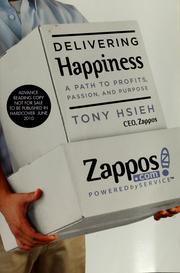
Zappos's legendary story shows how culture, values, and service become a single unified strategy. It brings the entire curriculum to life through one of the most studied service organizations in history.
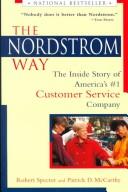
Deconstructs how Nordstrom built a multi-generational service culture through hiring philosophy, empowerment, and leadership. It closes the curriculum with a durable, real-world blueprint you can adapt to any organization.
Discussion
Keep reading
Paths that share books, cover the same subject, or open a related topic.