Getting Out of Debt: Best Books to Pay Off Debt and Take Control of Your Money
This curriculum takes a complete beginner from financial panic to lasting freedom in four carefully sequenced stages. It starts by building the right money mindset and basic vocabulary, moves into proven debt-payoff and budgeting tactics, then tackles credit repair, and finally installs the wealth-building habits that make sure debt never returns.
Mindset & Foundations
BeginnerUnderstand why debt happens, shift your relationship with money, and learn the core vocabulary (interest, net worth, cash flow) needed for every stage ahead.
▸ Study plan for this stage
Pace: 4–5 weeks, ~40–50 pages/day (approximately 2 weeks per book with time for reflection and exercises)
- The psychological roots of debt and overspending (Ramsey's 'debt is a symptom' principle)
- The debt snowball method as a behavioral tool for momentum and motivation
- Reframing money as a tool for freedom rather than status or security
- Understanding the relationship between time, energy, and money (Vicki Robin's life energy concept)
- Core vocabulary: interest rates, net worth calculation, cash flow tracking, and the true cost of debt
- The Baby Steps framework as a structured path to financial stability
- Distinguishing between wants and needs, and the cultural messaging that drives spending
- Building awareness of your current financial situation without shame or judgment
- Why does Dave Ramsey argue that debt is a symptom rather than the root problem, and what does he say the real problem is?
- How does the debt snowball method work, and why does Ramsey emphasize it over the debt avalanche approach?
- What does Vicki Robin mean by 'life energy,' and how does she connect it to your spending habits?
- Calculate your own net worth and cash flow: What are your assets, liabilities, monthly income, and monthly expenses?
- What are the first three Baby Steps in Ramsey's framework, and why does he recommend tackling them in that order?
- How has cultural messaging and your upbringing shaped your beliefs about money and debt?
- Complete a personal net worth statement: list all assets (savings, investments, home value) and liabilities (credit cards, student loans, mortgage) and calculate the difference
- Track your spending for one week in detail, categorizing each expense as 'want' or 'need,' then reflect on patterns and surprises
- Create a written list of your current debts with creditor name, balance, interest rate, and minimum payment—this is your debt inventory
- Write a one-page personal money story: reflect on your earliest money memories, what your parents taught you about debt, and how those beliefs affect you today
- Calculate the true cost of one debt using interest: pick a credit card or loan and compute how much total interest you'll pay if you only make minimum payments
- Set up a simple monthly cash flow tracker (income minus expenses) and identify one area where you could redirect $50–100 toward debt payoff
- Read and annotate the 'Baby Steps' section in The Total Money Makeover, then create a visual roadmap (poster, digital graphic, or handwritten chart) of where you are and where you want to go
Next up: This stage equips you with the psychological foundation and vocabulary needed to execute a concrete debt payoff strategy, preparing you to move into the next stage where you'll learn budgeting mechanics, emergency funds, and tactical payoff methods.

The single best starting point for debt beginners — Ramsey's 'Baby Steps' give an immediately actionable framework and the motivational jolt needed to take the problem seriously.
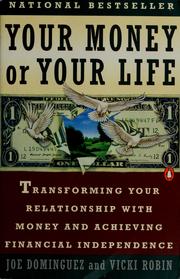
Reframes money as life energy, helping you understand the deeper 'why' behind overspending — essential mindset work before diving into tactics.
Budgeting & Debt-Payoff Strategies
BeginnerBuild a working monthly budget, choose the right payoff strategy (snowball vs. avalanche), and create a concrete plan to eliminate every debt.
▸ Study plan for this stage
Pace: 4–5 weeks, ~25–30 pages/day (approximately 150–180 pages per book)
- The four rules of YNAB: give every dollar a job, embrace your true expenses, roll with the punches, and age your money to break paycheck-to-paycheck living
- The difference between debt-payoff strategies: snowball (smallest balance first for psychological wins) vs. avalanche (highest interest rate first for mathematical efficiency)
- How to build a realistic, zero-based monthly budget that accounts for irregular expenses and prevents overspending
- The psychology of spending and how to identify and eliminate money leaks in your daily habits
- Automation as a debt-elimination tool: setting up automatic payments and transfers to remove willpower from the equation
- The relationship between debt payoff and wealth building: how eliminating debt frees up cash flow for long-term financial goals
- How to choose the right payoff strategy based on your personality, debt composition, and financial situation
- What are the four rules of YNAB, and how does each one address a common budgeting mistake?
- When would you choose the debt snowball strategy over the avalanche method, and vice versa? What are the trade-offs?
- How do you build a zero-based budget, and why is accounting for irregular expenses (like car insurance or annual subscriptions) critical?
- What are your personal money leaks, and how can you plug them using the principles from these books?
- How can automation help you stick to a debt-payoff plan without relying on willpower alone?
- What is your specific debt-payoff timeline, and which strategy will you use to eliminate each debt?
- List all your debts (credit cards, student loans, car loans, etc.) with balances and interest rates. Calculate which payoff strategy (snowball vs. avalanche) would save you the most money and which would give you the fastest psychological wins.
- Build a zero-based monthly budget using the YNAB framework: assign every dollar a job before the month begins, including irregular expenses. Track it for one full month and identify where you overspent or underspent.
- Identify your top 5 money leaks (subscriptions you forgot about, daily coffee runs, impulse purchases, etc.). Calculate their annual cost and decide which ones to eliminate or reduce.
- Create an automated debt-payoff plan: set up automatic payments for at least one debt and one savings category. Document the setup process and how it removes friction from your plan.
- Write a one-page debt-payoff action plan that includes: your total debt, your chosen strategy, your monthly payment amount, and your target payoff date. Be specific about which debts you'll tackle first.
- Interview yourself on your relationship with money: What emotions trigger your spending? What does being debt-free mean to you? How will eliminating debt change your life? Use these insights to personalize your budget.
Next up: This stage equips you with a working budget, a clear payoff strategy, and the automation tools to execute your plan—setting the foundation for the next stage, which will likely focus on building wealth and investing the cash flow you've freed up by eliminating debt.
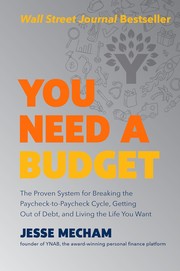
Teaches the four-rule budgeting method that stops living paycheck-to-paycheck — read this first in the stage so you have cash flow under control before attacking debt.

Provides practical, no-nonsense worksheets and a step-by-step payoff plan that directly complements the budgeting skills just learned from Mecham.
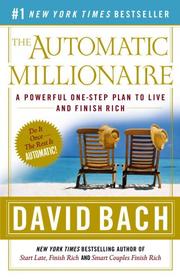
Introduces automation and the 'latte factor' concept, showing how small, consistent changes compound — bridges budgeting into the habit-building needed for the next stage.
Credit Repair & Rebuilding
IntermediateUnderstand how credit scores work, dispute errors effectively, rebuild damaged credit, and use credit as a tool rather than a trap.
▸ Study plan for this stage
Pace: 4–5 weeks, ~25–30 pages/day (approximately 140–150 pages per book)
- How credit scores are calculated (payment history, credit utilization, age of accounts, credit mix, inquiries) and why each factor matters
- The three major credit bureaus (Equifax, Experian, TransUnion) and how to obtain and read your credit reports
- Identifying errors, inaccuracies, and fraudulent accounts on credit reports and understanding your legal right to dispute them
- The dispute process: how to file disputes effectively with bureaus and creditors, documentation requirements, and timelines for resolution
- Strategies to rebuild credit: secured cards, authorized user status, credit-builder loans, and managing existing debt responsibly
- The difference between hard and soft inquiries and how to minimize damage from hard inquiries
- Negative items (late payments, collections, charge-offs) and realistic timelines for their removal or aging off your report
- Using credit strategically as a financial tool while avoiding common traps that lead to debt accumulation
- What are the five main factors that make up a credit score, and what percentage weight does each carry?
- How do you obtain your credit reports from all three bureaus, and what should you look for when reviewing them?
- What is the dispute process for inaccurate or fraudulent items on your credit report, and what documentation should you include?
- What are three concrete strategies you can use to rebuild credit after damage, and how long does each typically take to show results?
- What is the difference between a hard inquiry and a soft inquiry, and how does each affect your credit score?
- How can you use credit responsibly as a tool without falling back into debt traps?
- Pull your credit reports from all three bureaus (annualcreditreport.com) and spend 2–3 hours reviewing them line by line; document any errors or unfamiliar accounts
- Write a dispute letter for at least one inaccuracy found on your report, following the format and requirements outlined in the books; send it via certified mail and track the response
- Create a personal credit-building action plan: identify which strategy (secured card, credit-builder loan, or authorized user status) fits your situation best and apply
- Calculate your current credit utilization ratio across all accounts; develop a 90-day plan to reduce it to below 30% and track progress weekly
- Set up a dispute tracking spreadsheet documenting each error, the date disputed, the bureau/creditor contacted, and the resolution status; update monthly
- Research and compare 3–5 secured credit cards or credit-builder loan products; evaluate fees, credit limits, and reporting practices before choosing one to apply for
Next up: This stage equips you with the knowledge and tools to diagnose and fix credit damage, setting the foundation for the next stage where you'll learn to leverage good credit strategically for major financial goals like homeownership or business financing.
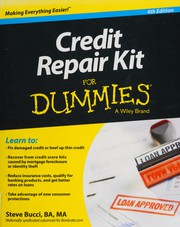
The most comprehensive plain-English guide to reading credit reports, writing dispute letters, and legally repairing your score — start here before any other credit book.

Goes deeper on rebuilding strategy after repair, covering secured cards, credit-builder loans, and score optimization — a natural next step once errors are cleared.
Lasting Financial Freedom & Wealth Building
IntermediateTransition from debt elimination to wealth accumulation — learn investing basics, build an emergency fund, and install systems that prevent ever returning to debt.
▸ Study plan for this stage
Pace: 8–10 weeks, ~25–30 pages/day. Allocate roughly 3 weeks per book with overlap for integration and practice.
- Wealth is built through consistent saving and disciplined spending habits, not high income — the millionaire mindset focuses on frugality and long-term accumulation
- Automating financial systems (savings, investments, bill payments) removes willpower from the equation and ensures consistent progress toward wealth
- Index fund investing offers low-cost, diversified, passive wealth-building suitable for ordinary investors without requiring stock-picking expertise
- An emergency fund of 3–6 months of expenses is the foundation that prevents debt relapse and protects wealth-building progress
- The psychology of money: understanding your spending triggers, lifestyle inflation, and behavioral biases is as important as financial mechanics
- Tax-advantaged accounts (401k, IRA, Roth IRA) and employer matches are powerful wealth accelerators that most people underutilize
- Intentional spending on what matters to you, paired with ruthless elimination of unconscious spending, creates sustainable wealth without deprivation
- What are the key characteristics of millionaires according to Stanley, and how do their spending and saving habits differ from high-income earners?
- How does automating your financial life (savings, investments, bill payments) prevent you from returning to debt, and what systems should you set up first?
- Why does Bogle advocate for index fund investing over active stock picking, and what are the long-term cost and performance advantages?
- What is the purpose of an emergency fund, how much should you have, and how does it fit into your overall wealth-building timeline?
- How can you identify and eliminate unconscious spending while still spending intentionally on things that align with your values?
- What is lifestyle inflation, why is it a threat to wealth building, and how do you prevent it after eliminating debt?
- Complete Sethi's 'Conscious Spending Plan' worksheet: categorize your spending into fixed costs, savings, investments, and guilt-free spending; identify where you can automate transfers
- Build your emergency fund in stages: calculate your monthly expenses, set a target of 3–6 months, and open a high-yield savings account; commit to one automatic monthly transfer
- Audit your employer benefits: review your 401(k) match, vesting schedule, and contribution limits; if eligible, increase contributions to capture the full match
- Set up three automated systems: (1) paycheck → emergency fund, (2) paycheck → investment account, (3) bills → auto-pay; document the setup process
- Research and compare index funds: identify 2–3 low-cost index funds (total market, S&P 500, or target-date funds) with expense ratios under 0.20%; calculate projected growth over 20–30 years
- Conduct a lifestyle inflation audit: list all subscriptions, recurring charges, and discretionary spending; identify three items to eliminate or reduce based on actual value to your life
Next up: This stage equips you with the foundational systems, mindset, and investment knowledge to build wealth steadily; the next stage will deepen specialized strategies for accelerating wealth, optimizing taxes, and navigating major financial decisions (home, education, retirement planning).
Research-backed portrait of how ordinary people build lasting wealth through frugality and discipline — resets expectations and reinforces the habits built in earlier stages.
Translates financial freedom into a modern, automated system covering investing, retirement accounts, and guilt-free spending — the perfect capstone that ties budgeting, credit, and wealth together.
Once debt is gone and cash flow is positive, this book shows exactly where to put the money — low-cost index funds — ensuring long-term wealth is built on a rock-solid foundation.
Discussion
Keep reading
Paths that share books, cover the same subject, or open a related topic.