Procurement has quietly become strategic: what a company buys, and from whom, often determines its margins and its resilience more than what it sells. But the discipline spans hard mechanics — contracts, categories, cost models — and soft skills like supplier relationships and negotiation, and beginners tend to master one while neglecting the other. Reading in a sensible order fixes that.
The path builds the fundamentals of sourcing, then the strategy of managing suppliers and categories, then the negotiation and lean techniques that capture value. Each stage depends on the one before.
The fundamentals
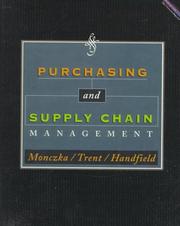
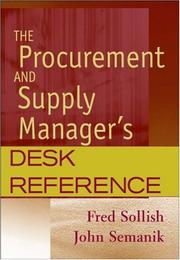
Start with the core discipline. Purchasing and Supply Chain Management by Robert Monczka is the leading textbook, connecting purchasing to the wider supply chain and laying out the sourcing process end to end. The procurement and supply manager's desk reference by Fred Sollish is the practical companion, a plain-language handbook for the daily mechanics of buying. Together they give you both the strategic frame and the working toolkit.
Strategy: suppliers and categories
Now move from transactions to strategy. Strategic Sourcing in the New Economy reframes sourcing as a long-term capability rather than a series of purchases. Supplier Relationship Management by Jonathan O'Brien treats suppliers as a portfolio to be actively managed for value and risk, and his Category Management in Purchasing provides the definitive framework for organizing spend into categories and building a strategy for each. This trio is where procurement stops being reactive and starts driving advantage.
Negotiation and lean value
The final arc is capturing value. Getting to yes by Roger Fisher is the timeless foundation of principled negotiation, and Negotiation for Purchasing Professionals, again by O'Brien, applies those ideas specifically to buying. The Handbook of World Stock, Derivative and Commodity Exchanges is a specialist reference for buyers dealing in traded commodities and market-priced inputs. For breadth, Purchasing and Supply Chain Management by Kenneth Lysons offers a second comprehensive treatment with a European lens, and The Lean Supply Chain by Barry Evans closes the path by applying lean principles to eliminate waste across the supplier base.
Read in this order and procurement becomes a strategic lever rather than a cost center. These books complement real supplier relationships, contracts, and legal review rather than replacing them. Follow the full path from the sourcing basics to lean, negotiated category strategies.
Follow the full reading path →
Ready to learn something deeply?
Build a reading path — free