Financial independence: the FIRE path
This curriculum takes a beginner from the core mindset shifts behind financial independence all the way through advanced portfolio strategy and intentional life design. Each stage builds on the last: first you rewire how you think about money, then you learn the mechanics of saving and investing, then you stress-test your plan with deeper math and real-world nuance, and finally you tackle the hardest question — what does a rich life actually look like once the numbers work?
Foundations: Mindset & the FIRE Philosophy
BeginnerUnderstand what financial independence really means, why the savings rate is the master lever, and how ordinary people can retire decades early by rethinking the relationship between money, time, and work.
▸ Study plan for this stage
Pace: 6–8 weeks total: Weeks 1–4 for "Your Money or Your Life" (~25–30 pages/day, including journaling time); Weeks 5–8 for "The Simple Path to Wealth" (~20–25 pages/day, with slower pacing around the index-fund and investment chapters). Plan for at least one full "reflection day" per week with no new rea
- Life Energy: Every dollar spent represents hours of your finite life traded for money — the core reframe introduced in 'Your Money or Your Life' that transforms how you evaluate every purchase.
- The Real Hourly Wage: Your true hourly wage, after subtracting work-related expenses and time costs, is almost always far lower than your nominal pay — a calculation Robin walks you through step by step.
- The Fulfillment Curve: More spending does not equal more happiness; 'Your Money or Your Life' maps the arc from survival to comfort to excess, helping you find your personal 'enough'.
- Financial Independence as Crossover Point: FI is reached when monthly investment income equals or exceeds monthly expenses — the 'Crossover Point' visualized in Robin's wall chart exercise.
- The Savings Rate as the Master Lever: Collins emphasizes that how much you save, not how much you earn, is the single biggest determinant of when you reach FI — small increases in savings rate dramatically compress the timeline.
- F-You Money & Freedom from Wage Slavery: Collins frames wealth not as luxury but as the freedom to say no — to bad jobs, bad bosses, and bad situations — redefining the purpose of accumulating capital.
- The Wealth-Building Equation (Spend Less + Invest the Difference): Both books converge on the same simple formula — reduce expenses, invest consistently in low-cost index funds, and let compounding do the heavy lifting.
- Rethinking Work and Retirement: FIRE does not necessarily mean never working again; both authors reframe 'retirement' as the freedom to choose how you spend your time, decoupling income from identity.
- In your own words, what is 'life energy' as defined in 'Your Money or Your Life,' and how does calculating your real hourly wage change the way you evaluate a specific purchase you made this week?
- What is the Crossover Point, and what two lines on Robin's wall chart must intersect for you to declare financial independence?
- According to Collins in 'The Simple Path to Wealth,' why does he argue that a high savings rate matters more than a high income when pursuing FIRE?
- How does Collins define 'F-You Money,' and why does he consider it a moral and practical necessity rather than a luxury?
- Both books share a core philosophy but were written decades apart. What is one key idea they agree on, and is there any tension or difference in emphasis between Robin's approach and Collins's approach?
- After reading both books, how would YOU personally define financial independence — and what monthly 'Crossover Point' number would represent FI for your own life?
- Calculate Your Real Hourly Wage: Following the method in 'Your Money or Your Life,' list all work-related expenses (commuting, work clothes, decompression costs, meals out) and extra time costs. Divide your monthly take-home pay by the true hours your job consumes. Write down the number — it will anchor every exercise that follows.
- Build Robin's Wall Chart: Set up a simple two-line graph (paper or spreadsheet). Plot your total monthly expenses and your monthly investment income (even if it's $0 now). Update it monthly for the rest of the curriculum — watching the lines move is the motivational engine Robin designed it to be.
- Run Your Savings Rate Scenarios: Using a simple FIRE calculator (or a spreadsheet), plug in savings rates of 10%, 25%, 50%, and 70%. Record how many years to FI at each rate. Let the dramatic compression of the timeline at higher savings rates sink in viscerally — this is the core insight Collins wants you to feel, not just understand.
- Conduct a 'Life Energy Audit': Review last month's bank and credit card statements. Next to each expense, write the number of hours of life energy it cost (expense ÷ real hourly wage). Mark each line: Does this spending bring fulfillment proportional to its life energy cost? Flag any that don't.
- Write Your Personal FI Number: Based on your current or target monthly expenses, calculate your FI number using the 25× rule (annual expenses × 25) that Collins references. Write a one-paragraph 'FI Vision Statement' describing what your life looks like the day you hit the Crossover Point.
- Teach It Back: Write a 300-word explanation of the FIRE philosophy as if you were explaining it to a skeptical friend or family member who thinks early retirement is only for the rich. Draw only on ideas from Robin and Collins. This forces you to synthesize both books into a coherent, defensible worldview.
Next up: By internalizing the 'why' and the core math of FIRE from Robin and Collins, you are now ready to move into the tactical mechanics — budgeting systems, debt elimination, and the specific investment vehicles — that translate this philosophy into a concrete, executable plan.
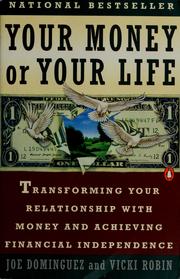
The philosophical cornerstone of the entire FIRE movement — it introduces 'life energy' as the true cost of spending and reframes every purchase as a trade of irreplaceable time. Read first to build the motivational foundation everything else rests on.

Written as a letter to the author's daughter, this is the most accessible end-to-end FIRE roadmap available: savings rate, low-cost index funds, and the F-you money mindset. It bridges philosophy and mechanics perfectly for a beginner.
Core Mechanics: Saving, Spending & Personal Finance
BeginnerMaster the practical personal-finance habits — budgeting, debt elimination, frugality as a tool — that generate the high savings rates FIRE requires.
▸ Study plan for this stage
Pace: 5–6 weeks total: Weeks 1–3 cover "The Millionaire Next Door" (~25–30 pages/day, reading in focused sittings of 45–60 min); Weeks 4–6 cover "I Will Teach You to Be Rich" (~20–25 pages/day, with extra time set aside for implementing Sethi's action steps as you read each chapter).
- Prodigious Accumulator of Wealth (PAW) vs. Under Accumulator of Wealth (UAW): Stanley's framework for measuring whether your net worth matches your income potential — the foundation for understanding why high income alone does not build wealth.
- Living below your means (LBYM) as a lifestyle identity: Stanley's research shows that most real millionaires drive used cars, live in modest homes, and reject status spending — frugality is a long-term character trait, not a short-term tactic.
- The 'Big Hat, No Cattle' trap: Stanley's concept that high-income, high-consumption households (doctors, lawyers, executives) often have little actual wealth because spending scales with income — a critical warning for future high earners on the FIRE path.
- Economic Outpatient Care (EOC): Stanley's finding that financial gifts from parents often undermine a recipient's wealth-building habits, illustrating how financial independence requires self-sufficiency and intentional behavior.
- Ramit Sethi's Conscious Spending Plan: A guilt-free budget framework that allocates income into four buckets — Fixed Costs (~50–60%), Investments (~10%), Savings Goals (~5–10%), and Guilt-Free Spending (~20–35%) — replacing restrictive budgeting with intentional allocation.
- Automating your financial system: Sethi's core tactical prescription — automate bill pay, investment contributions, and savings transfers so that good financial behavior requires zero ongoing willpower.
- Aggressive debt elimination: Sethi's structured approach to tackling credit card debt (negotiating APRs, avalanche/snowball methods) and his argument that eliminating high-interest debt is the highest guaranteed 'return' available to a beginner.
- Optimizing accounts and beating the banks: Sethi's guidance on selecting high-yield savings accounts, no-fee checking, and the right credit cards — ensuring that the infrastructure of your finances is not silently eroding your savings rate.
- According to Stanley's research in 'The Millionaire Next Door,' what is the formula for calculating your expected net worth, and are you currently a PAW, AAW, or UAW? What does that tell you about your current financial behavior?
- Stanley identifies seven common denominators of wealthy Americans. Which three resonate most with your own life, and which three represent your biggest gaps right now?
- Sethi argues that automating your finances is more powerful than budgeting manually. How would you design a fully automated 'money flow' for your current income — what moves, in what order, on what dates?
- How does Sethi's Conscious Spending Plan differ from a traditional line-item budget, and why does that distinction matter for long-term adherence — especially for someone pursuing FIRE?
- Stanley's data shows that many high-income professionals are poor wealth accumulators. Using his framework, how can someone with a modest income actually out-accumulate a high earner, and what does this imply about the savings rate vs. income debate in FIRE?
- After reading both books, what is your current savings rate (savings + investments ÷ gross income), and what are the top three specific changes — drawn from Stanley's mindset shifts or Sethi's tactical steps — that would raise it the most?
- Calculate your PAW/UAW score: Use Stanley's formula (Expected Net Worth = Age × Gross Annual Income ÷ 10) and compare it to your actual net worth. Plot where you fall and write a one-paragraph honest diagnosis of why.
- Build your Conscious Spending Plan: Using Sethi's four-bucket framework, map every dollar of your monthly take-home income into Fixed Costs, Investments, Savings Goals, and Guilt-Free Spending. Adjust until the buckets balance, then compare this to what you actually spent last month using real bank/credit card statements.
- Automate your money system in one weekend: Following Sethi's step-by-step instructions, set up automatic transfers from checking to a high-yield savings account and to at least one investment account (e.g., Roth IRA or employer 401k) to trigger the day after your paycheck lands.
- Conduct a 'Stanley Audit' of your top 5 monthly discretionary expenses: For each one, ask — 'Does this expense build wealth or signal wealth?' Cut or reduce at least two items that are purely status-driven and redirect that money to savings.
- Negotiate one bill or financial term this week: Call your credit card company to negotiate a lower APR (Sethi's script), call your bank to waive a fee, or shop for a high-yield savings account that beats your current rate. Document the outcome and annualized dollar impact.
- Track your savings rate for 30 days: At the end of the stage, calculate your actual savings rate for the month (include all investment contributions). Set a written target savings rate for the next stage and identify the single largest spending category you could reduce to hit it.
Next up: By internalizing the PAW mindset from Stanley and building an automated, high-savings-rate financial system with Sethi, the reader has the behavioral foundation and cash flow surplus needed to explore the next stage — where that surplus gets strategically invested and compounded toward full financial independence.
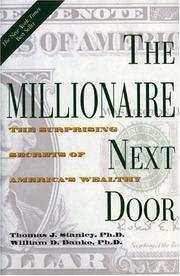
Data-driven research showing that real wealth is built through consistent under-consumption, not high income — directly reinforces why savings rate matters more than salary and gives the beginner concrete behavioral models.
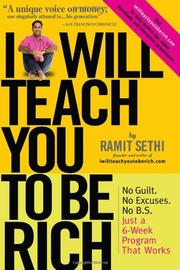
A practical, step-by-step system for automating savings, eliminating bad debt, and optimizing accounts. Read after Stanley to immediately translate mindset into actionable financial infrastructure.
Investing Engine: Index Funds & Portfolio Construction
IntermediateUnderstand how to build and maintain a low-cost, diversified index-fund portfolio that will compound wealth over decades and ultimately fund an early retirement.
▸ Study plan for this stage
Pace: 5–6 weeks total: Week 1–2 — "The Little Book of Common Sense Investing" (~20–25 pages/day, including chapter reflection notes); Week 3–5 — "A Random Walk Down Wall Street" (~25–30 pages/day, a denser read with historical and theoretical depth); Week 6 — review, synthesis, and completing all exercise
- The tyranny of costs: how expense ratios, turnover, and fees silently erode long-term returns (Bogle's central thesis in 'The Little Book')
- The index fund advantage: why capturing the total market return beats the average actively managed fund after costs, almost by mathematical certainty (Bogle)
- Reversion to the mean in fund performance: past outperformance by active managers does not reliably predict future outperformance (Bogle & Malkiel)
- The Random Walk Hypothesis and Efficient Market Hypothesis (EMH): why stock prices already reflect available information, making consistent market-beating nearly impossible (Malkiel)
- Fundamental vs. technical analysis: Malkiel's critique of both approaches and why neither reliably beats a passive index strategy over time
- Asset allocation and portfolio construction: balancing stocks, bonds, and other asset classes based on time horizon, risk tolerance, and FIRE target date (Malkiel's life-cycle investing framework)
- Diversification as the only 'free lunch': how broad index funds eliminate firm-specific risk while retaining market returns (both authors)
- Behavioral pitfalls: investor psychology, market timing temptation, and the discipline required to stay the course through volatility (Malkiel's behavioral chapters)
- After reading Bogle, can you explain in plain language why a total-market index fund investor is mathematically guaranteed to outperform the average actively managed fund investor over time, before and after costs?
- What does Malkiel mean by a 'random walk,' and what are the practical implications of the Random Walk Hypothesis for someone building a FIRE portfolio?
- How do expense ratios compound negatively over a 20–30 year FIRE accumulation horizon? Can you calculate the dollar difference between a 0.03% and a 1.0% expense ratio on a $100,000 portfolio over 30 years?
- What is Malkiel's life-cycle investment guide, and how should your stock/bond allocation shift as you approach your FIRE target date?
- Both Bogle and Malkiel critique active management. What are the two or three strongest empirical arguments they each make, and do their arguments differ in emphasis or evidence?
- What behavioral biases does Malkiel identify as the biggest threats to a passive investor's long-term returns, and what specific strategies do the books suggest to counteract them?
- Cost drag calculator: Build a simple spreadsheet comparing a $50,000 initial investment compounded at 7% annually for 30 years under three scenarios — 0.03% (e.g., Vanguard Total Market), 0.50%, and 1.20% expense ratios. Record the final portfolio values and the total dollars lost to fees in each scenario. Let Bogle's data in 'The Little Book' guide your assumptions.
- Portfolio blueprint: Using Malkiel's life-cycle allocation framework as a guide, draft your own target asset allocation (e.g., % US stocks, % international stocks, % bonds) based on your actual age and FIRE target date. Justify each percentage in 2–3 sentences referencing Malkiel's principles.
- Fund audit: Look up 3–5 popular actively managed mutual funds and compare their 10- and 20-year returns (net of fees) against their benchmark index. Document whether Bogle's and Malkiel's predictions about active fund underperformance hold up in your sample.
- Random Walk test: Pick any 5 stocks and, without looking at past prices, write down a 6-month price prediction and your reasoning. Seal it. After finishing the stage, open it and reflect on how Malkiel's EMH arguments apply to the accuracy (or inaccuracy) of your predictions.
- Behavioral journal: Over the course of reading both books, keep a one-page log of any impulse you feel to 'do something' with a portfolio (buy a hot stock, time the market, chase a trending fund). For each impulse, write which cognitive bias Malkiel would attribute it to and what the index-fund investor's correct response is.
- IPS draft (Investment Policy Statement): Write a one-page personal Investment Policy Statement that codifies your target allocation, chosen index funds (with tickers and expense ratios), rebalancing rules, and a 'stay the course' commitment clause — drawing directly on the principles from both Bogle and Malkiel.
Next up: Mastering low-cost portfolio construction and the math of compounding sets the essential foundation for the next stage, where the focus shifts from accumulating wealth to strategically managing withdrawals, safe withdrawal rates, and the specific mechanics of achieving and sustaining financial independence.
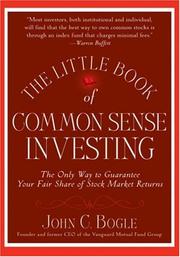
The definitive case for index investing from the man who invented the index fund. It explains why costs destroy returns and why passive beats active — essential theory before you put serious money to work.
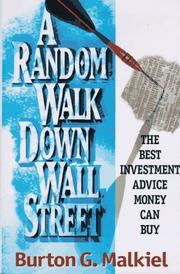
Provides the academic and historical evidence underpinning index investing, covering market efficiency and asset allocation. Reading it after Bogle deepens conviction and adds the intellectual framework to withstand market volatility.
The Withdrawal Problem: Making the Money Last
IntermediateUnderstand safe withdrawal rates (the 4% rule and its nuances), sequence-of-returns risk, and how to structure a portfolio that survives a 30–50 year early retirement.
▸ Study plan for this stage
Pace: 4–5 weeks total: Week 1–2 — Read "Work Optional" by Tanja Hester (~20–25 pages/day, including note-taking pauses at each chapter end); Week 3–4 — Read "Quit Like a Millionaire" by Kristy Shen (~20–25 pages/day, with focused attention on Kristy's "Yield Shield" and cash-cushion chapters); Week 5 — Re
- The 4% Rule (and its origins in the Trinity Study): understanding what it promises, what it assumes, and why early retirees must treat it as a starting point rather than a guarantee — as Hester emphasizes in Work Optional
- Sequence-of-returns risk: how a market crash in the first 5–10 years of retirement is disproportionately devastating compared to one later, a core danger Hester addresses when discussing retirement timing and flexibility
- The 'Work Optional' identity shift: Hester's framework for designing a life where paid work is a choice, not a necessity, requiring a withdrawal strategy flexible enough to accommodate part-time or passion income
- Kristy Shen's 'Yield Shield' strategy: building a portfolio that generates enough dividend and interest income to cover living expenses in down markets, thereby avoiding forced selling of depreciated assets
- The cash cushion / bond tent approach: holding 1–3 years of expenses in cash or short-term bonds to weather downturns without liquidating equities — a key mechanism Shen details in Quit Like a Millionaire
- Geographic arbitrage as a withdrawal extender: Shen's real-world use of lower cost-of-living countries to reduce the withdrawal rate demanded of the portfolio during volatile periods
- Portfolio survival over 30–50 year horizons: why standard 30-year retirement research understates the risk for early retirees, and how both authors advocate for lower effective withdrawal rates (3–3.5%) or flexible spending rules
- Flexible/dynamic withdrawal strategies: spending adjustments (guardrails, percentage-of-portfolio, or reducing discretionary spending) as the human behavioral layer that makes any withdrawal plan actually work
- After reading Work Optional, can you explain in plain language why the 4% rule — derived from 30-year retirement horizons — may be insufficient for someone retiring at 35 or 45, and what Hester recommends instead?
- What is sequence-of-returns risk, and using Hester's framing, what are two concrete strategies a retiree can use to reduce its impact in the critical early years of retirement?
- How does Kristy Shen's Yield Shield work mechanically — what types of assets does it rely on, and how does it prevent forced selling during a bear market?
- Shen retired and traveled internationally as part of her withdrawal strategy. How does geographic arbitrage function as a financial buffer, and what are its real-world trade-offs as she describes them?
- Both Hester and Shen advocate for flexibility over rigidity in withdrawal planning. What specific behavioral or spending adjustments do they each recommend when a portfolio is underperforming?
- If you had a $1M portfolio and planned to retire at 40, what withdrawal rate would each author likely endorse, and what portfolio structure (asset allocation, cash buffer, income shield) would they recommend to support it?
- Build your personal 'withdrawal rate stress test': Using your current or target portfolio size, calculate annual spending needs at 3%, 3.5%, and 4% withdrawal rates. Then use a free tool like FIRECalc or cFIREsim to run 40- and 50-year simulations and record the historical success rates — compare these numbers to the assumptions in both books.
- Design your own Yield Shield: List asset classes (dividend stocks, REITs, bonds, index funds with yield) and research their current yield percentages. Calculate what portfolio allocation would be needed to cover 50–75% of your annual expenses from yield alone, as Shen describes.
- Map your 'sequence-of-returns vulnerability window': Identify the first 10 years of your planned retirement and write a one-page plan for what you would do if the market dropped 40% in year 1, year 3, or year 7 — referencing the specific tactics from Hester (flexible spending, part-time work) and Shen (cash cushion, geographic arbitrage).
- Create a two-column comparison chart of Hester's and Shen's withdrawal philosophies: for each of the following dimensions — withdrawal rate, asset allocation, income buffers, spending flexibility, and risk tolerance — write one sentence summarizing each author's stance and note where they agree or diverge.
- Draft a 'spending flexibility ladder': List your monthly expenses in three tiers — non-negotiable (housing, food, healthcare), adjustable (travel, dining, subscriptions), and cuttable (luxuries). Calculate your withdrawal rate at each tier. This operationalizes the dynamic spending strategies both authors advocate.
- Write a one-page 'Withdrawal Policy Statement' for yourself (modeled on an Investment Policy Statement): define your target withdrawal rate, your cash cushion size, your Yield Shield target, the market conditions that would trigger a spending reduction, and the income sources (part-time work, arbitrage) you'd activate as backstops — synthesizing both books into one actionable document.
Next up: Mastering withdrawal mechanics and portfolio survival sets the foundation for the next stage, where the focus shifts from sustaining wealth to optimizing the tax, healthcare, and legal structures that determine how much of each withdrawal you actually keep — because a portfolio that lasts 50 years on paper can be quietly eroded by avoidable taxes and unplanned healthcare costs.

Written specifically for early retirees (not traditional retirees), it covers the math of withdrawal rates, healthcare, and the psychological transition — a practical bridge between accumulation and the decumulation phase.
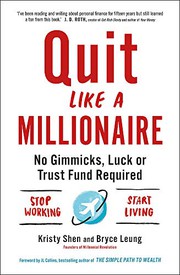
Introduces the 'yield shield' and other strategies for managing sequence-of-returns risk during early retirement. Its real-world case study of retiring at 31 makes abstract withdrawal math concrete and motivating.
Life Design: Building a Life You Don't Need to Escape
ExpertMove beyond the numbers to design a purposeful, fulfilling life — one where financial independence is a platform for meaning, not just an exit from work.
▸ Study plan for this stage
Pace: 6–8 weeks total: Weeks 1–3 on "Die with Zero" (~25–30 pages/day, including reflection time after each chapter); Weeks 4–7 on "Early Retirement Extreme" (~20–25 pages/day, slower pace due to dense systems-thinking content); Week 8 reserved for synthesis, journaling, and completing cross-book exercise
- The 'Die with Zero' philosophy: optimizing life for maximum fulfilling experiences rather than maximum net worth, and why dying with unspent wealth represents wasted life energy
- Memory dividends: experiences compound over time through memory and identity, making early investment in experiences — not just money — critical to a rich life
- Life stage sequencing: matching the right experiences to the right seasons of life (health, energy, relationships) rather than deferring all rewards to retirement
- The 'enough' threshold: identifying the precise point at which more money adds no more life value, and the danger of over-accumulating past that point
- Fisker's Renaissance Man ideal: designing a life of radical self-sufficiency, diverse skills, and low-cost high-satisfaction living as an alternative to the consumer default
- Systems thinking applied to personal finance and lifestyle: treating your life as an interconnected system of time, money, skills, and social capital rather than optimizing one variable in isolation
- The decoupling of income from identity: Fisker's framework for separating what you do to earn from who you are and how you live, enabling extreme flexibility
- Purposeful life architecture: using financial independence not as an escape hatch but as a deliberate platform from which to design work, leisure, relationships, and contribution on your own terms
- According to Perkins, what is the 'net worth curve' and at what point does he argue most people should begin deliberately drawing it down — and why does timing matter as much as the total amount?
- How does Perkins' concept of 'memory dividends' reframe the traditional FIRE debate between spending now versus saving for later, and what does it imply about how you should allocate your pre-FI years?
- Fisker describes a spectrum from 'salary man' to 'Renaissance man' — what are the defining characteristics of each end, and where does conventional early retirement fall on that spectrum?
- How does Fisker's systems-thinking approach challenge the standard FIRE assumption that the primary lever for financial independence is a high savings rate, and what additional levers does he introduce?
- Where do Perkins and Fisker agree and fundamentally disagree about the role of money, spending, and enough — and how would you reconcile their views into a single coherent life philosophy?
- What specific changes to your current life design — in spending, skills, time allocation, or social structure — do the combined arguments of both books suggest you should make before reaching your FI number?
- Life Audit by Chapter (Die with Zero): After finishing each chapter of Perkins, write one paragraph identifying a specific experience, relationship, or goal you have been deferring — and draft a concrete plan to pursue it within the next 12 months, not at retirement.
- Memory Dividend Inventory: List 10 of your most meaningful life experiences to date. For each, estimate the age at which you had it and score its ongoing 'memory dividend' (1–10). Identify the pattern: what types of experiences keep paying back, and are you currently investing in more of them?
- Your 'Enough' Number Exercise (Die with Zero): Using Perkins' framework, calculate not just your FI number but your 'enough' number — the annual spending level beyond which additional money produces no meaningful increase in your life satisfaction. Justify each line item.
- Renaissance Man Skills Mapping (Early Retirement Extreme): Draw Fisker's 'web of goals' for your own life. Map your current skills, then identify 3–5 skill gaps that, if closed, would meaningfully reduce your cost of living or increase your self-sufficiency and life satisfaction simultaneously.
- Systems Audit of Your Life (Early Retirement Extreme): Identify three areas of your life (e.g., housing, food, transportation, health, entertainment) where you are currently a pure consumer. For each, brainstorm how Fisker's systems approach would transform you from passive consumer to active, skilled participant — and pick one to begin changing this month.
- Integrated Life Design Document: After finishing both books, write a 2–3 page personal manifesto that answers: What is FI a platform FOR in your life (not just an escape FROM)? Include your enough number, your top 5 experience investments for the next decade, your Renaissance Man skill-building roadmap, and one sentence defining what a purposeful post-FI day looks like for you.
Next up: By internalizing that FI is a platform for intentional living rather than mere escape, the reader is now primed to explore the practical community, social, and legacy dimensions of that platform — examining how relationships, contribution, and long-term purpose sustain a meaningful post-FI life over decades.
Challenges the pure accumulation mindset by arguing for optimizing life experiences over maximum net worth — a necessary counterweight that forces FIRE planners to think about spending and living, not just saving.
The most intellectually rigorous book in the FIRE canon: a systems-thinking framework for radical financial independence and self-reliance. Read last because it synthesizes everything — philosophy, frugality, investing, and life design — into a coherent worldview.
Discussion
Keep reading
Paths that share books, cover the same subject, or open a related topic.