A budget that actually works
This curriculum takes a complete beginner from zero financial literacy to a fully functioning, habit-backed personal budget. It starts by rewiring money mindset and building core vocabulary, then moves through practical budgeting systems, behavioral habit science, and finally long-term wealth-building strategy — so each stage gives the reader exactly what they need to make the next stage click.
Foundations: Mindset & Money Basics
BeginnerUnderstand why most people struggle with money, shed counterproductive beliefs, and build the emotional foundation needed to stick to a budget.
▸ Study plan for this stage
Pace: 6–8 weeks total. Week 1–3: "I Will Teach You to Be Rich" (~25–30 pages/day, including time to pause and reflect on the automation and mindset chapters). Week 4–6: "The Total Money Makeover" (~20–25 pages/day, slower pace to absorb the Baby Steps framework and case studies). Week 7–8: Review, journal
- The 'I will teach you to be rich' philosophy: personal finance is more about behavior than math — small, consistent actions beat perfect knowledge
- Ramit Sethi's automation ladder: setting up accounts and automatic transfers so saving and investing happen without willpower
- The 'latte factor' myth reframed: Sethi argues cutting small pleasures is less powerful than earning more and automating big wins
- Dave Ramsey's 'Baby Steps' framework: a sequential, debt-snowball-first approach to financial stability (Steps 1–3 as the foundation)
- The debt snowball method from Ramsey: paying smallest debts first for psychological momentum, regardless of interest rate
- Ramsey's concept of 'gazelle intensity': treating debt elimination with urgent, focused energy as if your financial life depends on it
- Identifying and dismantling 'money scripts': inherited beliefs about money (e.g., 'rich people are greedy', 'I'm just not good with money') that sabotage budgeting
- The role of emotion and identity in financial behavior: both authors emphasize that mindset change must precede and accompany tactical change
- According to Ramit Sethi, why is automating your finances more effective than relying on discipline or willpower alone — and what are the key accounts he recommends setting up first?
- What is Dave Ramsey's debt snowball method, and how does it differ from the mathematically optimal debt avalanche? Why does Ramsey argue the snowball is still the better choice for most people?
- Both Sethi and Ramsey address the psychological barriers to managing money. What are two specific limiting beliefs or behaviors each author identifies, and what solutions do they propose?
- What does Ramsey mean by 'gazelle intensity,' and what life circumstances or stories in the book illustrate why urgency matters in the early stages of a money makeover?
- Sethi targets a younger audience and embraces credit cards and investing early, while Ramsey advocates cutting up credit cards and following strict Baby Steps. What is the core philosophical difference between their approaches, and which elements of each resonate with your own situation?
- After reading both books, how would you define a personal 'money mindset,' and what is one belief you currently hold that you need to challenge before building an effective budget?
- Net Worth Snapshot: Before finishing Book 1, list every asset (checking, savings, investments) and every liability (credit cards, loans, student debt). Calculate your net worth. This is your baseline — the number both authors want you to face honestly.
- Automate One Thing This Week (Sethi): Following Sethi's automation ladder, set up at least one automatic transfer — even $25/month — from checking to a savings account. Document how it felt to do it and whether any resistance came up.
- Write Your Money Story (Ramsey): In a journal, write 1–2 pages answering: 'What did money mean in my household growing up? What messages did I receive about spending, debt, and wealth?' Identify at least two 'money scripts' you inherited and assess whether they still serve you.
- Build Your Debt Snowball List (Ramsey): List all your debts from smallest to largest balance. Note the minimum payment and interest rate for each. Map out how long it would take to eliminate the smallest debt if you threw an extra $50, $100, or $200 at it monthly.
- The 'Big Wins' Audit (Sethi): Review your last 3 months of bank/credit card statements. Identify your top 5 largest spending categories. Compare how much you spent on 'big wins' (rent, car, subscriptions) vs. small daily purchases. Does the data match your assumptions?
- Side-by-Side Philosophy Chart: Create a two-column comparison of Sethi's vs. Ramsey's advice on: (a) credit cards, (b) investing timeline, (c) emergency funds, and (d) the role of budgeting. Write one paragraph on which approach you'll adopt and why — this forces active synthesis before moving forward.
Next up: Completing this stage gives you an honest financial baseline, a cleared mindset, and a first taste of structure (Baby Steps + automation), which makes the next stage — learning to build and track an actual detailed budget — feel purposeful rather than abstract.
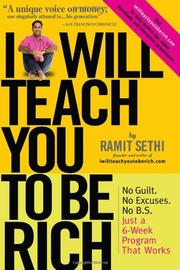
Written specifically for beginners, it demystifies personal finance with direct, judgment-free language and introduces the core concepts — spending, saving, and automating — that the rest of the curriculum builds on.

Provides a simple, motivating framework (the Baby Steps) for getting out of debt and starting a budget; its straightforward rules give beginners a clear first system to follow.
Building the Budget: Systems & Tools
BeginnerSet up a concrete, working personal budget using a proven method and understand how to track every dollar intentionally.
▸ Study plan for this stage
Pace: 6–7 weeks total: Weeks 1–4 for "You Need a Budget" (~20–25 pages/day, including time to pause and apply each of the four rules to your own finances); Weeks 5–6 for "The Index Card" (~25–30 pages/day, a shorter read best consumed in focused sittings); Week 7 reserved for review, reflection, and compl
- YNAB's Four Rules: Give Every Dollar a Job, Embrace Your True Expenses, Roll with the Punches, and Age Your Money — the philosophical and mechanical backbone of intentional budgeting (You Need a Budget)
- Zero-based budgeting: allocating every dollar of income to a specific category so that income minus outgo equals zero, eliminating 'mystery spending' (You Need a Budget)
- True Expenses: breaking large, infrequent costs (car repairs, annual subscriptions, holidays) into monthly savings targets so they never feel like emergencies (You Need a Budget)
- Aging Your Money: the goal of spending money that is at least 30 days old, creating a buffer that ends the paycheck-to-paycheck cycle (You Need a Budget)
- Rolling with the Punches: treating the budget as a living document — when a category overspends, you adjust other categories rather than abandoning the budget entirely (You Need a Budget)
- Simplicity as a feature: The Index Card's argument that personal finance rules are few, simple, and fit on a single index card — complexity is often a barrier, not a safeguard (The Index Card)
- The primacy of spending less than you earn and avoiding high-interest debt as the non-negotiable foundation beneath any budgeting system (The Index Card)
- Alignment of values and money: both books converge on the idea that a budget is not a restriction but a conscious expression of what you actually want your money to do (You Need a Budget & The Index Card)
- Can you explain each of YNAB's Four Rules in your own words and give a real example from your own life where each rule would apply?
- What is zero-based budgeting, and how does it differ from simply tracking what you've already spent?
- What are 'True Expenses,' and how would you calculate a monthly savings target for an irregular cost like a car insurance premium or a holiday gift fund?
- According to The Index Card, what are the core personal-finance rules that matter most, and why does Helaine Olen argue that financial complexity often works against ordinary people?
- How do the YNAB philosophy and The Index Card's principles reinforce each other — and where, if anywhere, do they create tension?
- What does it mean to 'Age Your Money,' and what concrete steps would move you from spending this week's paycheck to spending last month's income?
- Set up a real budget: Open a spreadsheet (or the YNAB app's free trial) and create budget categories for every area of your life. Assign every dollar of one month's take-home income using the zero-based method from You Need a Budget — your total allocated must equal your total income.
- True Expenses audit: List every large, irregular expense you can think of from the past 12 months (car repairs, medical co-pays, gifts, travel, subscriptions). Calculate a monthly savings target for each and add them as dedicated categories in your budget.
- Index Card exercise: After finishing The Index Card, write your own personal-finance index card — no more than 10 rules, fitting on one physical 4×6 card. Compare it to Olen's version and note what you added, removed, or reworded and why.
- Track every transaction for two full weeks: Record each purchase in your budget categories the same day it happens. At the end of each week, practice 'Rolling with the Punches' — if one category is overspent, move money from a lower-priority category to cover it and write one sentence explaining the trade-off you made.
- Age Your Money calculation: Look at your last two months of bank statements. Calculate roughly how many days old your money is when you spend it (YNAB displays this automatically; manually it's: average daily balance ÷ average daily spending). Set a written 30-day and 60-day target for where you want that number to be in six months.
- Values-alignment reflection: Write a one-page answer to the question: 'Does my current budget — as built in Exercise 1 — reflect what I actually care about?' Use specific dollar amounts and category names as evidence. Identify one category to increase and one to decrease based purely on your stated values, not guilt.
Next up: Mastering the mechanics of building and maintaining a zero-based budget creates the stable financial foundation needed to tackle the next stage's focus on debt elimination and wealth-building strategies — because you can only aggressively pay down debt or invest intentionally once you know exactly where every dollar is going.
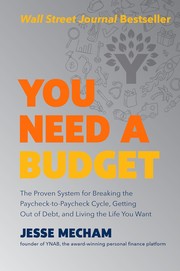
Introduces the four-rule YNAB method — the most widely adopted zero-based budgeting system for individuals — giving the reader a hands-on, actionable framework to implement immediately after finishing Stage 1.

Distills personal finance to its essential rules on a single index card, reinforcing that a good budget doesn't need to be complicated and consolidating everything learned so far into a memorable reference.
The Behavior Layer: Habits & Psychology
IntermediateUnderstand the psychological and behavioral forces that derail budgets, and install the specific habits and routines that make financial discipline automatic.
▸ Study plan for this stage
Pace: 5–6 weeks total: Weeks 1–3 for "Atomic Habits" (~30 pages/day, including 2–3 reflection days per week); Weeks 4–6 for "Your Money or Your Life" (~25 pages/day, with slower pacing for the deeper values-based exercises Robin embeds in the text)
- The Habit Loop & the Four Laws of Behavior Change (Atomic Habits): make it obvious, attractive, easy, and satisfying — and how each law can be deliberately engineered for financial routines
- Identity-Based Habits (Atomic Habits): the shift from outcome-based goals ('I want to save $500') to identity-based goals ('I am someone who spends intentionally'), which is the psychological foundation of lasting budget discipline
- Habit Stacking & Environment Design (Atomic Habits): anchoring new financial behaviors (e.g., weekly budget reviews) to existing routines, and redesigning your environment to reduce friction for saving and increase friction for impulse spending
- The Two-Minute Rule & Minimum Viable Habits (Atomic Habits): starting financial habits so small they are impossible to skip, building consistency before intensity
- The Real Cost of Money in Life Energy (Your Money or Your Life): reframing every purchase as hours of your life spent, which transforms abstract dollar amounts into visceral, motivating trade-offs
- The Nine-Step Program for Financial Integrity (Your Money or Your Life): a holistic, values-driven framework that moves budgeting from a mechanical spreadsheet exercise to a conscious alignment of spending with what truly matters
- Tracking Every Cent & the Wall Chart (Your Money or Your Life): the practice of recording all income and expenses without judgment as the cornerstone habit that creates financial awareness and accountability
- The Fulfillment Curve and 'Enough' (Your Money or Your Life): understanding the concept of peak fulfillment — the point at which more spending no longer increases happiness — as the psychological antidote to lifestyle inflation and hedonic adaptation
- According to James Clear, why do most habit-change attempts fail, and how does focusing on identity rather than outcomes change the probability of success for a financial habit like consistent budgeting?
- How can you apply all Four Laws of Behavior Change specifically to one stubborn budget-breaking behavior you currently have (e.g., impulse online shopping or dining out excessively)?
- What does Vicki Robin mean by 'life energy,' and how does calculating your real hourly wage (after subtracting work-related expenses and time) change the way you evaluate a specific purchase you made this month?
- How does the Wall Chart in 'Your Money or Your Life' function as both a tracking tool and a psychological motivator, and what behavioral principle from 'Atomic Habits' does it directly reinforce?
- Where do you currently sit on the Fulfillment Curve for your top three spending categories, and what does that tell you about where your budget has room to cut without sacrificing genuine well-being?
- How would you design a 'habit stack' that embeds a weekly financial review into your existing weekly routine, using the specific techniques Clear recommends?
- Identity Statement Rewrite: Write 3–5 first-person identity statements about your financial self (e.g., 'I am someone who knows where every dollar goes'). Post them somewhere visible — your bathroom mirror, phone lock screen, or wallet — and revisit them at the end of the stage to see how your behavior shifted.
- Habit Audit for Money Behaviors: List your current financial habits (both good and bad) and map each one to Clear's Four Laws. For each bad habit, invert the laws (make it invisible, unattractive, difficult, unsatisfying) and write a concrete redesign plan — for example, deleting saved credit card info from browsers to add friction to impulse purchases.
- Life Energy Calculation (Robin, Step 1–2): Calculate your real hourly wage using Robin's method — take your monthly take-home pay, subtract all work-related costs (commute, work clothes, decompression spending, etc.), then divide by actual hours spent on work-related activities. Write this number somewhere prominent in your budget tracker.
- 30-Day Every-Cent Tracking (Robin, Step 3): For the remainder of this stage, record every single financial transaction — no matter how small — in a notebook, app, or spreadsheet. Do this without judgment. At the end of 30 days, total each category and convert the dollar amounts into hours of life energy using your real hourly wage.
- Build Your Wall Chart: Create a physical or digital version of Robin's Wall Chart, plotting monthly income and expenses on the same graph. Update it at the end of each month and place it somewhere you see daily. Note the emotional response it produces — this is the 'satisfying' component of Clear's Fourth Law at work.
- Design a Minimum Viable Financial Habit Stack: Using Clear's Two-Minute Rule and habit stacking, design a weekly money ritual that takes no more than 10 minutes and is anchored to something you already do every week (e.g., Sunday morning coffee). Define the exact cue, the two-minute action, and the immediate reward. Run it for the full duration of this stage and log your completion rate.
Next up: By establishing the psychological foundation — identity, automatic habits, and values-aligned spending awareness — this stage equips the reader to engage meaningfully with more technical budgeting frameworks and investment strategies in the next stage, because the behavioral infrastructure needed to actually execute those systems is already in place.
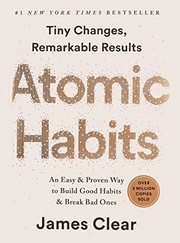
The definitive modern guide to habit formation; after building a budget system, this book shows exactly how to make budget-friendly behaviors (weekly money reviews, automatic savings) stick for the long term.
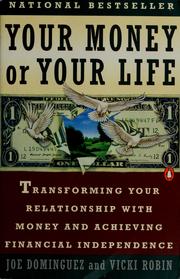
Reframes spending in terms of 'life energy,' deepening the reader's motivation to budget by connecting every purchase to personal values — a crucial psychological upgrade that sustains the habits built in earlier stages.
Going Deeper: Wealth-Building & Long-Term Strategy
IntermediateGraduate from surviving on a budget to using it as a launchpad for building lasting wealth through investing and smart financial planning.
▸ Study plan for this stage
Pace: 6–8 weeks total: ~3 weeks for "The Millionaire Next Door" (~25–30 pages/day) and ~3–4 weeks for "The Simple Path to Wealth" (~20–25 pages/day), with 1–2 buffer days per week for reflection and exercises.
- Prodigious Accumulator of Wealth (PAW) vs. Under Accumulator of Wealth (UAW) — Stanley's framework for measuring whether your net worth matches your income potential
- The 'Big Hatters' trap: high income does not equal high wealth; frugality and intentional spending are the true engines of wealth accumulation
- Wealth is what you don't see: the millionaire-next-door profile — modest homes, used cars, disciplined saving habits — versus the illusion of affluence
- Financial independence as the ultimate goal: Collins argues that FI means your investments generate enough income to cover your living expenses indefinitely
- The power of index fund investing: low-cost, broad-market index funds (especially total stock market funds) as the core wealth-building vehicle in Collins's framework
- The wealth-destroying nature of fees, active management, and market-timing — and why simplicity beats complexity in long-term investing
- The F-You Money concept from Collins: accumulating enough capital to have true freedom and optionality in life decisions
- Sequence-of-returns risk and the 4% withdrawal rule as a framework for thinking about sustainable wealth drawdown in retirement
- According to Stanley, what is the formula for calculating your expected net worth, and do you currently classify as a PAW, AAW, or UAW based on your own numbers?
- What behavioral and lifestyle patterns does Stanley identify as common across wealth-builders, and which of those patterns do or don't currently show up in your own financial life?
- How does Collins define financial independence, and what is the role of the savings rate in determining how quickly someone can reach it?
- Why does Collins advocate for total stock market index funds over actively managed funds, and what evidence does he cite about long-term performance and fees?
- What is 'F-You Money,' and how does having it change the relationship between a person and their work, spending, and life choices?
- How do the lessons of 'The Millionaire Next Door' and 'The Simple Path to Wealth' complement each other — what does Stanley provide that Collins doesn't, and vice versa?
- Calculate your actual net worth today (assets minus liabilities) and compare it to Stanley's expected net worth formula (Age × Pre-tax Income ÷ 10). Label yourself PAW, AAW, or UAW — then write a one-paragraph honest reflection on what's driving that result.
- Audit your last 3 months of spending through the lens of Stanley's PAW profile: identify your top 3 'status' or lifestyle expenses that consume income without building wealth, and propose one concrete substitution for each.
- Using Collins's framework, calculate your FI number: determine your annual expenses, multiply by 25 (the inverse of the 4% rule), and map out how many years it would take to reach that number at your current savings rate using a compound interest calculator.
- Open (or review) a brokerage or retirement account and evaluate its current holdings against Collins's recommendation: are you in low-cost, broad-market index funds? Calculate the total expense ratios you are currently paying and estimate their 30-year drag on your portfolio using an online fee calculator.
- Write a one-page 'Wealth-Building Policy Statement' that combines both books: define your target net worth, your savings rate goal, your investment vehicle of choice, and 3 lifestyle principles (inspired by Stanley's PAW profiles) you commit to maintaining.
- Draft a simple two-bucket investment plan (accumulation phase + drawdown phase) based on Collins's stock/bond framework, tailored to your current age and target retirement timeline.
Next up: By internalizing the wealth-building mindset from Stanley and the index-investing mechanics from Collins, the reader is now equipped to move beyond personal cash flow and into more advanced territory — such as tax-advantaged account optimization, estate planning, and sophisticated asset allocation strategies that require a solid net-worth foundation to be meaningful.
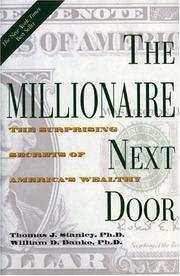
Research-backed evidence that disciplined budgeting and frugality — not high income — are the true drivers of wealth; it validates and deepens the reader's commitment to the habits built throughout the curriculum.

A clear, beginner-friendly bridge from personal budgeting to long-term investing, showing the reader exactly where surplus budget money should go to compound into financial independence over time.
Discussion
Keep reading
Paths that share books, cover the same subject, or open a related topic.