George Eliot Reading Order: Where to Start
This curriculum moves through George Eliot's fiction in roughly chronological order of composition, so each novel builds the reader's feel for her expanding moral vision and narrative ambition, before arriving at Middlemarch as a summit. A final stage turns to her essays and intellectual biography, revealing the philosophical mind behind the fiction.
The Entry Point: Early Fiction
IntermediateGet comfortable with Eliot's voice, her sympathy for ordinary provincial life, and her realist technique before tackling her longer masterworks.
▸ Study plan for this stage
Pace: 6–8 weeks total: Weeks 1–2 for Silas Marner (~25–30 pages/day, given its shorter length of ~180 pages); Weeks 3–7 for Adam Bede (~30–35 pages/day across its ~550 pages); Week 8 reserved for review, re-reading key passages, and completing exercises.
- Realist sympathy: Eliot's moral commitment to rendering ordinary, unglamorous lives with dignity and emotional truth — seen in her portrait of the weaver Silas and the rural laborers of Hayslope
- The narrator as moral guide: Eliot's intrusive, essayistic narrator who pauses the story to reflect, generalize, and directly address the reader, establishing an intimate ethical conversation
- Community as moral ecosystem: how the village of Raveloe in Silas Marner and the Loamshire countryside in Adam Bede function not as backdrop but as active social forces that shape and judge individual characters
- Redemption through human connection: Silas Marner's arc from miserly isolation to fatherly love via Eppie dramatizes Eliot's secular faith in fellow-feeling as the source of moral renewal
- The consequences of concealment and self-deception: Godfrey Cass in Silas Marner and Arthur Donnithorne in Adam Bede both illustrate how moral cowardice and hidden sins ripple outward to destroy others
- Hetty Sorrel and the limits of beauty: Adam Bede's tragic center — Hetty's vanity, her seduction, and her infanticide — forces Eliot to test her sympathy against a character who is neither wise nor good
- Methodism and moral feeling: Dinah Morris's preaching in Adam Bede introduces Eliot's nuanced treatment of religious enthusiasm as a vehicle for genuine compassion, not mere doctrine
- Provincial time and slow causality: Eliot's plots unfold gradually, insisting that character is formed and consequences accumulate over years — readers must adjust to a pace that mirrors real moral life
- How does Silas Marner's relationship with gold and his relationship with Eppie mirror and invert each other, and what does this parallel structure reveal about Eliot's view of what constitutes a meaningful life?
- In what ways does the community of Raveloe act as a moral agent in Silas Marner — and where does it fail Silas or Godfrey?
- Compare Arthur Donnithorne and Godfrey Cass as studies in moral weakness: what specific narrative techniques does Eliot use to make the reader understand, but not excuse, each man's self-deception?
- How does Eliot use Dinah Morris and Hetty Sorrel as contrasting female figures in Adam Bede — what does each woman represent, and how does the novel ultimately judge them?
- Identify two or three moments in either book where Eliot's narrator steps outside the story to address the reader directly. What is she arguing, and how does this technique shape your relationship to the characters?
- By the end of Adam Bede, how has Eliot established 'consequences' as a structural and moral principle — and how does this prepare you to expect the same in her longer novels?
- Close-reading journal: Select one narrator intrusion per reading session (a passage where Eliot speaks directly as 'I' or addresses 'you, the reader') and write 150–200 words on what moral argument she is making and whether you find it persuasive.
- Character comparison chart: Draw up a two-column table for Godfrey Cass and Arthur Donnithorne — list their temptations, their acts of concealment, the people harmed, and their eventual fates. Write a short paragraph on what the comparison reveals about Eliot's moral universe.
- Sympathy stress-test: Re-read the chapters focused on Hetty Sorrel in Adam Bede (especially her journey and trial). Write a one-page response to this prompt: 'Does Eliot succeed in making you feel sympathy for Hetty without excusing her actions? Where does her technique succeed or strain?'
- Community mapping: Sketch an informal social map of either Raveloe (Silas Marner) or Hayslope (Adam Bede) — place the major characters, note their relationships and social standings, and annotate two moments where community opinion directly influences a character's fate.
- Voice imitation: Write one paragraph (200–250 words) in Eliot's narratorial style — choose a mundane, contemporary scene and describe it with her blend of precise observation, gentle irony, and moral reflection. This exercise makes her technique viscerally clear.
- Thematic thread essay: Write a 400–500 word comparative essay on the theme of 'the weight of a hidden secret' across both books, drawing on specific scenes and quoting directly from the texts to support your argument.
Next up: Mastering Eliot's realist voice, her slow-building causality, and her community-centered moral vision in these two shorter works equips the reader to navigate the far greater scope, psychological depth, and interwoven plotlines of her longer masterworks — where the same techniques operate at novel-length scale and with higher philosophical stakes.
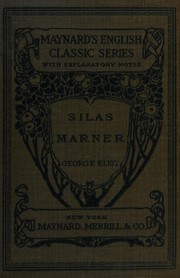
The ideal entry novel: compact, beautifully structured, and rich with Eliot's characteristic moral warmth. It introduces her themes of community, redemption, and the inner life without the length or complexity of her later works.
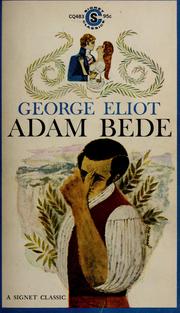
Her first full-length novel deepens the rural world of Silas Marner and introduces the tragic moral seriousness that defines her mature fiction; reading it here prepares you for the grander scale ahead.
The Moral Imagination Expands
IntermediateEncounter Eliot's growing psychological depth and her interest in how history, culture, and self-delusion shape individual lives.
▸ Study plan for this stage
Pace: 10–13 weeks total: ~5–6 weeks for The Mill on the Floss (~30 pages/day, accounting for its emotional density) and ~5–7 weeks for Romola (~25 pages/day, given its historical complexity and unfamiliar Florentine setting). Plan for slower reading during Romola's early chapters while you orient yourself
- Psychological realism and interiority: Eliot's pioneering technique of rendering a character's inner conflict, self-deception, and moral reasoning from the inside out, seen in Maggie Tulliver's torn loyalties and Romola's gradual disillusionment.
- The tyranny of circumstance: how social class, gender expectations, and provincial culture constrain individual potential — most acutely in Maggie's entrapment between the Dodson world and her own intellectual hunger.
- Self-delusion and motivated reasoning: the way characters construct flattering narratives about their own motives, especially Tito Melema in Romola, whose moral decline is charted as a series of small, self-justified betrayals.
- History and culture as moral environment: Romola immerses the reader in Savonarola's Florence to show that no individual conscience operates in a vacuum — political upheaval, religious fervor, and civic duty all press on personal ethics.
- The tension between duty and desire: both novels stage the conflict between what characters owe to others (family, community, tradition) and what they privately long for — and neither novel offers an easy resolution.
- Sympathy as an ethical faculty: Eliot's narrator consistently asks the reader to extend imaginative sympathy even to flawed or self-deceiving characters, treating fellow-feeling as the foundation of moral life.
- The role of education and intellectual aspiration: Maggie's thwarted hunger for learning and Romola's scholarly formation under her father both explore what it means — and costs — for a woman to pursue a life of the mind in a world not built for her.
- Disillusionment as moral growth: both protagonists move from idealized visions (of love, of a mentor, of a cause) toward a harder, clearer understanding — Eliot frames this painful process as the necessary price of genuine moral maturity.
- In The Mill on the Floss, how does Eliot use the Dodson family's code of respectability to illuminate the cultural forces that crush Maggie's development — and to what extent does Eliot also treat that code with ironic sympathy rather than simple condemnation?
- Trace Tito Melema's moral deterioration across Romola: what specific acts of self-deception enable each successive betrayal, and how does Eliot's narrative technique make the reader complicit in initially sympathizing with him?
- Both Maggie Tulliver and Romola de' Bardi are women of exceptional intelligence living inside suffocating constraints. Compare how each responds to those constraints — what choices does each make, and what does Eliot seem to be saying about the relationship between integrity and survival?
- How does Savonarola function in Romola — not merely as a historical figure but as a test case for Eliot's ideas about the dangers of idealism, fanaticism, and the subordination of individual conscience to a collective cause?
- The endings of both novels are among the most debated in Eliot's career. What moral logic does each ending enact, and do you find it earned or evasive? Ground your answer in specific scenes.
- How does Eliot's narrative voice shift between The Mill on the Floss and Romola — in particular, how does the move to a historical setting change the relationship between narrator, character, and reader?
- Moral-decline timeline for Tito: create a detailed chart of every moment in Romola where Tito chooses self-interest over obligation. For each entry, write one sentence in Tito's own voice rationalizing the choice — then one sentence from Eliot's narrator judging it. This trains you to hear the gap between self-presentation and authorial irony.
- Sympathy stress-test for Maggie: select three scenes in The Mill on the Floss where Maggie behaves in a way that is hard to defend (e.g., her treatment of Lucy, her flight with Stephen). Write a 200-word 'defense' of Maggie using only evidence from the text, then a 200-word critique. Reflect on how Eliot engineers the reader's divided response.
- Historical context annotation: before or during Romola, read a short overview of Savonarola and the Florentine Republic (any reliable encyclopedia article will do). As you read, flag three moments where Eliot's fictional rendering diverges from or deepens the historical record, and write a paragraph on what the fictional choice reveals about her moral argument.
- Comparative close-reading: choose one passage of psychological interiority from each novel (e.g., Maggie's temptation on the river; Romola's decision to leave Florence). Annotate both for narrative technique — free indirect discourse, metaphor, pacing, the narrator's intrusions. Write a one-page comparison of how Eliot renders the moment of moral crisis in each.
- Personal resonance journal: after finishing each novel, write a one-page response to the question 'Where in this book did I feel the most resistance to Eliot's moral vision — and why?' This is not a summary exercise; it is designed to surface your own assumptions so you can examine them alongside Eliot's.
- Thematic thread essay (500–700 words): argue for or against the following claim — 'In both The Mill on the Floss and Romola, Eliot suggests that the greatest moral danger is not wickedness but the stories we tell ourselves to avoid knowing we are wrong.' Use at least two specific scenes from each novel as evidence.
Next up: By working through Maggie's provincial entrapment and Romola's historically grounded disillusionment, the reader has internalized Eliot's core method — the slow, sympathetic anatomy of conscience under pressure — which is the essential preparation for encountering her most architecturally ambitious and philosophically mature novels, where these same techniques are deployed at full scale and with e

Her most autobiographical novel, tracing a brilliant woman trapped by provincial expectations — a direct bridge between the early pastoral mode and the full psychological intensity of Middlemarch.
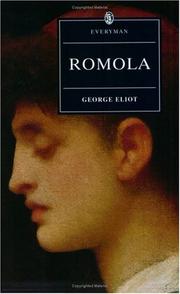
Her ambitious historical novel set in Renaissance Florence; often skipped, but it shows Eliot wrestling with ideas of duty and egoism on a grand canvas, and reading it here makes Middlemarch's architecture feel earned.
The Summit: Middlemarch
ExpertRead and fully absorb Eliot's greatest novel — a panoramic study of marriage, vocation, idealism, and society — equipped with the context built in earlier stages.
▸ Study plan for this stage
Pace: 8–10 weeks, ~30–35 pages/day (Middlemarch runs ~800 pages in most editions); read in the novel's natural 8-Book structure, completing roughly one Book per week, with a dedicated review/reflection day at the end of each Book before moving on.
- The 'web' metaphor: Eliot's vision of society as an interconnected tissue of causes and consequences, where every character's action ripples outward
- Dual protagonist structure: Dorothea Brooke and Tertius Lydgate as parallel idealists whose grand ambitions are eroded by flawed marriages and provincial society
- Vocation vs. circumstance: how gender, class, and money constrain or enable self-realization — Dorothea's thwarted philanthropy, Lydgate's medical reform, Casaubon's sterile scholarship
- The 'unhistoric acts' thesis: Eliot's argument, crystallized in the Finale, that moral progress depends on ordinary, unrecorded goodness rather than heroic deeds
- Psychological realism and free indirect discourse: Eliot's narrative technique of moving fluidly inside characters' minds while maintaining an ironic, compassionate authorial voice
- Marriage as social and moral laboratory: the four marriages (Dorothea–Casaubon, Dorothea–Ladislaw, Lydgate–Rosamond, Garth–Caleb) as case studies in power, self-deception, and mutual growth
- The narrator as moral philosopher: intrusive commentary, epigraphs, and chapter prefaces (including the Prelude on Saint Theresa) as explicit ethical argument
- Reform, progress, and disillusionment: the 1832 Reform Bill backdrop as a structural metaphor for the gap between idealistic aspiration and messy social reality
- How do Dorothea's and Lydgate's stories mirror and contrast each other, and what does their pairing reveal about Eliot's view of idealism in a 'middling' world?
- What does Eliot mean by the 'unhistoric acts' passage in the Finale, and how does the entire novel build toward that claim?
- How does free indirect discourse allow Eliot to be simultaneously inside a character's self-deception and critically outside it — give two specific examples from the text?
- In what ways do the marriages in Middlemarch function as moral tests, and which characters pass or fail those tests, and why?
- How does the historical setting of the 1829–1832 Reform era operate as more than background — what thematic work does it do in the novel?
- How does Eliot use the chapter epigraphs and the Prelude to frame reader expectations, and does the novel ultimately fulfill or subvert those frames?
- Book-by-Book journal: After finishing each of the eight Books, write a one-page entry tracking one character's internal state — note what they believe about themselves vs. what the narrator implies about them. Compare entries at the end to chart the arc.
- Web-mapping exercise: Draw a literal diagram of the novel's character relationships after Book IV and again after Book VIII. Annotate each connection with the type of bond (financial, romantic, professional, moral) and note how the web has shifted.
- Close-reading drill on free indirect discourse: Select three passages of roughly one paragraph each — one from Dorothea's perspective, one from Lydgate's, one from Rosamond's — and rewrite each in plain third-person omniscient narration. Reflect in writing on what is lost and what Eliot's technique achieves.
- Marriage comparison essay (500–800 words): Choose any two of the novel's four marriages and argue which represents Eliot's most complete vision of ethical partnership, using specific scenes as evidence.
- Epigraph analysis: Compile all chapter epigraphs from one Book (Book II or Book VI work well). Research the sources Eliot invented vs. quoted, and write a short analysis of how each epigraph reframes the chapter it introduces.
- Reform Bill context exercise: Read a short external summary of the 1832 Reform Act (one article or encyclopedia entry is sufficient), then return to the Middlemarch chapters set around the election and canvassing scenes. Annotate the margins (or a notebook) with connections between the political events and the personal moral crises happening simultaneously.
Next up: Fully absorbing Middlemarch — Eliot's most ambitious synthesis of realism, ethics, and social analysis — equips the reader to engage critically with her intellectual legacy, tracing how her ideas about sympathy, moral evolution, and the novel's social function influenced later writers and continue to resonate in contemporary fiction and criticism.
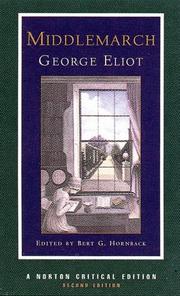
Widely considered the greatest novel in the English language, it rewards every page of preparation: you will now recognise her moral philosophy, her narrative irony, and her sympathy for 'unhistoric acts' as the culmination of everything that came before.
Later Fiction: The Final Experiments
ExpertSee how Eliot pushed her art further after Middlemarch, into darker psychological territory and a bold engagement with Jewish identity and political idealism.
▸ Study plan for this stage
Pace: 8–10 weeks total: Weeks 1–3 for Felix Holt, the Radical (~25–30 pages/day, including the Author's Introduction); Weeks 4–10 for Daniel Deronda (~30–35 pages/day, given its greater length and density). Reserve the final 3–4 days of each book for re-reading key chapters and consolidating notes before
- Radical politics vs. moral conservatism: In Felix Holt, Eliot interrogates what genuine political radicalism means, contrasting Felix's inward, ethical reform with the opportunistic electoral politics swirling around him — questioning whether external political change can precede inner transformatio
- The inheritance plot as moral allegory: Both novels use legal and financial inheritance (the Transome estate in Felix Holt; Grandcourt's will and Daniel's unknown origins in Daniel Deronda) as structural metaphors for questions of identity, entitlement, and the debts owed to the past.
- Psychological entrapment and the 'unhistoric' life: Mrs. Transome in Felix Holt and Gwendolen Harleth in Daniel Deronda are among Eliot's most searching portraits of women whose intelligence and ambition are crushed by the choices available to them — extending the theme of thwarted potential from Mi
- Jewish identity, nationalism, and the proto-Zionist vision: Daniel Deronda's entire second narrative strand — Mordecai's messianic idealism, Mirah's diaspora experience, and Daniel's discovery of his heritage — constitutes Eliot's bold, sympathetic, and historically unusual engagement with Jewish cu
- The double-plot structure and its ideological function: Daniel Deronda deliberately splits into the Gwendolen/Grandcourt story and the Daniel/Mirah/Mordecai story, forcing the reader to hold two moral and cultural worlds in tension and to ask why Eliot refused to resolve them into a single English s
- Sympathy, egoism, and moral education: Across both novels, Eliot tracks the education of sympathy — Felix's sometimes harsh didacticism toward Esther, Daniel's expanding circles of fellow-feeling — against the dangers of self-enclosure exemplified by Grandcourt's sadistic control and Gwendolen's ini
- The role of the epigraph and the narrator's voice: Eliot's use of invented epigraphs (especially in Daniel Deronda) and her intrusive, essayistic narrator signal a self-conscious late style in which the fiction openly theorizes itself.
- Realism at its limits — prophecy, vision, and idealism: Mordecai's visionary speeches and Daniel's quasi-messianic destiny push Eliot's realism toward romance and prophecy, raising the question of whether her commitment to the 'real' can accommodate transcendent political hope.
- In Felix Holt, what is the precise nature of Felix's 'radicalism,' and how does Eliot use his contrast with Harold Transome to argue that political reform without moral reform is hollow? Does the novel ultimately endorse or undercut Felix's position?
- How does Mrs. Transome's tragedy function in Felix Holt — what does her story reveal about the costs of secrecy, the limits of female agency, and the gap between a woman's inner life and her social role?
- In Daniel Deronda, how does Eliot construct Gwendolen Harleth's psychological deterioration within her marriage to Grandcourt? What narrative and stylistic techniques does she use to render Gwendolen's interiority, and how does this compare to her treatment of Dorothea Brooke in Middlemarch?
- What is Eliot's attitude toward Jewish identity and Zionist idealism as expressed through the characters of Mordecai, Mirah, and Daniel? How does she balance sympathetic insider portrayal with the perspective of an outsider author, and where, if anywhere, does the portrayal strain credulity or show idealization?
- How does the double-plot of Daniel Deronda work thematically? Is the novel structurally unified or does it fall apart — and what does your answer reveal about Eliot's ambitions for the novel form at this stage of her career?
- Taken together, how do Felix Holt and Daniel Deronda revise or deepen the concerns of Eliot's earlier fiction? What is 'darker' or more experimental about these two novels compared to her previous work?
- Parallel character mapping: Create a two-column chart pairing Mrs. Transome (Felix Holt) with Gwendolen Harleth (Daniel Deronda). For each woman, note: her initial self-conception, the specific mechanism of her entrapment, the moment of her sharpest psychological crisis, and what — if anything — she gains by the novel's end. Write a 300-word synthesis on what these two portraits together say about
- Close-reading the epigraphs: Select five chapter epigraphs from Daniel Deronda (including at least two of Eliot's own invention). For each, write a paragraph explaining how it frames, ironizes, or complicates the chapter it precedes. Then write a short essay arguing for or against the claim that the epigraphs constitute a second, philosophical 'text' running alongside the narrative.
- The politics debate: Re-read the key dialogue scenes between Felix Holt and Harold Transome. Write a structured debate transcript (500 words) in which each character makes his strongest possible case for his vision of political change. Then add a paragraph in Eliot's narrator's voice adjudicating between them — imitating her essayistic style.
- Tracking the gaze on Jewishness: As you read the Daniel/Mirah/Mordecai strand of Daniel Deronda, keep a reading journal logging every scene set in a Jewish domestic or communal space. Note the details Eliot chooses to include, the language she uses, and any moments where the narrative perspective seems to shift between insider empathy and outsider observation. At the end, write a 400-word reflecti
- Structural surgery on Daniel Deronda: Outline the novel chapter by chapter, marking each chapter as belonging primarily to the 'Gwendolen plot,' the 'Daniel plot,' or a transitional chapter that links both. Map the alternation visually (e.g., a color-coded timeline). Then write a one-page argument either defending Eliot's chosen structure or proposing a specific restructuring — and explain what wo
- Comparative final essay: Write a 600–800 word essay with the title 'From Middlemarch to Daniel Deronda: How Eliot's Realism Changed.' You may not reference any novel outside the current stage's reading list. Focus on how Felix Holt and Daniel Deronda push the formal and thematic boundaries established in earlier Eliot, using specific scenes and passages as evidence.
Next up: Completing these two novels — with their unresolved political idealism, their psychologically extreme characters, and their self-questioning narrative form — equips the reader to engage with critical and biographical perspectives on Eliot's legacy, including how later readers, feminist critics, and postcolonial scholars have reassessed the ambitions and blind spots of her final experiments.

Her most explicitly political novel, engaging with the Reform Act era; reading it after Middlemarch reveals her sustained interest in civic life and the limits of idealism.
Her final and most daring novel, interweaving a devastating portrait of a trapped woman (Gwendolen Harleth) with a visionary narrative about Jewish identity — essential for understanding the full reach of her imagination.
The Mind Behind the Novels: Essays & Biography
ExpertUnderstand the intellectual and philosophical foundations of Eliot's fiction by reading her own critical prose and a definitive modern biography.
▸ Study plan for this stage
Pace: 8–10 weeks total: Weeks 1–4 cover the Byatt-edited "Selected Essays, Poems and Other Writings" (~25–30 pages/day, reading slowly and annotating); Weeks 5–10 cover Rosemary Ashton's "George Eliot" biography (~20–25 pages/day, cross-referencing Eliot's essays as her life and ideas intersect).
- Eliot's philosophical empiricism and her engagement with Comte's Positivism, Feuerbach's humanism, and Spencer's evolutionary thought, as traced through her essays
- The role of sympathy and moral imagination as Eliot's central aesthetic and ethical doctrine, articulated in essays such as 'The Natural History of German Life' and 'Silly Novels by Lady Novelists'
- Eliot's theory of realism: the novelist's duty to represent ordinary life truthfully rather than idealize it, and how this shapes her critique of sentimental fiction
- The tension between Eliot's loss of Christian faith and her retention of a secular, quasi-religious ethics of fellow-feeling — a tension Ashton traces from her Coventry years onward
- Eliot's intellectual formation through translation (Strauss's 'Life of Jesus', Feuerbach's 'Essence of Christianity') and how Ashton shows these labors shaped her narrative voice
- The pseudonym 'George Eliot' as a deliberate intellectual and social strategy: Ashton's biography reveals how gender, reputation, and her relationship with G. H. Lewes made the mask necessary
- The relationship between Eliot's journalism at the Westminster Review and the essayistic, digressive narrator-voice that defines her novels
- Byatt's editorial framing as itself a critical act: understanding how Byatt's selection and introduction shape the reader's encounter with Eliot's non-fiction prose
- After reading the essays in the Byatt volume, how would you summarize Eliot's theory of the social function of art, and which specific essay makes that case most forcefully?
- How does Ashton's biography explain the formative influence of Eliot's translations of Strauss and Feuerbach on her later fictional themes of doubt, community, and human love?
- In what ways does Eliot's critique of 'silly novels by lady novelists' reflect her own anxieties about being taken seriously as a woman intellectual, and how does Ashton's account of her early career illuminate this?
- How does Byatt's selection and introduction frame Eliot's essays as anticipating or explaining the philosophical concerns of the novels — and do you find that framing persuasive?
- Using both books together, how would you characterize the relationship between Eliot's life with G. H. Lewes and the development of her ideas about sympathy, domestic realism, and moral growth?
- What does Ashton's biography reveal about the reception of Eliot's work during her lifetime, and how does that reception history complicate or enrich your reading of the essays?
- Close-reading journal: For each major essay in the Byatt volume, write a one-paragraph précis of Eliot's central argument, then a second paragraph connecting it to a specific passage or technique from any Eliot novel you have previously read.
- Concept map: After finishing the Byatt volume, draw a diagram linking Eliot's key intellectual influences (Positivism, Feuerbachian humanism, evolutionary science) to specific ethical or aesthetic claims she makes in the essays — then annotate the map as you read Ashton.
- Parallel timeline: Create a two-column timeline — left column tracking the biographical events Ashton narrates (friendships, translations, publications, the Lewes relationship), right column tracking the ideas and arguments appearing in the essays — to make the life-and-thought connection visible.
- Comparative annotation: Select one passage from an essay in the Byatt volume where Eliot defines 'sympathy' or 'realism', then find a corresponding passage in Ashton where the biography contextualizes that idea historically. Write a 300-word synthesis of what the two passages together reveal.
- Debate-style writing exercise: Write a 500-word response to Eliot's critique in 'Silly Novels by Lady Novelists', either defending or challenging her standards, using evidence from both the essays and Ashton's account of the Victorian literary marketplace.
- Reflective essay: After completing both books, write a 700–1,000-word essay answering the question: 'To what extent is George Eliot's fiction a direct expression of her philosophical essays?' Use specific evidence from the Byatt-edited prose and Ashton's biographical analysis.
Next up: By grounding the reader in Eliot's own intellectual vocabulary and the biographical arc of her development, this stage equips them to read her major novels not as isolated literary objects but as philosophical arguments in narrative form — making the next stage's close engagement with the fiction far richer and more analytically precise.

Eliot was one of the finest critics of her age; her essays on realism, women, and religion reveal the ideas that animate every novel and are best read once you know the fiction well.
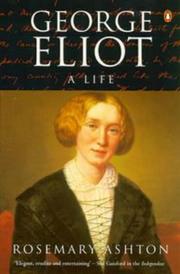
The standard modern biography, scrupulously researched and elegantly written; it contextualises her unconventional life, her relationship with G. H. Lewes, and her philosophical development, bringing the whole curriculum into focus.
Discussion
Keep reading
Paths that share books, cover the same subject, or open a related topic.