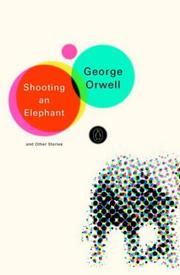
Start with Shooting an Elephant and other essays. Orwell was an essayist first and a novelist second, and the essays are where the famous plainness of the prose was built. "Politics and the English Language", "Why I Write" and the title piece do more to explain him in fifty pages than either dystopia does in four hundred.
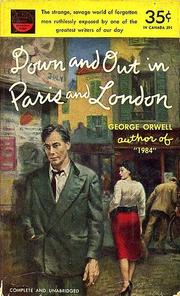
If you want a book-length narrative instead, start with Down and Out in Paris and London. It is his first book, an account of dishwashing in Paris kitchens and sleeping rough in London, and it reads like reportage written by someone who has not yet decided to be a great man. Either of these beats opening with Nineteen Eighty-Four, which most readers arrive at pre-loaded with slogans and therefore cannot actually read.
The documentary books
After the essays, take the three books of reporting in order. Down and Out in Paris and London first, then The Road to Wigan Pier, then Homage to Catalonia.
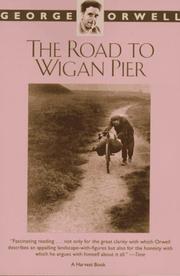
Fair warning on The Road to Wigan Pier: it is two books stapled together. The first half is superb — coal mines, housing, food budgets, the physical texture of poverty in the industrial north. The second half is a long argument with the English left about why socialism repels the people it means to help, and it is cranky, self-implicating and occasionally rude about vegetarians. Read the first half attentively; read the second half as an argument you are allowed to disagree with.
Homage to Catalonia is the pivot of his whole career and the best book he wrote. It also contains two chapters of dense Spanish factional politics that Orwell himself suggested readers might skip; most modern editions move them to appendices for exactly that reason. Take the offer if the acronyms start blurring, then come back to them.
The two famous ones, last
Now read Animal Farm and then Nineteen Eighty-Four. Reading them after Spain changes them completely. Animal Farm stops being a school text about pigs and becomes a specific, furious account of a revolution Orwell watched get eaten from inside. Nineteen Eighty-Four stops being a set of quotable nouns and becomes the work of a dying man extrapolating from things he had personally seen — censorship, rewritten dispatches, comrades disappearing.
Nineteen Eighty-Four has a genuine slow stretch: the long extract from Goldstein's book in the middle. It is deliberate and it is dull. Read it, do not skim it, and accept that the novel wants you to feel the flatness of official prose.
What this list leaves out
Orwell wrote four other novels — Burmese Days, A Clergyman's Daughter, Keep the Aspidistra Flying and Coming Up for Air — and they are not on this path. That is mostly the right call. Coming Up for Air is the one genuinely worth chasing down afterwards; the other three are apprentice work, and Orwell said as much about at least two of them.
Where to stop
These six are the whole essential Orwell. Stop after Nineteen Eighty-Four and you have missed nothing important. If you want more, go sideways rather than forward: the four-volume collected essays and journalism is the real treasure house, and it is where readers who love him end up living.
For adjacent political reading, the wider catalogue is on Discover.
Follow the full ordered path here: George Orwell Reading Order: Where to Start.
Ready to learn something deeply?
Build a reading path — free