Victorian Literature: Best Books to Read, in Order
This curriculum guides an intermediate reader through the full arc of Victorian literature, beginning with its most accessible and beloved social novels, moving through the psychological and moral complexity of the Brontës and George Eliot, and culminating in the darker, transitional works of Thomas Hardy that bridge Victorianism and literary modernism. Each stage builds thematic and stylistic fluency needed to appreciate the next, treating the Victorian novel as both a social document and a work of art.
The Victorian World: Society, Comedy & Injustice
IntermediateEstablish a confident feel for Victorian prose style, social satire, and Dickens's signature blend of comedy and moral outrage — the essential entry point for the era.
▸ Study plan for this stage
Pace: 8–10 weeks, ~40–50 pages/day (accounting for re-reading passages and note-taking). *Great Expectations* (5–6 weeks, ~460 pages), then *Bleak House* (3–4 weeks, ~900 pages, read in larger chunks given its episodic structure).
- Victorian prose style: Dickens's use of vivid imagery, digression, and rhythmic dialogue to create immersive social worlds
- Social satire as moral instrument: how Dickens ridicules institutions (law, education, class) to expose injustice rather than merely entertain
- The orphan/outsider protagonist: how Pip and Esther embody the era's anxieties about social mobility, belonging, and moral identity
- Blending comedy and pathos: Dickens's technique of juxtaposing grotesque minor characters and farcical scenes with genuine human suffering
- Serialization and structure: how monthly/weekly publication shaped narrative pacing, cliffhangers, and subplot proliferation in Victorian novels
- The fog as metaphor: understanding symbolic imagery (fog in *Bleak House*, marshes in *Great Expectations*) as commentary on social obscurity and moral confusion
- Redemption through connection: the role of relationships, loyalty, and human sympathy as counterweights to institutional coldness
- Class and aspiration: how both novels interrogate the Victorian myth of self-improvement and expose the fragility of social position
- How does Dickens use minor comic characters (e.g., Mr. Micawber in *Great Expectations*, Harold Skimpole in *Bleak House*) to simultaneously amuse and critique Victorian society?
- What role does the law play in both novels, and how does Dickens present it as both a source of injustice and a symbol of Victorian bureaucratic failure?
- How do Pip and Esther's narrative voices differ, and what does each reveal about Dickens's evolving approach to first-person perspective and moral unreliability?
- Trace the theme of social aspiration in *Great Expectations*: what does Pip's journey suggest about the Victorian ideal of 'becoming a gentleman'?
- How does Dickens use fog, weather, and setting as more than backdrop—as active forces that shape character and plot in *Bleak House*?
- What is the relationship between Dickens's comedy and his moral outrage? Identify a scene from each novel where humor serves a satirical purpose.
- Close-read a passage of Dickensian dialogue (e.g., Mrs. Jellyby's monologues in *Bleak House*, Wemmick's double life in *Great Expectations*) and annotate: identify rhythm, repetition, and how speech patterns reveal character and social critique.
- Create a 'character map' for each novel showing social networks and class positions; note how Dickens uses proximity and distance to comment on Victorian hierarchy.
- Write a 500-word comparison of how Pip and Esther each respond to injustice they witness—what does their passivity or agency reveal about Dickens's moral vision?
- Rewrite a scene from *Great Expectations* (e.g., Pip's first meeting with Miss Havisham) in modern prose; reflect on what Dickens's ornate style accomplishes that plain narration cannot.
- Track the Chancery lawsuit (Jarndyce v. Jarndyce) through *Bleak House*: how does Dickens use this single legal case to indict the entire system? Create a timeline of its absurdities.
- Identify three instances of 'redemption through connection' in each novel (e.g., Joe Gargery's loyalty to Pip, Esther's healing influence on Jarndyce House); write brief notes on how Dickens positions human warmth against institutional coldness.
Next up: Mastery of Dickens's satirical voice, social scope, and moral urgency here prepares you to engage with the psychological depth and formal experimentation of later Victorian novelists (e.g., the Brontës' introspection, Eliot's philosophical realism, Hardy's determinism) and to recognize how Dickens's blend of entertainment and critique became a template for Victorian fiction's engagement with socia
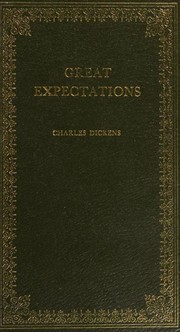
The most tightly plotted and psychologically rich of Dickens's novels, it introduces class anxiety, self-deception, and redemption in a form that feels surprisingly modern. Starting here gives you Dickens at his most focused before tackling his longer works.
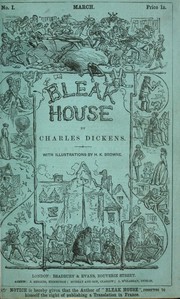
Dickens's masterpiece of institutional critique and panoramic storytelling. Having warmed up with Great Expectations, readers are ready for its dual narrative structure and sprawling cast, which set the template for the Victorian 'condition-of-England' novel.
Passion, Isolation & the Gothic Interior
IntermediateUnderstand how the Brontës pushed against Victorian social convention by turning inward — exploring desire, power, and the wild self — and how their contrasting styles illuminate each other.
▸ Study plan for this stage
Pace: 8–10 weeks, ~40–50 pages/day (with reflection days built in). *Jane Eyre* (weeks 1–3), *Wuthering Heights* (weeks 4–6), *The Tenant of Wildfell Hall* (weeks 7–8), comparative analysis and synthesis (weeks 9–10).
- The Gothic interior: how the Brontës use domestic spaces, attics, moors, and locked rooms as psychological landscapes that externalize inner turmoil and constraint
- Female desire and agency: the ways Jane, Heathcliff, Catherine, and Arthur Huntingdon's wife resist or claim power within patriarchal structures that deny them autonomy
- Passion as transgression: how raw emotion—rage, lust, ambition—becomes both liberating and destructive when it collides with Victorian propriety
- Narrative voice and perspective: how each sister's stylistic choices (Jane's first-person introspection, Emily's nested narratives, Anne's diary form) shape our understanding of isolation and rebellion
- The wild self: the Brontës' exploration of instinct, nature, and the 'uncivilized' aspects of human nature that Victorian society demands be suppressed
- Social convention as prison: how class, gender, marriage law, and respectability function as invisible cages that the heroines navigate, resist, or escape
- Contrasting approaches to transgression: comparing how Charlotte, Emily, and Anne differently imagine female autonomy, moral compromise, and the cost of defiance
- How does Jane Eyre use the Gothic interior—Thornfield Hall, the attic, the fire—to represent her psychological state and her struggle between passion and principle?
- What role does the moor play in *Wuthering Heights*, and how does Emily Brontë use landscape to express the wild, uncontainable nature of Heathcliff and Catherine's desire?
- How does Anne Brontë's use of the diary and letter form in *The Tenant of Wildfell Hall* create a different kind of intimacy and isolation than the narrative techniques of her sisters?
- In what ways do Jane, Catherine (Cathy), and Helen Huntingdon each resist or accommodate Victorian expectations of female obedience, and what are the consequences of their choices?
- How do the three novels present different visions of passion—is it redemptive, destructive, or morally ambiguous—and what does each sister's treatment suggest about her view of female desire?
- What do the Brontës suggest about the relationship between social isolation and self-discovery? How does being an outsider enable or complicate each heroine's agency?
- Create a visual map of the key interior spaces in each novel (*Jane Eyre*'s Thornfield, *Wuthering Heights*' Wuthering Heights and Thrushcross Grange, *The Tenant of Wildfell Hall*'s Wildfell Hall). Annotate each with scenes of emotional intensity and note what each space reveals about power, confinement, or freedom.
- Write a comparative character study of Jane Eyre and Helen Huntingdon (Arthur's wife): how do their acts of resistance differ? What does each woman risk, and what does she gain? Which sister's vision of female autonomy do you find more radical?
- Track the language of passion and restraint across all three novels. Collect 5–6 quotations from each that exemplify how the Brontës describe desire, rage, or emotional intensity. What patterns emerge in their vocabulary and imagery?
- Rewrite a key scene from *Wuthering Heights* (e.g., Heathcliff's return, Catherine's death) in the narrative voice and style of *Jane Eyre*. How does the change in perspective and tone alter the emotional impact? What does this reveal about each sister's artistic choices?
- Analyze the role of the supernatural or uncanny in each novel. How does each Brontë use Gothic elements (ghosts, premonitions, mysterious laughter, fire) to blur the boundary between inner psychology and external reality?
- Write a dialogue between the three heroines discussing marriage, duty, and desire. What would Jane, Catherine, and Helen say to each other about their choices? Where would they agree or clash?
Next up: This stage establishes how the Brontës turned Victorian literature inward—privileging psychology, desire, and moral ambiguity over plot—preparing you to explore how their innovations influenced later modernist and contemporary fiction's treatment of consciousness, gender, and the self.
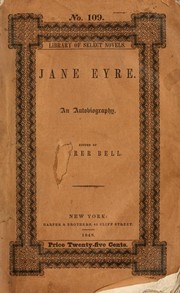
The defining Victorian novel of female self-determination and moral integrity. Its first-person voice and Gothic atmosphere make it the ideal bridge from Dickens's social world to the Brontës' more psychological terrain.
Read immediately after Jane Eyre, this novel's radical narrative fragmentation and amoral romanticism throw Charlotte's moral framework into sharp relief, deepening your understanding of what Victorian fiction could dare to do.
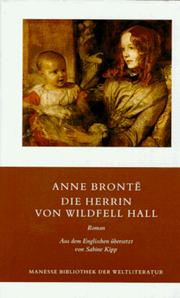
Often overshadowed by her sisters, Anne's unflinching portrait of a bad marriage and a woman's escape is arguably the most radical of the three. It rounds out the Brontë stage and anticipates the 'New Woman' debates of later Victorian fiction.
Moral Realism: George Eliot & the Examined Life
IntermediateEngage with Victorian fiction at its most philosophically ambitious — learning to read the slow, analytical prose of George Eliot and her belief that the novel is a supreme instrument of moral sympathy.
▸ Study plan for this stage
Pace: 8–10 weeks, ~40–50 pages/day (with 2–3 reflection days per week). *The Mill on the Floss* (4–5 weeks); *Middlemarch* (4–5 weeks).
- Moral sympathy as the novel's highest purpose: how Eliot uses narrative omniscience to invite readers into characters' inner lives and ethical struggles
- The slow, analytical prose style: Eliot's digressive narrator, philosophical asides, and resistance to plot-driven momentum as deliberate moral technique
- Tragedy of circumstance and character: how *The Mill on the Floss* and *Middlemarch* show how individual moral aspiration collides with social constraint, family duty, and historical limitation
- The examined life: Eliot's insistence that ordinary people—provincial, unglamorous, intellectually thwarted—deserve serious moral and psychological scrutiny
- Interconnection and consequence: how both novels reveal hidden links between characters' choices and show that no action exists in isolation
- Intellectual ambition in women: Maggie Tulliver and Dorothea Brooke as figures whose moral and intellectual hunger exceeds what their society permits
- Realism as moral philosophy: Eliot's rejection of sentimentality, melodrama, and wish-fulfillment in favor of unflinching portrayal of human limitation and compromise
- The narrator's voice as moral guide: how Eliot's intrusive, philosophizing narrator models the kind of sympathetic, analytical attention she asks readers to develop
- What does Eliot mean by moral sympathy, and how does she use narrative technique (particularly her omniscient narrator) to create it in the reader?
- How do Maggie Tulliver's intellectual and moral aspirations conflict with her family obligations and social position, and what does this conflict reveal about the constraints on women's lives?
- Compare the endings of *The Mill on the Floss* and *Middlemarch*: how does Eliot handle the gap between her characters' hopes and their actual fates, and what is she arguing about human possibility?
- What is the relationship between Eliot's slow, digressive prose style and her moral vision? Why does she resist conventional plot momentum?
- How do secondary characters and subplots in *Middlemarch* (e.g., the Garths, the Vincys, Bulstrode) function as moral mirrors or counterpoints to the main narrative, and what does this interconnection suggest about human society?
- How does Eliot portray intellectual life—particularly in Dorothea's encounter with Casaubon and Lydgate's scientific ambitions—and what does she suggest about the costs of pursuing knowledge or truth in a provincial setting?
- Close-read a passage of Eliot's philosophical digression (e.g., her reflection on Maggie's inner life in Book 5 of *The Mill on the Floss*, or her meditation on Dorothea's idealism early in *Middlemarch*). Annotate where the narrator steps outside plot to analyze character psychology, and write a paragraph on how this technique creates moral sympathy.
- Track Maggie Tulliver's intellectual development across *The Mill on the Floss*—from her childhood reading to her encounter with Thomas à Kempis to her final crisis. Write a brief essay on how her mind is shaped by circumstance, family, and social expectation, and what Eliot suggests about the tragedy of thwarted intellect.
- Create a character web for *Middlemarch* showing how the four main plots (Dorothea–Casaubon–Ladislaw, Lydgate–Rosamond, Bulstrode–Raffles, Mary–Fred) are morally and socially interconnected. Write annotations explaining how each subplot illuminates the others' moral dilemmas.
- Compare two scenes of moral choice or crisis—one from each novel (e.g., Maggie's decision to run away with Stephen Guest vs. Dorothea's realization about her marriage to Casaubon). Analyze how Eliot portrays the interior struggle, the social pressures, and the limits of individual agency.
- Write a letter from one character to another (e.g., Maggie to Dorothea, or Lydgate to Maggie) in which you articulate the moral or intellectual problem each faces. Use Eliot's own analytical, sympathetic tone to show you understand their dilemma from the inside.
- Identify a moment where Eliot's narrator explicitly judges or defends a character's action (e.g., her defense of Maggie's passion, or her complex treatment of Bulstrode's self-deception). Write a short response explaining what moral principle or insight Eliot is advancing through this narratorial intervention.
Next up: This stage establishes Eliot as the philosophical conscience of Victorian realism and trains you to read introspective, morally serious prose; the next stage will likely extend this into later-Victorian and modernist fiction, where psychological depth and narrative innovation become even more formally experimental.
A more personal and emotionally immediate entry into Eliot than Middlemarch, this novel's portrait of a brilliant woman constrained by provincial life prepares readers for Eliot's characteristic blend of psychological depth and social analysis.
Widely considered the greatest Victorian novel, it rewards the reader who has already built stamina with Dickens and the Brontës. Its interlocking plots and philosophical narrator represent the apex of Victorian realism.
Twilight of the Victorians: Hardy & the Crumbling Ideal
ExpertTrace how Victorian certainties — about class, marriage, religion, and progress — collapse in Hardy's tragic vision, and understand how his work signals the end of an era and the dawn of literary modernism.
▸ Study plan for this stage
Pace: 10–12 weeks, ~40–50 pages/day. Allocate roughly 3 weeks per novel to allow time for close reading, reflection, and comparative analysis across the three texts.
- Fate, determinism, and the 'President of the Immortals': Hardy's vision of human powerlessness against cosmic indifference and social forces
- The collapse of Victorian ideals: how marriage, class mobility, and religious faith crumble under the weight of circumstance and desire in Far from the Madding Crowd, The Return of the Native, and Jude the Obscure
- Tragedy and the ordinary: Hardy's elevation of rural and working-class protagonists to tragic status, challenging Victorian notions of who deserves tragic treatment
- Nature as antagonist and mirror: the Wessex landscape as both beautiful and hostile, reflecting characters' inner turmoil and the indifference of the universe
- The New Woman and sexual transgression: how female desire and unconventional relationships (Bathsheba, Eustacia, Sue) challenge Victorian moral codes and lead to catastrophe
- Modernist sensibility emerging: fragmented narrative, psychological interiority, and the breakdown of linear progress—precursors to 20th-century literary innovation
- Class, education, and aspiration: the impossibility of transcending one's station (Jude's failed climb) and the social machinery that enforces hierarchy
- Religion in crisis: the decline of faith and the absence of redemptive meaning in a post-Christian universe
- How does Hardy use the Wessex setting and natural forces in Far from the Madding Crowd and The Return of the Native to suggest that human will is subordinate to larger deterministic powers?
- Trace the evolution of the 'New Woman' figure across the three novels: how do Bathsheba Everdene, Eustacia Vye, and Sue Bridehead each challenge Victorian expectations, and what are the consequences of their transgression?
- What role does class and social mobility play in each novel? How does Hardy suggest that aspiration itself—whether Jude's pursuit of education or Bathsheba's independence—is ultimately doomed?
- How does Hardy's treatment of marriage in these three novels undermine Victorian ideals of matrimony as a source of stability and moral redemption?
- Identify moments of psychological interiority or narrative fragmentation in the three novels that anticipate modernist techniques. How do these formal choices reinforce Hardy's thematic concerns?
- What is the significance of Hardy's famous phrase about the 'President of the Immortals' in Far from the Madding Crowd? How does this cosmic vision persist and deepen across The Return of the Native and Jude the Obscure?
- Create a comparative character map tracking Bathsheba, Eustacia, and Sue across the three novels: note their desires, their transgressions, and the social/natural forces that oppose them. What patterns emerge?
- Write a 2–3 page analysis of a single scene from each novel where nature or landscape directly influences or mirrors a character's emotional or moral crisis (e.g., the storm in Far from the Madding Crowd, the heath in The Return of the Native, the railway journey in Jude the Obscure).
- Identify and annotate 5–6 moments of psychological interiority or stream-of-consciousness in the three novels. How do these passages differ from earlier Victorian narrative conventions, and what do they reveal about Hardy's modernist leanings?
- Construct a detailed timeline of each protagonist's attempts to escape or transcend their circumstances. At what points do they succeed, and at what points does Hardy's deterministic vision reassert itself? What does this pattern suggest about human agency?
- Write a dialogue or debate between a Victorian moralist and Hardy himself, discussing the 'moral lessons' of each novel. What would the moralist expect, and how would Hardy subvert those expectations?
- Rewrite a key scene from one of the novels (e.g., Bathsheba's confession to Troy, Eustacia's final night on the heath, Jude and Sue's separation) from the perspective of a character other than the protagonist. What new insights does this shift in perspective reveal about Hardy's vision of tragedy?
Next up: By tracing how Hardy dismantles Victorian certainties and experiments with modernist narrative techniques, you will be prepared to engage with early 20th-century modernist literature—where fragmentation, psychological depth, and the rejection of linear progress become the dominant mode of artistic expression.
Hardy's first major success is his most pastoral and hopeful, making it the right entry point into his world before his darker tragedies. Its portrait of rural Wessex and an independent heroine echoes the earlier novels in this curriculum.
A step darker, with fate and landscape working against its characters' ambitions — ideal for building toward Hardy's bleakest work and understanding his tragic worldview.
Hardy's final and most devastating novel, it dismantles every Victorian ideal — education, marriage, religion, social mobility — and shocked its contemporary audience. Having read the full curriculum, readers will feel the full weight of what Hardy is destroying.
Discussion
Keep reading
Paths that share books, cover the same subject, or open a related topic.