George Saunders Reading Order: Where to Start
This curriculum moves through George Saunders's work chronologically and by complexity, starting with his most accessible and celebrated story collections, advancing through his darker and more formally ambitious work, arriving at his only novel, and culminating in his masterclass on the craft of fiction. Each stage builds the reader's familiarity with Saunders's satirical voice, moral imagination, and technical range before the next stage demands more of them.
First Encounter: The Classic Saunders Voice
BeginnerGet hooked on Saunders's signature blend of dark comedy, corporate satire, and unexpected tenderness through his most beloved and widely-read collection.
▸ Study plan for this stage
Pace: 3–4 weeks, ~15–20 pages/day (the collection is ~250 pages); read one story per sitting when possible, pausing between stories to reflect before moving on
- The Saunders Interior Monologue: how stream-of-consciousness narration reveals character flaws and virtues simultaneously
- Dark Comedy as Empathy Engine: using humor, satire, and absurdity not to mock characters but to make the reader love them
- Corporate and Consumer Satire: how Saunders uses dystopian or near-future workplace settings (e.g., the amusement-park-like environments in 'Escape from Spiderhead' and 'The Semplica Girl Diaries') to critique capitalism and class anxiety
- The Redemptive Turn: identifying the moment in each story where unexpected tenderness or moral clarity breaks through the comedy
- Vernacular Voice and Linguistic Invention: Saunders's use of brand names, bureaucratic jargon, malapropisms, and invented slang to build entire worlds in a few pages
- Class and Aspiration: how characters' desperate desire to provide for or impress their families drives both the comedy and the tragedy
- The Unreliable or Limited Narrator: how Saunders uses narrators who don't fully understand their own situations to create dramatic irony
- Compression and the Short Story Form: how each story in 'Tenth of December' achieves emotional completeness in very few pages
- In a story like 'The Semplica Girl Diaries,' how does Saunders use a diary format and an earnest, bumbling narrator to simultaneously satirize consumer culture and generate genuine sympathy for the protagonist?
- What is the 'redemptive turn' in 'Tenth of December' (the title story), and how does the interaction between Don Eber and the boy Robbie reframe everything that came before it?
- How does Saunders use invented language, jargon, or brand names in at least two stories to establish setting and character without traditional exposition?
- Choose one story where the narrator is clearly limited or self-deceived. What does the reader understand that the narrator does not, and how does Saunders create that gap?
- How does 'Escape from Spiderhead' use a science-fiction premise to ask a fundamentally moral question, and what is that question?
- By the end of the collection, what would you say is Saunders's central argument about human goodness — and which story makes that case most powerfully for you personally?
- Story Mapping: After finishing each story, write a 3–5 sentence summary covering (1) the satirical target, (2) the narrator's blind spot, and (3) the moment of tenderness or moral shift. Do this for all ten stories before comparing your notes.
- Voice Imitation: Pick one Saunders narrator from the collection and write one page in that character's voice describing a mundane modern situation (a trip to the grocery store, a job interview). Focus on replicating the vernacular, the run-on anxious energy, and the brand-name texture.
- Underlining the Turn: Re-read 'Tenth of December' (the title story) and physically mark or highlight the exact sentence or paragraph where the emotional register shifts from dark/comic to tender. Then write two sentences explaining what craft technique (a change in tense, a shift in whose perspective we inhabit, a single image) triggers that shift.
- Class Anxiety Inventory: List every moment in 'The Semplica Girl Diaries' where the narrator makes a financial decision or comparison. What pattern emerges? Write a short paragraph connecting this pattern to a real-world consumer behavior or cultural pressure you recognize.
- Compare Two Voices: Choose two stories with very different narrative voices (e.g., the clinical tone of 'Escape from Spiderhead' vs. the rambling diary of 'The Semplica Girl Diaries'). Write a one-page comparison: how does the form of each narrator's voice reflect their moral situation?
- Personal Response Journal: After finishing the entire collection, free-write for 15 minutes on this prompt: 'Which character in Tenth of December do I most want to defend, and why?' Use at least two specific scenes from the text as evidence.
Next up: Mastering Saunders's signature voice and emotional architecture in 'Tenth of December' gives the reader the interpretive toolkit — dark comedy, unreliable narrators, the redemptive turn — needed to tackle his earlier, rawer, and more experimentally satirical work with confidence and context.

Saunders's most celebrated and accessible collection, winner of the Story Prize — the perfect entry point. Its range of tones and styles gives a panoramic introduction to everything he does best.
The Early Work: Satire and Dystopia
BeginnerUnderstand where Saunders's voice came from by reading his debut and sophomore collections, which establish the hyper-commercialized, near-future American landscape that defines his fictional world.
▸ Study plan for this stage
Pace: 6–8 weeks total: Weeks 1–3 for "CivilWarLand in Bad Decline" (~20–25 pages/day, including re-reading standout passages); Weeks 4–6 for "Pastoralia" (~20–25 pages/day); Weeks 7–8 reserved for comparative reflection, journal review, and exercises.
- Satirical dystopia: Saunders constructs hyper-commercialized near-future Americas (theme parks, corporate caves, call centers) that are absurd yet disturbingly plausible — recognize how each story's setting functions as a critique of late capitalism.
- The 'little guy' narrator: Both collections center on economically precarious, morally compromised protagonists (the manager in 'CivilWarLand,' the cave-dweller in 'Pastoralia') who are simultaneously complicit in and victimized by oppressive systems — study how Saunders generates sympathy without e
- Corporate-speak as character voice: Saunders weaponizes the language of memos, mission statements, and performance reviews to reveal how institutions colonize individual thought — track this idiom across both books.
- Moral failure under systemic pressure: Characters repeatedly face ethical choices and choose survival over integrity; Saunders asks readers to hold both judgment and compassion simultaneously.
- Dark comedy as moral vehicle: The humor in stories like 'The 400-Pound CEO' and 'Pastoralia' is never merely comic relief — it is the primary delivery mechanism for Saunders's ethical arguments.
- The theme park / simulation as metaphor: CivilWarLand and the cave exhibit in 'Pastoralia' are literal simulations sold as authentic experience, mirroring how consumer culture packages and sells identity and history.
- Escalating absurdism: Saunders begins each story in a recognizable reality and gradually escalates its logic to an extreme — map this escalation arc in at least two stories from each collection.
- Compassion as the counterweight: Even in the bleakest scenarios (the fax-dependent cave couple, the ghost-haunted theme park), small acts of tenderness appear — identify these moments and consider what Saunders is arguing about human resilience.
- How does Saunders use the theme park setting in 'CivilWarLand in Bad Decline' to critique the commodification of American history, and which specific details make the satire land?
- In 'Pastoralia,' how does the fax machine function as both a plot device and a symbol of corporate surveillance and control over the protagonists' lives?
- Both collections feature protagonists who know the right thing to do but fail to do it. Choose one such character and explain how Saunders makes the reader feel compassion rather than contempt — what craft techniques produce that effect?
- How does Saunders's prose style — particularly his use of corporate jargon, run-on anxious interiority, and dark humor — evolve or shift between 'CivilWarLand in Bad Decline' and 'Pastoralia'?
- What does the near-future, hyper-commercialized American setting allow Saunders to say about real, contemporary America that a strictly realist setting might not?
- Select one story from each collection and trace the 'escalating absurdism' arc: where does the story begin on the realism-to-absurdity spectrum, and how does Saunders move it, step by step, toward its extreme conclusion?
- Close-reading log: For each story in both collections, write 2–3 sentences identifying (a) the satirical target, (b) the moment the absurdism peaks, and (c) one line of corporate/institutional language that reveals character. Keep these in a dedicated notebook.
- Voice imitation: Write a 300–500 word scene in Saunders's style — choose a mundane, exploitative workplace setting and narrate it through an anxious first-person 'little guy' who uses corporate-speak to rationalize a moral compromise. Focus on replicating the rhythm of his run-on interiority.
- Sympathy mapping: Pick the protagonist of 'Pastoralia' and create a simple two-column chart: on the left, list every action or thought that makes him morally culpable; on the right, list every systemic or circumstantial pressure that explains (not excuses) that action. Reflect in a paragraph on how the balance of the chart shapes your emotional response.
- Setting-as-argument essay: Write a 400–600 word informal essay answering: 'What is the theme park / cave exhibit setting arguing about authenticity and consumer culture?' Draw evidence from at least three specific scenes across the two books.
- Comparative story pairing: Choose one story from 'CivilWarLand in Bad Decline' and one from 'Pastoralia' that feel thematically linked. Write a one-page comparison identifying what each story shares in structure, theme, or character type — and what meaningfully differs between them, suggesting Saunders's development as a writer.
- Re-read and annotate: Return to one story from each collection after finishing all exercises. Annotate for moments of tenderness or compassion buried inside the satire. Write a short reflection on how those moments change the overall meaning of the story.
Next up: Mastering the satirical foundations and recurring character types in these two collections gives readers the essential lens — the hyper-commercialized world, the morally pressured everyman, the compassionate dark comedy — needed to appreciate how Saunders deepens and complicates those same tools in his later, more formally adventurous work.

His debut collection — rawer and more overtly dystopian than later work. Reading it after Tenth of December lets you trace his roots without being overwhelmed by the rougher edges first.
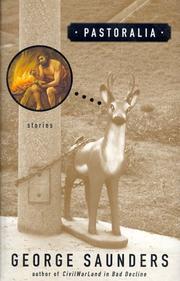
His second collection refines the debut's satirical machinery with more emotional depth. The title novella is essential Saunders and shows his growing mastery of the trapped, well-meaning narrator.
Maturing Vision: Fables and Moral Complexity
IntermediateEngage with Saunders at his most fable-like and morally probing, as his stories grow longer, stranger, and more philosophically demanding.
▸ Study plan for this stage
Pace: 5–6 weeks total: Weeks 1–3 cover "In Persuasion Nation" (~15–20 pages/day, pausing after each story for brief reflection notes); Weeks 4–6 cover "The Brief and Frightening Reign of Phil" (~20–25 pages/day, re-reading key political allegory passages in the final week).
- The fable as a vehicle for moral critique: how Saunders uses simplified, parable-like structures to expose complex ethical failures in consumer culture and political life
- Satire of advertising and media manipulation: 'In Persuasion Nation' dissects how commercial language colonizes consciousness, identity, and moral agency
- Complicity and systemic evil: characters in both books are rarely purely villainous — Saunders probes how ordinary people participate in and enable oppressive systems
- Absurdism as realism: the surreal premises (sentient ad characters, a nation literally too small to hold all its citizens) are logical extensions of real-world anxieties, not mere fantasy
- Political allegory and nationalism in 'The Brief and Frightening Reign of Phil': the novella maps the mechanics of scapegoating, mob mentality, border politics, and authoritarian demagoguery onto a cartoonish but chilling landscape
- Compassion within condemnation: even as Saunders satirizes his characters, he maintains empathy for their humanity, refusing simple moral binaries
- Voice and interiority: Saunders's narrators and characters speak in degraded, cliché-ridden, or bureaucratic language that itself becomes a symptom of their moral condition
- Escalation and inevitability: both books build toward moments of violence or collapse that feel both shocking and structurally inevitable, raising questions about free will and moral responsibility
- In 'In Persuasion Nation,' how does Saunders use the conceit of sentient advertising characters to critique the relationship between consumer capitalism and human identity? Pick two stories and compare their strategies.
- How does the language characters use in both books reflect their moral limitations? Find specific passages where degraded or bureaucratic speech signals ethical failure.
- In 'The Brief and Frightening Reign of Phil,' who or what does Phil represent, and how does the novella avoid reducing its allegory to a single, fixed political target?
- Both books depict communities that enforce conformity and punish difference. How do bystanders and 'ordinary' characters function in these systems, and what does Saunders suggest about collective moral responsibility?
- How does Saunders balance absurdist humor with genuine moral horror in these works? At what moments does the comedy collapse into something more disturbing, and why?
- What does the ending of 'The Brief and Frightening Reign of Phil' suggest about the cyclical nature of political violence and oppression? Does Saunders offer any hope, or is the conclusion deliberately bleak?
- Story-by-story annotation log: After each story in 'In Persuasion Nation,' write 3–5 sentences identifying (1) the satirical target, (2) the moment of moral crisis, and (3) the emotional register Saunders uses — comic, tragic, or both. Review the log at the end to identify patterns across the collection.
- Allegory mapping for 'The Brief and Frightening Reign of Phil': Draw or outline a diagram that maps the novella's invented geography, factions, and characters onto real-world political phenomena (nationalism, border policy, scapegoating, propaganda). Annotate with direct quotes from the text.
- Voice imitation exercise: Choose one story from 'In Persuasion Nation' and write a 1-page original scene using the same degraded, commercial, or bureaucratic voice Saunders employs. Then write a brief reflection on what moral worldview that voice encodes.
- Comparative close reading: Select one passage from 'In Persuasion Nation' and one from 'The Brief and Frightening Reign of Phil' where a character rationalizes participating in harm. Write a 400-word comparison of how Saunders constructs complicity differently in each book.
- Fable reconstruction: Distill one story from 'In Persuasion Nation' into a traditional fable format (2–3 paragraphs, ending with an explicit moral). Then reflect in writing on what is gained and what is lost when Saunders's ambiguity is stripped away — this sharpens awareness of his deliberate resistance to easy morals.
- Reader-response journal: At the end of each book, write a one-page personal response to the question: 'At what point, if any, did I feel implicated by Saunders's satire — and why?' Use specific scenes as evidence.
Next up: Mastering Saunders's fable-mode and political allegory here — his use of compressed, symbolic worlds to probe systemic moral failure — directly prepares the reader for his longer, more psychologically nuanced fiction, where these same concerns are embedded in fully realized characters with richer interiority and higher emotional stakes.
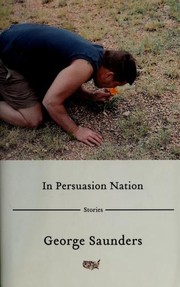
His third collection pushes the advertising-saturated dystopia to its logical extreme. Having read the earlier work, you'll now appreciate how deliberately he's escalating his critique.
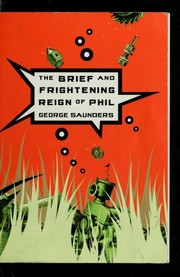
A short political fable that reads like Kafka crossed with Saturday Night Live. It works best here, once you're fluent in Saunders's invented vocabularies and allegorical mode.
The Novel: History, Grief, and the Afterlife
IntermediateExperience Saunders working at novel length for the first time — a formally daring, polyphonic ghost story set on a single night in the Lincoln White House.
▸ Study plan for this stage
Pace: 3–4 weeks, ~20–25 pages/day — the novel is ~350 pages but demands slow, attentive reading due to its fragmented, polyphonic structure; budget extra time for re-reading dense chorus sections and cross-referencing the historical source passages
- The Bardo as liminal space: Saunders draws on Tibetan Buddhist concept of the bardo (an in-between state after death before rebirth) to construct a purgatory populated by ghosts who refuse to accept their own deaths — understanding this framework unlocks the novel's central tension between denial an
- Polyphonic / chorus narration: the novel is told by dozens of voices — grieving ghosts, historical documents, invented testimonies — often interrupting and contradicting one another; recognizing how Saunders orchestrates this cacophony as a deliberate formal choice rather than chaos is essential
- The 'sick-box' delusion: the ghosts refer to their coffins as 'sick-boxes' and insist they are merely ill, not dead — this collective self-deception is Saunders's vehicle for exploring how humans (and nations) avoid confronting loss and mortality
- Historical collage and invented sources: Saunders interweaves real period documents (newspaper accounts, diaries, memoirs about Lincoln) with entirely fabricated ones, often contradicting each other — the technique interrogates the reliability of historical memory and the construction of myth
- Abraham Lincoln as a figure of grief: Lincoln's repeated nocturnal visits to Willie's crypt are the emotional spine of the novel; Saunders uses Lincoln's private grief to mirror the nation's grief during the Civil War, linking personal loss to collective tragedy
- Empathy as moral action: when Lincoln physically holds Willie's body, he absorbs the stories of the dead around him — Saunders argues that genuine empathy (feeling others' suffering as one's own) is the precondition for moral and political courage
- The novel's debt to Saunders's short fiction: Lincoln in the Bardo extends techniques from his stories — satirical voice, moral fable structure, formally experimental prose — but sustains them across a novel-length arc; tracing these continuities deepens understanding of both forms
- Release, acceptance, and letting go: the novel's climax turns on whether Willie (and the ghosts around him) can accept death and move on — Saunders frames this as the hardest and most necessary human act, giving the ghost story its redemptive moral weight
- How does Saunders use the bardo concept structurally — what rules govern who stays, who leaves, and what happens to children who linger too long, and how do those rules generate the plot's central stakes?
- Choose three of the ghost narrators (e.g., Hans Vollman, Roger Bevins III, the Reverend Everly Thomas) and explain how their individual backstories and 'unfinished business' reflect different human relationships to denial, regret, and the fear of death.
- How does Saunders signal to the reader which passages are drawn from real historical sources versus invented ones — and does that distinction ultimately matter? What argument is he making about how history is written and remembered?
- Trace the arc of Lincoln's emotional transformation across the single night the novel covers: where does he begin psychologically, what does his encounter with the bardo change in him, and how does Saunders connect his private grief to his decision-making as a wartime president?
- Lincoln in the Bardo is formally very different from a conventional novel (no chapters in the traditional sense, no single protagonist, no linear plot). Make the case that its fragmented form is not merely experimental decoration but is thematically necessary — what would be lost if it were told conventionally?
- What is the novel's final argument about grief — is it that grief should be abandoned, transformed, or honored? Use specific scenes (particularly the climax involving Willie and Lincoln) to support your reading.
- Map the ghost community: create a one-page character chart of the major ghost narrators listing each one's name, the era/circumstance of their death, their central delusion or 'unfinished business,' and the moment (if any) when they achieve release — this forces close tracking of the polyphonic structure
- Source detective exercise: select any five consecutive 'historical document' passages and research whether each is real or invented by Saunders (his author's note and published interviews provide guidance) — then write a paragraph reflecting on how your reading experience changed once you knew which was which
- Rewrite a chorus scene in a single voice: take any two-page section where multiple ghosts speak in rapid succession and rewrite it as a conventional third-person omniscient passage — then compare the two versions and write a short analysis of what the polyphonic original achieves that your rewrite cannot
- Grief journal response: after finishing the novel, write 500–700 words in the first person from the perspective of one ghost who does NOT get a resolution in the text — invent their backstory, their delusion, and what it would take for them to let go, staying true to Saunders's voice and moral framework
- Civil War context pairing: read one short primary source about the death of Willie Lincoln (freely available in historical archives) and one brief account of Civil War casualty figures from 1862 — then annotate 3–4 passages in the novel where Saunders is clearly in dialogue with this historical reality, noting how the fiction amplifies or reframes the facts
- Formal analysis essay (600–900 words): argue for or against the following claim — 'The novel's true protagonist is not Lincoln, not Willie, and not any single ghost, but grief itself.' Use at least four specific textual moments as evidence, and engage with at least one counter-argument
Next up: Mastering how Saunders sustains voice, moral seriousness, and formal experimentation across a full novel prepares the reader to step back and evaluate his complete artistic project — examining his essays, interviews, and craft statements to understand the conscious philosophy and writerly intentions behind everything encountered so far.
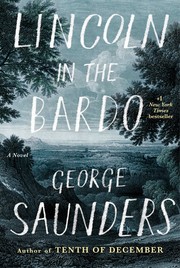
His Booker Prize-winning debut novel demands everything the earlier collections have built: comfort with his invented voices, trust in his moral seriousness, and appetite for formal experimentation.
The Craft Book: How It All Works
ExpertUnderstand the aesthetic and philosophical principles behind everything you've read, as Saunders dissects the mechanics of great short fiction through close reading of the Russian masters.
▸ Study plan for this stage
Pace: 5–6 weeks, ~25–30 pages/day; read each Saunders essay chapter before (or immediately after) its paired Russian story, then pause for reflection before moving on
- The 'Doorbell' principle: every story must keep earning the reader's continued attention moment-to-moment through escalation and surprise
- Meaningful causality — how each unit of a story must cause the next, creating inevitability rather than mere sequence
- The 'Skewing' technique: how great writers tilt a familiar situation just enough to generate tension and freshness without losing recognizability
- Morality in fiction as emergent, not didactic — how a story's ethical weight arises from specificity and honest portrayal rather than authorial preaching
- The role of 'Textual Residue': how word-level choices accumulate into a story's overall feeling, voice, and meaning
- Character interiority and the mechanics of sympathy — how Turgenev, Chekhov, Tolstoy, and Gogol make us care through precise, non-sentimental detail
- Revision as philosophical act — Saunders's argument that rewriting is how a writer discovers what the story actually believes
- The relationship between constraint and freedom: how formal limitations (length, POV, tense) paradoxically liberate a story's emotional range
- According to Saunders, what is the 'doorbell test,' and how can you apply it sentence-by-sentence to diagnose a story that is losing its reader?
- How does Saunders distinguish between a story that is 'about' a moral idea and one that earns its moral meaning through accumulated specificity? Which Russian stories best illustrate this distinction?
- What does Saunders mean when he says revision is the process by which a writer finds out what the story 'wants to be,' and how does this reframe the purpose of early drafts?
- How do the structural and stylistic choices Saunders identifies in Chekhov and Tolstoy — such as the management of time, interiority, and ending — connect to techniques visible in Saunders's own earlier fiction?
- In what ways does Saunders argue that a story's 'system of causality' is also its system of meaning, and what breaks down when causality is weak?
- How does Saunders use the concept of 'textual residue' to explain why word choice is never merely aesthetic but always ideological and moral?
- Close-reading drill: Choose any single paragraph from one of the Russian stories in the book. Annotate it using Saunders's own vocabulary (doorbell, skew, residue, causality) and write a one-page analysis explaining how the paragraph does or does not succeed by his criteria.
- Doorbell audit: Take a short story you have written (or a public-domain story of your choice) and mark every sentence with a ✓ (reader compelled forward) or ✗ (reader may stop). Rewrite every ✗ sentence and compare the two drafts.
- Imitation exercise: Write a 500–800 word story in strict imitation of one of the Russian masters Saunders analyzes — matching their management of time jumps, interiority, and ending type — then write a one-paragraph craft note explaining your choices in Saunders's terms.
- Revision-as-discovery journal: Draft a short scene (1–2 pages) quickly, then revise it three separate times, writing a brief note after each pass about what the story 'told you it wanted' during that revision — practicing Saunders's model of revision as philosophical inquiry.
- Morality mapping: Select two stories from the book — one Saunders praises for earned moral weight, one he critiques or uses as a cautionary example — and write a comparative essay (600–900 words) tracing exactly where and how moral meaning surfaces (or fails to) at the sentence level.
- Teach-back exercise: Summarize one of Saunders's craft essays in your own words as if explaining it to a fellow writer who has not read the book, then test your explanation by applying its principles to a story entirely outside the book's syllabus.
Next up: Internalizing Saunders's explicit craft framework gives the reader a precise critical vocabulary to carry into any subsequent stage — whether returning to his fiction with new analytical eyes, exploring other craft literature, or beginning serious original work of their own.

Based on his celebrated Syracuse MFA course, this book uses Chekhov, Turgenev, Tolstoy, and Gogol to articulate exactly what makes fiction work — and retroactively illuminates every Saunders story you've read.
Discussion
Keep reading
Paths that share books, cover the same subject, or open a related topic.