George Orwell Reading Order: Where to Start
This curriculum follows the learner's own roadmap: essays first to absorb Orwell's voice and political thinking, then his documentary prose to see those ideas applied to lived reality, and finally the two great novels where everything crystallises into fiction. Each stage builds the vocabulary, context, and intimacy with Orwell's style needed to fully appreciate the next, turning what might feel like "famous books everyone has heard of" into deeply understood works.
Finding the Voice — Essential Essays
BeginnerAbsorb Orwell's plain-English prose style, his core political and moral instincts, and the recurring themes (imperialism, class, truth, language) that run through everything else he wrote.
▸ Study plan for this stage
Pace: 3–4 weeks, ~15–20 pages/day. The collection contains roughly 40–50 pages of essential essays (e.g., "Shooting an Elephant," "A Hanging," "Politics and the English Language," "Why I Write," "Such, Such Were the Joys"), so read one or two essays per sitting, re-reading each at least once before moving
- Plain-English prose style: Orwell's deliberate use of short sentences, concrete nouns, and active verbs as a political and ethical act
- Imperialism and complicity: how 'Shooting an Elephant' dramatises the way oppressive systems corrupt the oppressor as much as the oppressed
- Class consciousness and shame: Orwell's acute awareness of his own class position and the social hierarchies he both inhabited and rejected, explored in 'Such, Such Were the Joys'
- The relationship between truth and language: 'Politics and the English Language' argues that vague, euphemistic language enables political dishonesty and moral evasion
- Bearing witness as a literary method: Orwell's use of the first-person narrator as an eyewitness (e.g., 'A Hanging') to force the reader into moral confrontation
- Recurring moral instinct — decency: the idea that ordinary human decency is the baseline from which all of Orwell's political judgements are made
- Autobiography as political argument: in 'Why I Write,' Orwell frames his entire career as a conscious choice to fuse personal experience with political purpose
- The essay as a form of intellectual honesty: Orwell's willingness to implicate himself, admit uncertainty, and change his mind within a single piece of writing
- In 'Shooting an Elephant,' Orwell says he 'had to shoot the elephant' to avoid looking a fool — what does this reveal about the psychological mechanism of imperial power, and who does he ultimately blame?
- What are Orwell's six rules for clear writing in 'Politics and the English Language,' and can you explain in your own words why he believes bad prose is a moral — not merely aesthetic — failure?
- How does 'A Hanging' use a single, precisely observed detail (the prisoner stepping around a puddle) to make its argument against capital punishment? What does this technique tell you about Orwell's prose strategy?
- In 'Why I Write,' Orwell lists four motives for writing. Which does he claim dominates his own work, and how does he reconcile artistic ambition with political purpose?
- Across the essays as a whole, what does Orwell mean by 'decency'? Is it a political programme, a personal ethic, or something else — and where do you see it operating most clearly?
- How does Orwell's treatment of his own class position in 'Such, Such Were the Joys' complicate any simple reading of him as a straightforward champion of the working class?
- Style imitation — rewrite a paragraph: Choose any paragraph of 150+ words from a current news article or political speech. Rewrite it following Orwell's six rules from 'Politics and the English Language.' Then write a short note explaining every change you made and why.
- Orwell's detail audit: Re-read 'A Hanging' and list every concrete sensory detail Orwell includes. For each one, write one sentence explaining what moral or emotional work that detail is doing. This trains you to see how his style and argument are inseparable.
- Personal 'Why I Write' essay: Write 400–600 words in Orwell's first-person confessional mode answering the same question he poses. Use his four-motive framework as a scaffold, but be honest about your own experience. Focus on plain, concrete language.
- Theme-tracking log: Create a simple four-column table (Imperialism | Class | Truth | Language). As you finish each essay, add a bullet point per column noting where and how that theme appears. By the end of the collection you will have a visual map of Orwell's obsessions.
- Close-reading comparison: Select one paragraph from 'Shooting an Elephant' and one from 'Politics and the English Language.' Annotate both for sentence length, verb choice (active vs. passive), and use of abstraction vs. concrete imagery. Write a one-page reflection on what the comparison reveals about Orwell's consistency of style.
- Socratic self-quiz: After finishing the collection, close the book and write — from memory — a one-paragraph summary of each essay you read. Then reopen the book and compare. The gaps between your summary and the text are your study targets for a second pass.
Next up: Mastering Orwell's essayistic voice and his core themes here gives you the interpretive lens you need to recognise those same instincts — plain style, anti-imperialism, class anxiety, the defence of truth — operating at full novelistic scale in his longer fiction and reportage.
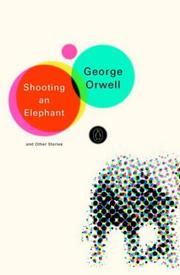
The perfect entry point: short, vivid personal essays ('Shooting an Elephant', 'A Hanging', 'Politics and the English Language') that introduce Orwell's voice, his guilt about empire, and his lifelong war on dishonest language — themes that echo in every later work.
Witness — The Documentary Books
BeginnerSee Orwell leave the desk and immerse himself in poverty, labour, and war, learning to read his documentary method — first-person immersion, unflinching detail, moral argument — that makes the novels feel so grounded.
▸ Study plan for this stage
Pace: 10–12 weeks total, reading roughly 20–25 pages per day: ~3 weeks for "Down and Out in Paris and London," ~4 weeks for "The Road to Wigan Pier," and ~3–4 weeks for "Homage to Catalonia." Set aside one extra day per week for reflection, note-taking, and exercises — no pure reading days should be rushe
- First-person immersion as method: Orwell deliberately enters the worlds he describes (Parisian kitchens, Wigan miners' homes, Barcelona barricades) rather than observing from a distance, making his own body and discomfort part of the evidence.
- The documentary gaze — unflinching, granular detail: Orwell's power comes from hyper-specific, sensory description (the smell of the plongeur's kitchen, the exact dimensions of a miner's bedroom, the weight of a rifle) that forces the reader to accept the reality of what is described.
- Class as lived experience, not theory: Across all three books, Orwell treats class not as an abstraction but as something felt in the body — hunger, exhaustion, humiliation, accent, and smell — long before it becomes a political argument.
- The two-part structure of moral argument: Orwell consistently moves from raw testimony (Part 1 of each book) to explicit analysis and polemic (most visible in Part 2 of 'The Road to Wigan Pier'), teaching the reader to distinguish what he saw from what he concludes.
- Honesty as a political act: Orwell's willingness to indict his own class prejudices ('The Road to Wigan Pier'), admit military confusion and fear ('Homage to Catalonia'), and record his own failures ('Down and Out') is itself an argument — that clear seeing requires self-implication.
- The betrayal of the left as a recurring theme: 'The Road to Wigan Pier' attacks middle-class socialism for its condescension; 'Homage to Catalonia' documents the Soviet-backed suppression of the POUM and anarchists — both books show Orwell's disillusionment hardening into principle.
- Narrative voice and the construction of trust: Orwell builds credibility through understatement, self-deprecation, and the refusal to sentimentalise — readers should notice how his plain, conversational prose style is itself a rhetorical strategy.
- Documentary writing as the seedbed of the novels: The techniques, themes, and moral obsessions developed in these three books — surveillance, propaganda, the crushing of the individual, the dignity of ordinary people — flow directly into 'Animal Farm' and 'Nineteen Eighty-Four.'
- In 'Down and Out in Paris and London,' how does Orwell use the figure of the tramp to challenge middle-class assumptions about poverty and idleness — and where does his own class background show through despite his disguise?
- Part 2 of 'The Road to Wigan Pier' is a polemic that many of Orwell's own publishers found embarrassing. What is his central argument about why the English middle class fails to connect with the working class, and do the facts he documented in Part 1 support or complicate that argument?
- In 'Homage to Catalonia,' Orwell describes the early days in Barcelona as a glimpse of a genuinely classless society. What specific details does he use to convey this, and how does the book's second half systematically dismantle that vision?
- All three books rely on Orwell's physical presence as a source of authority. Identify one moment in each book where his body — hunger, illness, a bullet wound — becomes the primary instrument of knowledge. What does this technique achieve that conventional journalism or statistics cannot?
- How does Orwell's treatment of propaganda and media distortion in 'Homage to Catalonia' (particularly his shock at reading false newspaper accounts of events he witnessed) anticipate the world-building of his later fiction?
- Taken together, what consistent moral standard do these three books apply — and what kind of writer, and what kind of reader, does Orwell seem to be trying to create?
- Imitation paragraph: Choose one scene of physical labour or deprivation from any of the three books (e.g., the plongeur's shift in 'Down and Out,' a miner's crawl to the coal face in 'The Road to Wigan Pier'). Write a 200-word paragraph in Orwell's style — concrete nouns, active verbs, no euphemism — describing a demanding physical task from your own experience. Then annotate your draft: where did
- Two-column fact/argument log: As you read Part 2 of 'The Road to Wigan Pier,' keep a running two-column table — left column: claims Orwell makes about socialism or class; right column: the specific evidence from Part 1 he cites (or fails to cite) to support each claim. At the end, write a one-paragraph verdict on whether the polemic earns its conclusions.
- Newspaper vs. eyewitness comparison: Find a short contemporary newspaper account of the Spanish Civil War (the BBC or British Newspaper Archive have free resources) and compare its framing of the POUM or Barcelona events with Orwell's account in 'Homage to Catalonia.' Write half a page on what each source can and cannot see — and why.
- Vocabulary of class: Keep a running list of every word Orwell uses to describe smell, cleanliness, accent, or physical appearance in relation to class across all three books. At the end of the stage, group them into patterns and write a short paragraph on what this vocabulary reveals about how class is enforced and felt.
- Structural map: Draw a simple two-part diagram for each book showing where Orwell shifts from testimony to argument. Note the page number, the trigger sentence, and the change in tone. Compare the three diagrams: does the shift come earlier or later in each book, and what does that tell you about Orwell's growing confidence as a polemicist?
- Reading journal — the moment of disillusionment: Each book contains a pivotal scene where Orwell's expectations are shattered (the pawn-shop system in 'Down and Out,' the reaction of a socialist intellectual to the miners in 'The Road to Wigan Pier,' the May Days in Barcelona in 'Homage to Catalonia'). Write a journal entry of 150–200 words for each scene from Orwell's point of view, then a second
Next up: Mastering Orwell's documentary method — his insistence on grounding moral argument in witnessed, bodily reality — gives the reader the essential lens for understanding how the nightmares of "Animal Farm" and "Nineteen Eighty-Four" are not fantasy but direct extrapolations from the propaganda, class betrayal, and institutional lying he documented firsthand in these three books.
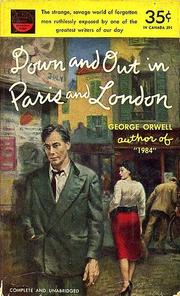
Orwell's first book: a raw, funny, and harrowing account of destitution in two cities. It establishes his habit of going to the bottom of society himself, and its episodic structure makes it an easy, gripping read that eases the transition from essays to longer prose.
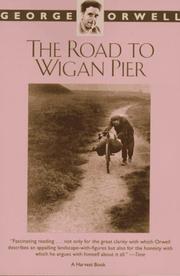
A two-part masterpiece: Part One is vivid reportage on coal miners' lives; Part Two is a frank, sometimes uncomfortable self-examination of class and socialism. Reading it after Down and Out shows how Orwell's documentary ambition grew, and it directly prefigures the political urgency of the novels.
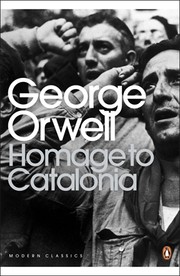
Orwell's account of fighting in the Spanish Civil War is the emotional and political turning point of his life — the moment he saw totalitarianism and Stalinist betrayal up close. It is essential preparation for Animal Farm and Nineteen Eighty-Four, giving those books their biographical weight.
The Fables — The Two Famous Novels
IntermediateRead the two canonical novels not as isolated classics but as the culmination of everything encountered so far — the essays' clarity, the documentary books' moral fury, and the Spanish war's disillusionment — now transmuted into enduring fiction.
▸ Study plan for this stage
Pace: 4–5 weeks total: Week 1 — Animal Farm in full (roughly 30 pages/day; it is short enough to finish in 3–4 sittings, so use the remaining days for re-reading key chapters and note-taking). Weeks 2–4 — Nineteen Eighty-Four at ~25–30 pages/day, pausing at the end of each of the three Parts before contin
- The fable as political weapon: how Animal Farm uses allegory, fairy-tale simplicity, and animal characters to expose the mechanics of revolutionary betrayal without naming names — and why that indirection is itself an argument about how propaganda works
- Language as power and its corruption: the evolution of the Seven Commandments in Animal Farm and the role of Newspeak, doublethink, and the memory hole in Nineteen Eighty-Four show Orwell's sustained thesis that controlling language is the first step to controlling thought
- Totalitarianism's anatomy: both novels dissect how a liberating movement calcifies into tyranny — the pigs' gradualism in Animal Farm mirrors the Party's permanent revolution in Nineteen Eighty-Four, together forming a complete model of authoritarian capture
- The betrayal of the working class: Boxer in Animal Farm and the proles in Nineteen Eighty-Four represent the same tragic figure — immense collective strength rendered impotent by loyalty, ignorance, and manufactured consent
- Doublethink and self-deception: Nineteen Eighty-Four's central psychological concept extends the sheep's bleating in Animal Farm into a fully theorised system; readers should be able to explain how holding two contradictory beliefs simultaneously is not a failure of logic but a deliberate cognitive
- The role of the intellectual: Snowball/Napoleon vs. O'Brien/Winston dramatise the question of whether the educated individual can resist or is inevitably co-opted; connect this to Orwell's own position as the writer-witness established in earlier stages of the curriculum
- Hope, futility, and the appendix: the 'Note on Newspeak' at the end of Nineteen Eighty-Four is written in past tense — a subtle, debated signal; Animal Farm's final image of indistinguishable pigs and men closes on deliberate ambiguity; both endings reward close reading about whether Orwell leaves a
- Synthesis with earlier Orwell: these novels do not appear from nowhere — the documentary moral fury of his non-fiction, the first-hand disillusionment of the Spanish Civil War, and the plain-prose manifesto of his essays are all crystallised here into fiction
- In Animal Farm, trace the exact sequence of changes made to the Seven Commandments. What does the gradualism of those changes reveal about how Orwell believes tyranny actually consolidates power — not through sudden coup but through incremental revision of shared memory?
- Boxer's motto is 'I will work harder' and 'Napoleon is always right.' How does Orwell use Boxer to make an argument about the relationship between personal virtue, political naivety, and systemic exploitation — and how does his fate function as the novel's moral centre of gravity?
- Newspeak is described in Nineteen Eighty-Four as making 'thoughtcrime literally impossible.' Explain the philosophical claim Orwell is making: can eliminating words for a concept truly eliminate the concept itself, and what does Winston's own struggle suggest about the limits of that project?
- O'Brien tells Winston that the Party seeks power entirely for its own sake, not as a means to any end. How does this differ from the pigs' motivation in Animal Farm, and what does the difference tell us about the two novels' distinct visions of how totalitarianism matures over time?
- Both novels end without a conventional hero's victory. Compare the final scenes — the farmhouse window in Animal Farm and Winston's gin-soaked capitulation in Nineteen Eighty-Four — as deliberate artistic choices. What emotional and political work is each ending doing, and are they pessimistic in the same way?
- Looking back across both books: where do you see the direct imprint of Orwell's Spanish Civil War experience and his essay-writing practice? Identify at least two specific passages — one from each novel — where the fiction feels like a direct transmutation of his lived or argued non-fiction.
- Commandment archaeology: create a two-column timeline for Animal Farm — on the left, the original Seven Commandments; on the right, every alteration made and the chapter in which it occurs. Then write a one-paragraph analysis of the pattern: what does the sequence of which commandments are changed first reveal about the pigs' priorities?
- Newspeak dictionary draft: choose any five concepts from Nineteen Eighty-Four's world (e.g. rebellion, privacy, the past, love, doubt) and write their Newspeak 'entries' as Orwell's appendix might — defining them out of existence or collapsing them into approved synonyms. Reflect in a short note on how difficult or easy you found it, and what that difficulty tells you.
- Parallel character mapping: draw a grid matching Animal Farm characters to their Nineteen Eighty-Four counterparts (e.g. Boxer ↔ the proles, Napoleon ↔ the Party/Big Brother, Squealer ↔ the Ministry of Truth). For each pairing, write two sentences: one on the similarity and one on the crucial difference — the differences will reveal how Orwell's thinking deepened between 1945 and 1949.
- Close-reading the endings: copy out by hand the final paragraph of Animal Farm and the final paragraph of Nineteen Eighty-Four (Winston's last lines). Annotate every word or image that carries political or emotional weight. Then write a 300-word comparison arguing which ending you find more devastating, and why — using only textual evidence.
- The essay-to-fiction bridge: select one of Orwell's argumentative claims from his essays (studied in earlier stages) — for example, his argument about political language or about the corruption of socialist ideals — and find the scene in Animal Farm or Nineteen Eighty-Four where that claim is dramatised most vividly. Write a 400-word note explaining the translation from argument to narrative image
- Rewrite a propaganda moment: choose one of Squealer's speeches in Animal Farm or one of the Two Minutes Hate sequences in Nineteen Eighty-Four and rewrite it as a straight, honest account of the same events. Then write a brief reflection on what is lost or gained — this exercise makes visceral how much work the distortion is doing in Orwell's original.
Next up: By reading Animal Farm and Nineteen Eighty-Four as the fictional culmination of Orwell's entire moral and political project, the reader is now equipped to step back and assess his legacy critically — exploring how later writers, thinkers, and political movements have interpreted, misappropriated, or built upon his work, which is precisely the territory the next stage opens up.
Read first because it is short, allegorically transparent, and directly grows out of Homage to Catalonia's disgust at Stalinist betrayal. With the essays and documentary books behind you, every irony lands with full force rather than as a school-room lesson.
The culminating work: everything Orwell ever wrote about language, power, class, and truth converges here. Reading it last, after his essays on politics and the English language and his lived experience of totalitarianism in Spain, transforms it from a famous dystopia into an intensely personal testament.
Discussion
Keep reading
Paths that share books, cover the same subject, or open a related topic.