Jane Austen and the 19th-century novel: where to begin and what to read
This curriculum begins with Austen's most accessible and beloved novels to build a feel for Regency wit, irony, and social comedy, then expands outward to the Brontës' passion and Gothic intensity, before moving into the grand Victorian realists — Dickens, Eliot, and Hardy — who pushed the nineteenth-century novel to its greatest moral and psychological depths. Each stage builds the reading stamina, period vocabulary, and thematic awareness needed to fully appreciate the next, turning a beginner into a confident, perceptive reader of the era's masterworks.
Foundations: Austen's World
BeginnerDevelop an ear for Austen's irony, free indirect discourse, and social comedy; understand the Regency marriage plot and class system that underpins the entire century's fiction.
▸ Study plan for this stage
Pace: 12–14 weeks, ~40–50 pages/day (approximately 3 weeks per novel with time for reflection and exercises)
- Free indirect discourse: how Austen blends narrator voice with character thought to create irony and psychological depth
- Austen's irony: the gap between what characters believe about themselves and social reality, especially through dialogue and internal contradiction
- The marriage plot as economic necessity: how women's limited legal and financial options drive plot and character motivation across all three novels
- Class and social hierarchy in Regency England: the entailment system, the importance of connections, and how wealth determines marriage prospects and respectability
- Social comedy through manners: how Austen uses etiquette violations, pretension, and miscommunication to expose character and critique social conventions
- The heroine's self-knowledge arc: how each protagonist must overcome pride, prejudice, sense, or sensibility to achieve mature understanding
- Narrative unreliability: how Austen's narrators guide but sometimes mislead readers, requiring active interpretation of tone and intention
- How does Austen use free indirect discourse to reveal Elizabeth Bennet's inner life and ironic perspective in Pride and Prejudice, and how does this technique differ in her portrayal of Emma Woodhouse?
- Explain the role of the entailment in Pride and Prejudice and how it shapes the Bennet family's economic desperation. How do similar financial constraints operate differently in Sense and Sensibility and Emma?
- What is the relationship between irony and self-deception in each novel? How does each heroine's blindness about herself drive the plot?
- How does Austen use dialogue and social situations (balls, visits, letters) to reveal character and critique social pretension? Provide specific examples from at least two novels.
- What does each novel suggest about the ideal marriage—not just romantic love, but the balance of economic security, mutual respect, and personal growth?
- How does Austen's narrative voice shift across the three novels? Is she more sympathetic to Elizabeth, Elinor, or Emma, and how do you know?
- Close-read 3–4 passages of free indirect discourse (one from each novel) and annotate where the narrator's voice blends with the character's thoughts. Note how irony emerges from this blend.
- Create a family tree and financial diagram for each novel, mapping out the entailment, inheritance, and economic stakes for each character. Use this to explain why certain marriages matter.
- Write a 2–3 page character analysis of one heroine (Elizabeth, Elinor, or Emma) focusing on her central blindness and how she overcomes it. Support with textual evidence.
- Rewrite a key scene (e.g., Elizabeth's first proposal refusal, Elinor's restraint with Edward, Emma's Box Hill outing) from a different character's perspective, then compare how Austen's original version uses irony.
- Track one secondary character across a novel (e.g., Mr. Collins, Mrs. Jenkinson, Harriet Smith) and write a brief analysis of how Austen uses them to satirize social types or expose the heroine's blind spots.
- Identify and annotate 5–6 instances of dialogue that reveal character through what is said and what is left unsaid. Explain how tone and subtext operate beneath the surface.
- Create a comparison chart of the three marriage plots: What obstacles does each heroine face? How do economic, social, and personal factors intersect? What does each resolution suggest about Austen's values?
Next up: This stage equips you to recognize Austen's formal innovations—irony, free indirect discourse, and the marriage plot as social critique—which become the template for how 19th-century novelists after her explore character interiority, class conflict, and women's agency in an increasingly complex industrial society.
The perfect entry point — Austen's most sparkling dialogue and clearest plot make her signature irony immediately enjoyable and easy to follow for a first-time reader.
Deepens the themes of Pride and Prejudice by contrasting two sisters' temperaments, introducing readers to Austen's more melancholy register and her critique of Romantic excess.
Austen's most technically ambitious novel; having read two earlier works, the reader can now appreciate the unreliable narrator and the subtle dramatic irony that make Emma her masterpiece.
Passion & the Gothic: The Brontës
BeginnerExperience the shift from Austen's cool social surfaces to raw emotion, wild landscape, and psychological intensity; understand how the Brontës transformed the novel's emotional register.
▸ Study plan for this stage
Pace: 8–10 weeks, ~40–50 pages/day. *Jane Eyre* (first 5–6 weeks, ~450 pages); *Wuthering Heights* (final 3–4 weeks, ~330 pages). Allow 1 week for reflection and comparative work between the two novels.
- Emotional intensity and psychological interiority: how the Brontës move beyond Austen's ironic distance to depict raw feeling, inner turmoil, and the life of the mind
- The Gothic mode in the 19th-century novel: supernatural elements, mysterious atmospheres, dark secrets, and the uncanny as vehicles for exploring passion and trauma
- Landscape as character: how wild, desolate settings (the moors, Thornfield's attic) reflect and amplify emotional states rather than serving as mere backdrop
- Female agency and transgression: how Jane Eyre and Cathy/Heathcliff challenge social conventions through desire, rebellion, and refusal to conform
- Narrative voice and unreliability: the Brontës' use of first-person narration and nested narratives to create intimacy and complicate reader judgment
- Love as destructive force: the Brontës' portrayal of passion as dangerous, consuming, and fundamentally at odds with social order
- Class, gender, and power: how economic dependence and patriarchal structures intensify emotional conflict and psychological suffering
- How does Charlotte Brontë's depiction of Jane's inner emotional life differ from the way Austen portrays her heroines' consciousness? What narrative techniques enable this difference?
- What role does the Gothic—including the mysterious laughter, the fire, Bertha Mason's existence—play in *Jane Eyre*? How does it express psychological and social anxieties?
- Compare the treatment of landscape in *Jane Eyre* and *Wuthering Heights*. How do the moors and Thornfield function as more than settings?
- How do Cathy and Heathcliff's relationship in *Wuthering Heights* embody a different vision of love and passion than anything in Austen? What are the consequences?
- Analyze the narrative structure of *Wuthering Heights* (Lockwood and Nelly's framing). How does this layered narration affect your understanding of the characters and events?
- In what ways do Jane Eyre and Cathy Earnshaw resist or transgress the social expectations placed on women? What costs do they pay?
- Close-read a key emotional scene from *Jane Eyre* (e.g., Jane's first meeting with Rochester, the fire scene, her rejection of St. John Rivers) and annotate the language for intensity, metaphor, and psychological revelation. Compare the prose style to a comparable scene from an Austen novel.
- Create a character map of *Wuthering Heights* tracking relationships across generations (Cathy/Heathcliff/Edgar and their children). Note how trauma and passion are inherited and repeated—what patterns emerge?
- Write a 500-word character study of Bertha Mason from *Jane Eyre*, using textual evidence. What does her presence in the attic suggest about female rage, confinement, and the Gothic?
- Trace the motif of fire in *Jane Eyre* (the fire in Bertha's bedroom, Jane's inner 'fire,' etc.). What does fire symbolize emotionally and psychologically?
- Rewrite a scene from *Wuthering Heights* (e.g., Cathy's choice between Heathcliff and Edgar, or Heathcliff's final days) from an alternative character's perspective. How does the narrative shift change your interpretation?
- Create a visual mood board or annotated map for either Thornfield Hall or Wuthering Heights, using textual descriptions. How do the physical spaces embody emotional and psychological states?
Next up: This stage establishes the Brontës' transformation of the novel into a vehicle for psychological depth and emotional extremity, preparing you to explore how later 19th-century novelists (George Eliot, Thomas Hardy, Henry James) grapple with consciousness, morality, and the inner life in even more complex and philosophical ways.
A first-person Gothic romance with a fiercely independent heroine — its direct, urgent voice is the most accessible bridge from Austen's drawing rooms to the darker Victorian novel.
Read after Jane Eyre, this novel's fractured narrative and savage passion feel like a deliberate answer to Charlotte's moral framework, expanding the reader's sense of what a novel can do.
The Great Victorian Realists
IntermediateGrasp the Victorian novel at its broadest social canvas — urban poverty, industrial change, and moral hypocrisy — through Dickens's unmatched storytelling energy and satirical power.
▸ Study plan for this stage
Pace: 8–10 weeks, ~40–50 pages/day. *Great Expectations* (Week 1–4, ~460 pages); *Middlemarch* (Week 5–10, ~800 pages). Allocate 2–3 days per week for note-taking, character mapping, and thematic reflection.
- Social realism and the Victorian novel's commitment to depicting multiple social classes and their interconnections—from Pip's rise in *Great Expectations* to Dorothea's entrapment in *Middlemarch*
- Moral hypocrisy and self-deception as central psychological engines: Pip's shame and ambition, Dorothea's idealism, Bulstrode's hidden guilt
- Industrial and urban change as backdrop: the marshes and London's commercial energy in *Great Expectations*; the provincial town's resistance to reform in *Middlemarch*
- The bildungsroman and its disillusionment: how both protagonists' coming-of-age narratives expose the gap between expectation and reality
- Narrative technique and omniscient voice: Dickens's satirical third-person narration vs. Eliot's intrusive, philosophizing narrator
- Female agency and constraint: Estella's and Pip's parallel trajectories of manipulation; Dorothea's intellectual hunger thwarted by marriage and social convention
- The web of causality and interconnection: how minor characters and seemingly random events shape destinies in both novels
- Redemption, forgiveness, and moral growth as the novels' ultimate stakes
- How does Pip's journey from the marshes to London embody the novel's critique of social ambition, and what does his final reunion with Estella suggest about the possibility of redemption?
- Compare the narrative techniques of Dickens and Eliot: how does Dickens's use of satire and grotesque characterization differ from Eliot's psychological depth and moral commentary?
- What role does hypocrisy play in both novels? Trace specific examples (Magwitch's transportation, Bulstrode's philanthropy) and explain how the novels expose hidden moral corruption.
- How do *Great Expectations* and *Middlemarch* depict the constraints on female autonomy? What do Estella and Dorothea reveal about women's limited choices in Victorian society?
- Explain the concept of 'great expectations' in both novels: what do the characters expect, and how do the novels challenge or complicate those expectations?
- How do both novels use provincial or urban settings to explore social change and moral stagnation? What is the significance of place in each?
- Character web mapping: Create detailed charts for *Great Expectations* (Pip, Estella, Magwitch, Havisham, Joe, Herbert) and *Middlemarch* (Dorothea, Casaubon, Ladislaw, Bulstrode, Lydgate) showing relationships, secrets, and moral trajectories. Update these as you read.
- Thematic journal: After each major section (every 100–150 pages), write 1–2 pages reflecting on how social hypocrisy, ambition, or female constraint manifest in the plot. Use specific scenes.
- Comparative close reading: Select 2–3 key passages from each novel (e.g., Pip's first meeting with Estella; Dorothea's wedding night) and analyze how Dickens's and Eliot's narrative voices differ in tone, irony, and moral judgment.
- Social context research: Read 2–3 short secondary sources on Victorian industrialization, class mobility, and women's education. Annotate 5–10 passages in each novel that reflect these historical realities.
- Dialogue and voice analysis: Transcribe and analyze 3 significant conversations from each novel (e.g., Pip and Joe; Dorothea and Casaubon). How do speech patterns reveal character, class, and moral blindness?
- Redemption tracking: Create a two-column chart for each novel listing characters' moral failures and their paths (or lack thereof) to redemption. How do the novels differ in their treatment of forgiveness?
Next up: This stage establishes the Victorian novel's capacity to weave together social critique, psychological realism, and moral philosophy—skills essential for understanding how later novelists (Brontë, Hardy, James) would push realism toward modernism and explore even more fragmented, subjective forms of consciousness.
Dickens's most unified and psychologically coherent novel; its first-person bildungsroman structure echoes Jane Eyre and makes it the ideal Dickens starting point after the Brontës.
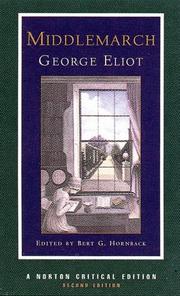
Often called the greatest English novel, it rewards the reading stamina built in earlier stages and represents the apex of Victorian realism — rich in moral philosophy, irony, and human sympathy.
Darkness, Doubt & the Late Victorian Novel
ExpertUnderstand how the Victorian novel turned inward and pessimistic as the century closed — confronting fate, sexuality, and social determinism — and how this bridges the era to literary modernism.
▸ Study plan for this stage
Pace: 8–10 weeks, ~40–50 pages/day. *Tess* (~450 pages): 2–3 weeks; *Portrait of a Lady* (~500 pages): 3–4 weeks; overlap and synthesis: 2–3 weeks.
- Determinism and fate: how Hardy and James present characters trapped by social class, gender, sexuality, and circumstance rather than free agents
- The inward turn: psychological depth and interiority as the novel becomes less about external plot and more about consciousness, doubt, and moral ambiguity
- Sexuality and transgression: how *Tess* and *Portrait* expose the destructive consequences of Victorian sexual codes and the female body as a site of social control
- Social determinism: the novel's darkening vision that individual will cannot overcome structural inequality, patriarchy, and inherited disadvantage
- Narrative unreliability and moral complexity: rejection of omniscient certainty in favor of fragmented perspectives, leaving readers to judge characters in shades of grey
- The New Woman and female agency: how both novels interrogate women's limited choices and the costs of rebellion or conformity
- Pessimism and modernist sensibility: the loss of Victorian confidence in progress, morality, and narrative resolution, pointing toward 20th-century fragmentation
- How does Hardy use the concept of 'President of the Immortals' and other fatalistic language to suggest that Tess is not responsible for her own downfall? What is the effect of this narrative stance?
- Compare the endings of *Tess* and *Portrait of a Lady*: how do both novels refuse conventional closure or moral clarity, and what does this suggest about the authors' view of female destiny?
- Analyze the role of sexuality in both novels: how do Tess's seduction and Isabel's marriage choices function as moments where Victorian sexual ideology traps or constrains the female protagonist?
- How does James's use of free indirect discourse and Isabel's consciousness differ from Hardy's omniscient narration? What does each technique reveal about the novel's relationship to doubt and certainty?
- What is the significance of social class and inheritance in *Tess* and *Portrait*? How do both novels suggest that birth and money determine fate more than character or virtue?
- How do *Tess* and *Portrait of a Lady* challenge or complicate Victorian ideals of womanhood, morality, and respectability?
- Track Tess's agency across the novel: create a timeline of moments where she acts freely vs. moments where she is acted upon. Write a 500-word reflection on whether Hardy presents her as a tragic victim or a complex agent.
- Comparative close reading: select a passage of psychological introspection from *Portrait of a Lady* (e.g., Isabel's meditation in Chapter 42) and a moment of narrative commentary from *Tess* (e.g., the 'President of the Immortals' passage). Analyze how each author uses language to convey doubt and moral ambiguity.
- Create a character map showing how Alec d'Urberville, Angel Clare, and Tess form a triangle of desire and judgment in *Tess*; then do the same for Osmond, Ralph, and Isabel in *Portrait*. Write notes on how each novel uses these triangles to explore power and sexuality.
- Write a 750-word essay: 'How do *Tess of the d'Urbervilles* and *Portrait of a Lady* reject Victorian moral certainty?' Use specific scenes to show how both novels leave readers uncertain about who is right or wrong.
- Perform a gender analysis: collect 5–6 moments in each novel where female characters are denied choice or voice because of their sex. Annotate these passages and write a synthesis paragraph on how both authors use such moments to critique patriarchy.
- Rewrite the ending of *Portrait of a Lady* in 500 words as if it were a conventional Victorian novel with a clear moral resolution. Then reflect: what would be lost? What does James's actual ambiguous ending achieve that a tidy resolution cannot?
Next up: This stage establishes the late Victorian novel's inward turn, moral pessimism, and formal experimentation with consciousness and doubt—the very foundations on which modernist literature will build its fragmentation, unreliable narration, and rejection of linear narrative and stable meaning.
Hardy's tragic masterpiece tests everything learned about the marriage plot and social class against a pitiless, fate-driven universe — a powerful counterpoint to Austen's comedic resolutions.
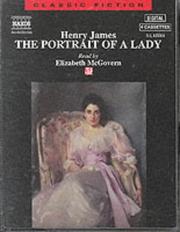
James inherits Austen's concern with a brilliant woman navigating social constraint and refines it into a psychological interiority that points directly toward the twentieth-century novel, closing the arc of the curriculum.
Discussion
Keep reading
Paths that share books, cover the same subject, or open a related topic.