Best Books on Forestry and Forest Science, in Order
This curriculum builds from a solid grounding in how forests function ecologically, through the science and practice of silviculture and management, and into the specialized domains of fire ecology and timber systems. Because the learner starts at an intermediate level, the path skips introductory natural-history primers and moves directly into rigorous, field-tested texts — each stage deepening the conceptual vocabulary needed for the next.
Forest Ecology Foundations
IntermediateUnderstand how forests work as ecological systems — tree physiology, stand dynamics, succession, nutrient cycling, and the relationships between species, soil, and climate.
▸ Study plan for this stage
Pace: 8–10 weeks, ~40–50 pages/day (alternating between both books to build conceptual depth)
- Forest as an integrated system: how trees, soil organisms, fungi, and climate interact as a unified whole rather than isolated components
- Tree physiology and resource allocation: photosynthesis, water transport, nutrient uptake, and how trees respond to light, water, and soil conditions
- Stand dynamics and forest structure: how tree age, size distribution, canopy layers, and spacing affect forest function and resilience
- Ecological succession: how forests change over time after disturbance, from pioneer species to climax communities, and the role of competition and facilitation
- Nutrient cycling and soil ecology: decomposition, mycorrhizal networks, nutrient availability, and the critical role of soil organisms in forest health
- Species interdependence and coevolution: mutualistic relationships (trees and fungi, pollinators), competition, and how species shape each other's evolution
- Forest response to environmental stress: drought, disease, pest outbreaks, and how forests adapt or fail under changing conditions
- Temporal and spatial scales in forest ecology: understanding processes that unfold over years versus centuries, and across individual trees versus entire landscapes
- How do mycorrhizal networks connect trees below ground, and what evidence does Wohlleben present for their role in nutrient and chemical signaling between trees?
- Using examples from Haskell's observations, explain how a single square meter of forest floor reveals the interconnectedness of decomposition, nutrient cycling, and species relationships.
- What is ecological succession, and how do pioneer species prepare the way for later-arriving species in a forest? Provide examples from either book.
- Describe the physiological mechanisms by which trees acquire and transport water and nutrients, and how these processes are affected by soil conditions and mycorrhizal associations.
- How do forests respond to disturbance (fire, logging, disease), and what does recovery look like in terms of stand structure and species composition?
- Explain the concept of a forest as a superorganism or integrated system. What evidence from these books supports viewing forests this way rather than as collections of individual trees?
- Conduct a detailed microhabitat study: select a 1–2 square meter patch of forest floor (or a potted forest ecosystem if field access is limited). Document all visible organisms, decomposing matter, soil layers, and plant growth over 2–3 weeks, sketching or photographing changes. Relate observations to nutrient cycling and succession concepts from Haskell.
- Create a nutrient cycle diagram: map the flow of a single nutrient (nitrogen or phosphorus) through a forest system, including trees, soil, fungi, decomposers, and atmosphere. Include mycorrhizal networks and explain how disrupting one component affects the whole cycle.
- Interview or research a local forester or forest ecologist about stand management practices (thinning, prescribed burns, rotation age). Analyze their decisions through the lens of succession, nutrient cycling, and species interdependence discussed in the books.
- Grow or observe a seedling in two contrasting soil conditions (one with mycorrhizal inoculant or rich forest soil, one with sterile or poor soil). Document growth rates, root development, and vigor over 4–6 weeks to empirically test the role of soil organisms in tree health.
- Dissect and examine tree rings from a cross-section (or study published dendrochronology data). Interpret ring width as a record of environmental stress and growth conditions, connecting to forest response to drought, competition, and climate discussed in the books.
- Create a forest succession timeline for a specific local ecosystem (e.g., post-fire recovery, abandoned field, or logged area). Use field observations, historical photos, or published studies to document species turnover, structural changes, and nutrient accumulation over decades.
Next up: This stage establishes forests as dynamic, interconnected systems governed by physiology, succession, and nutrient cycling—providing the ecological foundation needed to understand how human management, climate change, and conservation strategies affect forest health and function in the next stage.
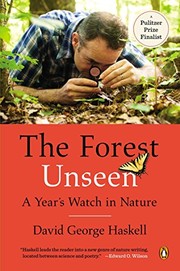
A scientifically rigorous yet accessible entry point that builds ecological intuition about forest processes at multiple scales — a perfect bridge from general knowledge into serious forest science.
A comprehensive, widely used university text covering stand structure, succession, disturbance regimes, and ecosystem function — establishes the core vocabulary for everything that follows.

Read after the ecology text to see how cutting-edge research on tree communication, competition, and cooperation reframes classical stand dynamics in thought-provoking ways.
Silviculture and Stand Management
IntermediateMaster the principles and practices of silviculture — how foresters manipulate stand structure, regeneration, and growth to meet ecological and economic objectives.
▸ Study plan for this stage
Pace: 8–10 weeks, ~40–50 pages/day (accounting for dense technical content, species descriptions, and reference tables)
- Silvics as the foundation: understanding the autecology (life history, ecological requirements, and physiological limits) of individual tree species as the basis for stand management decisions
- Species-specific regeneration requirements: light demands, moisture preferences, temperature tolerances, and soil chemistry that determine which species thrive under different conditions
- Stand structure manipulation: how thinning, shelterwood systems, clear-cutting, and other harvest methods create conditions favoring desired species and growth rates
- Growth and yield relationships: how site quality, density, age, and species composition interact to determine stand productivity and economic returns
- Ecological silviculture: balancing timber production with habitat, water quality, biodiversity, and other ecosystem services through species selection and treatment timing
- Regeneration establishment: comparing natural regeneration, artificial planting, and mixed approaches based on species ecology and management objectives
- Adaptation to site conditions: matching species to soil type, drainage, elevation, and climate to minimize losses and maximize growth
- For three regionally important tree species, what are their light requirements, soil preferences, and regeneration strategies, and how would you use this information to design a silvicultural prescription?
- How do thinning intensity and timing affect stand density, individual tree growth, and species composition, and what trade-offs exist between timber yield and other objectives?
- What is the difference between even-aged and uneven-aged stand structures, and under what ecological and economic conditions would you recommend each?
- How do site quality, species autecology, and management intensity interact to determine whether a stand will regenerate naturally or require artificial intervention?
- What role does understanding silvics play in designing stands that are resilient to pests, diseases, drought, or other disturbances?
- How would you select and establish a species mixture to meet multiple objectives (timber, wildlife habitat, watershed protection) on a given site?
- Create species profile summaries for 5–8 regionally relevant tree species from Silvics of North America, documenting light class, soil and moisture requirements, regeneration method, growth rate, and pest/disease susceptibility; use these as reference cards for prescription design
- Conduct a site assessment of a local forest stand: measure or estimate canopy cover, dominant species, age structure, and soil characteristics, then consult Silvics to diagnose why current species are present and predict regeneration outcomes under different treatments
- Design a silvicultural prescription for a hypothetical stand: specify current conditions, management objectives (timber, habitat, water quality), and a sequence of treatments (thinning, regeneration method, species composition) justified by species autecology from Silvics
- Compare regeneration strategies for two contrasting sites (e.g., a moist, fertile lowland vs. a dry, infertile upland): identify which species are viable on each, what regeneration methods are appropriate, and why natural regeneration might succeed on one but fail on the other
- Analyze a published silvicultural study or forest management plan: identify which species silvics principles were applied, whether recommendations align with species autecology, and what assumptions about site quality or disturbance regime underpin the prescription
- Build a simple growth and yield model or table for a single species: use Silvics data on site index, density effects, and age-related growth to project stand volume and composition over 50+ years under different thinning regimes
Next up: This stage establishes the ecological and physiological foundation for species-specific stand management; the next stage will likely apply these silvics principles to operational planning, economic analysis, and landscape-scale decision-making under constraints of markets, regulations, and competing land uses.

The definitive USDA reference on the ecology and silvics of individual tree species — an essential lookup companion that grounds abstract silvicultural principles in species-specific reality.
Fire Ecology and Disturbance
IntermediateUnderstand fire as a fundamental ecological force — fire behavior, fire history, post-fire succession, and how fire management and suppression policy shape modern forests.
▸ Study plan for this stage
Pace: 8–10 weeks, ~40–50 pages/day (with reflection days built in). "Fire in America" is ~650 pages; allocate 2–3 weeks for the core narrative, then 2–3 weeks for deeper dives into specific regions/periods, and 2–3 weeks for synthesis and note-taking on fire regimes.
- Fire as a natural and necessary ecological process: how fire shapes vegetation structure, nutrient cycling, and species composition across different forest types
- Fire behavior fundamentals: how fuel, weather, and topography interact to determine fire spread, intensity, and ecological effects
- Fire history and fire regimes: the concept of natural fire return intervals (fire-adapted ecosystems) and how to read fire scars and tree rings to reconstruct pre-suppression fire patterns
- The paradox of fire suppression: how 20th-century fire exclusion policies created fuel accumulation, catastrophic wildfires, and ecological degradation in fire-adapted ecosystems
- Regional fire ecology variation: how different forest types (ponderosa pine, chaparral, boreal, tropical) have evolved distinct fire regimes and responses
- Fire and human history: how Indigenous burning practices, settlement patterns, and industrial forestry shaped American fire regimes before and after European contact
- Post-fire succession and resilience: how forests recover after fire, including the role of seed banks, sprouting, and changing competitive dynamics
- Fire management and policy: the shift from total suppression toward prescribed burning and ecological restoration as management tools
- What is a fire regime, and how do fire-adapted ecosystems depend on specific frequencies and intensities of fire?
- How did 20th-century fire suppression policy create conditions for catastrophic wildfires, and what evidence does Pyne present for this unintended consequence?
- What role did Indigenous peoples play in shaping North American fire regimes before European settlement, and how did colonization disrupt these practices?
- How do fuel, weather, and topography interact to determine fire behavior, and why does understanding this matter for forest management?
- What does fire-scar dendrochronology reveal about pre-suppression fire frequencies in different forest types, and what do these patterns tell us about natural fire regimes?
- How do different forest types (e.g., ponderosa pine vs. chaparral vs. boreal) exhibit distinct fire ecologies, and what are the ecological consequences of fire exclusion in each?
- Create a detailed timeline of major fire suppression policies in the U.S. (1880s–1970s) as presented in Pyne, annotating how each policy shaped forest conditions and fire behavior.
- Reconstruct a fire regime for a specific forest type mentioned in the book (e.g., ponderosa pine of the Southwest, longleaf pine of the Southeast): document the natural fire return interval, typical fire intensity, and ecological role, then contrast with post-suppression conditions.
- Analyze a case study region from the book (e.g., California, the Great Plains, the Pacific Northwest) and map how fire history, settlement, and suppression policy intersected to create modern forest conditions.
- Sketch fire behavior under different fuel, weather, and topography scenarios; use Pyne's descriptions to explain why a fire spreads differently in a dense, suppressed forest vs. a historically burned landscape.
- Examine fire-scar data or tree-ring reconstructions (if available in the book or supplementary sources) for a specific location; interpret what the patterns reveal about pre-suppression fire regimes.
- Design a hypothetical prescribed burning plan for a fire-adapted forest type, justifying your choices (frequency, season, intensity) based on the natural fire regime and ecological goals outlined in Pyne's work.
Next up: This stage establishes fire as a foundational ecological process and reveals how suppression policy created the fuel-laden, fire-prone forests of today—setting up the next stage to explore modern fire management strategies, restoration ecology, and the integration of Indigenous knowledge into contemporary forestry practice.
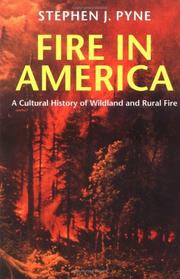
The landmark historical and ecological account of fire's role in shaping American landscapes — essential context before studying fire science and management in technical depth.
Timber Systems and Forest Economics
ExpertUnderstand timber harvesting systems, wood science, forest economics, and how commercial forestry integrates with ecological sustainability and long-term land stewardship.
▸ Study plan for this stage
Pace: 8–10 weeks, ~40–50 pages/day with 2–3 dedicated study days per week for exercises and problem sets
- Forest management planning frameworks: strategic, tactical, and operational planning horizons and their integration
- Timber harvesting systems (clearcut, shelterwood, selection, variable retention) and their ecological and economic trade-offs
- Wood science fundamentals: properties, grading, processing, and quality factors affecting timber value
- Forest economics: rotation age, net present value (NPV), internal rate of return (IRR), and cost-benefit analysis in timber production
- Sustainable forestry and certification standards: balancing timber yield with biodiversity, watershed protection, and carbon sequestration
- GIS and decision-support tools for forest inventory, growth modeling, and harvest scheduling
- Long-term land stewardship: intergenerational equity, ecosystem services valuation, and adaptive management under uncertainty
- What are the three planning horizons in forest management, and how do strategic, tactical, and operational plans differ in scope and decision-making?
- Compare and contrast at least four timber harvesting systems in terms of timber yield, ecological impact, implementation cost, and suitability for different forest types.
- How do wood properties (density, grain, moisture content, defects) influence timber grading, market value, and end-use applications?
- Calculate the optimal rotation age for a timber stand using net present value (NPV) and explain how discount rate assumptions affect the economic decision.
- How can forest managers integrate timber production goals with ecosystem services (wildlife habitat, water quality, carbon storage) through adaptive management?
- What role do GIS, forest inventory data, and growth models play in developing a defensible, long-term harvest schedule?
- Work through a case study from Bettinger's book: develop a 10-year tactical plan for a 500-hectare mixed-age forest, specifying harvest blocks, systems, and timing while justifying ecological constraints.
- Conduct an NPV analysis comparing two rotation ages (40 years vs. 60 years) for a hypothetical timber stand, varying discount rates (2%, 4%, 6%) and interpreting sensitivity.
- Create a simple GIS-based map of a forest compartment, classify stands by age and type, and propose a spatially explicit harvest schedule that minimizes fragmentation.
- Analyze a real forest management plan (available online from state/provincial forestry agencies) and identify how it addresses timber economics, biodiversity, and long-term stewardship.
- Design a monitoring protocol to track both timber growth and ecosystem health indicators (e.g., understory diversity, stream temperature) over a 5-year period post-harvest.
- Interview or survey a professional forester or timber manager about how they balance economic pressures with sustainability commitments in practice; document and reflect on tensions and trade-offs.
Next up: Mastery of timber systems, forest economics, and integrated planning positions you to explore advanced topics such as climate adaptation in forestry, carbon markets and forest-based climate mitigation, or specialized topics like agroforestry, restoration ecology, or landscape-level conservation planning.

Covers the full planning cycle — inventory, modeling, optimization, and regulation — giving the learner the analytical tools to integrate ecology, silviculture, and economics into coherent management plans.
Discussion
Keep reading
Paths that share books, cover the same subject, or open a related topic.