The Best Books on Tree Care and Arboriculture, in Order
This curriculum starts at an intermediate level, assuming the reader has some hands-on experience with trees but wants to build a rigorous, professional-grade understanding of arboriculture. The four stages move from foundational tree biology and planting science, through skilled pruning and structural management, into advanced diagnosis and pest/disease management, and finally into the long-game thinking of mature tree care and urban forestry — giving the reader a complete, decades-long stewardship framework.
Foundations: How Trees Work
IntermediateUnderstand tree biology, physiology, and the science behind how trees grow, respond to stress, and interact with their environment — the essential mental model for every decision that follows.
▸ Study plan for this stage
Pace: 4–5 weeks, ~25–30 pages/day, with 2–3 days per week for reflection and exercises
- Trees as interconnected organisms: the 'wood wide web' and fungal networks that link trees underground and enable nutrient/chemical communication
- Tree physiology and growth cycles: how trees photosynthesize, allocate resources, respond to seasons, and age over decades
- Stress responses and adaptation: how trees detect and react to drought, damage, competition, and environmental threats
- Parent-offspring relationships and memory in trees: how trees invest in offspring and pass on survival knowledge across generations
- Forest ecology as a superorganism: how individual trees function as part of a cohesive community with collective intelligence
- The role of fungi and microorganisms: mycorrhizal networks as the infrastructure enabling tree communication and resource sharing
- Tree defense mechanisms and chemical signaling: how trees warn neighbors of danger and mount physiological defenses
- What is the 'wood wide web' and how do trees use fungal networks to communicate and share resources with other trees?
- How do trees detect stress (drought, insect damage, disease) and what physiological responses do they mount?
- Explain the parent-offspring relationship in trees: how do mature trees support their seedlings, and what 'knowledge' do they pass on?
- What evidence does Wohlleben present that trees have memory and can learn from past experiences?
- How do mycorrhizal fungi benefit trees, and why are these relationships essential to forest health?
- Describe how trees communicate chemically with neighbors and what information they convey through these signals.
- Observe a forest floor: carefully excavate around a tree's base to examine root systems and fungal networks; photograph and sketch what you find, noting the density and interconnection of roots
- Track a single tree through a season: visit the same tree weekly for 4–5 weeks, recording changes in leaf color, bud development, sap flow, and animal activity; correlate observations with Wohlleben's descriptions of seasonal cycles
- Conduct a stress-response experiment: identify a tree showing visible stress (drought, damage, or disease) and monitor its recovery over 3–4 weeks; document how it responds and compare to Wohlleben's framework
- Create a 'forest map': identify 5–10 trees in a small forest area and map their spatial relationships, root zones, and estimated ages; hypothesize about which trees are connected via fungal networks based on proximity and species
- Interview a local forester or arborist: ask them to explain how they observe tree stress, communication, and community dynamics in their work; record insights and compare to Wohlleben's claims
- Dissect and examine tree anatomy: obtain a freshly cut log or branch, examine the rings, bark, cambium, and wood structure; relate your observations to Wohlleben's explanations of how trees grow and age
Next up: This stage establishes the biological and ecological foundation—understanding how trees work as individuals and communities—which is essential before learning practical arboriculture techniques, tree health assessment, and intervention strategies in the next stage.

A compelling, accessible entry point that reframes how readers think about tree communication, community, and long-term survival — building ecological intuition before diving into technical practice.
Planting & Establishment: Getting It Right from the Start
IntermediateMaster site assessment, species selection, proper planting technique, and the critical establishment period so trees develop strong architecture and root systems from day one.
▸ Study plan for this stage
Pace: 4–5 weeks, ~25–30 pages/day, with 2–3 days per week dedicated to site visits and hands-on assessment
- Site assessment fundamentals: soil composition, drainage, compaction, light exposure, and microclimate evaluation
- Species selection criteria: matching tree characteristics (size, growth rate, root system, hardiness) to site conditions and urban constraints
- Proper planting technique: pit preparation, root ball handling, backfill composition, planting depth, and staking/guying methods
- The establishment period (first 2–3 years): critical care requirements including watering schedules, mulching, pruning for structure, and monitoring for stress
- Urban tree constraints: dealing with limited soil volume, hardscape conflicts, utility lines, and compacted soils in city environments
- Root system development: understanding how planting practices influence root architecture and long-term tree stability
- What are the key soil and site factors you must assess before selecting a tree species, and how do you evaluate each one?
- How do you match a specific tree species to a particular urban site, considering both the tree's needs and the site's limitations?
- What are the critical steps in proper planting technique, and why does each step matter for long-term tree health?
- What does the establishment period entail, and what are the most common mistakes that compromise tree development during this phase?
- How do you manage watering, mulching, and structural pruning during the first 2–3 years to ensure strong root and crown development?
- What are the specific challenges of planting trees in urban environments, and how do you adapt your approach to overcome them?
- Conduct a detailed site assessment of 2–3 locations (residential yard, street tree pit, park space): document soil type, drainage, compaction, light, and microclimate; sketch the site and note constraints
- Create a species selection matrix for a given site: list 5–6 candidate species, evaluate each against site conditions (soil, water, light, space), and justify your top recommendation
- Observe and photograph proper and improper planting examples in your community; document what you see and explain why each example succeeds or fails
- Practice pit preparation and planting technique on at least one tree (or simulate with detailed notes and diagrams if live planting unavailable); document depth, backfill, mulching, and staking
- Develop a 3-year establishment care plan for a newly planted tree: specify watering frequency, mulch management, structural pruning schedule, and monitoring checkpoints
- Interview a local arborist or urban forester about their site assessment and species selection process; document their decision-making criteria and common pitfalls they observe
Next up: This stage equips you with the foundation to plant trees correctly and nurture them through their critical early years; the next stage will build on this by deepening your understanding of ongoing maintenance, pruning for mature form, and managing established trees through their full lifespan.
Covers species selection and urban site realities in an engaging, practical way — ideal for understanding which trees belong where before committing to planting decisions.
Pruning & Structural Management
IntermediateDevelop professional-level pruning judgment — understanding growth responses, cut placement, timing, and how to develop sound tree structure over a lifetime of care.
▸ Study plan for this stage
Pace: 8–10 weeks, ~40–50 pages/day, with 1–2 days per week for field observation and practice pruning
- Growth responses to pruning: apical dominance, compartmentalization, branch collar anatomy, and how trees heal wounds
- Cut placement principles: the three-cut method, proper angles, collar cuts, and why incorrect cuts lead to decay and structural failure
- Timing and phenology: dormant vs. active season pruning, species-specific response windows, and seasonal stress considerations
- Structural development: central leader training, branch angle optimization, crotch strength assessment, and preventing co-dominant stems and included bark
- Pruning objectives and decision-making: distinguishing between corrective, preventive, and maintenance pruning based on tree age and condition
- Crown architecture: crown raising, thinning, reduction, and restoration techniques with attention to balance and natural form
- Safety and professional standards: branch collar recognition, wound dressing debate, and adherence to ANSI A300 standards
- Species-specific pruning requirements: deciduous vs. coniferous responses, timing variations, and growth habit considerations across different tree types
- Explain the concept of compartmentalization and how it relates to proper cut placement. Why does a branch collar cut heal better than a flush cut?
- What is apical dominance and how does understanding it inform your decisions about which branches to remove or retain during structural pruning?
- Describe the three-cut method for removing a large branch. Why is each cut necessary, and what happens if you skip the undercut?
- How do dormant-season and active-season pruning differ in their effects on tree growth and stress response? When would you choose one over the other?
- What are the key differences in structural pruning approach between a young tree (training phase) and a mature tree (corrective phase)?
- How do you assess crotch strength and identify weak branch angles? What pruning decisions follow from this assessment?
- What is the role of thinning vs. reduction pruning, and when is each technique appropriate for different management goals?
- Read Brown's foundational chapters on wound healing and branch collar anatomy (weeks 1–2), then examine 5–10 trees on your property or in a park, identifying branch collars, growth rings, and evidence of past pruning on each specimen
- Study Harris's sections on structural development and central leader training; sketch the ideal branch architecture for 3 different tree species, then compare your sketches to actual young trees in the landscape
- Practice the three-cut method on 8–12 branches of varying sizes (start with 1–2 inch diameter, progress to 3–4 inch), documenting cut angle, collar placement, and healing response over 4–6 weeks
- Conduct a detailed case study: select one mature tree with structural defects (co-dominant stems, poor crotch angles, crossing branches), develop a multi-year pruning plan using Shigo's principles, and execute the first phase of cuts
- Create a species-specific pruning guide for 4–5 common trees in your region using information from all three books; include timing windows, growth responses, and structural objectives for each species
- Perform dormant-season pruning on one tree and active-season pruning on a similar tree of the same species; photograph and monitor growth responses over one full growing season to observe differences
Next up: This stage equips you with the judgment and technical skill to manage tree structure proactively; the next stage will likely focus on diagnosing and treating specific tree health problems, pest and disease management, and how structural decisions prevent future decline.
The classic English-language reference on pruning science and species-specific technique; its depth of species coverage makes it the essential companion before tackling structural and hazard pruning.
The definitive university-level arboriculture textbook, covering pruning, planting, soils, and pest management in an integrated framework — the single most important technical reference in this curriculum.

Shigo's photographic evidence of how trees respond to cuts makes abstract pruning principles viscerally concrete; reading it after Harris reinforces correct technique with visual proof.
Diagnosis, Decline & Long-Term Health
ExpertAccurately diagnose abiotic and biotic problems, understand decay and compartmentalization, manage pests and diseases, and develop multi-decade stewardship plans for mature trees.
▸ Study plan for this stage
Pace: 8–10 weeks, ~40–50 pages/day. Start with Shigo's foundational concepts (weeks 1–4), then transition to Sinclair's disease identification and management (weeks 5–8), with 2 weeks for integration and case study work.
- Compartmentalization of decay (CODIT): how trees wall off damaged tissue and the implications for pruning and wound management
- Abiotic stress factors (drought, compaction, pollution, temperature extremes) and their role in tree decline and disease susceptibility
- Biotic agents (fungi, bacteria, insects, viruses) and their life cycles, vectors, and entry points into trees
- Disease diagnosis methodology: visual symptoms, diagnostic tools, and confirmation techniques from Sinclair
- Integrated pest and disease management (IPM) strategies that minimize chemical intervention and promote tree resilience
- Decay column formation and wood anatomy: understanding how decay spreads vertically and laterally within the tree
- Long-term stewardship planning: selecting appropriate interventions, monitoring protocols, and realistic timelines for mature tree recovery
- Pruning standards and wound closure: applying Shigo's principles to minimize compartmentalization stress
- What is compartmentalization of decay (CODIT), and how does understanding it change the way you approach pruning and wound care?
- How do you distinguish between abiotic and biotic causes of tree decline, and what diagnostic steps would you take with a declining mature tree?
- Describe the life cycle of a major tree pathogen covered in Sinclair (e.g., Dutch elm disease, anthracnose, or canker fungi) and identify critical intervention windows.
- What is an integrated pest management (IPM) approach to tree disease, and how does it differ from conventional chemical-only strategies?
- Given a specific disease scenario from Sinclair, how would you develop a multi-year stewardship plan that accounts for tree compartmentalization and realistic recovery timelines?
- How do environmental stressors (soil compaction, drought, pollution) increase susceptibility to pests and diseases, and how would you address them in a holistic management plan?
- Work through Shigo's CODIT diagrams and decay column illustrations; sketch and annotate the compartmentalization process in cross-section for three different tree species.
- Conduct a field diagnosis on 3–5 declining or diseased trees: document symptoms, take photos, collect samples (bark, wood, leaves), and use Sinclair's identification keys to confirm the pathogen or stressor.
- Create a disease fact sheet for three pathogens from Sinclair (including symptoms, vectors, host range, and management options); use these as reference tools for future consultations.
- Develop a detailed 5–10 year stewardship plan for a mature tree with a specific disease or abiotic problem, including monitoring schedule, intervention timeline, and expected outcomes based on Shigo's compartmentalization principles.
- Practice pruning cuts on freshly cut logs or branches, applying Shigo's branch collar and wound closure concepts; photograph and compare healing over 4–6 weeks.
- Interview or shadow an arborist conducting disease diagnosis and management on a mature tree; document their diagnostic process, decision-making, and long-term plan against the frameworks in both books.
Next up: Mastery of diagnosis, decay dynamics, and disease management positions you to make evidence-based decisions about tree preservation, remediation, or removal—and to communicate complex, long-term health strategies to clients and stakeholders in the next stage.
Shigo's landmark work introducing CODIT (Compartmentalization of Decay in Trees) is essential reading for anyone diagnosing decay, wounds, or structural failure — it changed the entire field.
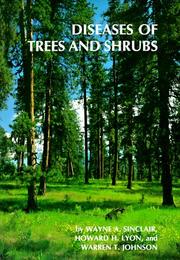
The authoritative photographic and descriptive guide to tree diseases; after understanding compartmentalization, this book gives the reader a comprehensive diagnostic reference for biotic problems.
Discussion
Keep reading
Paths that share books, cover the same subject, or open a related topic.