Food science reading splits cleanly into two literatures that rarely acknowledge each other. One is written for cooks and explains why a steak browns or a custard breaks. The other is written for the people who design shelf-stable products and run pasteurizers, and it is full of heat-transfer equations and water-activity charts. Both are legitimate food science; they just answer different questions.
The sensible order is to start with the cook's literature, because you can verify it immediately, and let curiosity push you toward the industrial texts. Going the other way — opening a food-engineering textbook cold — is how people conclude the subject is dry when it is anything but.
The foundation
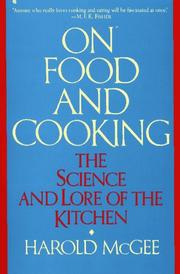
Everything starts with On food and cooking. Harold McGee's book is the field's common reference: proteins, starches, emulsions, the Maillard reaction, and the history of every major ingredient category, written for readers who cook. It is a reference rather than a cover-to-cover read, and virtually every book below assumes you have it.
Then The Food Lab, where J. Kenji López-Alt does the thing McGee mostly does not — runs controlled kitchen experiments and shows the results. Side-by-side tests on searing, brining, and boiling turn theory into method, and the reasoning style is as valuable as the recipes. Cooking for Geeks by Jeff Potter covers similar ground with more emphasis on equipment, temperature control, and hacking your gear; it overlaps meaningfully with the Food Lab, so if you only want one experimental book, take López-Alt for technique and Potter for hardware.
Experiment and technique
The kitchen as laboratory, edited by César Vega, Job Ubbink, and Erik van der Linden, is a collection of short pieces by food scientists on specific puzzles — why a soufflé rises, what happens in a slow-cooked egg — each written by someone who studies it professionally. It is the natural bridge from popular to academic writing. Modernist cuisine at home brings Nathan Myhrvold's laboratory approach into a domestic kitchen: sous vide, pressure cooking, gels and foams, presented with the photography that made the parent volumes famous.
The art of fermentation is Sandor Katz's encyclopedic treatment of microbial transformation — vegetables, dairy, grains, alcohol — and is the best entry point to the microbiology side of food, which the physics-oriented books largely skip.
Perception and flavor chemistry
Neurogastronomy by Gordon Shepherd argues that flavor is constructed in the brain rather than the mouth, and that retronasal olfaction does most of the work we credit to taste. It reframes everything the earlier books taught you about seasoning. Then Flavor Chemistry and Technology by Gary Reineccius takes the same territory to the molecular level: volatile compounds, extraction, encapsulation, and how flavors are actually formulated in industry.
The professional end
Finish with the two textbooks. Introduction to food engineering by R. Paul Singh and Dennis Heldman is the standard course text on unit operations — heat transfer, refrigeration, drying, thermal processing — and is where you learn why food is safe at scale. Food science by Norman Potter and Joseph Hotchkiss is the broader survey covering preservation, packaging, dairy, meat, and beverage processing. Both are worth owning if you are heading toward the industry; neither is a first read.
Follow the full path in order and you get the whole span from why an onion sweetens to how a cannery calculates a sterilization schedule. Adjacent tracks like soil science pick up where the ingredients come from.
Follow the full ordered path here: Best Books on Food Science, in Reading Order.