Soil is genuinely interdisciplinary in a way that makes it awkward to teach. A single handful is a physical structure of aggregates and pore spaces, a chemical system of exchange sites and pH-dependent availability, and a biological community of extraordinary density — and each of those is a separate literature. Read a soil chemistry text first and the ion-exchange mathematics arrives with nothing to attach to. Read a gardening book on soil biology first and you get enthusiasm without mechanism.
The order that works is to build the physical picture, add the standard comprehensive treatment, then take the chemistry and biology as specialisations, then finish with the applied books that show the whole system being managed.
The primer
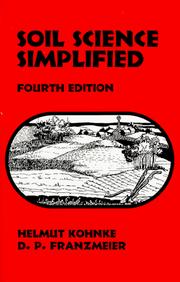
Start with Soil science simplified by Helmut Kohnke and D. P. Franzmeier. It is short and deliberately plain: soil formation, horizons, texture and structure, water movement, and the basic classification vocabulary. It gets you to the point where a soil profile in a road cut is legible, which is the necessary foundation for everything else. Read it in a weekend.
The standard textbook
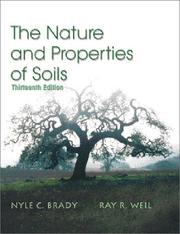
The nature and properties of soils by Nyle Brady and Ray Weil is the standard university text and the anchor of this path. It covers physics, chemistry, biology, fertility, and environmental soil issues in one comprehensive volume, with the depth to serve as a permanent reference. Do not read it cover to cover on a first pass. Read the chapters on soil water, colloids and cation exchange, organic matter, and nitrogen cycling, and return to the rest as questions arise.
Buy an older edition if cost matters. The fundamentals barely move between editions, and the price difference is substantial.
The specialist chemistry and biology
Soil chemistry by Hinrich Bohn, Rick Myer and George O'Connor is the rigorous treatment of the chemical side: sorption, redox, acidity, salinity, and the behaviour of nutrients and contaminants in the soil solution. It assumes general chemistry and repays it, and it is the book that turns "cation exchange capacity" from a term into a mechanism you can reason with.
Soil Microbiology, Ecology and Biochemistry, edited by Eldor Paul, is the parallel volume for the living fraction: microbial communities, enzyme activity, carbon and nitrogen transformations, and the mechanics of decomposition. Between these two you have the actual engines of nutrient cycling, which the general textbook necessarily summarises.
Fertility and management
Soil fertility and fertilizers by John Havlin and colleagues is the applied nutrient-management text — soil testing and its interpretation, nutrient behaviour in the field, application timing and placement, and the environmental consequences of getting it wrong. It is the bridge from understanding soil to making decisions about it, and it is unusually good on why a soil test result does not translate directly into a recommendation.
Bring it back to the ground
Teaming with microbes by Jeff Lowenfels and Wayne Lewis translates soil food web ideas for gardeners: what mycorrhizal associations do, why compost and mulch matter, and how disturbance affects the community. It is accessible and it is the popularising end of this path — read it after Paul rather than before, so you can tell where the confident recommendations run ahead of the evidence.
Close with Dirt to Soil by Gabe Brown, a North Dakota farmer's account of rebuilding degraded ground with cover crops, diverse rotations, minimal tillage, and integrated grazing. It is a single farm's experience rather than controlled research, and it is honest about the failures and the years of poor returns that preceded the results. Read as testimony rather than protocol, it is the best demonstration on this path of what the preceding six books are ultimately for.
If land management is your angle, forestry and forest science is the natural next path. Follow the full path to read these in order.
Follow the full ordered path here: Best Books on Soil Science, from Primer to Practice.