Read the forest: trees & botany for beginners
This curriculum moves from wonder and intuition to scientific understanding and ecological depth. It begins with narrative-driven books that make trees feel alive and relatable, then builds botanical vocabulary and field skills, before arriving at advanced ecology and the deeper science of how forests function as living systems.
Awakening to Trees
BeginnerDevelop a felt sense of trees as living, communicating organisms and build curiosity and basic vocabulary before any formal study.
▸ Study plan for this stage
Pace: 6–8 weeks total. Week 1–3: "Wisdom from the Hidden Life of Trees" (~20–25 pages/day, reading slowly and reflectively — Wohlleben's short chapters reward pausing). Week 4–7: "Braiding Sweetgrass" (~15–20 pages/day — Kimmerer's essays are lyrical and dense with meaning; linger on each section). Week 8
- Trees as social beings: Wohlleben's evidence that trees share nutrients, warn neighbours of pest attacks, and support sick companions via fungal networks ('the wood wide web').
- Forest as community, not collection: the idea, central to both books, that a forest is an interdependent superorganism rather than a sum of individual plants.
- Plant sentience and communication: trees perceive light, drought, injury, and neighbours, and respond with chemical signals, root behaviour, and growth changes (Wohlleben's core argument).
- Indigenous ways of knowing as science: Kimmerer weaves Potawatomi cosmology with plant ecology to show that reciprocity, gratitude, and attentiveness are legitimate — and complementary — modes of understanding nature.
- The grammar of animacy: Kimmerer's pivotal insight that calling a tree 'it' rather than 'who' shapes how we treat it; language encodes relationship.
- Reciprocity and the Honorable Harvest: Kimmerer's ethical framework — take only what you need, give back, ask permission — as a model for human–plant relationships.
- Slow time and tree perception: Wohlleben's reminder that trees live on timescales of decades to centuries, requiring humans to slow down their own perception to truly observe.
- Wonder as a valid starting point: both authors model how curiosity, awe, and personal relationship with individual trees are the foundation of genuine botanical understanding.
- According to Wohlleben, how do trees 'communicate' with one another, and what role do mycorrhizal fungal networks play in that process?
- What does Kimmerer mean by 'the grammar of animacy,' and how does she argue that the English language shapes our relationship with the plant world?
- How do both authors challenge the conventional Western view of trees as passive, silent, or unconscious organisms? Where do their arguments overlap, and where do they differ in approach?
- What is the 'Honorable Harvest' as described in Braiding Sweetgrass, and how might its principles apply to everyday interactions with nature — not just foraging?
- Wohlleben describes 'mother trees' and parent–offspring relationships in forests. What evidence does he offer, and how did this idea change your mental image of a woodland?
- After reading both books, how would you describe a tree to someone who has never thought about one as a living, sensing being? What vocabulary and ideas from these texts would you draw on?
- **Adopt a single tree for the whole stage.** Choose one tree you can visit easily. Before opening either book, write a one-page first impression. Return to it weekly — sketch it, note changes in light, leaves, smell, and sound. After finishing both books, write a second one-page reflection and compare the two.
- **Wohlleben chapter journals.** Because his chapters are short and punchy, write 2–3 sentences after each one answering: 'What surprised me?' and 'What do I want to look for outside?' Accumulate these into a field-observation checklist.
- **Language experiment (inspired by Kimmerer).** For one full week, replace 'it' with 'they' or a chosen name when referring to your adopted tree or any plant you encounter. Journal how — if at all — this shifts your attention or feeling toward the plant.
- **Fungal network mapping.** After reading Wohlleben's sections on mycorrhizal networks, draw a simple diagram of what a forest 'conversation' might look like underground. Label the participants, signals, and resources exchanged. No artistic skill required — the act of drawing forces conceptual clarity.
- **Reciprocity practice (Honorable Harvest).** Spend 20 minutes in any green space — park, garden, or woodland — and practise Kimmerer's protocol: observe before touching, ask (internally) before taking, leave more than you found. Afterwards, write a short paragraph on what felt awkward, what felt natural, and why.
- **Vocabulary building glossary.** As you read, maintain a running two-column glossary: left column = the scientific or botanical term (e.g., mycorrhiza, cambium, photosynthate), right column = Wohlleben's or Kimmerer's plain-language explanation. Aim for 20–30 entries by the end of the stage. This becomes your personal reference for all future stages.
Next up: By the end of this stage the reader has an emotional and intuitive relationship with trees and a working vocabulary of key ideas — the perfect foundation for moving into more structured botanical or ecological study, where the same organisms can now be examined with formal scientific rigour without losing the sense of wonder that makes that rigour meaningful.

The perfect entry point — a forester's accessible, story-driven account of how trees communicate, nurture their young, and form communities. It makes abstract biology feel personal and immediate.
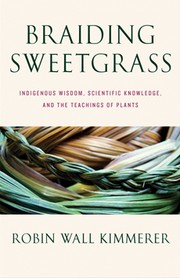
A botanist and Indigenous scholar weaves science with deep ecological relationship. Read second to layer in a sense of reciprocity and meaning that motivates everything that follows.
Botany Fundamentals
BeginnerUnderstand how plants actually work — cells, roots, leaves, photosynthesis, reproduction — and gain the scientific vocabulary needed for deeper reading.
▸ Study plan for this stage
Pace: 6–8 weeks total. Week 1–4: "Botany for Gardeners" by Brian Capon (~20–25 pages/day, reading chapter by chapter with short review pauses). Week 5–8: "The Life of a Leaf" by Steven Vogel (~15–20 pages/day, slower pace to absorb the physics-meets-biology depth). Reserve the final 2–3 days of each book
- Plant cell structure and function: cell walls, vacuoles, chloroplasts, and how they differ from animal cells (Capon, Ch. 1–2)
- Osmosis, turgor pressure, and how water moves through plant tissues — the foundation of wilting, growth, and rigidity (Capon)
- Root architecture and function: absorption, anchorage, root hairs, and the distinction between taproots and fibrous roots (Capon)
- Vascular tissue: xylem vs. phloem — how water, minerals, and sugars are transported throughout the plant (Capon)
- Photosynthesis and respiration: the leaf as a solar-powered sugar factory, including the role of stomata and gas exchange (Capon + Vogel)
- Leaf form and function: how shape, size, orientation, and surface texture are engineering solutions to light capture, water loss, and heat management (Vogel)
- The boundary layer: Vogel's core concept of the thin air layer clinging to a leaf surface and its outsized effect on gas exchange and temperature (Vogel)
- Plant reproduction: sexual (flowers, pollination, seed dispersal) and asexual (runners, bulbs, cuttings) strategies (Capon)
- After reading Capon, can you explain in plain language why a plant wilts — tracing the process from water deficit all the way to cell turgor loss?
- What is the functional difference between xylem and phloem, and why does a plant need both rather than a single transport system?
- How does a stoma 'decide' to open or close, and what competing pressures (water conservation vs. CO₂ intake) does it balance?
- Vogel argues that leaf shape is partly an aerodynamic and thermal problem — what does he mean, and what is the role of the boundary layer in this argument?
- How do the reproductive strategies described by Capon (sexual vs. asexual) differ in their genetic and ecological consequences?
- Having read both books, how does Vogel's physics-based perspective on leaves complement or deepen what Capon explains about photosynthesis?
- Dissect a fresh leaf (any common houseplant or garden plant): identify the midrib, veins, petiole, and — using a magnifying glass — attempt to spot stomata on the underside. Sketch and label your findings, using Capon's terminology.
- Turgor pressure demo: place a wilted celery stalk in water and a crisp one in salty water for 2 hours. Record observations and write a 1-paragraph explanation using the terms osmosis, turgor pressure, and solute concentration from Capon.
- Boundary layer experiment inspired by Vogel: hold a narrow leaf (e.g., grass blade) vs. a broad leaf (e.g., elephant ear) in a gentle breeze and note temperature differences with a simple thermometer. Journal how this connects to Vogel's boundary-layer concept.
- Vocabulary flashcard deck: after each chapter of Capon, write one flashcard per bolded or new term (aim for 50–70 cards total). Quiz yourself before starting Vogel, since his book assumes this vocabulary.
- Root observation: grow bean or radish seeds in a clear plastic bag pressed against a window with a damp paper towel. Over 10 days, sketch the root system every 2 days and annotate with Capon's root terminology (radicle, root hairs, lateral roots).
- Comparative leaf journal: collect 5–8 leaves of different shapes (needle, lobed, broad, compound). For each, write 3–4 sentences predicting — using Vogel's framework — how its shape might be an adaptation to its light, water, or wind environment.
Next up: Mastering plant cell mechanics, vascular transport, photosynthesis, and leaf physics through Capon and Vogel builds the scientific vocabulary and conceptual scaffolding needed to tackle more advanced topics — such as whole-ecosystem dynamics, tree-specific physiology, or plant evolution — with genuine comprehension rather than surface familiarity.

The clearest, most approachable introduction to plant science available. It explains how plants are built and how they function without overwhelming the beginner.
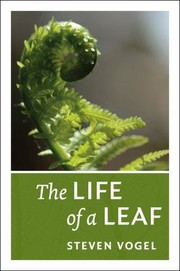
A focused, beautifully written deep-dive into the leaf — the engine of plant life. Reading this after Capon solidifies photosynthesis, gas exchange, and plant physics with real scientific rigor.
Field Skills & Identification
IntermediateBe able to step outside and identify the trees and plants around you, connecting classroom knowledge to the living landscape.
▸ Study plan for this stage
Pace: 8–10 weeks total. Weeks 1–4: "The Tree Identification Book" by Symonds — use the photo-reference format actively; aim for ~15–20 pages/day but spend extra time cross-referencing the leaf, bark, twig, and fruit plates against real specimens outdoors. Weeks 5–10: "A Natural History of North American T
- Morphological vocabulary: mastering the precise terms Symonds uses for leaf shape, margin, venation, bark texture, twig structure, buds, and fruit/seed types so every field observation can be named accurately
- The visual key method: how Symonds organizes identification by comparing photographic plates rather than dichotomous keys, and how to move efficiently from an unknown specimen to a confirmed ID
- Bark and twig as year-round clues: recognizing that leaves are seasonal and that Symonds's bark and twig plates train the eye to identify trees in winter or at a distance
- Ecological and geographic range: understanding from Peattie which species belong to which forest communities (eastern deciduous, boreal, western montane, riparian corridors) and why range matters for a field ID
- Species biography and natural history: Peattie's narrative accounts connect each tree's wood properties, wildlife relationships, historical uses, and cultural significance to its physical form, deepening memory of identification features
- Convergent vs. diagnostic features: distinguishing features that many species share (e.g., simple alternate leaves) from the diagnostic details (bud color, lenticel pattern, fruit type) that clinch an identification
- Phenological awareness: recognizing that a tree's identifiable features change through the seasons and planning observation accordingly, a theme reinforced by both Symonds's multi-feature plates and Peattie's seasonal natural history notes
- Building a mental search image: internalizing the 'gestalt' of a species — its overall form, branching habit, and preferred habitat — as described by Peattie and illustrated by Symonds
- Given an unknown leaf, twig, or bark sample, can you walk through Symonds's plate system step by step and arrive at a candidate species — and what additional features would you check to confirm it?
- How does Peattie's natural history narrative for a species (e.g., its soil preference, associated species, or historical logging history) help you predict where to find it and what it will look like in the field?
- What are the key morphological differences between at least three pairs of commonly confused species covered in both books (e.g., Red Maple vs. Silver Maple, White Oak vs. Bur Oak, Eastern White Pine vs. Eastern Red Cedar)?
- Why is bark alone often insufficient for a definitive identification, and which additional features does Symonds recommend examining in combination with bark?
- How does understanding a tree's ecological role and range, as described by Peattie, change the way you approach an identification in an unfamiliar landscape?
- What seasonal limitations affect field identification, and how do the features highlighted by Symonds help you identify trees when leaves are absent?
- Symonds plate drill: Each week, select 5 species from Symonds's photo plates, study all their featured plates (leaf, bark, twig, fruit), then go outside and locate each species, photographing the same features shown in the book — compare your photos directly to the plates and note discrepancies
- Blind ID challenge: Collect or photograph an unknown leaf, twig, or bark sample before opening either book; work through Symonds's visual key from scratch to reach an ID, then verify with Peattie's species account and record how many steps it took and where you got stuck
- Field notebook: Keep a running species journal — for every tree you positively identify, write one entry combining Symonds's diagnostic features with at least two natural history facts from Peattie (range, habitat, associated species, or use); aim for 20+ species by the end of the stage
- Seasonal feature inventory: Visit the same 3–5 trees once every two weeks throughout the stage; sketch or photograph bark, twigs, buds, leaves (if present), and fruit at each visit, building a personal phenology record that mirrors the multi-feature approach Symonds teaches
- Confusion-species comparison sheet: Choose 5 pairs of similar species that appear in both books; create a two-column reference card listing the exact diagnostic features Symonds illustrates and the habitat/range clues Peattie provides that separate each pair in the field
- Community transect walk: Using Peattie's forest community descriptions as a guide, walk a local trail and map which tree species you find in each microhabitat (ridgetop, slope, floodplain, disturbed edge); reflect on whether Peattie's ecological predictions match what you actually observe
Next up: Mastering visual identification and natural history context through Symonds and Peattie gives the reader a living, species-level foundation that makes the next stage — whether focused on forest ecology, dendrology, or plant communities — immediately concrete, because every abstract ecological concept can now be anchored to trees the reader has personally identified and observed.
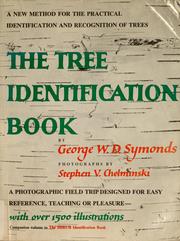
A uniquely visual field guide organized by tree features (bark, leaves, fruit) rather than species, teaching you how to think like a naturalist when identifying an unknown tree.
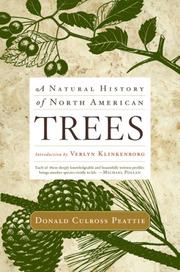
Rich narrative profiles of major North American trees — their ecology, history, and character. Pairs with field identification to give every species a story and context.
Forest Ecology & Systems Thinking
IntermediateUnderstand forests as complex, interconnected ecosystems — including soil webs, disturbance, succession, and the roles trees play in the broader biosphere.
▸ Study plan for this stage
Pace: 8–10 weeks total. Weeks 1–5: "The Forest Unseen" (~20–25 pages/day, reading one or two mandala visits per sitting to allow reflection). Weeks 6–10: "Finding the Mother Tree" (~25–30 pages/day, pausing at the end of each major research chapter to journal key findings). Reserve the final 3–4 days for
- The mandala as a lens for systems thinking — Haskell's single square meter of old-growth forest floor reveals how every organism is embedded in layered ecological relationships
- Soil as a living system — the fungal networks, bacteria, invertebrates, and decomposers that make forest soil a dynamic, interdependent community rather than mere substrate
- Ecological succession and disturbance — how forests recover, reorganize, and renew themselves after fire, windthrow, logging, or disease, as illustrated across both books
- Mycorrhizal networks and below-ground communication — Simard's foundational discovery that trees exchange carbon, water, and chemical signals through fungal highways, challenging the purely competitive view of forests
- The Mother Tree concept — large, old hub trees that disproportionately support seedling establishment, genetic diversity, and network resilience, and what their loss means for the whole system
- Carbon and nutrient cycling — how trees act as pumps and reservoirs in the broader biosphere, connecting atmosphere, soil, and water in continuous flows
- Biodiversity as functional redundancy — why species richness is not decorative but structural, providing the forest with resilience against perturbation
- Science as a personal and political act — Simard's narrative shows how paradigm-shifting ecological research meets institutional resistance, linking the doing of science to conservation outcomes
- After reading Haskell's year of mandala visits, how does the concept of 'place-based observation' change the way you understand ecological relationships compared to a survey-style approach?
- What specific evidence does Simard present for the existence of mycorrhizal networks, and how did her experimental methodology (radioactive carbon tracing, etc.) address scientific skepticism?
- How do the ideas of disturbance and succession appear differently in Haskell's old-growth Tennessee forest versus the logged and replanted forests Simard studied in British Columbia?
- What is the ecological role of a Mother Tree, and what does Simard's research predict will happen to forest regeneration if Mother Trees are systematically removed during clear-cutting?
- How do both authors use their personal, embodied relationship with a specific forest to argue for a broader, systems-level understanding of ecology — and where do their approaches differ?
- Drawing on both books, how would you explain the flow of carbon from atmosphere through tree, through fungal network, into soil, and back — and why does this cycle matter for climate?
- Mandala journaling: Choose a 1-meter-diameter patch of ground outdoors (a park, garden, or woodland edge). Visit it once a week for at least four weeks, mirroring Haskell's method. Sketch and note every organism, texture, and change you observe — then write one paragraph connecting what you see to a systems concept from the readings.
- Network mapping: After finishing 'Finding the Mother Tree,' draw a diagram of a mycorrhizal network from memory. Label the Mother Tree, satellite trees, seedlings, fungal species, and the resources being exchanged. Annotate with specific species or findings Simard mentions.
- Disturbance timeline: Research a real local forest disturbance (a fire, storm, or logging event). Using concepts from both books, write a 1–2 page succession narrative predicting how that forest will change over 5, 25, and 100 years.
- Concept comparison table: Create a two-column table contrasting how Haskell and Simard each treat the themes of competition vs. cooperation, individual vs. community, and visible vs. invisible forest processes. Use direct page references.
- Field soil investigation: Dig a small sample of forest or garden soil and examine it with a hand lens or magnifying glass. Identify as many components as possible (fungal threads, invertebrates, root hairs, organic matter layers). Write a short reflection connecting your observations to Haskell's descriptions of the mandala's soil life.
- Argument reconstruction: Simard faced significant resistance to her mycorrhizal network research. Write a one-page 'devil's advocate' critique of her early findings as a skeptical peer reviewer might have, then write her rebuttal using evidence from the book. This sharpens understanding of how the science was actually built.
Next up: By internalizing forests as living, networked systems shaped by deep time and constant exchange, the reader is now equipped to explore how human societies have perceived, used, and transformed those systems — making the transition to forest history, conservation ethics, or tree biology at a more advanced level a natural and motivated next step.
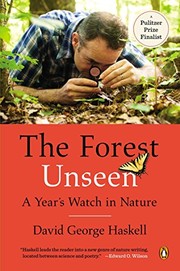
A biologist spends a year observing a single square meter of old-growth forest, revealing extraordinary ecological complexity. It trains the reader to see systems, not just individual organisms.
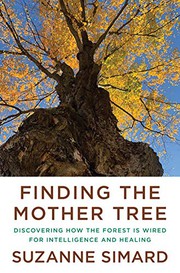
The scientist who discovered mycorrhizal wood-wide networks tells her story. This bridges personal narrative with rigorous forest ecology, deepening the science introduced by Wohlleben at the start.
Advanced Plant Science & Conservation
ExpertEngage with cutting-edge plant biology, the evolutionary story of plant life, and the urgent science of why forests must be protected.
▸ Study plan for this stage
Pace: 8–10 weeks total: ~3 weeks for "The Botany of Desire" (~30–35 pages/day) and ~5–6 weeks for "The Overstory" (~25–30 pages/day), with one buffer week for reflection, journaling, and exercise completion.
- Co-evolution and plant-human interdependence: Pollan's central thesis that plants 'use' human desires (sweetness, beauty, intoxication, control) as evolutionary strategies to ensure their own survival and spread
- The plant's-eye view of the world: reframing agency and desire so that plants are not passive objects but active participants in their own evolutionary success
- Domestication as a two-way street: how the apple, tulip, cannabis, and potato each shaped human civilization just as profoundly as humans shaped them
- Monoculture fragility and biodiversity loss: the Russet Burbank potato chapter in Pollan as a gateway to understanding why genetic uniformity in crops is an existential ecological risk
- Forest consciousness and deep time: Powers' fictional but scientifically grounded portrayal of trees communicating, cooperating, and operating on timescales invisible to human perception
- The wood-wide web — mycorrhizal networks: the underground fungal internet through which trees share nutrients, chemical signals, and warnings, as dramatized through the Hoel chestnut and other species in The Overstory
- Ecological grief, activism, and the ethics of conservation: The Overstory's human characters as case studies in how scientific knowledge translates (or fails to translate) into protective action
- Narrative and metaphor as conservation tools: how both Pollan and Powers use storytelling, not just data, to shift the reader's relationship with the plant world
- According to Pollan in The Botany of Desire, what are the four human desires that four specific plants have 'exploited,' and what does this reveal about the conventional assumption that humans alone drive domestication?
- How does the story of the Russet Burbank potato in The Botany of Desire connect to broader warnings about monoculture agriculture, and what parallels can you draw to real-world crop vulnerability today?
- In The Overstory, what does the multi-generational story of the Hoel chestnut tree communicate about deep time, legacy, and the relationship between human and plant lifespans?
- How does Powers use the science of mycorrhizal networks and inter-tree communication (drawn from researchers like Suzanne Simard) to challenge the idea that trees are isolated, competitive individuals?
- Both Pollan and Powers argue, in different registers, that human perception is too narrow and too fast to truly 'see' plants. How do each author attempt to correct this perceptual blind spot — and which approach do you find more persuasive?
- What does The Overstory suggest about the gap between knowing that forests are in crisis and acting to protect them? Which character's arc best illustrates this tension, and why?
- Desire mapping: After finishing The Botany of Desire, create a two-column chart for each of the four plants (apple, tulip, cannabis, potato). On one side list what humans gave the plant; on the other, what the plant gave humans. Then write a one-paragraph argument for which side of the exchange benefited more.
- Monoculture audit: Visit a local grocery store or farmers' market and document the variety (or lack thereof) of a single crop — apples, potatoes, or tulips. Research how many heritage varieties once existed versus how many are commercially available today. Write a one-page reflection connecting your findings to Pollan's warnings.
- Tree sit or slow observation: Choose one tree in your neighborhood or a local park. Visit it at least four times over two weeks at different times of day. Sketch it, note its neighbors, look for signs of fungal activity at its roots, and journal about what you notice changing. Let The Overstory's pacing inspire genuine slowness in your observation.
- Character-to-science bridge (The Overstory): Pick one of Powers' nine main characters and research the real plant science that underpins their storyline. Write a 300-word summary explaining how accurately Powers represents the science and where he takes creative license.
- Conservation position paper: Drawing on both books, write a 500-word personal position statement on one of the following: (a) the ethics of GMO crops in light of Pollan's co-evolution argument, or (b) the legal rights of trees/forests as argued implicitly by Powers' characters. Use at least three specific passages from the books as evidence.
- Reading journal synthesis: At the end of both books, write a comparative journal entry (1–2 pages) answering: 'How did each book change the way I perceive a plant or tree I encounter every day?' Be specific — name the plant, name the passage, name the shift.
Next up: By internalizing both the evolutionary intelligence of plants (Pollan) and the moral urgency of forest conservation (Powers), the reader is now equipped to move from narrative and conceptual understanding toward rigorous field-based or policy-driven study — whether that means formal ecology, environmental ethics, or hands-on conservation practice.
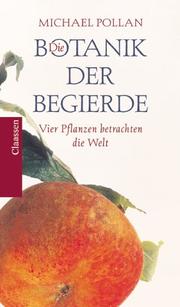
Reframes the human-plant relationship through the lens of co-evolution, asking what plants 'want' from us. It applies everything learned so far to a sophisticated evolutionary and cultural argument.

A Pulitzer Prize-winning novel whose characters are as much the trees as the humans — grounded in real botany and conservation science. It synthesizes the emotional, ecological, and political stakes of forests into a single unforgettable work.
Discussion
Keep reading
Paths that share books, cover the same subject, or open a related topic.