Sleep is one of the few scientific subjects where the most-read book and the underlying research have been publicly at odds. Popular sleep writing tends toward strong, memorable claims; the circadian and sleep-research literature is more hedged and more interested in individual variation. Reading in an order that puts biology after the overview lets you enjoy the popular books and then calibrate them.
The other thing to sort out early is the distinction between sleep and circadian timing. They are related but separate systems — how much you sleep, and when your body expects to. Most practical sleep problems, including a large share of what people call insomnia, are timing problems, and books that conflate the two give confusing advice.
The overview, read with care
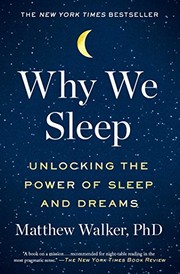
Start with Why We Sleep by Matthew Walker. It is the book that made sleep a mainstream health topic, and it is a genuinely engaging tour of sleep architecture, memory consolidation, and the consequences of deprivation. It should also be read knowing that specific claims in it have been challenged in detail by other researchers, including some statistical and citation errors documented publicly. Read it for the shape of the field and the motivation, and treat individual dramatic statistics as things to verify.
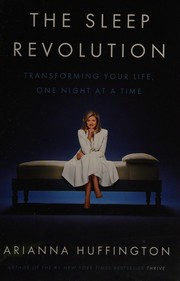
The sleep revolution by Arianna Huffington sits alongside it as the cultural argument rather than the science — how a working culture came to treat sleep deprivation as a badge, and what that costs. It is thin on mechanism and useful on context.
The circadian foundation
Circadian rhythms by Russell Foster and Leon Kreitzman is the concise scientific introduction to biological timing: the clock genes, light as the dominant entraining signal, and how timing organises physiology far beyond sleep. Life Time is Foster's later, longer trade book on the same subject with more practical application. They overlap substantially — read the short one if you want the science efficiently, the longer one if you want the applications spelled out. There is little reason to read both.
Dreaming and the sleeping mind
The mind in sleep, edited by Arthur Arkin, is the academic collection on the psychology and psychophysiology of sleep — dense, dated in places, and the right source if you want to see how dream research is actually conducted rather than summarised. Dreaming: A Very Short Introduction by J. Allan Hobson is the far more accessible counterpart, from the researcher behind the activation-synthesis model, and it is honest about how much remains unresolved.
The practical programme
Say good night to insomnia by Gregg D. Jacobs is the most directly useful book here for anyone actually sleeping badly. It sets out a cognitive behavioural programme for insomnia — sleep restriction, stimulus control, and cognitive work on catastrophic thinking about sleep — which is the first-line treatment recommended by major clinical guidelines, ahead of medication. It is a self-help implementation of a real evidence base, not a collection of tips. Chronic insomnia still warrants a clinician, and sleep apnea in particular needs diagnosis rather than a book.
Depth and individual variation
The promise of sleep by William Dement comes from the researcher who co-discovered REM sleep and founded the first sleep clinic. It is part history of the field, part accumulated clinical wisdom, and it is the best account of how sleep medicine came to exist at all.
Close with Internal time by Till Roenneberg, which is the most quietly radical book on the path. Roenneberg's work on chronotypes and social jetlag argues that the mismatch between biological timing and imposed schedules is a widespread and under-recognised health issue — and it explains why blanket advice about early rising fails so many people.
If ecology and biological cycles interest you more broadly, soil science is an unexpectedly good neighbour. Follow the full path to read these in order.
Follow the full ordered path here: The Science of Sleep: The Best Books to Read, in Order.