The History of Germany: Best Books to Read, in Order
This curriculum takes you from a broad, accessible overview of German history all the way through specialized, analytical works on its most pivotal eras. Each stage builds on the last — first establishing the full arc of German history, then diving into the Holy Roman Empire and Prussia, then the catastrophic 20th century, and finally reunification and modern Germany's reckoning with its past.
The Full Arc: Foundations
BeginnerGain a clear, chronological overview of German history from the medieval period to the present, establishing the key names, turning points, and vocabulary needed for deeper reading.
▸ Study plan for this stage
Pace: 8–10 weeks, ~40–50 pages/day. Start with "The German Genius" (4–5 weeks, covering medieval to early modern Germany), then move to "A History of Germany, 1815–1990" (4–5 weeks, focusing on the modern period). Allocate 1–2 days per major section for review and note-taking.
- The role of the Holy Roman Empire and fragmentation in shaping German identity and political development
- The Reformation and its profound impact on German culture, religion, and territorial organization
- The rise of Prussia as a dominant German power and its militaristic traditions under Frederick the Great
- The concept of German nationalism and its evolution from the Napoleonic Wars through unification
- Bismarck's realpolitik and the unification of Germany (1871) as a turning point in European history
- The structural weaknesses of the Weimar Republic and the conditions that enabled Nazi rise to power
- The Nazi period and World War II as catastrophic ruptures in German history
- The division and eventual reunification of Germany as a defining post-war narrative
- How did the fragmentation of the Holy Roman Empire shape Germany's political and cultural development differently from more centralized European nations?
- What were the major turning points in German history between the medieval period and 1815, and how did they set the stage for modern Germany?
- How did Bismarck's policies and the 1871 unification transform Germany's position in Europe, and what tensions did this create?
- What structural and political weaknesses made the Weimar Republic vulnerable to extremism, and how did these lead to Nazi ascendancy?
- How did the Nazi period and World War II reshape German identity, and what were the immediate consequences for the German nation?
- What were the key differences between East and West Germany during the Cold War, and how did these differences affect reunification?
- Create a detailed timeline from 1500–1990 marking major political, cultural, and military events; cross-reference events in both books to identify patterns and causation
- Write character sketches (1–2 pages each) of 5–6 pivotal figures (e.g., Frederick the Great, Bismarck, Hitler, Adenauer) using details from Watson and Carr; note how each shaped German history
- Map the territorial changes of German-speaking lands from the Holy Roman Empire through unification to division and reunification; annotate with explanations of why borders shifted
- Create a comparison chart of three German political systems (Holy Roman Empire, Prussian-led Reich, Weimar Republic, Nazi state, East/West Germany) noting their structures, strengths, and fatal flaws
- Write three short essays (500–750 words each): (1) Why did Prussia, not Austria, lead German unification? (2) Why did Weimar fail? (3) How did division and reunification reshape German identity?
- Compile a glossary of 30–40 key terms (e.g., Kulturkampf, Blitzkrieg, Ostpolitik, Wirtschaftswunder) with definitions and historical context drawn from both texts
Next up: This stage equips you with a solid chronological scaffold and vocabulary to move into deeper thematic or regional explorations—whether focusing on intellectual/cultural history, the Holocaust, Cold War politics, or specific periods like the Weimar era or Prussian ascendancy.
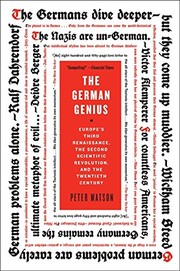
A sweeping, accessible survey of German culture, thought, and history that gives beginners a rich mental map of who the Germans are and why their history matters. Read this first to build broad context.
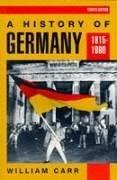
A concise, well-structured narrative covering the critical modern period from the Congress of Vienna through reunification. Its clarity makes it the ideal second read to anchor the political timeline.
The Old Reich: Holy Roman Empire & Prussia
BeginnerUnderstand the fragmented political world of the Holy Roman Empire and the rise of Prussia as the engine of German unification, building the pre-modern foundations of the German state.
▸ Study plan for this stage
Pace: 8–10 weeks, ~40–50 pages/day (Wilson's HRE: 4–5 weeks; Clark's Iron Kingdom: 4–5 weeks)
- The Holy Roman Empire as a decentralized confederation of hundreds of semi-autonomous territories, not a centralized state, and how this fragmentation shaped German political culture
- The Peace of Westphalia (1648) and the Treaty of Utrecht (1713) as watershed moments that formalized HRE weakness and enabled the rise of rival German powers
- Prussia's transformation from a marginal Brandenburg-Prussian territory into a great power through militarization, administrative reform, and strategic expansion under Frederick William I and Frederick the Great
- The Prussian military-bureaucratic state as a model of early modern state-building, emphasizing discipline, efficiency, and the subordination of nobility to royal authority
- The tension between the HRE's religious and constitutional framework (especially after the Reformation) and the practical dominance of individual princes pursuing dynastic interests
- The Silesian Wars and the Seven Years' War as pivotal moments when Prussia challenged Austrian Habsburg supremacy and redefined the balance of power in German-speaking Europe
- The concept of 'German dualism'—the competition between Austria and Prussia for leadership of the German lands—as the central dynamic driving German political development in the 18th century
- What was the Holy Roman Empire's actual structure and why is it misleading to call it a 'state' in the modern sense? How did the Peace of Westphalia reshape its political reality?
- How did Prussia transform itself from a relatively minor territory into a great power, and what role did military reform and bureaucratic innovation play in this rise?
- What were the key differences between the Prussian and Austrian models of state organization, and why did Prussia ultimately prove more effective at consolidating German power?
- How did the Silesian Wars and Seven Years' War demonstrate Prussia's capacity to challenge the established order, and what were the long-term consequences for German political development?
- What is 'German dualism' and how did the Austria-Prussia rivalry shape the trajectory toward German unification in the 19th century?
- How did the religious divisions within the HRE (Catholic vs. Protestant) interact with dynastic politics and territorial ambition to fragment German-speaking Europe?
- Create a detailed map of the HRE showing the major territories (Prussia, Saxony, Bavaria, Bohemia, etc.) and color-code by religious affiliation (Catholic, Protestant, mixed). Annotate key cities and note which territories were most powerful.
- Construct a timeline comparing the parallel development of the HRE and Prussia from 1600–1800, marking major treaties (Westphalia, Utrecht), wars (Thirty Years' War, Silesian Wars), and internal reforms. Note how each event shifted the balance of power.
- Write a comparative character sketch of Frederick William I ('the Soldier King') and Frederick the Great, identifying how each shaped Prussia's military and administrative institutions. What did they inherit vs. what did they innovate?
- Analyze the Peace of Westphalia (1648) as a primary source: identify which clauses weakened the HRE's central authority and which strengthened individual princes. Explain why this treaty was a turning point.
- Create an organizational chart showing the structure of the Prussian state under Frederick the Great—how the military, bureaucracy, and nobility were integrated. Compare this to a similar chart for the Austrian Habsburg state.
- Write a 500-word essay: 'Why did Prussia, not Austria or another German power, emerge as the engine of German unification?' Use specific evidence from both Wilson and Clark about institutional advantages, military capacity, and strategic positioning.
Next up: This stage establishes the deep historical roots of German fragmentation and the Prussian state model that will dominate the 19th century, preparing you to understand how Bismarck leveraged Prussia's institutional strength and military superiority to forcibly unify Germany and create the modern German nation-state.

The definitive modern account of the HRE, written accessibly enough for a prepared beginner. Read it here, after the overview, so the empire's complexity slots into a framework you already have.
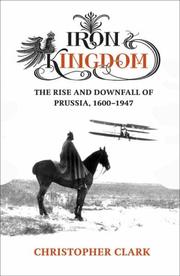
The essential history of Prussia — its militarism, bureaucracy, and ambition — told as a gripping narrative. Clark's prose makes a complex state feel alive, and Prussia is the key to understanding Bismarck and unification.
Unification, Empire & the Road to Catastrophe
IntermediateTrace how Bismarck forged a unified Germany, how the Wilhelmine Empire stumbled into World War I, and how the Weimar Republic's fragility set the stage for Hitler's rise.
▸ Study plan for this stage
Pace: 12–14 weeks, ~40–50 pages/day. Bismarck: A Life (4–5 weeks, ~50 pages/day); The Sleepwalkers (4–5 weeks, ~45 pages/day); Weimar Germany (3–4 weeks, ~40 pages/day).
- Bismarck's realpolitik and the use of 'blood and iron' to unify Germany through three wars (1864–1871), creating a militarized state structure that outlasted him
- The Prussian-dominated German Empire's institutional design: federalism in theory, Prussian hegemony in practice, with the Kaiser as supreme military authority
- How European great powers became 'sleepwalkers' into World War I through alliance systems, imperial rivalries, and the July Crisis of 1914, with Germany's blank check to Austria-Hungary as a turning point
- The catastrophic impact of World War I on German society: military defeat, economic collapse, and the psychological trauma that discredited liberal democracy
- Weimar's structural vulnerabilities: proportional representation, the Article 48 emergency clause, reparations burden, and the absence of a republican consensus among elites
- The hyperinflation crisis (1923) and the brief stabilization (1924–1929) as moments that shaped mass psychology and political extremism
- How anti-democratic forces—the military, industrialists, and the radical right—exploited Weimar's fragility to undermine parliamentary government
- The continuity of German authoritarianism: how Bismarckian state structures and militarism persisted through Weimar and enabled fascism's rise
- How did Bismarck use military force and diplomacy to unify Germany, and what institutional legacies did his state structure leave for the future?
- In Clark's account, how did the alliance system and the July Crisis of 1914 transform a regional conflict into a continental war, and what was Germany's role in this escalation?
- What were the primary structural weaknesses of the Weimar Constitution, and how did they make the republic vulnerable to authoritarian challenges?
- How did the experience of World War I—military defeat, economic crisis, and national humiliation—undermine faith in liberal democracy among German elites and masses?
- What role did hyperinflation and economic instability play in radicalizing German politics and discrediting the Weimar system?
- How did anti-democratic institutions and actors (the military, judiciary, industrialists) actively work to sabotage parliamentary government in Weimar?
- Create a timeline of Bismarck's three unification wars (1864–1871) with key diplomatic moves; annotate how each war shifted the balance of power in Europe and consolidated Prussian dominance.
- Map the alliance system described in The Sleepwalkers (Triple Alliance vs. Triple Entente); trace how each power's strategic anxieties and commitments locked them into escalation during the July Crisis.
- Write a 2–3 page analysis comparing Bismarck's authoritarian state structure with Weimar's democratic constitution: what did Weimar try to change, and what persisted?
- Construct a chart of Weimar's constitutional vulnerabilities (proportional representation, Article 48, federalism, reparations) and identify which ones were exploited by anti-democratic forces.
- Research and present on one key moment of economic crisis (hyperinflation 1923 or the Great Depression 1929–1933): how did it shift voting patterns and elite behavior?
- Read primary source excerpts (e.g., Bismarck's 'Ems Dispatch,' a Weimar-era political speech, or a contemporary account of the July Crisis) and analyze how language and framing shaped political perception.
Next up: This stage establishes the historical preconditions—Prussian militarism, imperial overreach, democratic fragility, and mass radicalization—that the next stage will show culminating in the Nazi seizure of power and the Third Reich's catastrophic trajectory.

A psychologically sharp biography of the man who unified Germany through 'blood and iron.' Reading it here connects the Prussian foundations of Stage 2 directly to the birth of the German nation-state.
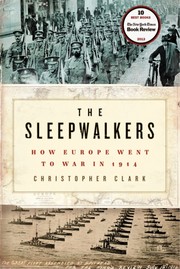
Clark's landmark account of how Europe stumbled into World War I reframes German responsibility within a broader European failure. It is essential before tackling the Nazi period, as it explains what the war destroyed.

A vivid cultural and political history of the Weimar Republic that captures both its extraordinary creativity and its fatal instabilities. This bridges WWI and the Nazi rise with nuance and depth.
The Third Reich & World War II
IntermediateDeeply understand how Hitler came to power, how the Nazi state functioned, how the Holocaust was carried out, and how Germany was destroyed and divided.
▸ Study plan for this stage
Pace: 8–10 weeks, ~40–50 pages/day. Evans' book (~600 pages) over 5–6 weeks, then Browning's book (~200 pages) over 2–3 weeks, with 1 week for review and synthesis.
- The structural and ideological foundations of the Nazi state: how totalitarianism was built through propaganda, terror, and institutional control (Evans)
- Hitler's path to power: the economic, political, and social conditions that enabled his rise, and the role of elites in facilitating it (Evans)
- The mechanics of the Holocaust: how ordinary bureaucrats and soldiers became perpetrators, and how systemic dehumanization enabled mass murder (Browning)
- The role of obedience, careerism, and peer pressure in driving participation in atrocities—not just ideology (Browning)
- The distinction between intentionalist vs. functionalist interpretations of Nazi policy and genocide (Evans)
- Germany's military collapse and the physical/political destruction of the nation, including division and occupation (Evans)
- How historical memory and interpretation of the Third Reich have evolved, and why competing narratives matter (Evans)
- What were the key institutional and ideological mechanisms through which the Nazi regime consolidated total control over German society?
- How did economic crisis, political instability, and resentment over the Treaty of Versailles create conditions for Hitler's rise to power?
- What does Browning's study of Reserve Police Battalion 101 reveal about the psychology and motivations of ordinary perpetrators of genocide?
- How did the Nazi regime systematically dehumanize Jews and other targeted groups, and what role did propaganda and bureaucracy play in enabling the Holocaust?
- What is the difference between intentionalist and functionalist explanations of Nazi genocide, and what evidence does Evans present for each?
- How did Germany's military defeat lead to the physical destruction of cities, the collapse of the state, and the division of the nation?
- Create a timeline of Hitler's rise to power (1923–1933) using Evans, marking key political crises, economic shifts, and turning points in elite support.
- Map the institutional structure of the Nazi state (party, SS, Gestapo, Wehrmacht, etc.) and explain how each enforced totalitarian control and competed for power.
- Read and annotate one primary source document from the Nazi era (e.g., a Nazi propaganda poster, a Nuremberg decree, or a speech) and analyze how it reflects Evans' themes of ideology and control.
- Write a 2–3 page analytical essay comparing two competing interpretations of Nazi genocide (intentionalist vs. functionalist) using evidence from both Evans and Browning.
- Conduct a close reading of Browning's chapters on the battalion's first mass shooting and subsequent killings; identify the psychological and social pressures that influenced individual choices to participate or refuse.
- Create a visual or written comparison of how different perpetrators in Browning's study justified or rationalized their participation in mass murder—what patterns emerge?
Next up: This stage provides the historical foundation and interpretive frameworks needed to understand how a modern industrial state engineered genocide, preparing you to examine the postwar reckoning, Cold War division, and long-term legacies of the Third Reich in subsequent stages.
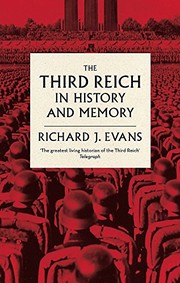
Evans distills decades of scholarship on the Nazi state into focused, analytical essays. Read after Kershaw to broaden your view beyond Hitler to the institutions, perpetrators, and victims of the regime.
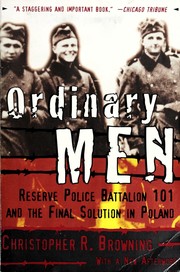
A chilling, essential micro-history of Reserve Police Battalion 101 that confronts the human mechanics of the Holocaust. It is the most important book on perpetrator behavior and belongs at the close of this stage.
Division, Reunification & Memory
ExpertUnderstand the division of Germany into East and West, the dynamics of the Cold War German state, the miracle of peaceful reunification in 1989–90, and how modern Germany has confronted its history.
▸ Study plan for this stage
Pace: 4–5 weeks, ~40–50 pages/day (approximately 250–300 pages total)
- The mechanics of East German surveillance: how the Stasi operated as a totalitarian control apparatus and the psychological impact of pervasive monitoring on citizens
- Personal testimony as historical evidence: how Ash's access to his own Stasi file reveals the granular details of state repression and the human cost of division
- The paradox of the 'invisible wall': how surveillance created psychological barriers between East and West Germans that persisted even after physical borders fell
- Memory and identity in post-Cold War Germany: how confronting the past through documentary evidence shapes individual and national consciousness
- The role of archives and transparency in transitional justice: how accessing secret files became a tool for understanding and healing after reunification
- Complicity and moral ambiguity: how ordinary citizens, informants, and bureaucrats participated in systems of oppression
- What was the Stasi and how did it function as an instrument of control in East Germany? What specific surveillance techniques did it employ?
- How does Timothy Garton Ash's personal discovery of his own Stasi file change the way we understand Cold War division? What does his file reveal about the targeting of Western visitors?
- What psychological and social effects did pervasive surveillance have on East German society and on the relationship between East and West Germans?
- How does Ash use his file as a lens to examine the nature of totalitarianism and the loss of privacy under communist rule?
- What role did ordinary informants (Inoffizielle Mitarbeiter) play in the Stasi system, and what does this reveal about complicity in authoritarian regimes?
- How does the act of accessing and reading one's own secret file contribute to post-Cold War memory work and national reconciliation in Germany?
- Create a detailed timeline of Ash's movements in East Germany (as documented in his file) and cross-reference them with major Cold War events; annotate what the Stasi was tracking and why
- Write a comparative character sketch of the Stasi officers and informants who monitored Ash, based on details in the file; analyze their motivations and roles
- Construct a visual map or diagram of the surveillance network described in the book—show how information flowed from street-level informants to Stasi headquarters
- Select three key passages from Ash's file and write analytical reflections on what each reveals about the nature of totalitarian control and the loss of privacy
- Research and summarize the post-1989 German law that allowed citizens to access their Stasi files (the Stasi Records Act); discuss how this transparency mechanism differs from other transitional justice approaches
- Write a fictional first-person account from the perspective of one of Ash's informants or handlers, imagining their internal justifications and doubts—use only details that Ash provides in the book
Next up: This intimate, documentary exploration of East German surveillance and state control provides the personal and psychological foundation for understanding how divided Germany functioned on the ground, preparing you to examine the broader political, economic, and social structures that sustained the two German states and eventually made their peaceful reunification possible.
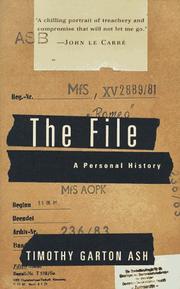
A personal, literary investigation into the author's own Stasi surveillance file that illuminates life in East Germany with intimacy and moral seriousness. A perfect entry into the GDR's world.
Discussion
Keep reading
Paths that share books, cover the same subject, or open a related topic.