The Founding Fathers get flattened into a portrait gallery, wise men agreeing on a nation. The reality was messier and more interesting, a set of brilliant, quarrelsome individuals who improvised a country while distrusting one another. Reading in order helps because you want the collective drama first, then the individual lives, then the founding document that their conflicts produced.
Start with the group, move to the biographies, and finish with the argument that became the Constitution.
The group and the moment
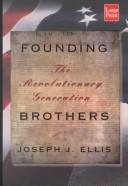
Begin with Founding Brothers, Joseph J. Ellis' Pulitzer-winning study of the relationships and rivalries among the founders. It teaches you to see them as a generation in tension. Follow it with Revolutionary summer, Ellis' tight account of the crucial months of 1776, and American Creation, his look at the achievements and failures of the founding, so you hold the whole moment before diving into single lives.
The lives
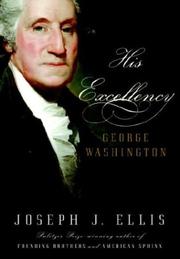
Then the biographies, in a rough arc of temperament. His Excellency, Ellis' portrait of George Washington, shows the man whose restraint held the experiment together. American Sphinx : The Character of Thomas Jefferson, again Ellis, wrestles honestly with the founding's most eloquent and most contradictory figure.
Alexander Hamilton, Ron Chernow's magisterial biography, is the one that reshaped the popular image of the founding, tracing the immigrant financier who built the machinery of the state. Benjamin Franklin, Walter Isaacson's life of the era's most versatile mind, and John Adams, David McCullough's beloved biography of the prickly New Englander, round out the personalities whose clashes defined the early republic.
The document and the debate
Close with the founding's intellectual core. Plain, honest men, Richard R. Beeman's history of the Constitutional Convention, puts you in the room where the compromises were struck. Then read The Federalist Papers, the essays by Hamilton, Madison, and Jay defending the proposed Constitution, still the sharpest argument for the design they built.
Read this way, the founders emerge as they were, gifted, flawed, and locked in argument, which is exactly why the system they left behind was built to contain disagreement. Follow the full path to take the books in order.
Follow the full reading path →
Ready to learn something deeply?
Build a reading path — free