The Best Books on Anarchism
This curriculum builds a rigorous, historically grounded understanding of anarchist political philosophy across four stages. Starting from the classical thinkers who defined the tradition, it moves through the major schools and debates, then into sophisticated theoretical and critical works — giving the reader both the canon and the tools to think critically about anarchism's past, present, and future.
The Classical Foundations
IntermediateUnderstand the origins of anarchism as a distinct political philosophy, its core arguments against the state and capitalism, and the foundational thinkers who shaped the tradition.
▸ Study plan for this stage
Pace: 8–10 weeks, ~40–50 pages/day (with 1–2 days per week for review and reflection)
- Anarchism as a coherent political philosophy distinct from chaos or nihilism, emphasizing voluntary association and mutual aid
- Proudhon's critique of property ownership and his concept of 'property is theft,' along with his vision of a federalist, mutualist alternative
- Bakunin's materialist critique of the state and his argument that centralized authority inevitably corrupts revolutionary movements
- The tension between individual liberty and collective organization—how classical anarchists propose to resolve it without a state
- Critique of capitalism as inseparable from state power, and the role of both in perpetuating hierarchy and exploitation
- Historical context: how these thinkers emerged from and responded to 19th-century industrialization, nationalism, and competing socialist ideologies
- Practical anarchist principles: federalism, decentralization, direct democracy, and voluntary association as alternatives to hierarchical governance
- The relationship between theory and action: how these foundational texts informed anarchist movements and revolutionary praxis
- What is anarchism according to Colin Ward, and how does he distinguish it from popular misconceptions of anarchism as chaos or terrorism?
- Explain Proudhon's argument that 'property is theft.' What does he mean by property, and what alternative system does he propose?
- How does Bakunin critique both the state and centralized revolutionary authority? What does he see as the danger of Marxist communism?
- What role do mutual aid, voluntary association, and federalism play in classical anarchist visions of social organization?
- How do Ward, Proudhon, and Bakunin each argue that capitalism and the state are interconnected, and why is this connection central to their critique?
- What are the key differences in emphasis or approach between Proudhon's mutualism, Bakunin's collectivism, and Ward's modern anarchism?
- Close reading: Select one key passage from each book (e.g., Proudhon on property, Bakunin on authority, Ward on mutual aid) and write a 500-word analysis explaining the argument and its implications.
- Comparative chart: Create a table comparing Ward, Proudhon, and Bakunin on five dimensions: view of the state, critique of capitalism, vision of post-revolutionary society, role of the individual, and relationship to other socialist traditions.
- Debate preparation: Prepare arguments for and against one of Proudhon's or Bakunin's central claims (e.g., 'All property is theft' or 'Centralized authority inevitably corrupts'). Practice articulating both positions clearly.
- Historical contextualization: Research one major 19th-century event or movement (e.g., the Paris Commune, the First International, industrial strikes) and write a 1000-word essay connecting it to the ideas in these texts.
- Thought experiment: Design a small-scale community (100–500 people) based on the principles outlined in these books. Write a 750-word proposal addressing governance, resource distribution, conflict resolution, and individual liberty.
- Annotated bibliography: As you read, maintain a running list of key concepts, quotes, and page numbers. After finishing all three books, synthesize these into a 5–10 page personal glossary of classical anarchist terminology and ideas.
Next up: This stage establishes the philosophical and historical foundations of anarchism, preparing you to examine how these classical ideas were tested, adapted, and contested in practice through anarchist movements, revolutions, and the emergence of competing anarchist schools (anarcho-communism, anarcho-syndicalism, etc.).
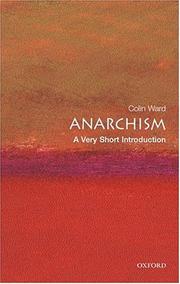
A concise, authoritative orientation to anarchist ideas by one of its most lucid modern practitioners — establishes key concepts and vocabulary before diving into primary sources.

The text that coined 'anarchism' as a self-description; Proudhon's critique of property and the state is the essential starting point for the entire tradition.
Bakunin's passionate attack on religious and political authority introduces collectivist anarchism and the foundational split with Marxism — short and electrifying.
The Great Schools: Communism, Individualism & Syndicalism
IntermediateMap the major internal currents of anarchism — communist, individualist, and syndicalist — and understand how each answers questions about organization, economics, and revolution.
▸ Study plan for this stage
Pace: 6–8 weeks, ~40–50 pages/day. Kropotkin's works (weeks 1–5, ~25 pages/day) followed by Goldman (weeks 6–8, ~35 pages/day). Allocate extra time for re-reading dense passages on economic theory and revolution.
- Anarchist communism: abolition of both state and capitalism, with distribution based on need rather than labor contribution or market exchange
- Mutual aid as a biological and social principle: cooperation and reciprocity as natural drivers of evolution and human flourishing, countering Social Darwinism
- Individualist anarchism: emphasis on personal autonomy, voluntary association, and resistance to all coercive institutions (state and collective alike)
- Syndicalism: the revolutionary role of trade unions and direct action (strikes, sabotage) as the primary vehicle for workers' liberation and post-revolutionary organization
- The critique of representative government and centralized authority: why anarchists reject both capitalist democracy and Marxist vanguardism
- Decentralized, federated organization: how anarchist communities coordinate without hierarchy or top-down control
- The relationship between theory and practice: how anarchist ideas translate into concrete strategies for revolution and daily life
- What is Kropotkin's vision of anarchist communism, and how does he argue it is both more efficient and more humane than capitalism or state socialism?
- How does Kropotkin use the concept of mutual aid to challenge Social Darwinist interpretations of evolution, and what role does cooperation play in his anarchist theory?
- What are the key differences between anarchist communism (Kropotkin) and individualist anarchism (Goldman), particularly regarding collective ownership and personal freedom?
- According to Goldman and the syndicalist tradition, what is the role of trade unions and direct action in achieving anarchist revolution and organizing post-revolutionary society?
- How do Kropotkin and Goldman each critique representative democracy and centralized authority, and what alternatives do they propose?
- What practical strategies for revolution and social change emerge from these texts, and how do they differ from Marxist or reformist approaches?
- Create a comparative chart mapping how Kropotkin, Goldman, and syndicalist thought answer three core questions: (1) How should an anarchist economy function? (2) How should communities be organized? (3) What is the path to revolution?
- Write a 2–3 page essay analyzing one specific proposal from *The Conquest of Bread* (e.g., housing, food production, or education) and evaluate its feasibility using contemporary examples.
- Identify three examples of mutual aid in your own community or historical examples you know well, then write a brief analysis of how Kropotkin's framework illuminates or complicates your understanding of them.
- Select one essay from *Anarchism and Other Essays* (e.g., 'Anarchism,' 'The Individual, Society and the State,' or 'Patriotism') and outline Goldman's central argument, then write a response identifying one strength and one limitation of her position.
- Debate exercise: Prepare arguments for both anarchist communism (Kropotkin) and individualist anarchism (Goldman) on a specific issue (e.g., collective property, mandatory participation in community work, or cultural expression), then reflect on which tensions remain unresolved.
- Create a detailed sketch or written description of how a specific institution (school, hospital, factory, or neighborhood) might function under the anarchist models described in these texts, noting practical challenges and solutions.
Next up: This stage establishes the ideological and strategic diversity within anarchism; the next stage will likely examine how these theories were tested and adapted in concrete historical movements and revolutions, revealing both the power and the limits of anarchist practice.
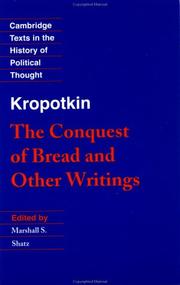
The definitive statement of anarcho-communism; Kropotkin's vision of a post-revolutionary society built on mutual aid is the most influential positive program in the canon.

Read immediately after Conquest of Bread, this provides the scientific and evolutionary grounding for Kropotkin's ethics — cooperation as a natural law, not mere idealism.

Goldman bridges theory and lived experience, addressing patriarchy, free love, and direct action — essential for understanding how anarchism engaged with feminism and American radicalism.
History, Practice & the Spanish Revolution
IntermediateGround anarchist theory in its most significant historical episodes, especially the Spanish Civil War, and understand why anarchism succeeded and failed as a mass movement.
▸ Study plan for this stage
Pace: 4–5 weeks, ~40–50 pages/day (approximately 250–300 pages total). Allocate extra time for the densest chapters on the CNT-FAI structure and the Civil War period.
- The origins and development of Spanish anarchism from the 1870s through the early 20th century, including the influence of Bakunin and the contrast with Marxist socialism
- The CNT (Confederación Nacional del Trabajo) and FAI (Federación Anarquista Ibérica) as organizational models: their structure, tensions between pragmatism and revolutionary purity, and internal factionalism
- The role of anarchist movements in Spanish labor struggles, peasant mobilization, and urban insurrections before 1936
- The Spanish Civil War (1936–1939) as anarchism's largest historical test: why anarchists initially succeeded in creating revolutionary collectives and communes, and the strategic and political failures that led to their defeat
- The tension between anarchist theory (decentralization, direct action, anti-hierarchy) and the practical demands of mass organization and military conflict
- Why anarchism failed as a mass movement in Spain despite significant popular support: collaboration with Republicans, military disadvantages, internal divisions, and the rise of Stalinist influence
- The distinction between anarcho-syndicalism (labor-focused) and anarcho-communism, and how both operated within Spanish anarchism
- Lessons about revolutionary potential, state power, and the limits of horizontal organization in conditions of total war
- How did Spanish anarchism develop differently from anarchism in other European countries, and what role did Bakunin's ideas play in shaping it?
- What were the structural differences between the CNT and FAI, and why did tensions between them matter for the movement's effectiveness?
- Describe the major anarchist uprisings and labor actions in Spain before 1936. What patterns do you see in their successes and failures?
- What were the initial achievements of Spanish anarchists during the Civil War, particularly in terms of collectivization and revolutionary organization?
- Why did Spanish anarchists ultimately fail to sustain their revolutionary gains during the Civil War, and what role did collaboration with Republican forces play in this failure?
- What does Bookchin argue about the relationship between anarchist theory and the practical realities of mass movements and military conflict?
- Create a timeline of major Spanish anarchist events from 1870–1939, marking key uprisings, organizational developments, and turning points in the Civil War. Annotate each with 2–3 sentences explaining its significance.
- Compare the CNT and FAI side-by-side in a chart: their founding dates, stated goals, membership, decision-making structures, and relationship to each other. Identify where their interests aligned and conflicted.
- Write a 500-word analysis of one specific anarchist uprising or action described in Bookchin (e.g., the Tragic Week, the Bolshevik-influenced period, or a Civil War collectivity). Explain what anarchists were trying to achieve and why it succeeded or failed.
- Map out the major factions within Spanish anarchism (e.g., syndicalists vs. communists, pragmatists vs. purists) and trace how their disagreements shaped the movement's strategy during the Civil War.
- Research and summarize one specific anarchist collective or commune established during the Spanish Civil War (using Bookchin as your primary source). Describe its organization, achievements, and what happened to it.
- Debate exercise: Argue both sides of whether Spanish anarchists should have collaborated with Republican forces during the Civil War, using specific examples from Bookchin to support each position.
Next up: This stage grounds anarchist theory in its most dramatic historical test, revealing both the movement's revolutionary potential and its structural vulnerabilities—preparing you to examine anarchism's theoretical responses to these failures and its evolution in later periods.
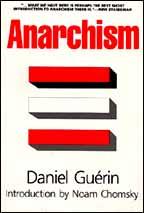
The best single-volume historical and theoretical survey of anarchism in practice; Guérin bridges the classical era and the 20th century with clarity and critical sympathy.
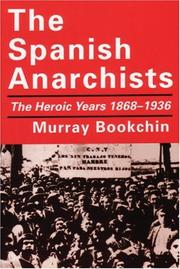
A rigorous, deeply researched history of the CNT and the anarchist movement that came closest to transforming a modern society — essential for understanding anarchism's real-world stakes.
Modern Theory & Critical Perspectives
ExpertEngage with sophisticated contemporary reformulations of anarchism, its relationship to post-structuralism and ecology, and serious critiques that sharpen rather than dismiss the tradition.
▸ Study plan for this stage
Pace: 8–10 weeks, ~40–50 pages/day (accounting for dense theoretical passages requiring re-reading). Allocate roughly 3 weeks to Bookchin, 2–3 weeks to Le Guin, and 3 weeks to Marshall's comprehensive history.
- Social ecology and the relationship between ecological crisis and hierarchical social structures (Bookchin's core thesis)
- Post-scarcity as both material condition and anarchist goal—how technological abundance reshapes political possibility
- The distinction between domination of nature and rational management of resources in anarchist thought
- Anarchism as lived practice and social organization rather than abstract ideology—exemplified through Le Guin's Anarres
- The tension between individual freedom and collective decision-making in anarchist communities
- Historical trajectories of anarchist movements: successes, failures, and internal contradictions across centuries
- Anarchism's relationship to post-structuralism, feminism, and contemporary critical theory
- Critique of both state socialism and capitalism as hierarchical systems, and anarchism's alternative vision
- How does Bookchin argue that ecological crisis is rooted in social hierarchy, and what is his vision for resolving both simultaneously?
- What does Le Guin's depiction of Anarres reveal about the practical challenges and possibilities of anarchist social organization?
- How do the three texts differ in their understanding of what anarchism is, and where do they converge?
- What are the major historical anarchist movements and tendencies that Marshall traces, and why did certain experiments succeed or fail?
- How does the concept of post-scarcity function differently in Bookchin's theory versus Le Guin's fictional exploration?
- What critiques of anarchism emerge within these texts themselves, and how do the authors address them?
- Create a detailed outline of Bookchin's argument in Post-scarcity Anarchism, mapping how he connects hierarchy, technology, and ecology—then write a 2-page response identifying one assumption you find questionable
- Read The Dispossessed alongside Bookchin: annotate scenes that illustrate or challenge Bookchin's post-scarcity vision, noting specific page references
- Construct a comparative timeline of anarchist movements using Marshall's Demanding the Impossible, plotting major figures, events, and ideological shifts across geography and decades
- Write a 3–4 page essay comparing how Bookchin and Le Guin each envision the relationship between individual autonomy and collective decision-making
- Select one historical anarchist experiment from Marshall (e.g., Spanish Civil War collectives, Paris Commune, Rojava) and research its contemporary legacy—present findings in a 5-minute talk
- Debate exercise: take opposing positions on whether Le Guin's Anarres is a realistic model or utopian fantasy, using evidence from all three texts to support your argument
Next up: This stage grounds anarchism in both contemporary theory (ecology, post-scarcity) and historical reality (Marshall's comprehensive survey), preparing readers to engage with specialized applications—whether anarchist approaches to specific domains (education, economics, technology) or to evaluate anarchism's viability in current political contexts.

Bookchin's landmark rethinking of anarchism for an ecological age introduces libertarian municipalism and social ecology — the most influential modern development of the tradition.

This canonical science-fiction novel rigorously imagines an anarchist society's contradictions and possibilities — a unique and indispensable thought experiment that no theoretical text can replicate.
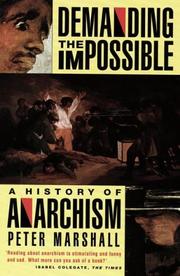
The most comprehensive single-volume history of anarchist thought, synthesizing everything covered so far and extending it to postmodern and green anarchism — the ideal capstone text.
Discussion
Keep reading
Paths that share books, cover the same subject, or open a related topic.