Understanding Hannah Arendt: The Best Books to Read, in Order
This curriculum builds a deep understanding of Hannah Arendt by moving from accessible biographical and contextual entry points, through her three major intellectual pillars — totalitarianism, the banality of evil, and political theory — and finally into her most demanding philosophical work on thinking and judgment. Because the learner starts at an intermediate level, we skip purely introductory overviews and instead open with a focused biography before diving into Arendt's own texts in the order that mirrors her own intellectual development.
Context & Entry Point
IntermediateUnderstand who Arendt was, the historical world she was responding to, and the key concepts that will recur throughout her work — giving you the biographical and intellectual scaffolding to read her primary texts productively.
▸ Study plan for this stage
Pace: 4–5 weeks, ~40–50 pages/day (approximately 250–300 pages total)
- Arendt's biography as a lens for her thought: Jewish identity, exile, and witness to totalitarianism
- The historical context of the 20th century: rise of totalitarianism, World War II, and the Holocaust as catalysts for her philosophy
- The vita activa framework: labor, work, and action as distinct human activities
- The public realm (political action) versus the private realm and their relationship to human freedom
- Natality and plurality: the human capacity for new beginnings and the irreducible multiplicity of human perspectives
- Thinking, willing, and judging as the vita contemplativa and their role in political life
- The banality of evil and the dangers of thoughtlessness in modern bureaucratic systems
- What major historical events and personal experiences shaped Arendt's intellectual concerns, and how do they connect to her philosophical projects?
- How does Arendt distinguish between labor, work, and action, and why does this distinction matter for understanding human freedom?
- What does Arendt mean by the 'public realm' and 'private realm,' and how does she argue they relate to political life and human dignity?
- What is natality, and why does Arendt consider it central to understanding politics and human freedom?
- How does Arendt's concept of the 'banality of evil' challenge conventional understandings of evil and moral responsibility?
- What role does thinking and judgment play in Arendt's vision of political life, and why is thoughtlessness dangerous?
- Create a timeline of Arendt's life alongside major 20th-century historical events (WWI, rise of fascism, WWII, Cold War) and note which events she directly witnessed or fled from
- Write a 1–2 page reflection: How might Arendt's experience of statelessness and exile inform her ideas about the importance of the political realm and human plurality?
- Diagram the vita activa: create a visual representation of labor, work, and action with concrete modern examples for each (e.g., cooking a meal vs. building a house vs. organizing a protest)
- Select one concept from the book (e.g., natality, the public realm, or banality of evil) and write a short essay (500–750 words) applying it to a contemporary political or social issue
- Conduct a close reading exercise: choose 2–3 key passages from Young-Bruehl's book that introduce Arendt's ideas and annotate them, identifying the historical context, the concept being introduced, and why it matters
- Discuss with a study partner or write a dialogue: What would Arendt say about a contemporary political event (e.g., a protest movement, a bureaucratic failure, or a crisis of representation)? Use concepts from the book to construct her likely response
Next up: This stage equips you with Arendt's biography, historical context, and foundational concepts (vita activa, natality, the public realm, banality of evil), providing the intellectual scaffolding necessary to engage directly with her primary texts—where these ideas are developed in full philosophical depth and argumentative rigor.

Written by Arendt's foremost biographer, this slim volume distills why each of Arendt's major works still speaks to contemporary politics, building the conceptual vocabulary (natality, plurality, public realm) you will need immediately.
Totalitarianism — Her Foundational Diagnosis
IntermediateGrasp Arendt's landmark analysis of how totalitarian regimes arise, how they destroy the political and human, and why they represent something genuinely new in history — the intellectual core from which all her later work flows.
▸ Study plan for this stage
Pace: 8–10 weeks, ~40–50 pages/day. *Origins of Totalitarianism* (~600 pages) takes 4–5 weeks; *Totalitarianism* by Gleason (~200 pages) takes 2–3 weeks; final 1–2 weeks for review, synthesis, and exercises.
- The three pillars of totalitarian origins: antisemitism, imperialism, and the breakdown of the nation-state system
- Totalitarianism as a genuinely new form of government distinct from tyranny and dictatorship—its reliance on ideology, terror, and the atomization of society
- The destruction of the human person: how totalitarian regimes eliminate the distinction between public and private life, and reduce humans to 'superfluous' populations
- The role of the masses and mass movements in enabling totalitarianism—how modern loneliness and uprootedness create susceptibility to totalitarian appeal
- Arendt's distinction between totalitarian terror and traditional political violence: terror as a system of control that targets the innocent and operates according to ideological logic
- How totalitarian regimes weaponize ideology (racism, Marxism) to create a total explanation of history and justify unlimited domination
- Gleason's contextualization of Arendt's thesis: how her framework applies across different regimes and historical moments, and its limitations
- The implications for political action and human freedom: why understanding totalitarianism is essential for defending the political realm and human dignity
- What does Arendt mean by totalitarianism as a 'new' form of government, and how does it differ fundamentally from traditional tyranny or dictatorship?
- Explain Arendt's three-part genealogy of totalitarianism: what role do antisemitism, imperialism, and the crisis of the nation-state play in its emergence?
- How does totalitarianism destroy the distinction between the public and private realms, and what does Arendt mean by the reduction of humans to 'superfluous' populations?
- What is the relationship between mass society, loneliness, and the appeal of totalitarian movements? Why are atomized, uprooted populations vulnerable to totalitarian ideology?
- How does totalitarian terror function as a system of governance? Why does Arendt argue that it targets the innocent and operates according to ideological logic rather than rational political calculation?
- What is the role of ideology in totalitarian regimes, and how does it differ from propaganda or traditional political justification?
- How does Gleason's analysis extend, complicate, or critique Arendt's framework? What are the strengths and limitations of her totalitarian model?
- Create a detailed timeline mapping Arendt's three genealogical strands (antisemitism, imperialism, nation-state crisis) from the 19th century through the 1930s–40s, noting key events and how they intersect.
- Write a comparative chart contrasting traditional tyranny/dictatorship with totalitarianism across dimensions: ideology, terror, mass participation, destruction of privacy, and relationship to human nature.
- Close-read a passage from *Origins* (e.g., on the 'superfluous man' or the mechanics of terror) and write a 2–3 page analytical essay explaining how Arendt's argument unfolds and what it reveals about totalitarian logic.
- Identify and analyze one historical case study (Nazi Germany or Stalinist USSR) using Arendt's framework: trace how the three genealogical elements converge, how ideology functions, and how terror operates in that specific regime.
- Engage with Gleason's critique: write a 2–page response identifying one significant limitation or extension of Arendt's model that Gleason highlights, and evaluate whether the critique is convincing.
- Create a concept map or visual diagram showing the interconnections between key Arendtian concepts: masses, loneliness, ideology, terror, atomization, and the destruction of the political realm.
Next up: This stage establishes totalitarianism as Arendt's central diagnostic problem—the historical rupture that demands new political thinking—which directly prepares you to explore how she reconstructs the foundations of political action, freedom, and human dignity in response to this crisis.

Arendt's magnum opus and the essential starting point for her thought; read it now that you have biographical context so you can follow her argument from antisemitism and imperialism through to the logic of the camps.
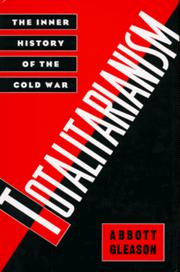
A scholarly history of the concept of totalitarianism that situates Arendt's contribution among other thinkers (Orwell, Popper, Talmon), deepening your critical perspective on what she got right and what was contested.
The Banality of Evil — Moral & Political Responsibility
IntermediateUnderstand Arendt's explosive argument that great evil can be perpetrated without demonic intent, and engage with the fierce debate it provoked — developing your own critical position on her most controversial idea.
▸ Study plan for this stage
Pace: 8–10 weeks, ~40–50 pages/day. *Eichmann in Jerusalem* (approx. 280 pages) over 5–6 weeks; *The Anatomy of Fascism* (approx. 240 pages) over 3–4 weeks. Build in 1–2 weeks for synthesis and debate engagement.
- The banality of evil: how ordinary bureaucrats without ideological fervor or sadistic impulses can orchestrate mass atrocity through thoughtlessness and obedience
- The failure of moral imagination: Eichmann's inability or unwillingness to think from the perspective of his victims, and what this reveals about moral responsibility
- The role of totalitarian systems in eroding individual judgment: how Nazi bureaucracy fragmented decision-making and diffused accountability
- Fascism as a political movement with distinct organizational and psychological structures: Paxton's framework for understanding how fascism mobilizes and consolidates power
- The distinction between ideological commitment and structural complicity: how ordinary people become perpetrators without necessarily being true believers
- The problem of legal and moral accountability in mass atrocities: how do we assign responsibility when guilt is distributed across thousands of functionaries?
- Arendt's controversial claim that Eichmann was not a monster but a mediocre man: the implications for how we understand evil and perpetrators
- What does Arendt mean by 'the banality of evil,' and how does her portrait of Eichmann support or complicate this thesis?
- How does Arendt distinguish between the ideological motives of Nazi leadership and the bureaucratic mentality of functionaries like Eichmann?
- What role does the failure of moral imagination play in Arendt's analysis of Eichmann's crimes, and what does this suggest about moral responsibility?
- How does Paxton's analysis of fascism as a political movement help explain the conditions under which ordinary people become perpetrators of mass violence?
- What are the main criticisms of Arendt's banality-of-evil thesis, and how do you evaluate them in light of both texts?
- How do *Eichmann in Jerusalem* and *The Anatomy of Fascism* together illuminate the relationship between political systems, individual psychology, and moral accountability?
- Close-read Arendt's trial observations (Part I of *Eichmann in Jerusalem*): annotate 10–15 passages where she describes Eichmann's demeanor, language, or responses. What patterns emerge? How do these details support her thesis about banality?
- Create a timeline of Eichmann's career decisions in *Eichmann in Jerusalem* (Part II). At what points could he have refused or resisted? Where does Arendt suggest he had agency, and where does she suggest the system constrained him? Write a 2–3 page analysis.
- Map Paxton's five stages of fascism (*The Anatomy of Fascism*) onto the Nazi case: identify concrete examples from *Eichmann in Jerusalem* that illustrate each stage. How does understanding fascism's structure change your reading of Eichmann's role?
- Debate exercise: Prepare two opposing positions—(1) Arendt is right: Eichmann was banal and thoughtless, not demonic; (2) Arendt underestimates Eichmann's agency and moral culpability. Write a 3–4 page argument for one position, then a 2–page rebuttal from the other side.
- Comparative character study: Using both texts, write a 4–5 page essay comparing how Arendt and Paxton explain the psychology and motivation of fascist perpetrators. Where do they agree? Where do they diverge?
- Reflection paper: After finishing both texts, write 2–3 pages on your own position: Is Arendt's banality-of-evil thesis convincing? What does it mean for how we understand moral responsibility in your own time?
Next up: This stage equips you to move beyond Arendt's trial analysis into her broader political philosophy by grounding her most contested idea in historical and psychological evidence, preparing you to engage her theories of totalitarianism, action, and natality with a nuanced understanding of how she thinks about human agency and moral failure.
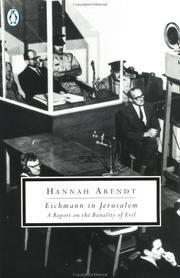
The book that introduced 'the banality of evil'; read it as a primary text and a work of political journalism, paying close attention to how Arendt's courtroom observations generate a philosophical claim about thoughtlessness and moral failure.
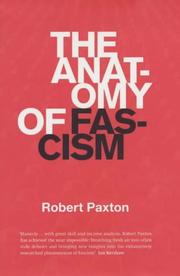
A rigorous historical counterpoint that grounds fascist evil in social and institutional processes, helping you test and sharpen Arendt's philosophical account against the empirical record of how fascist movements actually functioned.
Power, Action & the Political Realm
IntermediateMaster Arendt's positive political philosophy — her concepts of action, power, freedom, and the public space — understanding what she believed politics at its best could and should be.
▸ Study plan for this stage
Pace: 8–10 weeks, ~40–50 pages/day (The Human Condition: 5–6 weeks; On Revolution: 3–4 weeks). Allocate extra time for dense passages on natality and action; revisit chapters on power and the public realm before moving to On Revolution.
- Natality as the human condition and the foundation of political action — the capacity to begin something new
- The vita activa: labor, work, and action as three distinct human activities, with action as the highest and most political
- Power as the capacity to act in concert with others, distinct from strength, force, or violence
- The public realm (space of appearance) as the arena where action becomes visible, meaningful, and real
- Freedom as the raison d'être of politics — achievable only through action in the public space with others
- The revolutionary impulse as the attempt to establish a new beginning and preserve the spirit of action in lasting institutions
- The distinction between revolution and rebellion: revolution's unique goal of founding a new body politic
- The problem of permanence: how revolutionary action can be institutionalized without being frozen or corrupted
- What does Arendt mean by natality, and why is it central to her understanding of human freedom and political action?
- How does Arendt distinguish between labor, work, and action? Why does she argue that action is the most political activity?
- According to Arendt, what is the relationship between power and violence? Why does she insist they are opposites rather than variations of the same thing?
- What role does the public realm (space of appearance) play in Arendt's political philosophy? Why is visibility essential to action?
- How does Arendt characterize the revolutionary spirit, and what does she identify as the central problem revolutions face in trying to preserve their founding moment?
- What distinguishes a true revolution from a rebellion or coup in Arendt's analysis? Use examples from On Revolution.
- Map the vita activa: Create a detailed chart comparing labor, work, and action across dimensions like temporality, product, visibility, and political significance. Use specific examples from The Human Condition.
- Analyze a contemporary political event (protest, election, policy debate, etc.) through Arendt's lens: Identify where action occurs, where power is generated, and where the public realm is present or absent.
- Close reading exercise: Select one dense passage from The Human Condition on natality or the public realm (e.g., Part II, Chapter 2). Annotate it line by line, paraphrase each section, and explain its political implications.
- Compare two revolutions using Arendt's framework: Choose two revolutions discussed in On Revolution (e.g., American and French) and analyze how each attempted to preserve the revolutionary spirit and why one succeeded better than the other.
- Debate exercise: Take a position on whether modern democratic institutions successfully preserve the space of appearance and enable genuine action, or whether they have become bureaucratized and lifeless. Support your argument with Arendt's concepts.
- Reflective writing: Describe a moment when you experienced genuine political action or power-in-concert with others (in a group, organization, or community). Analyze it using Arendt's vocabulary—natality, plurality, visibility, freedom.
Next up: This stage establishes Arendt's vision of politics at its best—rooted in action, plurality, and freedom—providing the philosophical foundation needed to understand her critique of totalitarianism and the conditions that destroy the political realm in the next stage.
Her most systematic philosophical work, introducing the vita activa (labor, work, action) and the concept of power as collective human capacity; best read after Origins so her critique of modernity lands with full force.

Arendt applies her theory of action and power to the American and French Revolutions, showing what genuine political founding looks like — a natural sequel to The Human Condition that tests her ideas against historical events.
Thinking, Judgment & the Deeper Philosophy
ExpertEngage with Arendt's late and most philosophically demanding work on the inner life of thinking and judgment, and consolidate your understanding through a scholarly synthesis that ties all the threads together.
▸ Study plan for this stage
Pace: 8–10 weeks, ~25–30 pages/day (accounting for philosophical density and re-reading passages)
- The vita contemplativa vs. vita activa: Arendt's late reconsideration of the life of the mind as a distinct human activity with its own dignity and freedom
- Thinking as a two-in-one dialogue: the reflexive, solitary nature of thought and its relationship to the self
- Willing and the paradox of freedom: how the will relates to causality, natality, and human agency in the modern world
- Judgment as the highest human faculty: aesthetic judgment as the bridge between thinking and action, and its political implications
- The limits of philosophy: Disch's critique of how Arendt's philosophical project reveals the boundaries of traditional philosophical method and its inability to fully capture human plurality
- Natality and the new: how thinking and judgment enable us to respond to unprecedented events and create genuine novelty in the political realm
- The banality of evil revisited: how Arendt's theory of thinking illuminates the dangers of thoughtlessness and the moral stakes of the examined life
- What does Arendt mean by 'thinking' as a distinct human activity, and how does it differ from knowing or cognition? How does she distinguish thinking from willing and judging?
- Explain Arendt's concept of thinking as a 'two-in-one dialogue.' What are the implications of this reflexive structure for understanding consciousness and the self?
- What is the paradox of the will in Arendt's philosophy, and why does she argue that the will cannot be free in the traditional metaphysical sense? How does this relate to human natality?
- How does Arendt position judgment as the highest human faculty, and what is the relationship between aesthetic judgment and political judgment in her work?
- According to Disch, what are the fundamental limits of philosophy as a discipline, and how does Arendt's work expose these limits? What does Disch mean by the 'limits of philosophy'?
- How does Arendt's theory of thinking address the problem of thoughtlessness and the 'banality of evil'? What is the moral and political significance of the examined life?
- Close reading exercise: Select one chapter from The Life of the Mind (e.g., on thinking or willing) and annotate it thoroughly, identifying Arendt's key arguments, her use of examples, and points where she revises or challenges traditional philosophy. Write a 2–3 page summary that explains the main thesis and its implications.
- Comparative analysis: Choose a classical philosophical text on thinking or willing (e.g., Descartes' Meditations, Kant on the categorical imperative, or Nietzsche on the will) and write a 4–5 page essay comparing Arendt's approach with the traditional view. What does Arendt preserve, reject, or transform?
- Dialogue reconstruction: Write out an imagined 'two-in-one dialogue' between yourself and your thinking self on a significant question or experience. Reflect on how this exercise illuminates Arendt's concept of thinking as reflexive and solitary.
- Disch engagement: Read Disch's critique carefully and write a 3–4 page response that either defends Arendt against Disch's charges or extends Disch's argument. What does Disch help you see about the limitations of Arendt's philosophical method?
- Case study application: Analyze a contemporary political or ethical crisis (e.g., institutional corruption, technological disruption, or collective violence) through the lens of Arendt's theory of thinking and judgment. Write a 5–6 page essay arguing how cultivating the examined life and judgment might address the crisis.
- Synthesis essay: Write a 7–10 page essay that integrates insights from both The Life of the Mind and Disch's critique to argue for a coherent understanding of Arendt's philosophy of the inner life and its political relevance. This should be your capstone exercise for the stage.
Next up: This stage equips you with a sophisticated understanding of Arendt's most philosophically rigorous work and its limitations, preparing you to apply her insights to specific historical, political, and ethical problems in subsequent stages, or to engage critically with contemporary Arendtian scholarship and debates.

Arendt's unfinished final masterwork on Thinking, Willing, and Judging — the direct philosophical response to the question the Eichmann trial posed: what happens when a person stops thinking? Read last because it presupposes all her earlier concepts.
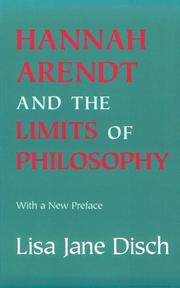
A rigorous scholarly study that critically examines the tensions between Arendt's philosophical method and her political theory, giving you the analytical tools to evaluate her legacy and identify where her arguments succeed or strain.
Discussion
Keep reading
Paths that share books, cover the same subject, or open a related topic.