The Weimar Republic: the best books on Germany's road to Hitler
This curriculum traces the arc from Weimar Germany's birth in defeat and revolution (1918) through its fragile democratic experiment to its violent collapse into Nazi dictatorship (1933). Starting with accessible narrative histories, the path moves through social and political analysis, then into the deeper historiographical debates that scholars still argue over today — giving the reader both a vivid story and the analytical tools to understand why it happened.
Foundations: The Story in Plain Sight
BeginnerGrasp the full narrative arc — from Germany's defeat in WWI and the founding of the Republic, through the crises of the 1920s, to Hitler's appointment as Chancellor — with enough context to make sense of names, dates, and turning points.
▸ Study plan for this stage
Pace: 8–10 weeks, ~40–50 pages/day (Evans first, then Weitz; allow 1–2 weeks per book with review days)
- The legacy of Germany's WWI defeat and the myth of the 'stab in the back' — how military collapse was reframed as political betrayal
- The founding and structure of the Weimar Republic — its constitution, federal system, and proportional representation as both strength and vulnerability
- The hyperinflation crisis of 1923 and the Dawes Plan — economic catastrophe, mass suffering, and the temporary stabilization that followed
- The 'Golden Twenties' (1924–1929) — cultural flourishing, social modernization, and the fragile consensus that masked deep political divisions
- The rise of extremist movements — how the Nazi Party, Communist Party, and right-wing paramilitary groups exploited Weimar's structural weaknesses
- The Great Depression and its political consequences — how economic collapse discredited democratic institutions and radicalized voters
- Key turning points and actors — Hindenburg, Hitler, Brüning, von Papen, and Schleicher — and how elite miscalculation enabled the Nazi seizure of power
- The role of ideology, resentment, and institutional failure — why rational economic or political analysis alone cannot explain the Republic's collapse
- What was the 'stab in the back' myth, and why did it resonate so powerfully in post-WWI Germany despite being historically false?
- How did the Weimar Republic's proportional representation system contribute to both its democratic legitimacy and its political paralysis?
- What were the causes and consequences of the 1923 hyperinflation crisis, and how did the Dawes Plan temporarily stabilize the economy?
- What characterized the cultural and social innovations of Weimar Germany in the mid-to-late 1920s, and why did they fail to generate broad political support for the Republic?
- How did the Great Depression of 1929 onwards transform German politics, and what role did it play in Hitler's rise to power?
- Why did traditional conservative and military elites ultimately support Hitler's appointment as Chancellor, and what miscalculations did they make?
- Create a detailed timeline (1918–1933) marking major political, economic, and cultural events; use Evans and Weitz to populate it and identify which crises were most destabilizing
- Write a one-page character sketch of three key figures (e.g., Hindenburg, Hitler, Brüning) based on Evans, noting their backgrounds, motivations, and fatal misjudgments
- Map the political landscape of Weimar: draw a spectrum showing the major parties and movements (SPD, KPD, NSDAP, DNVP, etc.) and explain their core constituencies and ideologies using both texts
- Analyze the 1923 hyperinflation using Weitz's social history lens: how did ordinary Germans experience it, and what political resentments did it generate?
- Compare two contrasting periods — the 'Golden Twenties' (1924–1929) and the Depression years (1929–1933) — by listing cultural achievements, economic indicators, and political stability for each
- Write a short essay (500–750 words) answering: 'Was Weimar's collapse inevitable, or did it result from specific choices and contingencies?' Ground your answer in evidence from both Evans and Weitz
Next up: This stage equips you with the narrative scaffolding and key actors needed to understand how institutional, economic, and ideological forces converged; the next stage will deepen your analysis by examining the Nazi ideology, propaganda machinery, and mechanisms of totalitarian control in greater detail.
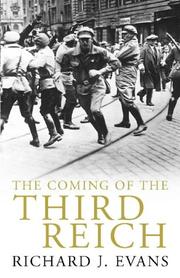
The single best starting point: a masterfully clear narrative of how the Nazis rose to power, written for a general audience by the leading English-language historian of the period. It establishes the essential vocabulary and cast of characters for everything that follows.

Broadens the picture beyond politics to show the cultural brilliance and social tensions of the Republic — the art, science, sexuality, and street violence — giving the reader a feel for what was actually at stake and what was lost.
Hitler & the Nazi Movement: Origins and Ideology
BeginnerUnderstand Hitler as a historical person — his formation, his ideology, and how he built a mass movement — rather than treating him as an inexplicable monster.
▸ Study plan for this stage
Pace: 8–10 weeks, ~20–25 pages/day (with close reading and annotation)
- Hitler's early life, family background, and formative experiences (Vienna, Munich, WWI) as drivers of his worldview
- The core ideological pillars of Nazi thought: antisemitism, racial hierarchy, Lebensraum (living space), and the rejection of Weimar democracy
- Hitler's theory of history as racial struggle and the role of the state in enforcing racial purity
- The relationship between Hitler's personal grievances and his political program—how individual resentment scaled into mass ideology
- Hitler's rhetorical strategy and appeals to German national humiliation, economic anxiety, and cultural decline
- The distinction between Hitler's stated ideology in Mein Kampf and the practical political movement that emerged from it
- What were the key experiences in Hitler's early life (childhood, Vienna years, WWI service) that shaped his political ideology?
- How does Hitler define race, and what role does racial hierarchy play in his vision for the German state and society?
- What is Lebensraum, and how does Hitler justify German territorial expansion based on this concept?
- How does Hitler use the concept of the 'stab-in-the-back' myth, and what purpose does it serve in his political narrative?
- What are Hitler's main critiques of Weimar democracy, and what alternative political system does he propose?
- How does Hitler's antisemitism function within his broader ideological framework, and what does he propose as solutions?
- Create a detailed timeline of Hitler's life from birth through the writing of Mein Kampf, noting key formative events and how they connect to ideas expressed in the text
- Annotate 3–4 key passages from Mein Kampf that encapsulate his core ideological positions; write a 1-page analysis of how each passage reflects his personal experiences
- Write a 2–3 page essay analyzing the internal logic of Hitler's racial ideology: how does he justify racial hierarchy, and what does he believe should follow from it?
- Create a comparison chart mapping Hitler's grievances (personal, national, ideological) to the political solutions he proposes in Mein Kampf
- Identify and analyze 5 rhetorical techniques Hitler uses to persuade readers (e.g., scapegoating, appeals to national pride, false historical claims); note where each appears in the text
- Write a reflection essay (2–3 pages) on the relationship between Hitler's individual psychology and his political ideology—where does personal resentment end and systematic ideology begin?
Next up: Understanding Hitler's ideological foundations and personal formation in Mein Kampf provides the essential framework for analyzing how these ideas were translated into political action, organizational strategy, and the actual rise of the Nazi Party during the Weimar crisis.
Primary source: Hitler's own statement of ideology, grievances, and intentions. Reading it after the biographies and histories means you can evaluate it critically rather than be overwhelmed by its rhetoric — and you will see how contemporaries underestimated it.
The Republic Under Pressure: Politics and Society
IntermediateMove from narrative to analysis — understanding the structural weaknesses of Weimar democracy, the role of economic catastrophe, and the political choices that made Hitler's rise possible rather than inevitable.
▸ Study plan for this stage
Pace: 8–10 weeks, ~40–50 pages/day. Peukert (280 pp, ~2 weeks); Craig (600 pp, ~4 weeks); Allen (400 pp, ~2.5 weeks). Include 1–2 review days per week.
- Structural weaknesses of Weimar democracy: the flawed 1919 constitution, proportional representation, and the absence of a strong republican consensus among elites
- Economic catastrophe as political catalyst: hyperinflation (1923), the Great Depression (1929–33), and how economic crisis delegitimized democratic institutions
- The fragmentation of Weimar politics: the role of extremist parties (KPD, NSDAP), the weakness of centrist coalitions, and the failure of moderate parties to defend the republic
- Contingency vs. inevitability: how specific political choices (Hindenburg's appointment, the Enabling Act, elite miscalculation) made Nazi seizure possible rather than predetermined
- The role of local and regional politics: how grassroots Nazi organization and local grievances translated into national power (Allen's microhistorical approach)
- The complicity of traditional elites: how industrialists, military officers, and conservative politicians enabled Hitler's rise through tactical miscalculation
- Ideology and mass politics: how Nazi propaganda and organization exploited Weimar's structural crises to build a mass movement
- The distinction between Weimar's collapse and Nazi triumph: understanding why the republic failed and why the Nazis, specifically, benefited
- What were the three main structural weaknesses of the Weimar Constitution, and how did each contribute to democratic instability?
- How did the hyperinflation crisis of 1923 and the Great Depression of 1929–33 differ in their political consequences, and why did the latter prove more fatal to the republic?
- Explain the paradox of Weimar politics: why did the Nazi Party grow strongest precisely when it had the least electoral support (1930–32)?
- What role did the traditional elites (military, industrialists, conservatives) play in Hitler's appointment, and how did their miscalculations differ from their intentions?
- Using Allen's local case study, how did grassroots Nazi organization and community-level grievances translate into national political power?
- Was the Nazi seizure of power inevitable given Weimar's structural weaknesses, or were there critical decision points where history could have turned differently?
- Create a timeline of Weimar's political crises (1919–1933) with annotations for each major event. Identify which crises were structural (constitutional flaws) vs. contingent (specific decisions or accidents).
- Construct a comparative chart of Weimar's three major economic crises (1923 hyperinflation, 1924–28 stabilization, 1929–33 depression). For each, note the political response and which parties benefited.
- Map the fragmentation of Weimar politics: create a diagram showing the major parties' positions on a left-right spectrum, their coalition patterns, and why centrist coalitions repeatedly failed. Use Craig's narrative to trace shifts over time.
- Analyze Peukert's argument about structural weaknesses vs. Allen's microhistorical approach: write a 2–3 page synthesis explaining how macro-level constitutional flaws and local-level Nazi organizing worked together.
- Role-play exercise: Assume the role of a Weimar politician in 1930. Given the structural constraints Peukert identifies and the political fragmentation Craig describes, what coalition strategy would you pursue? What would be your realistic options?
- Close reading: Select one key decision point from Allen's case study (e.g., a local Nazi recruitment drive, a specific election result, or a moment when a traditional elite figure made a choice about Hitler). Write a 2–page analysis explaining how this local event reflected larger Weimar dynamics and how it might have turned out differently.
Next up: This stage equips you with the analytical tools to understand how structural crisis and political choice intersected—preparing you to examine in the next stage how the Nazi regime itself consolidated power and transformed German society once in office.

A classic analytical study that examines the Republic's internal contradictions — economic, social, and cultural — arguing that modernity itself generated the crises Nazism exploited. Introduces the reader to serious historical argument rather than just storytelling.

Places Weimar in the longer sweep of German history, showing how deep-rooted political and cultural traditions shaped the Republic's possibilities and limits. Essential for understanding why German democracy was so fragile from the start.
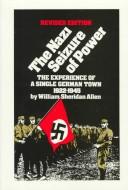
A brilliant micro-history of a single small German town, showing exactly how the Nazis won over ordinary people at the local level. Complements the big-picture analyses with ground-level human detail and is one of the most readable books in the field.
Deeper Causes: Historiographical Debates
ExpertEngage with the major scholarly controversies — intentionalism vs. structuralism, the role of antisemitism, the question of a German 'special path' — and form your own informed judgements about why the Republic failed.
▸ Study plan for this stage
Pace: 8–10 weeks, ~40–50 pages/day. Goldhagen (600pp) over 4–5 weeks; Paxton (210pp) over 2–3 weeks; final 1–2 weeks for synthesis and debate essays.
- Goldhagen's 'eliminationist antisemitism' thesis: the claim that a specifically German, genocidal form of antisemitism was widespread in the population and directly motivated perpetrators
- Intentionalism vs. structuralism: whether Nazi atrocities resulted from Hitler's long-held plans (intentionalism) or emerged from competing bureaucratic pressures and radicalization (structuralism)
- The role of ordinary Germans: Goldhagen's argument that perpetrators were not coerced but willing participants, versus structuralist emphasis on institutional pressure and careerism
- Paxton's fascism as a process: how fascism develops through stages (genesis, takeover, exercise of power) rather than as a fixed ideology, and how this applies to the Nazi case
- The 'special path' (Sonderweg) debate: whether Germany's history uniquely predestined it toward Nazism, or whether this is a retrospective myth
- Antisemitism's causal weight: whether antisemitism was the motor of Nazism or one factor among many (nationalism, militarism, economic crisis, anti-communism)
- Perpetrator agency and complicity: the tension between viewing Nazis as ideologically driven fanatics versus as bureaucrats, careerists, and ordinary people responding to institutional incentives
- The comparative perspective: how understanding fascism in Italy, Spain, and elsewhere illuminates or complicates the German case
- What is Goldhagen's core argument about eliminationist antisemitism, and what evidence does he use to support the claim that it was widespread in German society before 1933?
- How does Goldhagen's intentionalist account of perpetrator motivation differ from structuralist explanations, and what are the main criticisms of his approach?
- According to Paxton, what are the key stages through which fascism develops, and how does this framework help explain the Nazi seizure and consolidation of power?
- What does Paxton identify as the 'social base' of fascism, and how does this compare to Goldhagen's emphasis on antisemitic ideology?
- How do Goldhagen and Paxton differ in their assessment of whether German history followed a unique 'special path' toward Nazism?
- What role does each author assign to antisemitism in explaining the rise of Nazism and the Holocaust—is it the primary cause, a necessary condition, or one factor among several?
- Create a two-column comparison chart: list Goldhagen's key claims on one side and the main structuralist counterarguments on the other, with specific page references from the text.
- Write a 1,500-word essay: 'Was eliminationist antisemitism a sufficient cause of the Holocaust?' Use evidence from Goldhagen to argue one position, then write a rebuttal using structuralist logic.
- Map Paxton's four-stage fascist process onto the Nazi timeline (1920–1933). For each stage, identify key events and explain how they fit or challenge Paxton's model.
- Debate exercise (solo or with a study partner): Argue both sides—'Goldhagen's thesis is essential to understanding perpetrator motivation' vs. 'Structuralism better accounts for how the Holocaust happened.' Record or write your strongest points for each.
- Close-read 2–3 key passages from each book (e.g., Goldhagen on 'eliminationist' definitions; Paxton on fascism's 'social base'). Annotate them and write a 500-word analysis of how each author's language and evidence shape their argument.
- Comparative case study: Using Paxton's framework, analyze how antisemitism functioned differently in Nazi Germany versus fascist Italy or Spain. What does this reveal about the specificity of the German case?
Next up: This stage equips you with the historiographical tools and contested interpretations needed to move beyond narrative and into evaluating competing explanations of causation—preparing you to examine primary sources and specialized monographs in the next stage with a sophisticated, evidence-based critical lens.
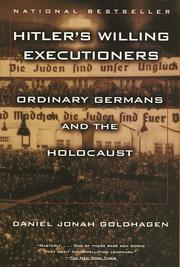
A controversial but hugely influential argument that eliminationist antisemitism was deeply embedded in German culture long before Hitler. Reading it here, after the structural and political accounts, lets you weigh its claims against what you already know.
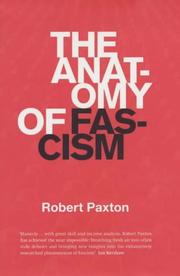
Steps back to ask what fascism actually is as a political phenomenon, comparing Nazi Germany to other fascist movements. This comparative perspective is the final tool for understanding Weimar's collapse not just as a German story but as a warning about democracy everywhere.
Discussion
Keep reading
Paths that share books, cover the same subject, or open a related topic.