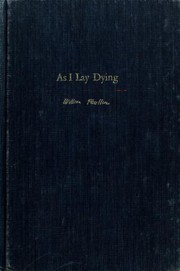
Start with As I Lay Dying. It is around two hundred and fifty pages, split into fifty-nine short chapters narrated by fifteen different voices, and it tells one grimly comic story: a poor family hauling their mother's corpse across Mississippi to bury her in town. The technique is as radical as anything he wrote, but every chapter is short enough to reread immediately, and confusion never lasts more than a page or two.
The obvious alternative is The Sound and the Fury, and it is where most abandoned Faulkner attempts die. Its first section is narrated by a man with a severe cognitive disability who does not distinguish between 1898 and 1928, with two characters sharing a name and no signposting of the jumps. It is a great piece of writing and a terrible first encounter. If you want an even gentler entry than As I Lay Dying, Light in August is the most conventionally told of the major novels and a perfectly defensible place to begin.
The sequence
As I Lay Dying, then Light in August, then The Sound and the Fury, then Absalom, Absalom!. That is the difficulty curve, and it is worth following even though it is not publication order.
Light in August braids three stories — a pregnant girl walking to find the father, a disgraced minister, and Joe Christmas, a man who does not know whether he is Black or white and is destroyed by other people's need to decide. It is long but linear, and it is the novel that shows most plainly what he is actually writing about.
The Sound and the Fury comes third, and by then you will have the equipment. Read the first section without fighting it; the italics mark time shifts, and the second and third sections will explain retrospectively most of what confused you. Many readers reread section one immediately after finishing the book, and that is the intended experience rather than a failure.
Absalom, Absalom! is the summit and the hardest. Sentences run for a page, several narrators reconstruct the same events decades apart from incomplete evidence, and nobody in the book knows the whole truth. It is also the most rewarding thing he wrote. Do not attempt it fourth-hand or in short sittings.
After the peak
Go Down, Moses is usually shelved as a novel and reads as linked stories about the McCaslin family across generations. The Bear sits at its centre, and its fourth section is a notorious wall — a single sentence running for pages, working through ledger entries and inheritance. Some editions print The Bear alone without that section; read the full version, but know what is coming.
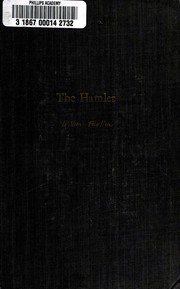
The Hamlet opens the Snopes trilogy and is much funnier than his reputation suggests — horse-trading, tall tales, a rising family of rural opportunists. It is a good place to go once the heavy books are behind you, and it does not require them.
Publication order or chronological order?
Yoknapatawpha County has an internal history that spans a century, and some readers try to assemble the books into it. Do not. The novels contradict each other on detail, Faulkner reused and revised names, and the chronological arrangement would put you in Absalom, Absalom! early. Publication order is defensible; the difficulty order above is better.
The critical shelf
Faulkner, a biography by Joseph Blotner is the standard life and is exhaustive to a fault — the one-volume abridgement is the sane choice for most readers. The ink of melancholy by André Bleikasten is the better companion for the fiction itself, taking the major novels one at a time; read it after each novel rather than before, unless you want the plots handed to you.
Where to stop
After Absalom, Absalom! most readers have what they came for. Go Down, Moses and The Hamlet are for people who want to live in the county rather than visit it. Readers who want the same territory from a different angle should go to Toni Morrison, who argued with Faulkner all her life.
Follow the full ordered path here: William Faulkner Reading Order: Where to Start.