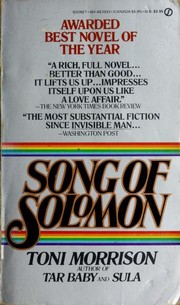
Start with Song of Solomon. It is the novel where Morrison's voice arrives fully formed, and it is the most navigable of her major books: a recognisable quest structure, one protagonist followed from birth, and a plot that moves forward. It won the National Book Critics Circle Award and it is the book Morrison herself broke through with, and it gives you everything she does — the compression, the folklore, the refusal to explain — attached to a story you can follow on a first reading.
The obvious alternative, and the one most people reach for, is Beloved. It is her greatest novel and it is not an introduction. It withholds its central event for two hundred pages, moves through fragmented time without signposting, and demands that you tolerate uncertainty for a long stretch before it resolves. Readers who start there and stop have not failed; they have started in the wrong place. Come to it third or fourth, when you trust her.
A reading order by phase
- Song of Solomon (1977) — the entry point. Milkman Dead's journey south.
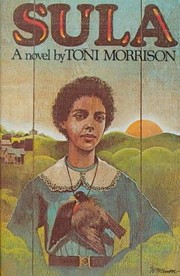
- Sula (1973) — short, ferocious, and a good second book. A friendship between two women across four decades, told in a hundred and fifty pages that read like compressed poetry. The earliest work worth reading first.
- The Bluest Eye (1970) — her debut. Devastating and formally less assured than what follows, and its subject matter — a Black girl's longing for blue eyes, and the sexual violence at the centre of the book — is among the hardest in her work. Read it after you know her.
- Beloved (1987) — the masterpiece. Slavery, infanticide, and a haunting that is not metaphorical. Read it when you can give it real attention.
- Jazz (1992) — the follow-on, set in Harlem in 1926 and narrated by a voice whose identity is the novel's deepest puzzle. Structurally the most experimental of the major novels.
- Paradise (1997) — the third in the loose trilogy that begins with Beloved, set in an all-Black Oklahoma town. The most difficult, with a large cast introduced quickly and a chronology that will not sit still. This is where readers most often stall.
- A Mercy (2008) — late, short and superb: seventeenth-century colonial America before race had hardened into its later form. An excellent late-career entry if the long novels feel like too much.
Honest warnings
Morrison does not explain. Timelines fold, narrators are unreliable or unidentified, and crucial events are revealed obliquely long after they have happened. This is deliberate and it is the source of the power, but it means that reading her quickly does not work — the books reward a slow first pass far more than a fast one followed by a reread.
Paradise is the one to be careful with. Its opening line is famous, its first fifty pages introduce a great many people at once, and a large number of otherwise devoted readers do not finish it. Do not make it your third Morrison.
The non-fiction
Playing in the dark is a short, sharp set of lectures on how the American literary canon was shaped by an Africanist presence it refused to name — the best single key to what Morrison was doing as a critic and as an editor. The Source of Self-Regard collects four decades of essays and speeches and is the fullest record of her thinking outside the novels. Both are far more approachable than the fiction and either makes a good pause between novels.
Where to stop
There is no diminishing tail here — the late novels are short and strong. If you read only three, make them Song of Solomon, Sula and Beloved, in that order. That is the argument in miniature.
For a related reading order in the same American tradition, see William Faulkner.
Follow the full ordered path here: Toni Morrison Reading Order: Where to Start.
Ready to learn something deeply?
Build a reading path — free