The literary classics: where to begin and what to read, in order
This curriculum guides a beginner through the great works of world literature in four carefully sequenced stages — starting with short, gripping narratives that build reading stamina, moving through foundational novels and plays, and culminating in the most demanding and rewarding masterpieces of the Western and world canon. Each stage builds the literary vocabulary, historical context, and interpretive confidence needed to fully appreciate the next.
Entry Points: Short, Gripping Classics
BeginnerBuild reading confidence and pleasure with shorter, highly readable classics that introduce key themes — fate, morality, identity, and society — without overwhelming length or archaic language.
▸ Study plan for this stage
Pace: 8–10 weeks, ~20–30 pages/day (with reflection days built in)
- Minimalist prose and symbolic depth: how Hemingway uses simple language and concrete details to convey profound emotional and philosophical truths
- Allegory as social critique: understanding how Orwell uses animal characters to expose political corruption and the corruption of ideals
- Duality and the fragmented self: recognizing how Stevenson explores the coexistence of good and evil within a single person and society
- Fate versus agency: examining how characters in these works struggle against circumstances, systems, and their own nature
- Moral ambiguity: learning to sit with stories that don't offer easy answers or clear villains
- Narrative economy: appreciating how shorter works achieve maximum impact through precise language and structure
- Themes across texts: identifying how fate, morality, identity, and social systems recur and interconnect across all three books
- What does Santiago's struggle with the marlin in *The Old Man and the Sea* reveal about human dignity, perseverance, and the meaning of victory?
- How does Orwell use the pigs' gradual transformation in *Animal Farm* to illustrate the corruption of revolutionary ideals, and what does this suggest about power and human nature?
- In *The Strange Case of Dr. Jekyll and Mr. Hyde*, how does Stevenson suggest that Jekyll and Hyde are not truly separate beings, and what does this imply about the nature of morality?
- How do all three books explore the tension between individual agency and forces beyond a character's control (fate, society, nature, or human nature)?
- What role does language and narrative style play in each book's effectiveness? How does simplicity or constraint serve the author's purpose?
- Which character—Santiago, the animals of Animal Farm, or Jekyll/Hyde—faces the most impossible moral dilemma, and why?
- Close-read 2–3 key passages from each book (e.g., Santiago's final battle, the pigs' rewriting of the commandments, Jekyll's confession) and annotate for symbolism, tone, and word choice
- Create a character arc chart for Santiago, the pigs (as a collective), and Jekyll/Hyde, tracking how each changes and what forces drive that change
- Write a 500-word comparative essay on how fate operates differently in each book: Is Santiago fighting fate, are the animals victims of it, and is Jekyll enslaved by it?
- Rewrite a key scene from one book from a different character's perspective (e.g., the final battle from the marlin's view, the revolution from a human farmer's view, or Hyde's perspective on his existence)
- Create a visual timeline or infographic showing how each book's central conflict escalates, noting turning points and moments of moral choice
- Discuss in a reading group or journal: Which book's ending felt most satisfying or troubling, and what does that reveal about your own values regarding hope, justice, and human nature?
Next up: This stage equips you with the confidence to recognize how classic literature uses economy of language, symbolic depth, and moral complexity to explore timeless human questions—preparing you to tackle longer, more densely layered works that build on these same foundations with greater narrative scope and stylistic sophistication.
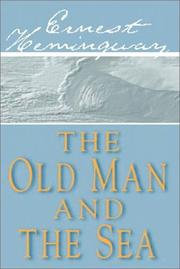
A short, luminous novella about struggle and dignity, written in Hemingway's famously clear prose — a perfect first classic that rewards close reading without demanding prior literary knowledge.
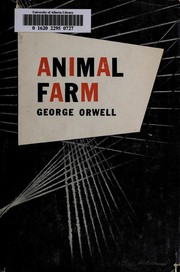
A compact allegorical fable that introduces the concept of literary symbolism and political satire, making it an ideal second step before tackling longer, more complex works.
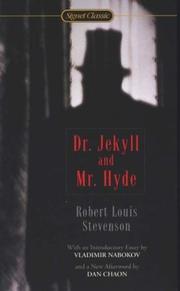
This tight, suspenseful novella introduces Gothic atmosphere and the theme of duality in human nature — concepts that echo throughout the broader canon — while remaining highly accessible.
Foundations: The Great Novels
BeginnerEngage with full-length canonical novels that shaped modern literature, developing the ability to follow complex characters, social themes, and narrative arcs over a sustained reading experience.
▸ Study plan for this stage
Pace: 12–14 weeks, approximately 40–50 pages/day. Allocate 4–5 weeks per novel to allow for careful reading, reflection, and completion of exercises between books.
- Character development and interiority: How authors reveal psychological depth and moral complexity through protagonists like Jane, Gatsby, and Raskolnikov across hundreds of pages
- Social critique through narrative: How Jane Eyre, The Great Gatsby, and Crime and Punishment use individual stories to expose class systems, wealth inequality, and moral hypocrisy
- Narrative voice and perspective: The effects of first-person narration (Jane Eyre), third-person limited (Gatsby), and shifting perspectives (Crime and Punishment) on reader engagement and interpretation
- Sustained plot architecture: How these novels build tension, develop subplots, and resolve conflicts over extended narratives without losing coherence
- Symbolism and motif: Recurring images (the red room in Jane Eyre, the green light in Gatsby, the city streets in Crime and Punishment) that deepen thematic meaning
- Moral ambiguity and ethical questions: How these novels present protagonists whose choices challenge readers' judgments rather than offering simple moral answers
- Historical and cultural context: How each novel reflects and critiques the social anxieties of its era (Victorian England, Jazz Age America, Tsarist Russia)
- How does Charlotte Brontë use Jane's first-person narration to make her internal struggles—particularly around love, independence, and morality—feel immediate and compelling?
- What is Gatsby's actual character, and how does Fitzgerald use Nick's limited perspective to create ambiguity about Gatsby's dreams and moral worth?
- How does Raskolnikov's theory about extraordinary individuals justify crime, and what does the novel ultimately argue about this philosophy through his psychological unraveling?
- Compare how Jane Eyre, Gatsby, and Raskolnikov each respond to social exclusion or desire for transcendence—what does each novel suggest about the possibility of escape or redemption?
- Identify and analyze one major symbol from each novel (the red room, the green light, the city/crime) and explain how it reinforces the book's central themes
- How do the endings of these three novels differ in their treatment of hope, morality, and the protagonist's place in society?
- Character journal: After finishing each novel, write 2–3 entries from the protagonist's perspective reflecting on a pivotal moment—this deepens understanding of interiority and motivation
- Comparative character analysis: Create a three-column chart comparing Jane, Gatsby, and Raskolnikov across dimensions like ambition, morality, isolation, and relationships; write a 500-word essay on one dimension
- Symbol tracking: As you read each novel, maintain a notebook of recurring images (colors, objects, places) and their contexts; write a short analysis of how one symbol evolves in meaning
- Social context research: Read 2–3 short secondary sources on the historical period of each novel (Victorian gender roles, Jazz Age wealth, Tsarist Russia); write a 300-word reflection on how this context illuminates the protagonist's choices
- Narrative voice experiment: Rewrite a key scene from Jane Eyre in third-person limited, or rewrite a Gatsby scene in first-person from Daisy's perspective, then reflect on how perspective changes meaning
- Thematic debate: After each novel, write a position paper (400–500 words) answering one of the novel's central moral questions (e.g., 'Is Jane right to leave Rochester?' or 'Is Raskolnikov's suffering redemptive?')
Next up: This stage establishes the reader's capacity to engage with psychologically complex protagonists, recognize how narrative technique shapes interpretation, and identify thematic patterns across different cultural contexts—skills essential for the next stage, which will likely deepen analysis of literary movements, stylistic innovation, and intertextual connections among canonical works.
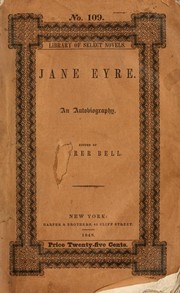
A propulsive, emotionally immediate novel with a strong first-person voice — it eases readers into Victorian prose while exploring independence, morality, and passion in deeply human terms.
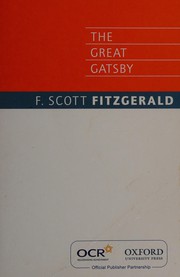
Short by novel standards but rich in symbolism and social critique, this is an ideal bridge text that rewards the interpretive skills built in Stage 1 while preparing readers for longer 19th-century works.
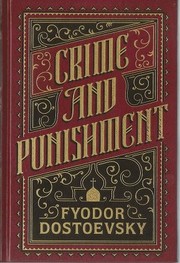
A gripping psychological thriller at heart, this is the most accessible of Dostoevsky's major novels and introduces the great Russian tradition of moral and philosophical fiction — essential for the later canon.
The Classical World and the Stage
IntermediateEncounter the ancient roots of Western literature and the power of drama, understanding how Greek tragedy and Shakespearean theatre established the archetypes and moral questions all later literature inherits.
▸ Study plan for this stage
Pace: 8–10 weeks, ~40–50 pages/day. Oedipus Cycle (1–2 weeks), Hamlet (3–4 weeks), Divine Comedy (3–4 weeks). Include 1–2 days between books for reflection and note consolidation.
- Tragic flaw (hamartia) and inevitability: how Oedipus's pride and blindness to truth drive inexorable downfall despite his intelligence and power
- The chorus as moral voice and collective consciousness in Greek drama: how the Theban elders embody societal wisdom and fear in the Oedipus Cycle
- Madness, performance, and hidden truth in Hamlet: how feigned madness reveals real corruption and the gap between appearance and reality at the Danish court
- The soliloquy as window into interiority: how Shakespeare's Hamlet articulates psychological depth and moral paralysis in ways Sophocles' characters do not
- Moral responsibility and divine will: the tension between human agency and fate in both Sophocles and Dante, and how each author resolves it differently
- The underworld as spiritual reckoning: from Sophocles' references to the underworld, through Hamlet's ghost, to Dante's literal descent through Hell, Purgatory, and Paradise
- Redemption through suffering and knowledge: how each protagonist's journey transforms understanding—Oedipus through self-blinding, Hamlet through acceptance of death, Dante through guided ascent
- Archetypal patterns: the scapegoat, the avenger, the seeker—how these roles recur across all three works and establish templates for Western literature
- What is Oedipus's tragic flaw, and how does his attempt to escape his fate actually fulfill it? What does this suggest about the relationship between human will and destiny?
- How does the chorus function in the Oedipus Cycle—what role does it play in interpreting events, and how does its perspective differ from Oedipus's own?
- Why does Hamlet feign madness, and what is the effect of his performance on the other characters and on the audience's understanding of his mental state?
- Compare the ghost of Hamlet's father to the underworld references in Sophocles: how does each work use the supernatural to raise questions about truth, justice, and moral obligation?
- How does Dante's journey through Hell, Purgatory, and Paradise differ from the tragic journeys of Oedipus and Hamlet? What does the structure of the Divine Comedy suggest about redemption that the other two works do not?
- Identify one archetypal character or situation (e.g., the scapegoat, the avenger, the seeker) that appears in at least two of these three works. What does its recurrence suggest about human storytelling?
- Create a character map for the Oedipus Cycle tracking who knows what truth at each stage: mark what Oedipus, Jocasta, Creon, and the chorus each know or suspect, and note the moments when knowledge shifts. Reflect on how dramatic irony shapes the audience's experience.
- Write a soliloquy in Hamlet's voice (200–300 words) responding to a moment from the Oedipus Cycle—e.g., Hamlet reflecting on Oedipus's self-blinding, or on the chorus's helplessness. Use Shakespearean techniques: metaphor, paradox, questions to the self.
- Annotate one choral ode from the Oedipus Cycle and one soliloquy from Hamlet side by side, marking where each reveals moral uncertainty, fear, or wisdom. Write a brief analysis of how form (choral vs. individual voice) shapes meaning.
- Track the motif of blindness across all three works: literal blindness in Oedipus, spiritual blindness in Hamlet, and the metaphorical blindness of souls in Dante's Hell. Create a visual or written comparison showing how each author uses this image.
- Perform or record a dramatic reading of Hamlet's 'To be or not to be' soliloquy and one speech from the Oedipus Cycle (e.g., Oedipus's final speech). Reflect on how tone, pacing, and emphasis change meaning, and what each reveals about the character's state of mind.
- Write a dialogue (500–700 words) between Oedipus, Hamlet, and Dante in which they discuss their journeys: what each learned, what each regrets, and how they understand their suffering. Use evidence from the texts to ground each character's voice.
Next up: This stage establishes the archetypal patterns, moral questions, and formal techniques (chorus, soliloquy, descent narrative) that will recur and evolve in all subsequent literature, preparing you to recognize how later authors inherit, challenge, and transform these classical foundations.
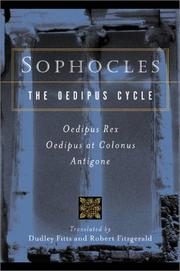
Reading Oedipus Rex and Antigone reveals the origins of tragedy, fate, and hubris — concepts that underpin virtually every major work in the Western canon and are referenced throughout later literature.
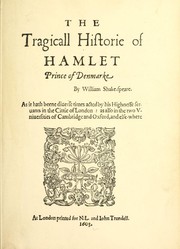
The most psychologically rich of Shakespeare's plays, Hamlet is best read after Sophocles so the reader can see how Renaissance drama transforms Greek ideas of fate into modern explorations of consciousness and indecision.
Beginning with Inferno, Dante's epic synthesizes classical and medieval thought into a visionary journey — now approachable with the classical grounding built in this stage, especially in a modern verse translation.
Masterpieces: Demanding and Transcendent
ExpertTackle the most ambitious and rewarding works of world literature, bringing all accumulated literary, historical, and interpretive knowledge to bear on texts that have defined human civilization's self-understanding.
▸ Study plan for this stage
Pace: 12–14 weeks, ~40–50 pages/day, with 1–2 weeks per novel for deep study and reflection
- Narrative scope and multiplicity: how Tolstoy's omniscient narrator, Márquez's cyclical time, and Joyce's stream-of-consciousness create fundamentally different ways of representing human experience
- The novel as philosophical inquiry: how Anna Karenina interrogates meaning and morality, One Hundred Years of Solitude explores fate and repetition, and Ulysses deconstructs consciousness and language itself
- Historical consciousness embedded in form: recognizing how 19th-century realism, magical realism, and modernist fragmentation reflect their respective historical moments
- Intertextuality and literary allusion: understanding how these works reference, transform, and dialogue with canonical predecessors (Homer, Dante, Shakespeare, etc.)
- The limits of representation: grappling with how language and narrative structure either capture or fail to capture the fullness of human interiority and social reality
- Symbolic density and ambiguity: learning to read layered symbolism (the railway in Anna Karenina, the cyclical names in One Hundred Years of Solitude, the Homeric parallels in Ulysses) without collapsing meaning into single interpretations
- Modernism's challenge to realism: understanding how Joyce's radical formal experimentation represents a fundamental break from the representational strategies of earlier masterpieces
- How does Tolstoy's use of an omniscient narrator differ fundamentally from Joyce's stream-of-consciousness technique, and what does each approach reveal or conceal about human consciousness?
- What role does cyclical or repetitive time play in One Hundred Years of Solitude and Anna Karenina, and how does this differ from the compressed, single-day timeframe of Ulysses?
- How do these three novels use historical events (Russian society and the Crimean War in Anna Karenina, Colombian civil conflict in One Hundred Years of Solitude, Irish independence in Ulysses) to explore larger philosophical questions?
- Trace the function of a major symbol or motif across one of these novels—how does it accumulate meaning and complicate the work's central themes?
- How does each novel engage with literary tradition? What classical or earlier literary works does it reference, and what does it transform or critique in doing so?
- What is the relationship between form and content in each work? How does the way the story is told shape what can be said?
- Create a detailed timeline of major events in Anna Karenina, then write a 2–3 page reflection on how Tolstoy's narrative structure (jumping between characters and storylines) shapes your understanding of causality and moral responsibility compared to a linear chronology
- Map the Buendía family tree across One Hundred Years of Solitude and annotate it with recurring names, traits, and historical events; write a short essay on how cyclical repetition functions as both narrative structure and thematic statement
- Select three passages from Ulysses (one from each major section: Telemachus, Wanderings, Nostos) and perform a close stylistic analysis of how Joyce's prose technique evolves; note the shifts in vocabulary, syntax, and narrative perspective
- Read the Odyssey (Book 1 and selections from Books 9–12) alongside relevant chapters of Ulysses; create a detailed comparison chart showing how Joyce transforms Homer's plot, characters, and heroic values
- Write a 1500-word comparative essay on how each novel treats a shared theme—such as love, mortality, meaning-making, or social change—and argue which formal approach (omniscient realism, magical realism, modernist fragmentation) most effectively captures the complexity of that theme
- Conduct a close reading of a 2–3 page passage from each novel, paying attention to sentence structure, diction, and rhythm; write analytical notes on how each author's prose style embodies their philosophical vision
Next up: By mastering these three canonical masterpieces—and understanding how they represent distinct but interconnected responses to the question of how literature can represent human experience—you are prepared to either specialize in a particular tradition (Russian, Latin American, or modernist), engage in comparative literary theory, or approach contemporary literature with a fully developed critical

Often called the greatest novel ever written, it is best read after Dostoevsky and the earlier novels — the reader now has the stamina and sensitivity to appreciate Tolstoy's vast social canvas and moral philosophy.

This landmark of magical realism expands the canon beyond Europe, and its mythic, cyclical storytelling is best appreciated after the reader has a firm grasp of realist and classical narrative conventions to contrast against.
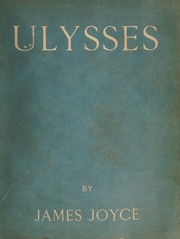
The summit of modernist fiction and one of the most ambitious novels in any language — placed last because it consciously rewrites Homer, Shakespeare, and the entire tradition the reader has now traversed, making it finally, deeply rewarding.
Discussion
Keep reading
Paths that share books, cover the same subject, or open a related topic.