Digital Painting: Best Books to Learn Photoshop and Procreate Painting
This curriculum takes a complete beginner from zero to confident digital painter across four progressive stages. It begins by building traditional art fundamentals (the universal language of all painting), moves into light and color theory, then bridges into digital-specific tools and workflows, and finally tackles advanced rendering and stylized painting techniques in Photoshop and Procreate.
Foundations — Drawing & Seeing
BeginnerDevelop the ability to see and construct form, value, and proportion — the bedrock skills every digital painter needs before touching a brush tool.
▸ Study plan for this stage
Pace: 4–5 weeks, ~25–30 pages/day. Week 1–3: "The New Drawing on the Right Side of the Brain" (Edwards); Week 4–5: "Keys to Drawing" (Dodson). Dedicate 3–4 days per week to reading, 2–3 days to exercises and reflection.
- Shifting from left-brain (verbal/analytical) to right-brain (visual/spatial) perception — the core premise of Edwards' method
- Contour drawing and edge awareness as tools to train direct observation without symbolic thinking
- Value (light and shadow) as the primary vehicle for form and dimension, not line or outline
- Proportion and spatial relationships: measuring with your eye and understanding how shapes relate to one another
- The five basic perceptual skills Edwards identifies: seeing edges, spaces, relationships, light/shadow, and the whole gestalt
- Dodson's systematic approach to constructing form through basic shapes and structural lines before detail
- Overcoming the 'symbol trap' — learning to draw what you actually see, not what you think you know
- The role of negative space in defining positive form and improving accuracy
- What is the difference between left-brain and right-brain modes of perception, and why does Edwards argue that learning to draw requires a shift into right-brain thinking?
- Explain the five perceptual skills Edwards teaches and give an example of how each one applies to observing a simple object.
- How does contour drawing train your eye differently than other drawing methods, and what should you focus on while doing a contour line?
- What role does value (light and shadow) play in creating the illusion of form and dimension on a flat surface?
- How can understanding negative space improve your ability to draw accurate proportions and relationships?
- What does Dodson mean by the 'symbol trap,' and how can you avoid falling into it when drawing from observation?
- Describe the process of constructing a complex form using basic shapes and structural lines, as Dodson teaches.
- Complete Edwards' 'scribble drawing' and 'upside-down drawing' exercises to bypass symbolic thinking and train direct observation.
- Do 10–15 minute blind contour drawings (one per day, 5–6 times) of everyday objects without looking at your paper — focus on edges and hand-eye coordination.
- Create a value study of a simple object (apple, cube, sphere) using only light and shadow, no outlines — practice seeing form through tone.
- Draw the same object three times: once as you think it looks, once using Dodson's basic-shape construction method, once from direct observation — compare the results.
- Practice negative space drawing: choose a complex shape (hand, plant, chair) and draw only the empty space around it, not the object itself.
- Spend 15–20 minutes daily on proportion exercises: measure relationships between parts of a face, figure, or object using sighting techniques (holding a pencil at arm's length).
- Create a 'seeing journal' where you do quick observational sketches (5–10 minutes each) of different subjects daily, focusing on one perceptual skill per session (edges one day, values the next, etc.).
- Redraw one of your early sketches after a week of practice to see tangible improvement and reinforce that skill development is measurable.
Next up: This stage establishes the perceptual and structural foundation—the ability to see accurately and construct form convincingly—that makes all subsequent digital painting techniques (color theory, rendering, composition, digital tools) actually land on the canvas with intention and control.
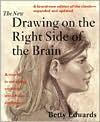
Teaches you to truly *see* — edges, spaces, and relationships — rather than draw symbols. This perceptual shift is the single most important foundation for any visual art, digital or traditional.
A practical, exercise-driven follow-up that reinforces observation and line confidence; prepares you to translate what you see into marks on a canvas (or tablet).
Light, Value & Color Theory
BeginnerUnderstand how light behaves on forms, how value creates depth, and how color relationships work — the three pillars that make a digital painting look believable.
▸ Study plan for this stage
Pace: 8–10 weeks, ~25–30 pages/day, with 2–3 days per week dedicated to hands-on painting exercises
- How light defines form through highlights, midtones, and shadows — the foundation of believable rendering
- Value (brightness/darkness) as the primary tool for creating depth, contrast, and visual hierarchy in composition
- The relationship between local color, light color, and shadow color in realistic lighting scenarios
- Color temperature shifts: warm light casts cool shadows and vice versa, affecting perceived depth and mood
- Simultaneous contrast and color relativity: how colors appear different based on their surrounding context (Albers' core principle)
- Practical application of value studies in grayscale before introducing color to avoid muddiness
- How saturation, temperature, and value work together to push colors forward or recede in space
- How does the placement of highlights and shadow edges communicate the form and material of an object?
- Why is establishing a strong value structure more important than color accuracy in creating a believable painting?
- How do warm and cool color temperatures interact in light and shadow, and why does this matter for realism?
- What is simultaneous contrast, and how can you use it to make colors appear more vibrant without increasing saturation?
- How does local color differ from perceived color, and what role does light play in this distinction?
- Why should you complete a value study before adding color, and what problems does this prevent?
- Complete 5–7 grayscale value studies from reference photos (simple objects: spheres, cubes, cylinders) focusing on light direction and form
- Paint a still life with strong directional light, paying attention to highlight placement, core shadow, and reflected light in shadow areas
- Create a color temperature study: render the same simple form twice—once with warm light/cool shadow, once with cool light/warm shadow—and compare
- Reproduce 3–4 of Albers' color interaction exercises digitally, documenting how the same color appears different when surrounded by different backgrounds
- Paint a simple scene (mug, apple, or similar) in full color, but first create a detailed value study in grayscale to establish structure before adding hue
- Analyze 3 master paintings (photograph them or find high-res images) and create annotated diagrams showing light direction, value distribution, and color temperature shifts
Next up: Mastering light, value, and color relationships equips you with the technical foundation to move into composition, form construction, and atmospheric perspective—the tools needed to create cohesive, believable scenes rather than isolated objects.

The definitive guide to understanding light, shadow, and surface rendering on 3D forms. Reading this first gives you the 'physics' of light before you apply it digitally.

Gurney demystifies how color and light interact in the real world — temperature, reflected light, ambient occlusion — giving you the intuition that separates flat paintings from luminous ones.
A classic deep-dive into how colors influence each other perceptually. Reading this after Gurney sharpens your eye for color relationships and teaches you to mix and harmonize digitally.
Digital Tools — Brushes, Workflow & First Paintings
IntermediateGet hands-on with Photoshop and/or Procreate: understand brush mechanics, layer workflows, and complete your first finished digital paintings from scratch.
▸ Study plan for this stage
Pace: 4–5 weeks, ~20–25 pages/day with daily sketching practice
- Composition fundamentals: framing, focal points, and visual hierarchy in digital space
- Perspective and spatial relationships as tools for storytelling and viewer guidance
- Value structure and contrast as the foundation for readable, impactful paintings
- Line weight, gesture, and mark-making adapted to digital brushes and layers
- Thumbnail sketching and rough layouts as essential pre-painting workflow steps
- How to translate traditional composition principles into digital painting practice
- Narrative composition: using visual elements to guide the viewer's eye and tell a story
- How do framing and focal point placement affect where a viewer's eye travels in a digital painting?
- What role does value structure play in making a digital painting readable and visually strong?
- How can you use perspective and spatial relationships to enhance storytelling in your work?
- Why is thumbnail sketching an essential step before opening Photoshop or Procreate to paint?
- How do line weight and gesture translate from traditional drawing to digital brush mechanics?
- What composition mistakes commonly undermine digital paintings, and how do you avoid them?
- Complete 10–15 small thumbnail sketches (2×3 inches) exploring different focal point placements and framings for a single subject
- Paint a simple landscape or interior scene using only value (grayscale) to practice contrast and readability before adding color
- Recreate a composition from Framed Ink using your own subject matter—focus on matching the spatial relationships and visual hierarchy
- Paint a character or object in three different compositions, each emphasizing a different focal point; compare which tells the strongest story
- Do a gesture drawing study session (10–15 quick sketches) focusing on line weight variation with your digital brush
- Complete one finished digital painting (8×10 inches minimum) that incorporates thumbnail planning, strong value structure, and deliberate focal point placement
Next up: This stage grounds you in composition and visual storytelling principles, which you'll now apply with full color theory, advanced brush techniques, and rendering skills in the next phase of digital painting mastery.
A practitioner-led anthology covering brushwork, texturing, and step-by-step painting workflows in Photoshop — ideal for bridging theory into actual digital practice.

Focuses on composition and visual storytelling through value — skills that directly translate to setting up compelling digital paintings and understanding what to paint before how to paint it.
Advanced Rendering & Stylized Painting
ExpertMaster advanced rendering techniques, develop a personal style, and paint complex subjects — characters, environments, and concept art — with professional polish.
▸ Study plan for this stage
Pace: 4–5 weeks, ~40–50 pages/day with daily practice sessions
- Imaginative realism as a bridge between observation and fantasy—using real-world knowledge to create convincing invented worlds
- Color harmony and atmospheric perspective in creating depth, mood, and visual storytelling
- Constructive anatomy and form understanding as the foundation for drawing complex characters and creatures
- Lighting design and chiaroscuro techniques to direct viewer attention and enhance narrative drama
- Texture rendering and surface quality to convey material properties and add visual richness
- Composition strategies for complex multi-figure scenes and environmental storytelling
- Developing a personal visual language by synthesizing observation, imagination, and stylistic choices
- How does Gurney define imaginative realism, and what is the relationship between careful observation and fantastical invention?
- What role does color temperature and atmospheric perspective play in creating depth and emotional impact in a painting?
- How can understanding real-world anatomy and physics improve the believability of invented creatures and characters?
- What lighting strategies does Gurney recommend for directing viewer attention and enhancing narrative in complex scenes?
- How do you develop a consistent personal style while maintaining the flexibility to adapt to different subjects and genres?
- What techniques does Gurney present for rendering different textures and materials convincingly in digital media?
- Paint 5–7 studies of real-world objects, environments, and people, focusing on accurate light, shadow, and color relationships
- Create 3–4 imaginative paintings of invented creatures or characters, deliberately applying anatomical knowledge from observation studies
- Develop a color palette study for a complex scene (e.g., fantasy landscape, character in environment) exploring atmospheric perspective and mood
- Paint a multi-figure composition or environmental scene that tells a story, emphasizing composition, lighting hierarchy, and focal point
- Create texture studies for 4–5 different materials (metal, fabric, skin, stone, etc.) using digital painting techniques
- Sketch and paint your own character design or creature, iterating through multiple versions to refine your personal style
Next up: This stage equips you with the conceptual framework and technical skills to paint complex, imaginative subjects with professional polish, preparing you to specialize further in specific genres (character design, environment art, concept art) or to develop a cohesive body of work that demonstrates mastery.

Gurney's companion volume shows how to paint subjects that don't exist using real-world reference and imagination — essential for concept art and stylized digital illustration.
A master Disney animator's approach to painting animals and characters digitally; demonstrates advanced brush economy, texture rendering, and expressive color in Photoshop.
Discussion
Keep reading
Paths that share books, cover the same subject, or open a related topic.